Retiring teacher, coach urges Colony grads to ‘find their 68’
By Jeremiah Bartz Frontiersman.com A football coach using a hockey reference as the centerpiece for his keynote address may


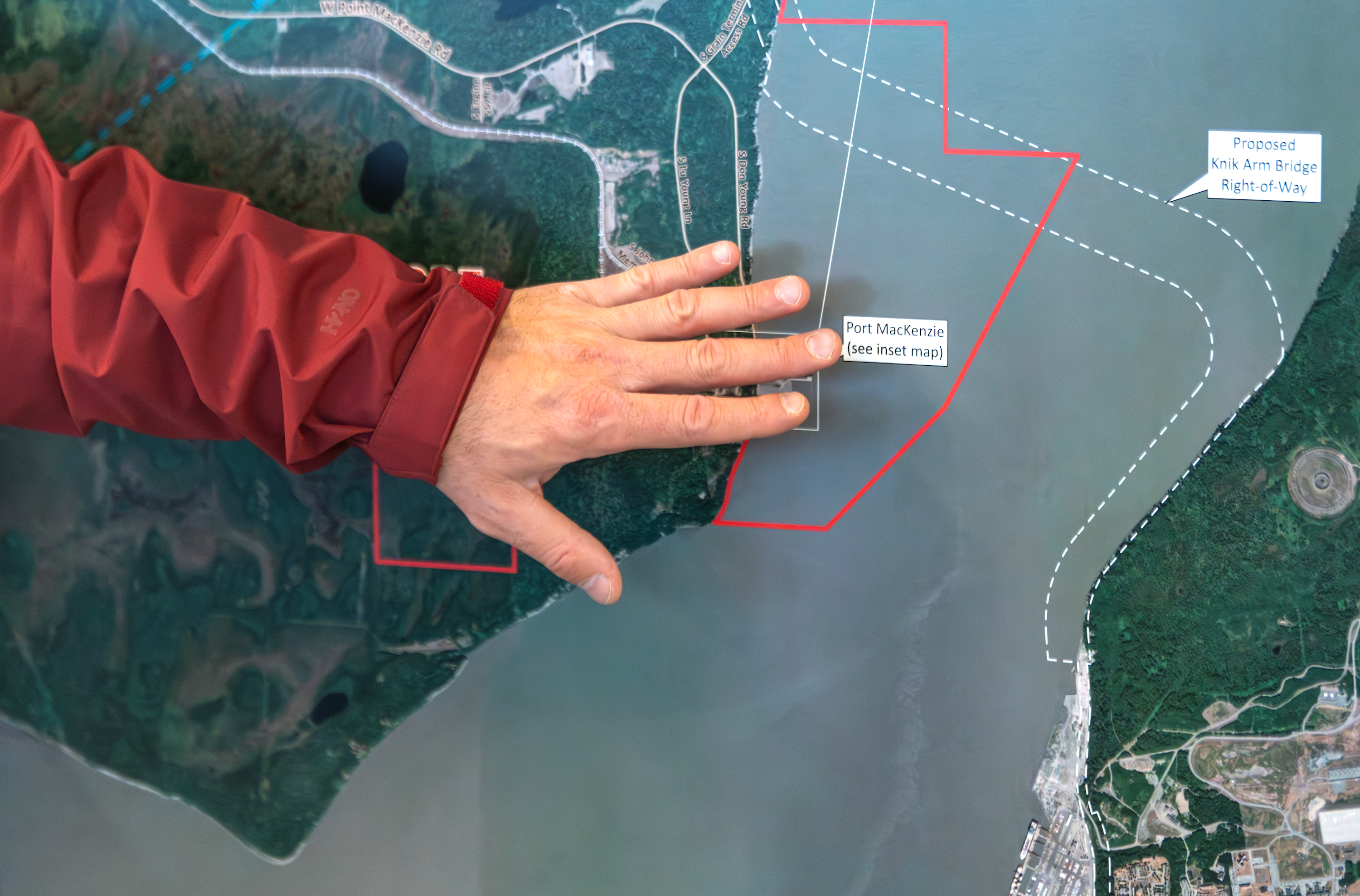
Port MacKenzie, a commercial and industrial port in Upper Cook Inlet, is notable for being the only port in the state with significant land dedicated to development. With its deep-draft and barge docks designed to export natural resources such as gravel and coal, the port has infrastructure for connecting to major road and rail corridors serving Alaska. The port is poised to become a hub for various business operations and international trade.
To learn about the port's strategic location and long-term operational plans, the Matanuska-Susitna Borough (MSB) held a public open house on October 4, 2025, offering tours and overviews of the facility and its economic future.
“Alaska needs to start developing its manufacturing base, and we can do that here,” said Dave Griffin, Port Operations Manager for Port MacKenzie.
Griffin discussed the key features of the port, as a centerpiece to stimulate economic development by creating jobs, expanding the local economy, and generating new revenue sources through investments in infrastructure. Recent investments, such as a new barge ramp, are expected to attract additional businesses and increase operational capabilities.
Another feature for the port? Because of its year-round operation and deep-water capability, the port can serve as an alternative for cargo transfer in the event of damage to other critical infrastructure from natural or man-made disasters.
Griffin discussed the future of the port as it pertains to the Alaska Liquefied Natural Gas (LNG) project, which is focused on creating an export facility to liquefy and sell North Slope natural gas and providing a stable and affordable in-state gas supply for energy needs. Recent efforts in Mat-Su specifically involve discussions for the Port MacKenzie LNG delivery hub to potentially re-gasify and distribute the liquefied gas via Enstar's pipeline network, making it available for local heating, generating power, and industrial use.
“Energy for Alaska is going to continue to be a big question mark, and the sooner we can get that answered, figure out how to reduce energy costs, I think that’s when opportunities are really going to open up for us.”
He said one advantage the MSB has is that it’s one of the last vestiges of privately-owned property, as most of the Alaskan lands are owned by the federal government. “In a state where less than 1% of the land is under private ownership, the Mat-Su Borough is the last municipality to have land at a scale, so we’re going to continue to see growth and development, regardless of what happens.”
Discussions also included the port’s role in economic growth for the Borough and the State, mining and natural resource development, export/import potential, fuel storage, and supply chain resiliency for the State. The port even hosted military training activities, using the port and barges to demonstrate the loading of military equipment, while the Marines and Coast Guard conducted operations to simulate seizing the port to re-establish force flow and control in a contested scenario, and improve readiness and capability to defend North America in the complex Arctic security environment.
Griffin also discussed the West Susitna Access Project, a proposed two-part project in the MSB that will unlock the potential of the region for various types of resource development, including critical minerals, and create jobs, while also providing a safe, reliable, and year-round public road connecting the existing road system to remote areas for recreation like hunting, fishing, and boating.
The Alaska Department of Transportation and Public Facilities (DOT&PF) is managing the first 22-miles of the public road, while the Alaska Industrial Development and Export Authority (AIDEA) oversees the permitting for the remainder of the extension, which would be over 78 miles long and more industrial in nature.
“When we talk about growth and development, the West Susitna Access Road…the Governor had DOT figure out the quickest way to get this permitted, and that was to move it up to West Susitna.” He said that the move take the Susitna Flats Game Refuge off the table, which would have required additional permitting and required additional delays.
Another feature of the port being developed is the Point MacKenzie Rail Extension. While primarily accessible by road and barge, a key part of the port's future development is the completion of the rail extension. This 32-mile rail link would provide a direct connection to the state's main rail system just south of Houston, creating a more efficient, less expensive route for bulk exports from Interior Alaska to tidewater.
Some of the projected benefits to the extension include it becoming the longest rail car loop in Alaska for efficient bulk resource offloading, shorter shipping distances for Interior shippers, and stimulated economic growth through increased jobs and tax revenue for rail belt communities. It also aims to create a major export hub, potentially boosting new mines and a cement industry, and supporting resource extraction and development across Alaska.
The West Susitna Access project doesn’t have rail connection that directly benefits the port, but Griffin says it drives activity, and activity breeds more activity, which would bring more interest to the port.
“When we think about Port MacKenzie, think of it as Southcentral Alaska’s gateway to the interior,” Griffin said, emphasizing the need to finish the railway. “Anything that gets developed resource-wise in the interior, this is the logical place to bring it.”
He also said that the project is already underway and that the 25 miles has already been developed the embankment, and that of the six water-crossings, bridges have been put in.
“The last remaining area that needs the embankment through the Point MacKenzie farms, the right-of-ways have already been acquired.”
Visitors walked away with a better understanding of the Port and the role it plays in our community; the importance of the Port’s strategic location, and the benefits of having a port situated on the west side of Cook Inlet;
Point MacKenzie residents Stephanie Grimes and her husband Darryl came out to the open house to learn more about the port, glad to see it held on the weekend.
“It’s our backyard, so we need to know what’s going on,” said Stephanie. The couple say they are encouraged by the development taking place at the port. “We need growth. There’s nowhere to go in Anchorage or Eagle River, so it makes sense to move out this way.”
They also acknowledge the concerns of some about the disruption to the wilderness, but say that nearly all of Alaska has wilderness within reach and developing at least main roads is needed.
“We don’t have to be like the lower 48 cities, or Anchorage with roads everywhere, but we need main roads going north, west, east. We gotta have them,” says Darryl.
“You can only take so much from a resource and then it’s gone without new growth,” said Stephanie.

By Jeremiah Bartz Frontiersman.com A football coach using a hockey reference as the centerpiece for his keynote address may

Frontiersman.com With its headquarters in Wasilla, the Frontiersman has been a primary source of news for the Matanuska-Susitna

By Katie Stavick Frontiersman.com The next generation of leaders took flight this week as the Houston High School Class

By Kyle Wilkinson For the Frontiersman Keynote speaker and Carry the Cure President Bill Pagaran’s words boomed through the