Retiring teacher, coach urges Colony grads to ‘find their 68’
By Jeremiah Bartz Frontiersman.com A football coach using a hockey reference as the centerpiece for his keynote address may


Editor’s note: Matanuska Telephone Association Chief Executive Officer Greg Berberich agreed to participate in the Valley Men Choose Respect campaign, but opted to use his space to spotlight other men at MTA who also Choose Respect.
Ask any number of people how they define respect and you will get a variety of answers, but all have a common theme: treat others the way you want to be treated. A life marred by domestic violence lacks respect.
For most, learning about respect and how to treat others starts at an early age. And some of the most important lessons in how to show respect come from the sidelines, from the coaches who dedicate their time to teaching young men and women the value of teamwork, cooperation, responsibility and equality.
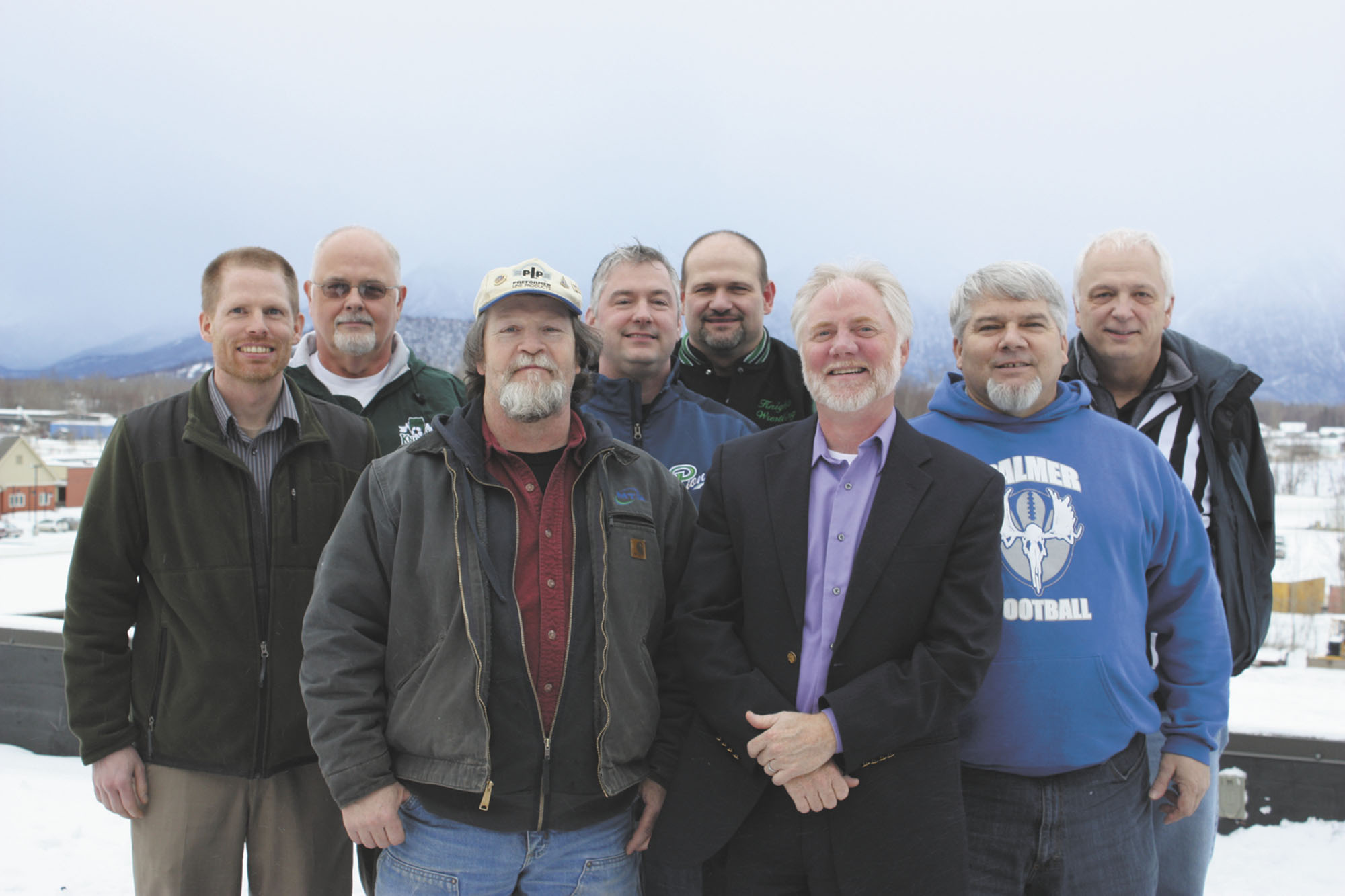
It’s no surprise then, that men who have dedicated years to coaching — everything from soccer, wrestling, football, hockey and hunter safety — find themselves working together for a company that incorporates these same values into its day-to-day business. Matanuska Telephone Association is proud to support these men, who bring the lessons they teach on the field into the workplace.
“Success is built by the individual choices we make every day,” said Greg Berberich, MTA’s CEO.
Berberich coached elementary- and middle-school-aged children in soccer and basketball for about five years.
“It’s about offering encouragement and helping them understand how the decisions they make today affect their future,” he said.
Growing up with four sisters, he learned early what was acceptable behavior and what wasn’t. “You don’t hit girls, that’s Rule No. 1,” he said, “As a society, a community, we can’t turn a blind eye anymore; if we witness something, we need to stand up and say this isn’t right.”
Coaching also allowed Berberich to share these values with his team, to help them bring the lessons of sportsmanship into their everyday lives — treat each other with respect and dignity while competing at your highest level.
Ed Powell, retired MTA engineer, started his coaching career with girls’ soccer in 1983. Over the years, he’s lent his time and talent to coaching wrestling, football and hunter safety. Aside from the fundamentals of each sport, he encouraged his players to excel as individuals, be truthful and learn to look out for each other. He said coaching isn’t just about sports, it’s about taking the values and lessons learned as part of a team and incorporating them into everyday behavior.
“Take the more difficult right, rather than the easy wrong,” said Powell. “For me, respect is a feeling, a method of payment for the people you admire.”
Coaching isn’t only about what happens on the field. Coaching is mentoring young boys and girls, helping to mold them into adults ready to take responsibility for their actions.
“Sometimes mom and dad aren’t always able to be on the sidelines,” said Bert Verrall, a facilities maintenance technician with MTA who began coaching high school football in 2005. “You have to teach the kids to show up on time, be prepared and learn how to problem solve.”
Even when disagreements arise, there are ways to be cordial, to be conscientious of everyone else — to show respect, he said.
“I’ve always believed an adult with a good and positive attitude is an asset in a child’s life,” said Carl Serencha, an MTA network technician who also has coached hockey and baseball.
He currently referees hockey, working with kids and adults. Serencha started coaching because his own children were involved in sports, but he soon found that he enjoyed working with young kids and trying to be a positive role model for them.
Growing up, he said his own role models shared this positive outlook. Serencha says respecting someone means to “first assume good, not bad,” give the other person the benefit of the doubt, recognizing that we are not all the same.
Eric Anderson, MTA’s director of Engineering/Construction and Operations, also serves as president for the Wasilla Waves Swim Club and is a former soccer coach.
“It’s important to see each other as equals, to recognize that each person has a right to their opinion,” he said.
Coaching also allowed him to spend time with his children, he said, and to instill in them the values of treating others fairly, respecting different perspectives and working together. Anderson said he believes “a good role model is always willing to listen and teach.”
“Sports translate into life lessons, extremely valuable lessons — you don’t always win,” said Jody Myers, a lineman for MTA. “Opportunities now are different for kids.”
Myers said he started coaching basketball and football when his own children got involved in the sports.
“No one else stepped forward, so I did,” he said. “I found I enjoyed it and I enjoyed teaching. You try and build on things that go right.”
As a young man, Myers recalls the values his role models passed on to him — they invested their time, their experience and they taught him that respect is a two-way street.
“Respect starts at home — every day, all day,” said Brian Fish, a draftsman for MTA. “You need to respect yourself first in order to respect others. That goes a long way.”
Fish said he became involved in coaching hockey and soccer because of his love of sports and all that it offers: camaraderie, self-discipline and teaching kids.
“I love to watch them learn, become better people,” Fish said.
He said his parents taught him the value of a good work ethic, which included respect for himself and others.
“Respect can be hard to pinpoint,” Fish said. “It can be many things — respecting someone’s ability, their opinion or their space.”
Like many of the men profiled here, Robbie Nash started coaching to spend more time with his children. Nash, an engineering supervisor at MTA, coaches football and wrestling.
“I realized that all kids involved need a positive role model to teach them valuable life lessons that can be learned through participation in sports,” he said.
He said he models his own life after the values he tries to pass on to his players: self-confidence, setting goals, discipline, integrity, a strong work ethic and team work.
“Praise in public and if you have to provide constructive criticism, do that in private,” Nash said. When you treat others with respect and honesty, anything is possible, he said.
As a community, we should all be invested in providing a safe environment for each other, free from domestic and sexual violence. With the help of men like Greg, Ed, Bert, Carl, Eric, Jody, Brian and Robbie — who have invested not only their time, but also serve as role models, mentoring the youth in our community through their coaching — we can strive toward a day when the menace of domestic violence is replaced with tolerance and respect.
— Submitted by Tracy Ressler

By Barbara Hunt Palmer Buzz It was 6:43 on Friday morning and the Plant Owner was sound asleep when

By Kyle Wilkinson Frontiersman Memorial Day Weekend was filled with a variety of events in Willow. From live music to

By Kyle Wilkinson For the Frontiersman The Susitna Valley Emergency Preparedness Fair will be held at the Willow Community Center

By Barbara Hunt Palmer Buzz Green-Up happened at exactly 9:34 am on Saturday morning in Palmer. This was