Retiring teacher, coach urges Colony grads to ‘find their 68’
By Jeremiah Bartz Frontiersman.com A football coach using a hockey reference as the centerpiece for his keynote address may


When you live in Alaska, you come to know that our state is covered with fault lines, all with the potential of releasing an earthquake. In November 2018, we experienced and responded to a 7.1 earthquake. We mobilized our resources to repair roads and infrastructure quickly. We came together as a community to assess and meet the needs of our neighbors.
It was impossible to ignore the shaking that morning, and the hundreds of aftershocks constantly reminded me that we live in an earthquake zone. My family gathered together for reassurance each time the house began to shake. We reached out to extended family, friends, and neighbors to help process what was happening and ensure that everyone was okay. My young daughter repeatedly called her out-of-state grandparents, aunties, and cousins to video chat about the “scary shaking.” She is nearly six years old now, and I still reassure her that we have a plan to respond to future quakes and that if an earthquake happens in the night, I will immediately come to make sure she is safe. Our relationships help us process traumatic experiences and protect us from their lasting effects.
We in the Mat-Su are currently responding to another emergency, although you may not feel the shockwaves in your personal life yet. Addiction, substance misuse, and overdose deaths are shaking the foundations of our society. Sooner or later, you may be seeking support or services for a loved one or friend facing these aftershocks. Families, faith communities, and service providers are coming together to assess and support those whose lives are rocked by addictive substances and behaviors. Community connection, strong relationships, innovation, and problem-solving all aid healing and recovery.
We all have different perspectives and experiences with addiction that influence our willingness to come together to address this crisis. The FrameWorks Institute’s Brain Faultline metaphor compares addiction and the varying degrees of the destruction and damage it causes to earthquakes. Just as friction and movement along faults underground can cause the earth to shake at different magnitudes, people’s brains are subject to the devastating effects of addiction depending on the stress, depth, and interactions with their “faultlines.”
“Like a faultline in the earth, people’s brains can develop small cracks. These faultlines can form in a number of ways. In some cases, they appear as the brain develops. They can also develop over time as people experience stress and don’t have supportive relationships. Other times, people may have been born with faultlines. But just because there is a faultline doesn’t mean there will be an earthquake. Faultlines are triggered by factors and experiences that turn them into earthquakes, which can do a huge amount of damage. We know that there are things we can do to help prevent brain faultlines from developing in the first place and things that we can do to minimize the chances that existing faultlines will turn into earthquakes. There are also things we can do once earthquakes or addictions have happened to prevent damage from happening again” (FrameWorks, 2012).
When we compare the impacts of addiction to the damage following an earthquake, there are several important takeaways. Not every fault line produces earthquakes, but scientists and geologists can help to identify invisible fault lines and help communities prepare for potential damage. We can also identify higher risks for addiction and support healthy child development and youth activities to buffer the stress that contributes to substance misuse. Like earthquakes, addiction affects and disrupts communities and society and requires coordinated effort to repair and address the damage.
Ultimately, relationships are key to heal from the cyclical nature of addiction, trauma, and isolation. We all need trusted friends, family, clergy, coworkers, mentors, or therapists to help us process unexpected life events and heal from trauma. For those in our community who lack these strong relationships, the likelihood of life disruptions and traumatic stress is significant. As faith communities, we can increase our support and fellowship, forging authentic and lasting relationships to help prevent the effects of trauma in our area.
Weekly youth activities, worship services, and addiction recovery support groups already function in many congregations. How can we increase our opportunities for broadened fellowship and relationships for healing?
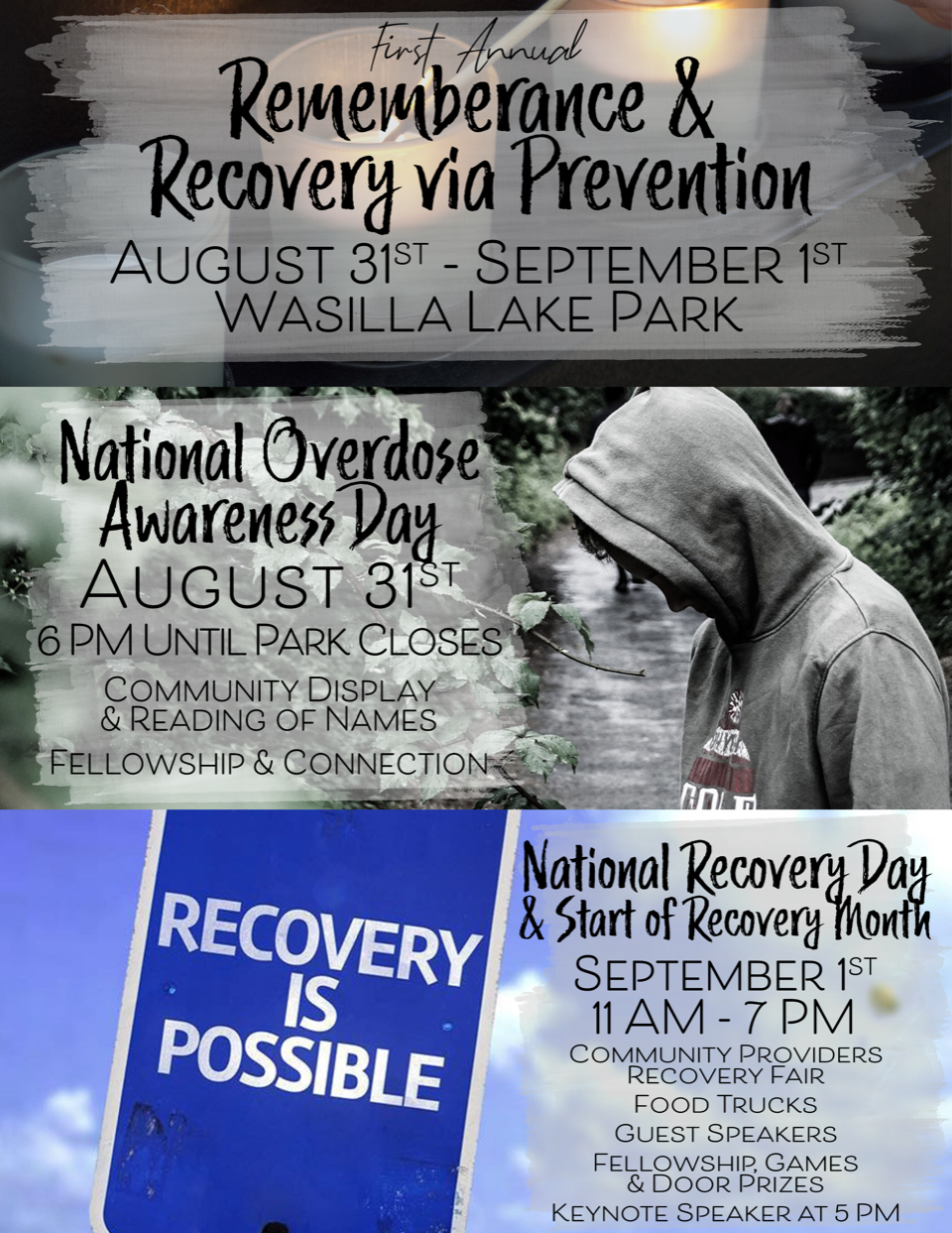
The Mat Su Opioid Task Force and Alaska Health and Human Services will present the First Annual Remembrance and Recovery via Prevention event at Newcomb Park on Wasilla Lake, August 31 and September 1. Everyone is invited to come together in support and fellowship, learn about the services and tools available in our community, aid recovery, discover opportunities to serve, and connect with our youth to help delay their exposure to addictive substances and behaviors.
International Overdose Day is Tuesday, August 31. At 6 pm, join those who have lost loved ones to overdose, substance misuse, and addiction for a candlelight vigil and community display. If you would like to add a name to the list, please email John Green at KellsiesKey@yahoo.com.
Recovery Day events will be held Wednesday, September 1, from 11 am – 7 pm. There will be food trucks, youth activities and engagement programs, door prizes, and space to connect and chat. Representatives from addiction recovery programs, behavioral and mental health services, support groups, and others will be on hand to provide information and answer questions. Learn about bridge devices, fentanyl test strips, Narcan, and the many ways our community is working together to provide recovery support options for individuals and families impacted by addictive substances and behaviors.
Find and share event information on Facebook under “Remembrance & Recovery via Prevention” hosted by the Mat-Su Opioid Task Force at https://www.facebook.com/events/580174876480622.
Whether you are currently enduring the instability that accompanies addiction and substance misuse, or if you want to help solidify community support for recovery, we hope to see you at Newcomb Park next week.
Amity Condie has lived in Palmer since 2004. She loves reading, skiing with her dogs and family, and napping in sunlight. She is currently a graduate student in UTK’s Master of Social Work Trauma Certificate program and is a member of The Church of Jesus Christ of Latter-day Saints.

By Darla Petersen Faith Hi! How are you? Good to see ya! What helps you to feel welcome? What do

By Katie Stavick Frontiersman.com The atmosphere was electric at the Menard Center on Tuesday evening as the Wasilla High

By Jonathan Rockey Faith Last Sunday, May 24, 2026, was the 7th Sunday AFTER Easter, and celebrated by most liturgical

Frontiersman.com Mat-Su Regional Medical Center was awarded an “A” Hospital Safety Grade for the 5th consecutive grading round