Retiring teacher, coach urges Colony grads to ‘find their 68’
By Jeremiah Bartz Frontiersman.com A football coach using a hockey reference as the centerpiece for his keynote address may


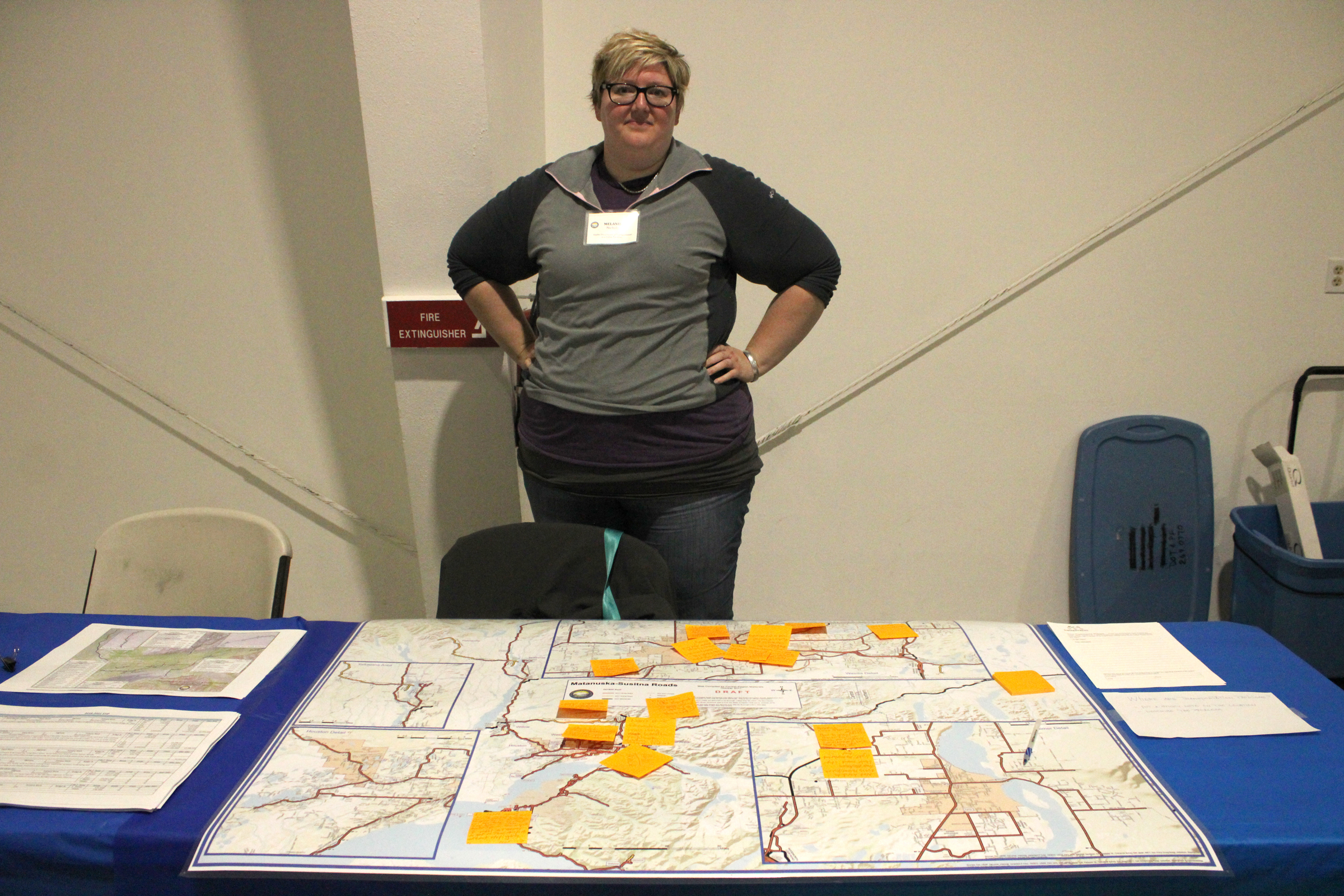
PALMER — While dozens of presenters from agencies all over the state descended on the Mat-Su Transportation Fair at Raven Hall on the Alaska State Fairgrounds hoping to get the latest scoop on the dozens of ongoing and upcoming nearby road construction projects, some of those gathered to distribute information were not only concerned with how to move across the Valley, but how to do it safely.
On a trailer outside of Raven Hall was a reminder of how important safe habits can be. The 8.0 Alaska Earthquake Simulator was provided by the Department of Homeland Security and Emergency Services.
“We really kind of get their attention. From there we can talk to them about the proper earthquake safety action, which is drop cover and hold on. The reason we say that is during strong earthquakes, you can’t stand up, walk or run anyways. You’re going to end up on the ground one way or another,” said DHS&ES Public Information Officer Jeremy Zidek.
As the earthquake simulator starts, the voice on the speaker tells you that it is not a ride, it is an experience. Zidek said that a fair number of Transportation Fairgoers passed up the opportunity, still shook from the real earthquake last November. The four-seat ‘experience’ on the trailer bounces up and down, shakes back and forth and drops, simulating the effects of an actual earthquake and encouraging the person experiencing the simulation to drop, cover and hold on. The noise from the printer, fax machine, and toys along the counter is an acute reminder of the Point Mackenzie earthquake, but the difference is the simulation is safe. The Alaska Earthquake Simulator has earthquake-safe features, with the items on the counter clipped to a board on the back and push-tight cabinet doors.
“I think it’s important,” said Nicole Deren after experiencing the simulator. “I knew more people who were like, I ran out of my house from that November earthquake than duck and cover in the house. I think it’s good. It’s a good reminder, we need that.”
The Alaska Department of Fish and Game set up a map as almost every different booth did, but their map drew blank expressions from passers by. The map assembled by ADF&G displays the frequency of motor vehicle vs. moose accidents in the Mat-Su Valley. Large collections of deep red or ‘hot spots’ showed the high frequency of moose collisions. The signs along the side of the Glenn and Parks Highways marking how many moose have died in the calendar year as a result of losing battles with cars are part of the messaging that the ADF&G wants to get across to Alaskan motorists.
“There’s two kinds of people, those that have hit a moose or those that are going to,” said ADF&G researcher Jeff Stetz.
Stetz has also been working on developing an interactive map that allows users to not only see the frequency of collisions between moose and vehicles, but testimony from those that have survived the crashes. The booth that Stetz stood behind also had a small stick so that he could encourage them to ‘knock on wood’ after bragging about never hitting a moose. Stetz is also working on a program to track moose that have attached radio collars to track their movements along the highways on a regular basis. Stetz is hoping that the messaging from ADF&G can help people be cognizant of the danger and not become complacent or drive distracted.
“We’re trying to have more consistent messaging as far as how people should respond if they do see a moose on the road,” said Stetz.
Stetz said that he is hoping to encourage the trend of motorists turning on their hazard lights when they see a moose, accident, or other wildlife that may enter the roadway. While many drivers commonly flash their bright lights to indicate a moose, Stetz hopes to change that behavior to use hazard lights so that drivers traveling in front of and behind you can be aware of the danger.
“If people understand what flashers may mean that it’s time to slow down and look around, that’s an important message,” said Stetz.
Stetz warned that the late fall is the most active time for vehicle collisions with moose, especially due to decreased daylight.

By Jeremiah Bartz Frontiersman.com A football coach using a hockey reference as the centerpiece for his keynote address may

Frontiersman.com With its headquarters in Wasilla, the Frontiersman has been a primary source of news for the Matanuska-Susitna

By Katie Stavick Frontiersman.com The next generation of leaders took flight this week as the Houston High School Class

By Kyle Wilkinson For the Frontiersman Keynote speaker and Carry the Cure President Bill Pagaran’s words boomed through the