Retiring teacher, coach urges Colony grads to ‘find their 68’
By Jeremiah Bartz Frontiersman.com A football coach using a hockey reference as the centerpiece for his keynote address may


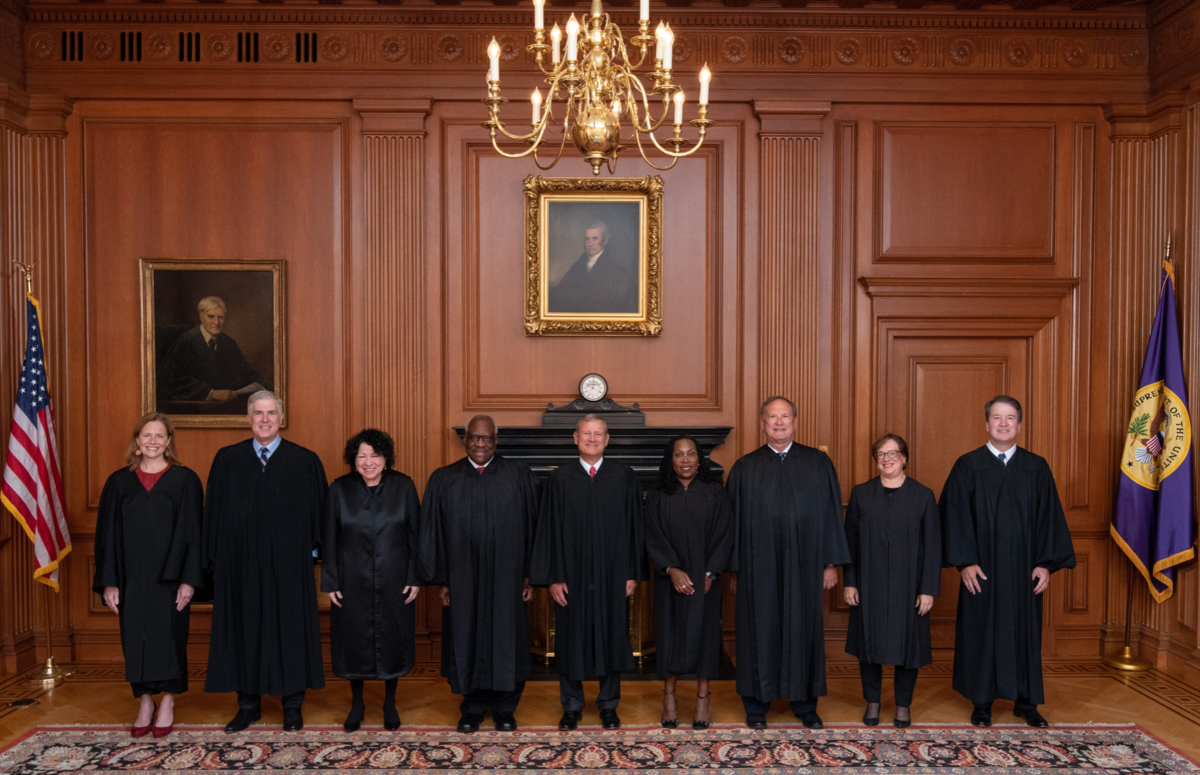
Last week, the Supreme Court of the United States (SCOTUS) struck down a plan to provide mass student debt relief, invalidating President Joe Biden’s student loan debt relief plan.
President Biden’s had proposed canceling student loan debt during the 2020 presidential election campaign, and his administration ultimately proposed forgiving up to $10,000 in debt for borrowers earning less than $125,000 a year, or couples who file taxes jointly and earn less than $250,000 annually.
Supporters had said that student loan debt slows new business growth and slows consumer spending. An August 2020 Roosevelt Institute study explained student loan debt prevented about 400,000 people from buying homes between 2005 and 2014, which accounted for 25% of the decrease in home-ownership. Every $1,000 increase in student loan debt lowered the home ownership rate by 1.5% for those who attended four-year colleges. Further, student loan debtors save half as much for retirement by age 30 as those without debt.
“The positive effects of an evidence-based student debt cancellation policy for individuals and households extend far beyond the immediate need of removing burdensome debt. The ramifications for financial and personal well-being, credit, job stability and satisfaction, homeownership earlier in the life course, capacity to build wealth for emergencies, human capital investments, family stability, and accumulating wealth can multiply throughout a person’s life.”
A Federal Reserve Bank of Philadelphia study found “a significant and economically meaningful negative correlation” between student loan debt and the falling rate of new small businesses.
Opponents said the plan would have cost more than $400 billion. A 2020 survey from stundentloanhero.com found 46% of Americans believe student loan forgiveness is unfair to those who have paid off their loans, and 39% believe it unfair to those without loans.
Matthew Noyes, columnist at Lone Conservative, who noted the sacrifices he had to make to pay off his $27,000 in student loans, explained, “Taking out a loan is a choice, and personal responsibility shouldn’t be supplanted by taxpayer bailouts. ‘Canceling’ student loans means penalizing people like me for honoring my word and repaying the debt I chose to accept.”
The justices ruled 6-3 that the program was an unlawful exercise of presidential power because it had not been explicitly approved by Congress.
The Biden administration had argumed that the plan was lawful under a 2003 law called the Higher Education Relief Opportunities for Students Act, or HEROES Act. The law says the government can provide relief to recipients of student loans when there is a “national emergency,” allowing it to act to ensure people are not in “a worse position financially” as a result of the emergency.
Chief Justice John Roberts said the HEROES Act language was not specific enough, writing that the court's precedent "requires that Congress speak clearly before a department secretary can unilaterally alter large sections of the American economy."
The student loan proposal was important to President Biden, as tackling student loan debt was a key pledge he made on the campaign trail in 2020. About 43 million Americans would have been eligible to participate.
The Supreme Court had considered 2 cases: one brought by 6 states, including Missouri, and the other brought by 2 people who hold student loan debt, Myra Brown and Alexander Taylor. SCOTUS ruled that the program was unlawful in the case brought by states, but found in the second case that the challengers did not have legal standing.
Justice Elena Kagan, one of the 3 justices who dissented on the decision, said that by ruling against the plan, the court had "exceeded its proper limited role in our nation's governance."
She said the states bringing the challenge did not have legal standing to even bring the case, and in analyzing HEROES Act, the conservative justices ignored the clear language of the law.
"The result here is that the court substitutes itself for Congress and the executive branch in making national policy about student-loan forgiveness."
The court decided the case in part based on a legal argument made by the challengers that the conservative majority has recently embraced called the “major questions doctrine.”
For students here in Alaska, UAA has recently partnered with Inceptia on financial literacy programming for students, and improved communications with students while in school, so as to better prepare and learn where they are as far as accumulated debt. The university has also partnered with Student Connections to ensure students have the support they need during the repayment process and have already received communications outlining what they can expect for their unique situation in light of the Supreme Court ruling.
"The University of Alaska takes pride in making higher education affordable and accessible, and Alaska’s public universities are consistently ranked as some of the most affordable in the United States. Many students attending UA also have the opportunity to access non-loan financial aid - including the Alaska Performance Scholarship, UA Scholars Program, Pell Grants, and other tuition assistance programs and scholarships. We’ll continue to support and promote those and other opportunities for long-term student success," said Jonathon Taylor, Director of Public Affairs, University of Alaska System.
The student loan repayment process is set to begin again at the end of August after having been put on pause during the Covid-19 pandemic, although first payments will not be due until October.
The ruling immediately puts pressure on the administration to find an alternative avenue to forgive student debt that could potentially withstand legal challenge. After the SCOTUS decision, President Biden said that he would invoke the 1965 Higher Education Act, a different law than the one at issue in the Supreme Court cases, which some experts have said gives the Education Department broad authority, although that proposal could take time to implement.

By Jeremiah Bartz Frontiersman.com A football coach using a hockey reference as the centerpiece for his keynote address may

Frontiersman.com With its headquarters in Wasilla, the Frontiersman has been a primary source of news for the Matanuska-Susitna

By Katie Stavick Frontiersman.com The next generation of leaders took flight this week as the Houston High School Class

By Kyle Wilkinson For the Frontiersman Keynote speaker and Carry the Cure President Bill Pagaran’s words boomed through the