Retiring teacher, coach urges Colony grads to ‘find their 68’
By Jeremiah Bartz Frontiersman.com A football coach using a hockey reference as the centerpiece for his keynote address may


PALMER — Inside the Pioneer Home retirement home lives Alfred (Al) Willis and his brother, Edward (Ed). The brothers are down the hall from each other. They both served in the military during World War II (WWII). Al was a way-finder/radar operator for the Navy, and Ed was a boiler room mechanic with the Merchant Marines. The two are often seen together, sharing all three of their meals together. Now in their 90’s, they like to watch football and share stories about their past — swapping tales from their childhood, military service and connecting the dots in between.
“I think it’s pretty cool you’ve got 2 brothers who’ve had a very interesting life living right next to each other and can have breakfast, lunch and dinner in the same retirement home. They probably talk a lot of old times when they watch football together,” said Al’s son, Charlie.
The brothers grew up in Barstow, California. Just a couple years apart, Al and Ed both wanted to join the war effort right out of high school. The eldest brother, Ed saw his classmates joining various branches of the military and figured he should do the same. It took longer than expected since he was initially rejected due to physical limitations. He tried both the Army Air Force and Navy but failed the physical, finding out he had hypertension and a heart murmur. He was classified as 4-F, “unfit for service.”
“I pretty much made up my mind that I was probably going to be out of World War II because of physical difficulties,” Ed said.
Then, fate handed him another opportunity.
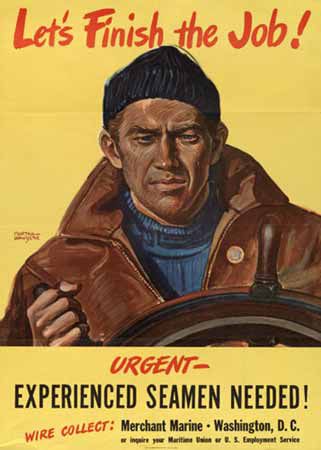
Ed said his boyhood friend, Joe Anthony (“remember Joe?” he asked Al, who said he remembered). Joe told Ed, “there’s a heck of a lot of guys with 4-F status who are in the Merchant Marines, why don’t you come up to San Francisco with me and I’ll introduce you to some of the union guys (Seafarers Union)?”
Ed enrolled in a boiler room training program since he had mechanical experience in high school. After four weeks of training, he boarded a World War I-era oil tanker that the U.S. took over from Russia.
“My uncle was a very proficient boiler room operator,” Charlie said.
The ship departed from San Francisco and headed further out into the Pacific. The ship was “more or less” a service station; other ships would come and pump them with fuel and they would help other ships. Ed said that since it was an old WWI ship, it put out a lot of gas fumes which filled the cabins and didn’t do his seasickness any favors.
“I was never so sick in my life,” he laughed.
Al graduated high school in 1943 in June and he was in a boot camp inside a Naval Station by September.
“I was ready to go,” Al said.
Apparently, so were three of his fellow high school graduates — his old scoutmaster and a former school teacher. Having his hometown peers in boot camp and on following missions made it feel “just like home.”
“I never got away from my mother or dad,” he laughed.
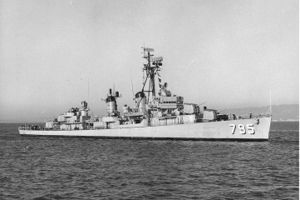
Al boarded the USS Preston (DD-795) a fletcher-class destroyer that took him to Guam the Philippines, and other islands to fight the Japanese. As a way finder and radar operator, Al spent much of his time looking out for “bogeys.” One day, a kamikaze pilot came right at the ship.
“He got pretty close to us,” Al said.
They caught it and time and unloaded over 100 rounds of 5-inch shells. After sinking the plane, the crew pulled the pilot from the debris and took him onto the ship. Al said the skipper immediately read him his naval rights. They “fixed him up,” put him in a bag, had a ceremony and gave him a burial at sea — all in accordance with the Geneva Convention. He recalled how white the man’s teeth were.
“The ship didn’t have a scratch and he paid the price. Everything was to the T. We got the job done. If we hadn’t of done the right thing, we’d be in his position and they’d be sending us roses,” Al said.
Meanwhile, Ed’s old WWI ship was “zig-zagging” the ocean at 6 knots. Merchant Marines were technically classified as civilians during WWII, but they hauled cargo to the front lines.
“It could be jeeps, red drums of oil — anything they needed on the war front,” Ed said.
Merchant Marines reportedly lost more members in combat per capita than any other branch in the military. They weren’t officially recognized until the Merchant Seaman’s Benefit act was introduced into in House in 1986 and finally made official in 1988. That is when Ed obtained his official veteran status.
Ed returned to the states to board another ship, the SS Mission San Miguel, a Type T2-SE-A2 tanker built for the United States Maritime Commission. He said they frequently had to stop and make repairs. They eventually made it to a staging area in Ulithi is an islet in the Caroline Islands where Al’s other ship, the Tennessee was on the battlefront in Okinawa. The two ships crossed paths over an “incident.” Ed said that his ship’s skipper got “all screwed up” and dropped anchor right in the battleship row and “all hell broke loose.”
“They went to battle stations, I actually heard the skipper of the Tennessee call our skipper to ‘get the g-ddamn rust bucket out of here or we’re gonna’ blow it out of the water!'” Ed laughed.
It wasn’t until 30 years later that the brothers found out they were at the same place at the same time. This apparently happened on several occasions, according to Charlie. As they recounted their tales, they found more instances where they intersected. The brothers have mirrored experiences helping people abroad during and after the war. When Al was stationed on 2 islands in the Philippines where he said they protected the villagers from “criminals.”
Al said that after the war, Merchant Marines were still widely used because the government wanted them to replace the occupying fleets, so they could come home and the Merchant Marines could man the ships.
In Germany, many of the men were in prison camps. One of his ships had a choice of two meals per evening and oftentimes, one was “tossed over the side.” He said that his skipper made it a point that they didn’t waste anything while they were in Germany and they gave food to the women and children begging at the docks.
“They knew how to work hard,” Charlie said.
Al has a collection of all his letters from the war.
This is a time when posters read, “loose lips sink ships.”
To prevent enemy interception and learning valuable details during war times, the government made sure every letter sent from a soldier was proofread by censors. Anything that could even remotely aid foreign powers and put lives at risk was literally cut out from the paper. So, Al has a large, white binder filled with letters to home, many of them missing chunks here and there. Ed said that during his service, he was rationed two cartons of cigarettes a week. He said he never smoked but his dad lit up a pack a day so he mailed his cartons to him.
“Remember that?” Ed asked Al.
Al did.

By Jeremiah Bartz Frontiersman.com A football coach using a hockey reference as the centerpiece for his keynote address may

Frontiersman.com With its headquarters in Wasilla, the Frontiersman has been a primary source of news for the Matanuska-Susitna

By Katie Stavick Frontiersman.com The next generation of leaders took flight this week as the Houston High School Class

By Kyle Wilkinson For the Frontiersman Keynote speaker and Carry the Cure President Bill Pagaran’s words boomed through the