Retiring teacher, coach urges Colony grads to ‘find their 68’
By Jeremiah Bartz Frontiersman.com A football coach using a hockey reference as the centerpiece for his keynote address may


WASILLA — Bird rehabilitation centers in Southcentral Alaska have received an unusually high number of calls regarding rescued seabirds lately, volunteers say.
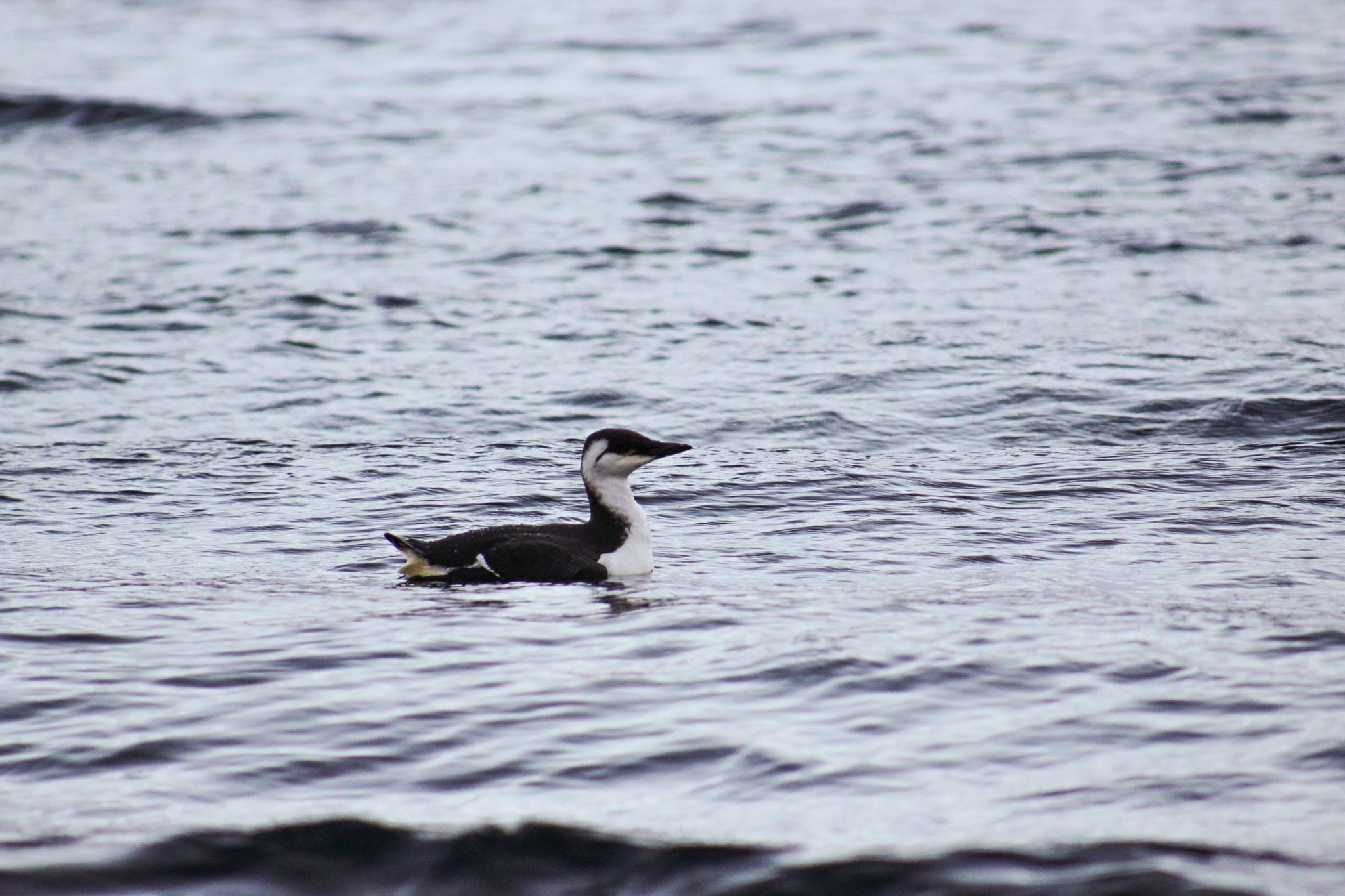
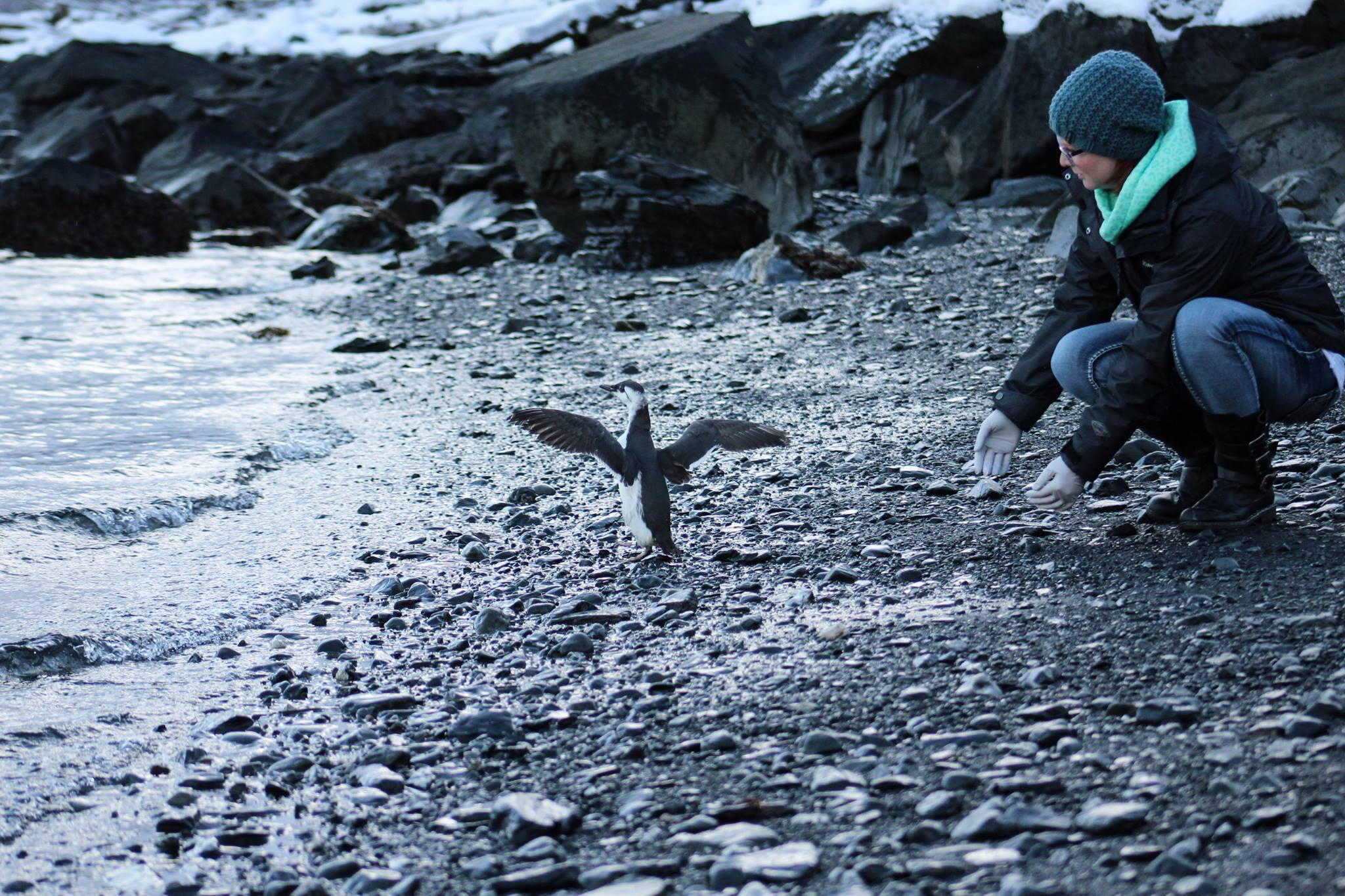
One such call came the morning of Thursday, Dec. 17, after Palmer resident Grant Van Bavel captured a common murre near the Glenn-Parks Highway interchange. His wife and daughter alerted him when they spotted it on their way to Anchorage.
When Van Bavel encountered the bird, he said it was agitated, getting picked on by ravens and apparently unable to fly.
“It was pretty active, it wasn’t just a sickly bird laying there,” he said. “I had to chase it a little bit.”
Van Bavel wrapped the bird in a towel, brought it home and called the Bird Treatment and Learning Center (TLC) in Anchorage for advice. As it turned out, he wasn’t the only one to have called about such a bird recently.
Katie Middlebrook, the avian rehabilitation coordinator for Bird TLC, said they’ve received 40 common murres since Oct. 31, more than half of which were found in the Mat-Su Valley — some coming from as far north as Willow. Normally, the center receives one or two of the seabirds a year, she said.
Nancy Wade with the Alaska WildBird Rehabilitation Center in Houston said Thursday the center had received six common murres that week, nine a couple weeks before that, and seven in mid-November. All the murres coming in are obviously malnourished, she said.
Since the Houston facility is not set up to take care of these particular birds — which need water to preen properly and maintain natural waterproofing, as well as a diet of blended, high-fat fish to gain their weight back — all have been or are being transported to Bird TLC.
In mid-September, more than 100 dead murres were found offshore of Kodiak Island, and at the end of November, a Seward Coastal Observation and Seabird Survey Team (COASST) volunteer found at least 36 murre carcasses over the course a few days, after a big storm.
U.S. Fish and Wildlife Service biologist Leslie Slater said the farthest-north breeding colony recorded is on Chisik Island, about halfway up Cook Inlet, the same latitude as Seward. While it’s not unreasonable to see a few birds crop up in unusual places once in a while, she said, the number of dead murres found in the Kachemak Bay area is six times higher than that of previous years.
The COASST program, Slater said, has been of great significance in the research of this issue.
“That program is … showing that there is something odd happening here,” she said.
Alaska isn’t the only state seeing large misplacements or deaths of murres. A California newspaper reported 212 mysterious murre appearances between August 1 and Sept. 25, and Washington and Oregon have also experienced an influx of malnourished murres this year, Slater said.
In answer to the question of why this particular species of bird seems to be suffering, there are a couple of theories. The dominant one, Wade said, is that with ocean temperatures rising, the cold water fish murres feed on are swimming deeper than the birds can dive.
Slater said that’s a reasonable explanation, but that biologists still know too little about the situation to be sure.
“We really don't know much about the specific foraging habits of murres in the winter,” she said.
As for why the birds may have been landing on Valley roads, Wade and Middlebrook suspected that the murres saw wet or icy pavement during recent warm spells and confused the area with a body of water.
Slater said it wouldn’t be the first time a bird had done that, citing recorded instances of Washington grebes mistakenly landing in parking lots, and also being unable to take off from the ground.
If a common murre is found locally on land, the finder should gently capture it and call either the Alaska WildBird Rehabilitation Center at 892-2927 or Bird TLC at 907-562-4852 to coordinate transport of the bird to Anchorage. Middlebrook said rescuers should use a towel to grab the birds, as even the oil on a person’s hands can damage their natural waterproofing. Jeanette Hanneman, avian coordinator for the Houston facility, said it’s best to place the captured bird in a cardboard box away from bright lights to keep it calm and quiet.
Contact reporter Caitlin Skvorc at 352-2266 or caitlin.skvorc@frontiersman.com

By Jeremiah Bartz Frontiersman.com A football coach using a hockey reference as the centerpiece for his keynote address may

Frontiersman.com With its headquarters in Wasilla, the Frontiersman has been a primary source of news for the Matanuska-Susitna

By Katie Stavick Frontiersman.com The next generation of leaders took flight this week as the Houston High School Class

By Kyle Wilkinson For the Frontiersman Keynote speaker and Carry the Cure President Bill Pagaran’s words boomed through the