Retiring teacher, coach urges Colony grads to ‘find their 68’
By Jeremiah Bartz Frontiersman.com A football coach using a hockey reference as the centerpiece for his keynote address may


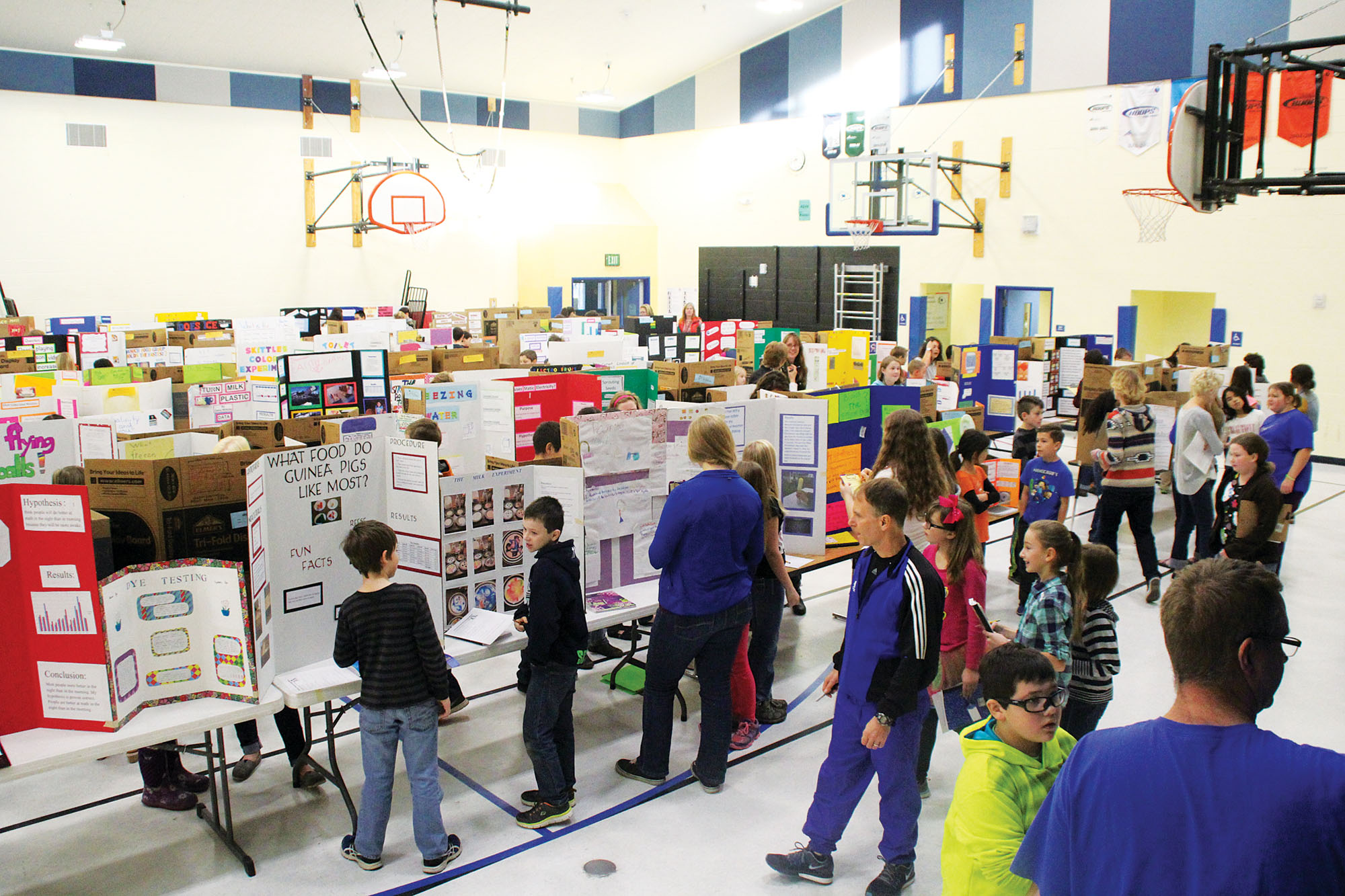
PALMER — Over the last 30 years, Sherrod Elementary School staff have learned that there’s more to science fairs than science.
As far as anyone currently employed at the school can remember, Sherrod held its first science fair in 1986. Since then, it has become a staple in the education of hundreds of third- through fifth-grade students at Sherrod.
Projects are judged by Palmer High School students, and graded based on how well the students demonstrate understanding of their individual projects and the scientific method.
Third grade teacher and science fair aficionado Charlotte Ray said that, more than asking young children to comprehend detailed concepts, teachers and staff hope their students have fun, spend time with family, and learn something — anything.
“When they present their project, they have so much pride in what they did, and it’s just an awesome experience, not even mentioning that they learned science and get to teach it to their class,” Ray said. “It’s very empowering for the kids.”
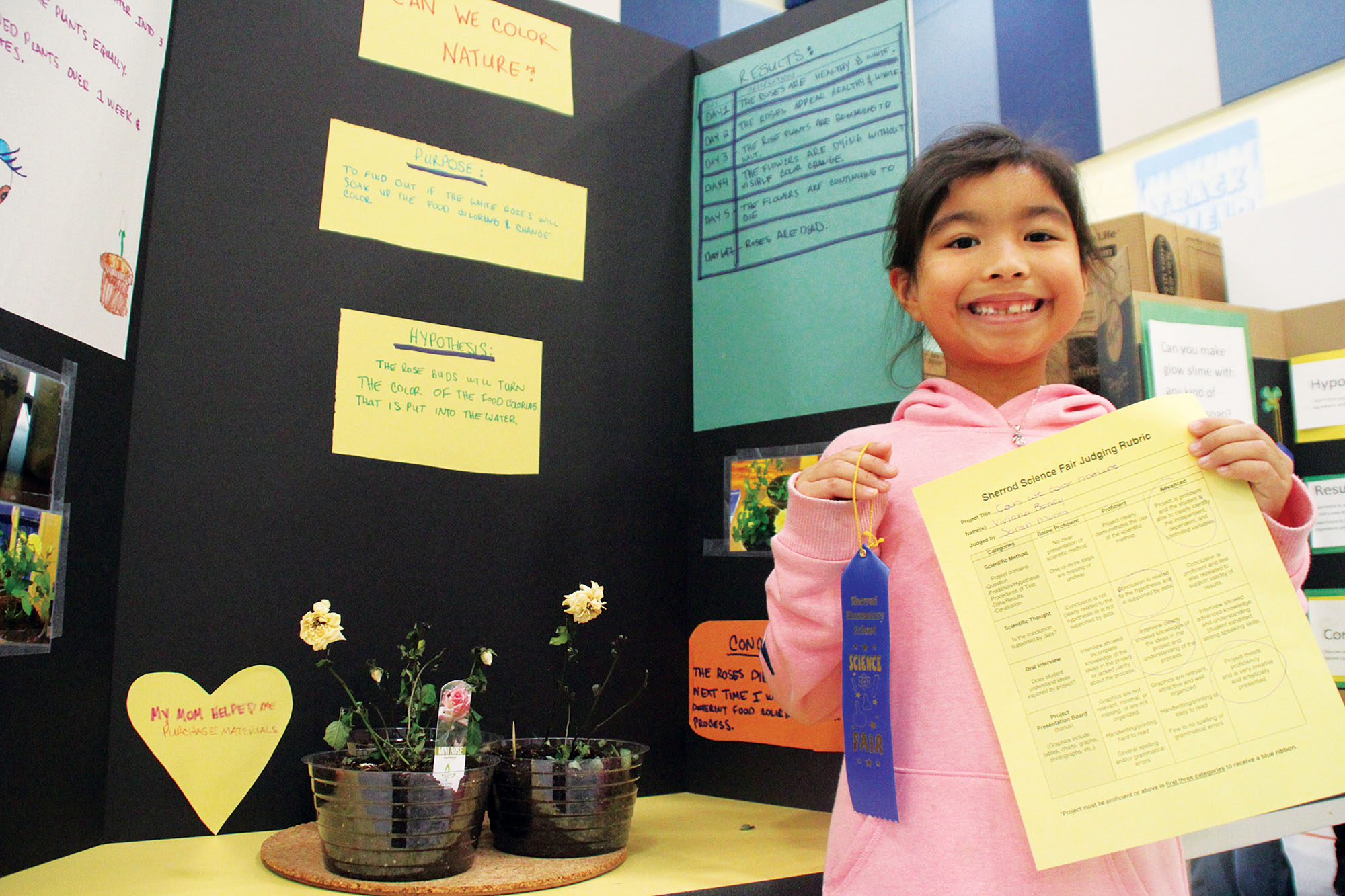
Vivianna Boney is one third-grade student who verbally expressed how proud she was of her project to her classmates — even though it didn’t go according to plan.
For her project, titled, “Can we color nature?” Vivianna hypothesized that the petals of the white roses her mother bought would turn red, blue or green after being fed water dyed with food coloring. The rose she fed green water died, and the roses she fed red and blue water wilted before taking on any color, so Vivianna concluded that green dye was bad for flowers and red- and blue-dyed water had no effect on them.
Though she’d already made her poster for the science fair, Vivianna and her mother tried using celery as an agent instead of flowers, just to see if it worked.
“My mom was like, “it’s a bonus!” she said.
The celery did soak up the artificial color, so Vivianna said she might try that to begin with next year.
Students are required to participate in the science fair, but Vivianna said everyone has a choice to make, come this time of year.
“Either you do it and you try to get a good grade, or you don’t do it and you get a zero on your science, and I’m not much of a zero person,” she said.
Vivianna said she enjoyed working with her mom, but that coloring the poster was the most fun part.
Fifth-grader Jonathan Aliberti, whose project measured distance traveled by Hot Wheels cars on various surfaces, said the best part about his project was that “it didn’t take five hours.”
“It was fun,” he said.
In previous years, Jonathan said he did a project on how earthquakes affected skyscrapers, and how cell phone use affected driving, simulated with a racing video game (which another student tried this year, Ray said).
Third-grader Ella Johnson ventured into the medical field with her project, measuring the resting heart rates of people of various ages. She said she enjoyed the process, but had a hard time getting her older brother to sit still for 10 minutes.
That, and she’s more interested in being a chef when she grows up than an anesthesiologist like her mother.
Ray and her predecessor, retired longtime teacher Kathleen Jones, said students aren’t judged on the depth or level of their project because it’s sometimes hard to know how much parents contribute. They’ve both learned over the years that some parents who work in professional scientific fields provide their students with more advanced projects, and the point of the fair is just to keep kids curious and involved.
“Some posters don’t look that sweet but they did it all themselves,” Ray said.
Senior Sarah LeCheninant, who is currently in the International Baccalaureate (IB) Biology II class at Palmer High, said she had wanted to be a science fair judge as a student at Sherrod. While she’s glad to have the community service hours and day off from school by volunteering the last couple years, LeCheninant’s recognized the value of giving young students an opportunity to connect with adults and older kids through their projects.
“Even if they don’t understand the science part of it, it’s really hard for them to talk to the judges and like, do all the work for it,” she said.
Her classmate, Jenny Hawkins, said she finds it personally gratifying to watch the elementary students go through the process in their presentation.
“I like being able to see the kids being able to … explain what they did, when you’re able to speak to them and not get the robotic movements of ‘this is what my mom told me to say,’” Hawkins said.
Because if the kids don’t know what they’re saying, and don’t enjoy their project, there isn’t much point.
“With school, it’s supposed to be fun, otherwise you don’t do it anymore,” she said. “You’ve gotta be interested in what you do.”
Contact reporter Caitlin Skvorc at 352-2266 or caitlin.skvorc@frontiersman.com.

By Jeremiah Bartz Frontiersman.com A football coach using a hockey reference as the centerpiece for his keynote address may

By Katie Stavick Frontiersman.com The next generation of leaders took flight this week as the Houston High School Class

By Kyle Wilkinson For the Frontiersman Keynote speaker and Carry the Cure President Bill Pagaran’s words boomed through the

By Jeremiah Bartz Frontiersman.com The community of Palmer is known for a couple of things. At or near the