Retiring teacher, coach urges Colony grads to ‘find their 68’
By Jeremiah Bartz Frontiersman.com A football coach using a hockey reference as the centerpiece for his keynote address may


ANCHORAGE — Alta and Jed Dean’s years of scientific research paid off when they placed first in their respective divisions — Environmental Science and Earth Science — at the Alaska State Science and Engineering Fair March 21.
Senior Alta won the overall competition, in which projects from all categories are judged together.
It all started with a marine biology class Alta took in sixth grade.
“I just fell in love with it,” she said.
But Alta’s love for the water started even earlier. Now a graduating senior and varsity swimmer for Colony High School, Alta has more than a decade of swimming experience. She is also a certified scuba diver, as of this year, when the Deans took a family vacation to Indonesia.
Alta’s love of the ocean involves more than just play, however.
For the last four years, Alta has been researching ocean acidification in Prince William Sound. With the help of a family boat, she was able to visit and measure pH levels in 19 different sites, tracking changes over time.
Alta had entered the project in previous science fairs, but it wasn’t until this year that the state science fair judges were able to see how dedicated she was to her project – and that the data she gathered was actually really important.
Alta’s findings reveal that the Pacific Ocean is indeed becoming more acidic, causing problems up the food chain. For example, due to ocean acidification, the decline of organisms as small and little-known as pteropods (“sea butterflies”) — which make up 60 percent of pink salmon diets, Alta said — is significant enough to pose threats to salmon survival.
“Through this project, I’ve really realized how everything has to be perfectly balanced for it to work correctly in nature,” Alta said. “If one little thing is thrown out of whack, then that just is devastating for the environment … and it’s hard to get that balance back.”
Alta’s younger brother, Jed, wasn’t just sitting on his hands while his sister studied the chemical properties of the ocean. Not long after Alta started her project, Jed — a sophomore — began talking with their father about the effect of radiation on the world’s waters. Soon, Jed began a project to study the effects on the ocean of Japan’s 2011 nuclear power plant disaster.
For the last two years, Jed has been scanning multiple objects found in Prince William Sound for radioactivity. While it will take a couple more years to gather enough data for conclusive results, it’s likely that more radioactive debris from Japan will be showing up on Alaska’s shores.
There’s still much to be done in the way of studying and addressing the oceans’ issues, and more students will need to step up in various scientific fields to maintain the environment, the Deans said. Colony High doesn’t currently have a Science Fair club, team or class, Alta said, but it does have the smart, self-motivated students to start and support one.
Her brother agreed.
“We (the Colony Knights) have the highest test scores in the entire state, and there were only two representatives of this school (at the state science fair) this year, and we pretty much won a third of the awards that were given,” Jed said.
Because of her win at state, Alta is currently presenting her project at the Intel International Science and Engineering Fair in Pittsburgh, Penn., which concludes May 15. She will miss her commencement ceremony from Colony.
Alta also was recently accepted as the Alaska candidate for the Stockholm Jr. Water Prize. She will compete against other students from around the U.S. in Washington, D.C., June 19 and 20 for a chance to present her project at the international competition in Stockholm, Sweden, this fall.
Outside of science, both Alta and Jed participate in the regional and state Spanish declamation contests — the former of which Alta has won three years in a row.
Alta said she hopes to continue in the field of marine biology at the University of Alaska Fairbanks next fall and study oceans in her post-college career. And although Jed is leaning more toward a career in law than science at the moment, he intends to continue his oceanic research and participate in science fairs throughout high school.
“I follow in her footsteps,” he said. “It’s a motivation factor.”
Contact Caitlin Skvorc a 352-2266 or caitlin.skvorc@frontiersman.com.
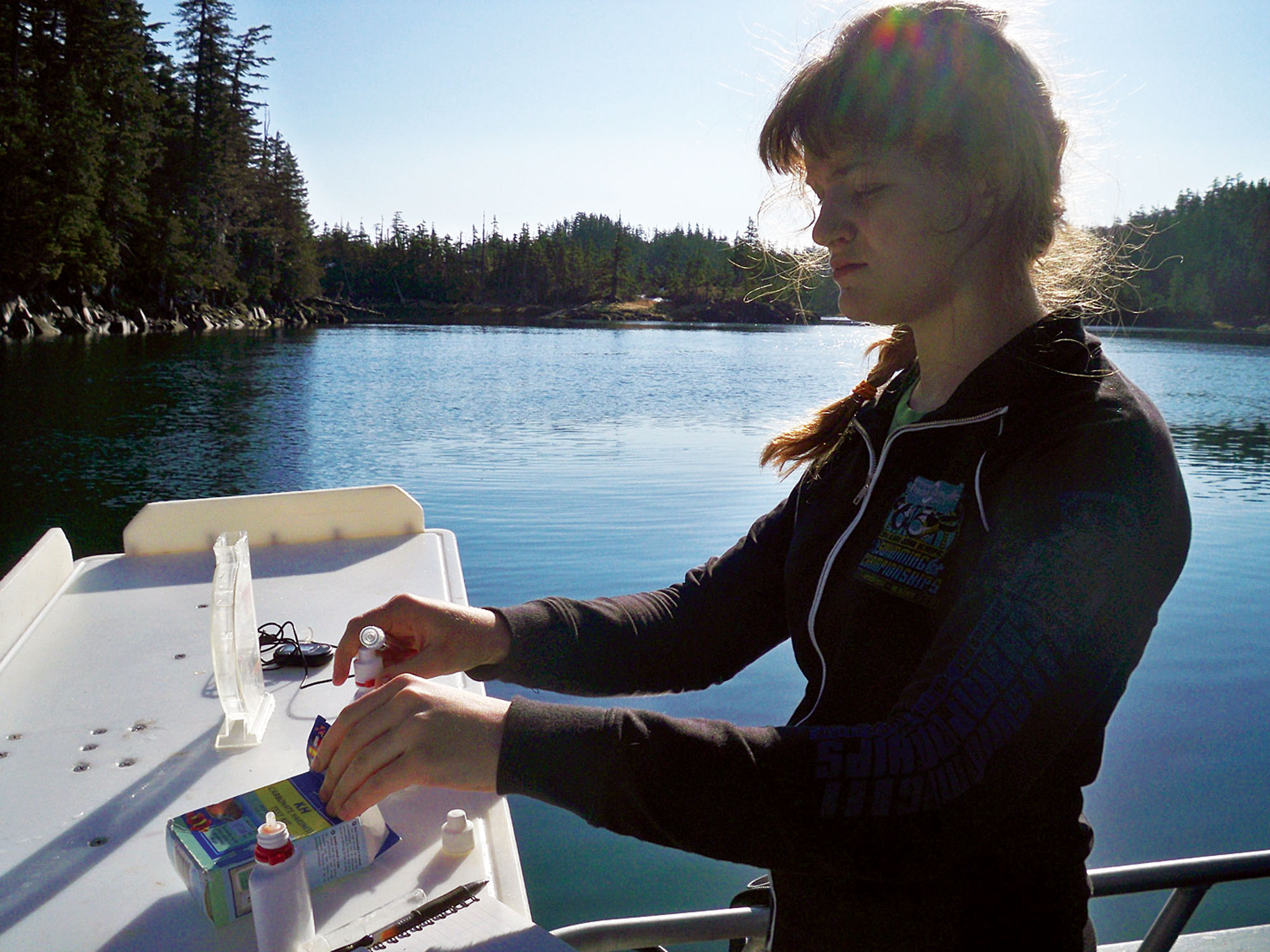
Courtesy Alta Dean

By Jeremiah Bartz Frontiersman.com A football coach using a hockey reference as the centerpiece for his keynote address may

By Katie Stavick Frontiersman.com The next generation of leaders took flight this week as the Houston High School Class

By Kyle Wilkinson For the Frontiersman Keynote speaker and Carry the Cure President Bill Pagaran’s words boomed through the

By Jeremiah Bartz Frontiersman.com The community of Palmer is known for a couple of things. At or near the