Retiring teacher, coach urges Colony grads to ‘find their 68’
By Jeremiah Bartz Frontiersman.com A football coach using a hockey reference as the centerpiece for his keynote address may


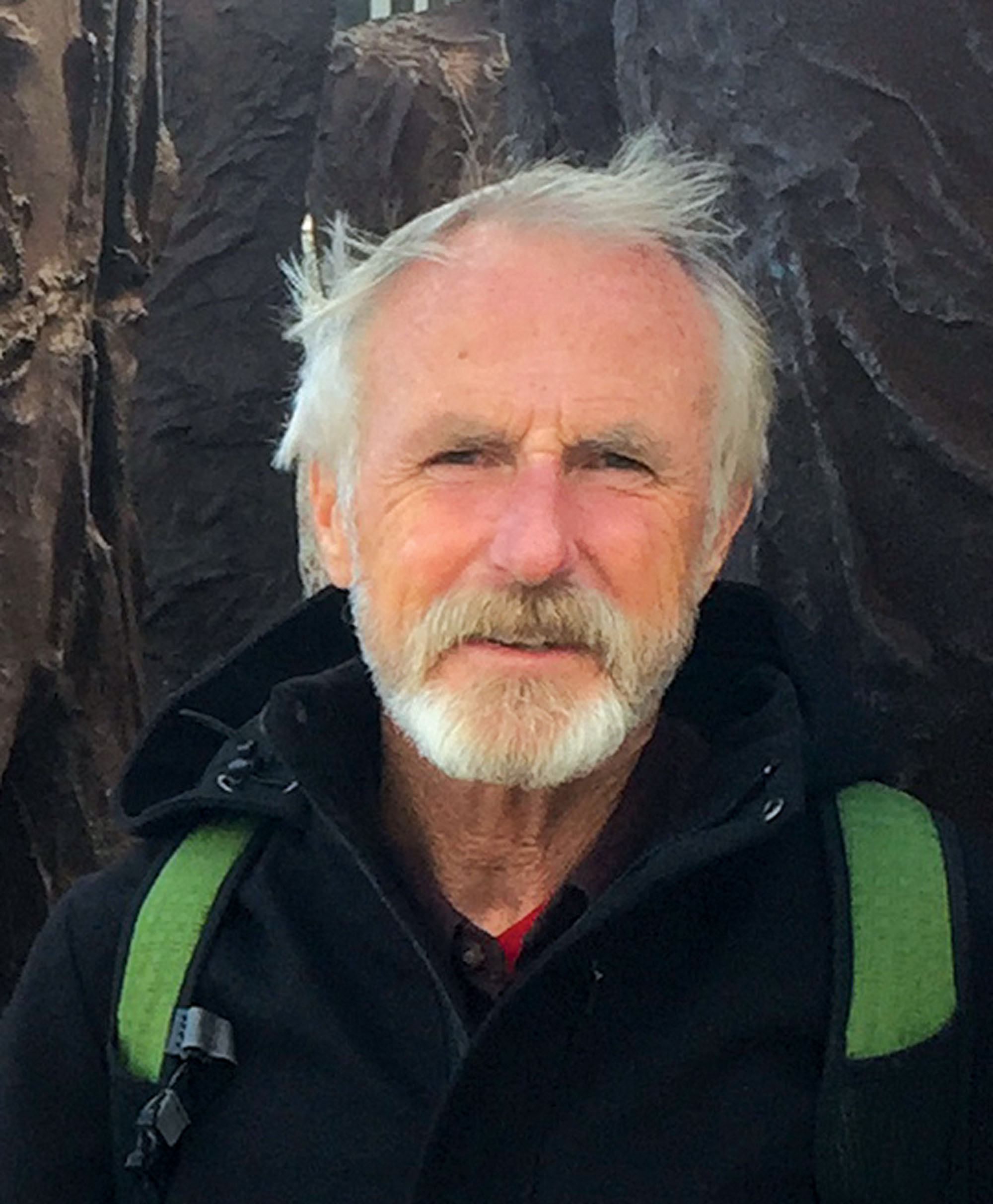
WASILLA — Summer is the season for wildfires in Alaska, and this month provided a perfect opportunity for artist Stephen Lawrie to install a thematically relevant sculpture at Mat-Su College.
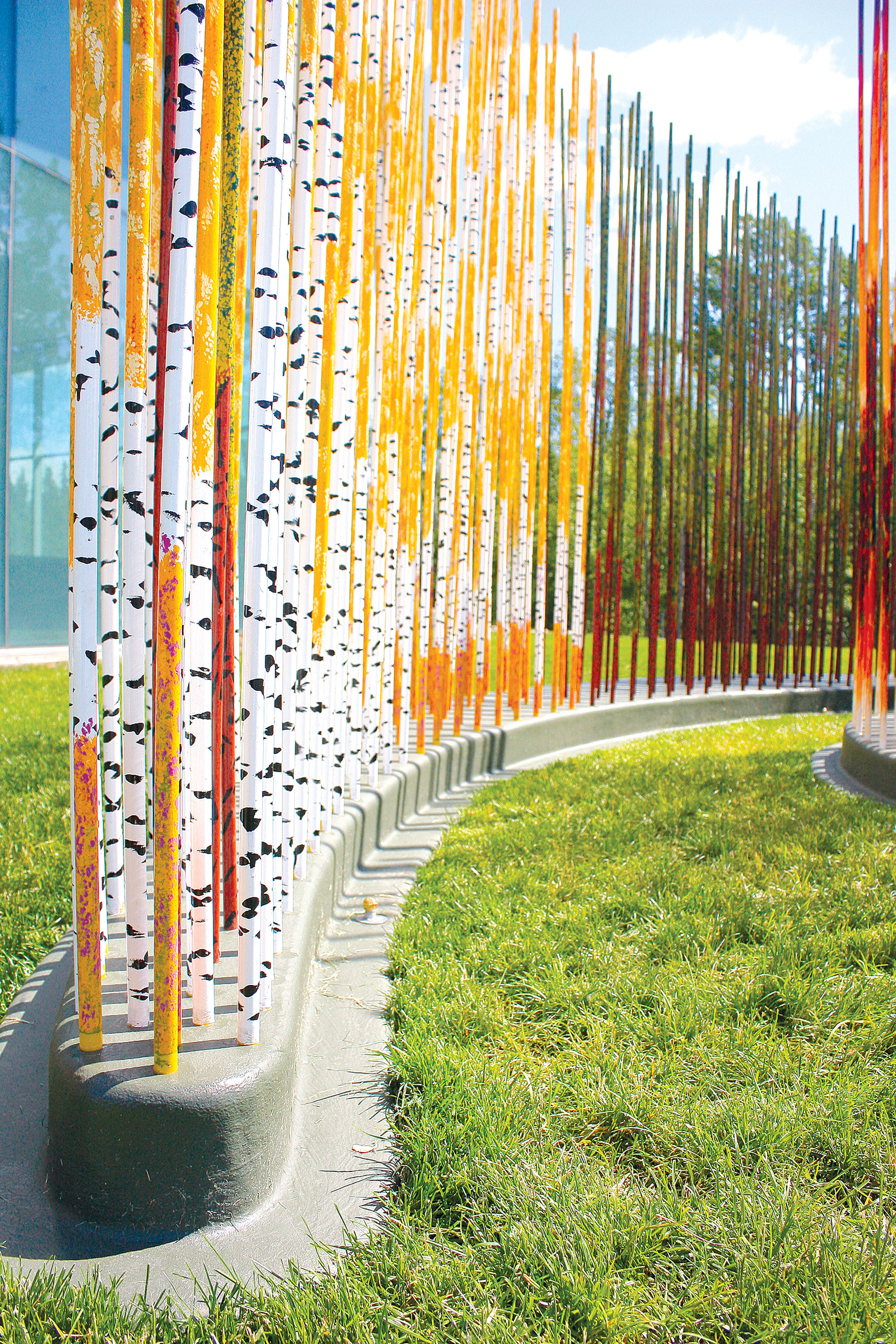
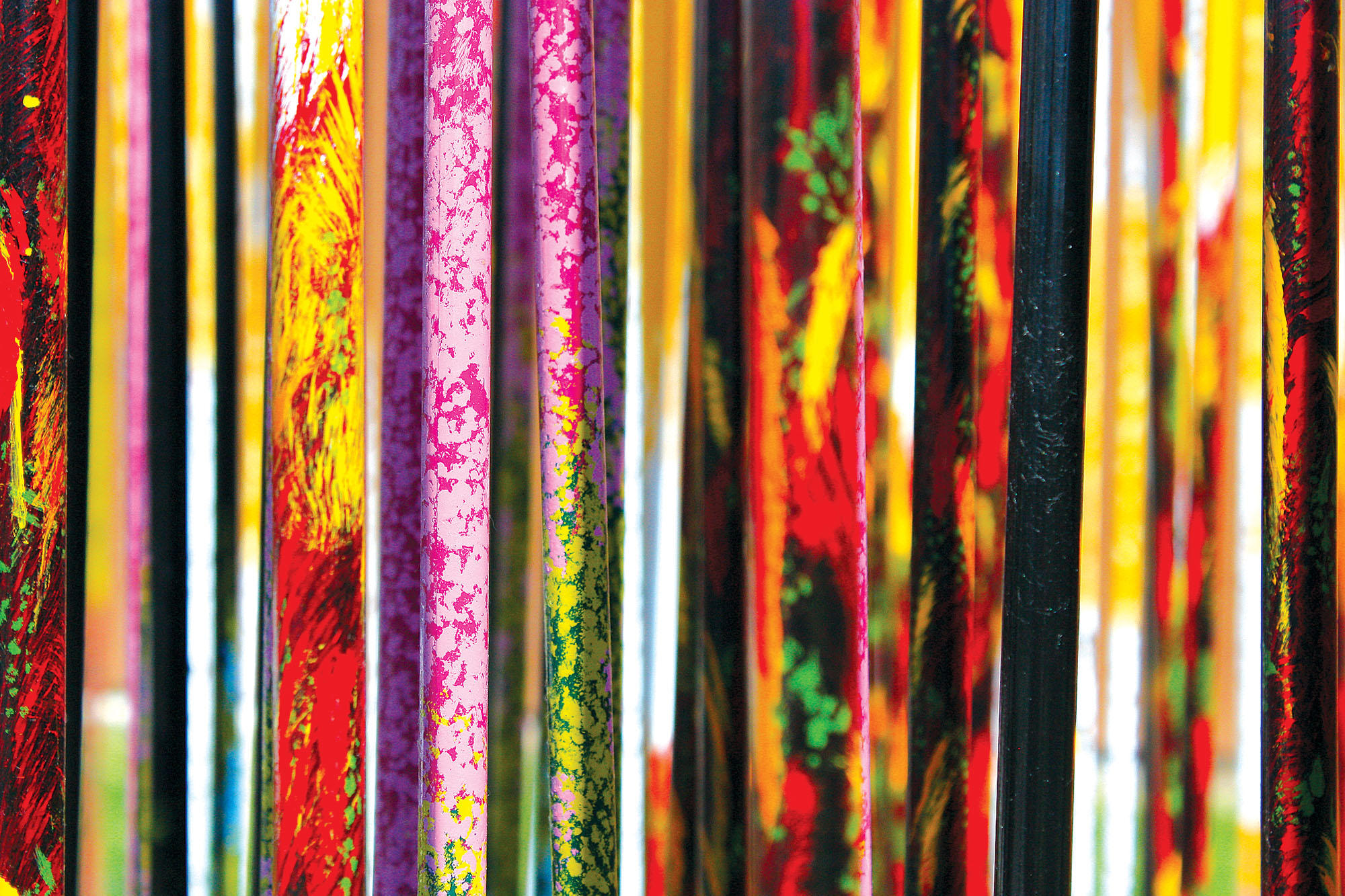
Standing roughly 8 feet tall, an array of 590 painted plastic poles arranged in a 23-foot-long spiral now greets entrants to the Glenn Massay Theater on campus, depicting the various stages of Alaska’s wildfires — the death and resurrection of natural life, from burning black spruce to rejuvenating fireweed and thriving birch trees.
Both the concrete and metaphysical concepts embodied by the sculpture inspired the title of the piece, “Resurrection Koru,” which uses the Maori word for fiddlehead (koru) to describe both the physical spiral and what it represents to natives of New Zealand, like Lawrie: unity, spirituality, kinship, guardianship, emotion and vital essence.
“In the Maori understanding, that shape encompasses so many things,” Lawrie said by phone from Sitka this week.
Though Lawrie is not of Maori descent himself, he grew up surrounded by the native culture. From a common prisoner re-entry ceremony to the “haka” dance performed before national rugby games, the Maori influence is clear throughout the country, Lawrie said.
“You can’t be in New Zealand and not feel associated with Maori culture,” he said.
Though Lawrie may be a born-and-bred kiwi, he has lived and worked as a fisherman in Sitka now for 40 years, and is much an Alaskan as anything else. Both identities, then, fed the concepts of the college’s latest Percent for Art piece (derived from the Alaska Percent for Art program, which reserves one percent of the capital construction costs of public buildings for the acquisition and permanent installation of artwork).
“You can’t ever forget the place you were born in, but this is home, so I wanted to integrate those two things,” he said.
Lawrie said the idea for the sculpture came from his drive to Wasilla from Southeast last year, during which he observed both active and long-dead forest fires, which he had never seen before.
“We don’t have that down here in Southeast,” he said.
In an effort to tailor the commissioned artwork to the Mat-Su Valley, Lawrie incorporated what he had seen on that drive — and local products from a community business — into the final piece.
Lawrie said Steve Apling with CAC Plastics in Palmer was hugely instrumental in giving him the ability to see his vision to completion, having built the base, provided the supplies and helped install the 2,000-pound structure.
“It was a fun project,” Apling said. “It was nice to see it finished and go, ‘oh, that’s what you were going for.’”
Apling said he and his employees are no artists, but “can make shapes,” and have built signs and sculptural reliefs around the state. He said he and Lawrie did a lot of problem-solving onsite, drilling holes and moving the individual poles until it produced the desired aesthetic.
Lawrie also thanked Susan Padilla, his “partner in life,” and engineer friend Dennis Carlson for helping with the installation.
Lawrie’s art portfolio consists mainly of portraits and landscape paintings, but the “Resurrection Koru” wasn’t as much a departure from that as one might think. Lawrie said each painted pole in the sculpture was “like its own brush stroke” to him, a symbolization he first discovered in creating another Percent for Art project at Sitka High School.
“Aurora,” as the Sitka piece is called, started out in Lawrie’s head as a solid sheet of acrylic plastic to be painted. Due to costs and logistics, however, he converted his idea into a six-foot tall wave of individual rods adorned with holographic tape.
Lawrie said that’s often how public art projects work.
“You have a concept and then see if you can build it,” he said.
Lawrie called the Mat-Su College sculpture “one of the most labor intensive pieces I’ve done,” and hopes the community will appreciate it, because it’s designed to last a long time. The eight anchors grounding the piece allow it to withstand winds of more than 100 mph — something not unheard of in the Matanuska Valley — and the grass in the immediate area will be allowed to grow around the sculpture to give it a more natural appearance, Lawrie said.
To view more of Stephen Lawrie’s work, visit www.thinkartthinksitka.com/the-arts-in-sitka/artist-registry/stephen-lawrie/
Contact reporter Caitlin Skvorc at 352-2266 or caitlin.skvorc@frontiersman.com.

By Jeremiah Bartz Frontiersman.com A football coach using a hockey reference as the centerpiece for his keynote address may

Frontiersman.com With its headquarters in Wasilla, the Frontiersman has been a primary source of news for the Matanuska-Susitna

By Katie Stavick Frontiersman.com The next generation of leaders took flight this week as the Houston High School Class

By Kyle Wilkinson For the Frontiersman Keynote speaker and Carry the Cure President Bill Pagaran’s words boomed through the