Retiring teacher, coach urges Colony grads to ‘find their 68’
By Jeremiah Bartz Frontiersman.com A football coach using a hockey reference as the centerpiece for his keynote address may


One of the unique features of the Arctic Winter Games that sets them apart from other athletic competitions is the cultural aspects of the Games, which are represented by the Dene games and the Arctic Games.
Dene games are tests of physical and mental skill that were originally used by the Dene (northern Athabascan peoples) to prepare for the hunting and fishing seasons, and to provide entertainment. Today, Dene games (e.g., Finger Pull and Hand Games) are still played in many schools and community centers in the North as a means of preserving tradition and culture.
The Dene are the aboriginal inhabitants of the Northern Regions of Canada and Alaska, consisting of several regional groups, who each speak their own language. And while certain differences exist, neighboring groups can usually understand each other’s language. This is also true of the Dene Games where there are differences in the same game played by different Dene Regions. Games were not only intended for fun at gatherings but also to prepared people to survive on the land.
There are five main games:
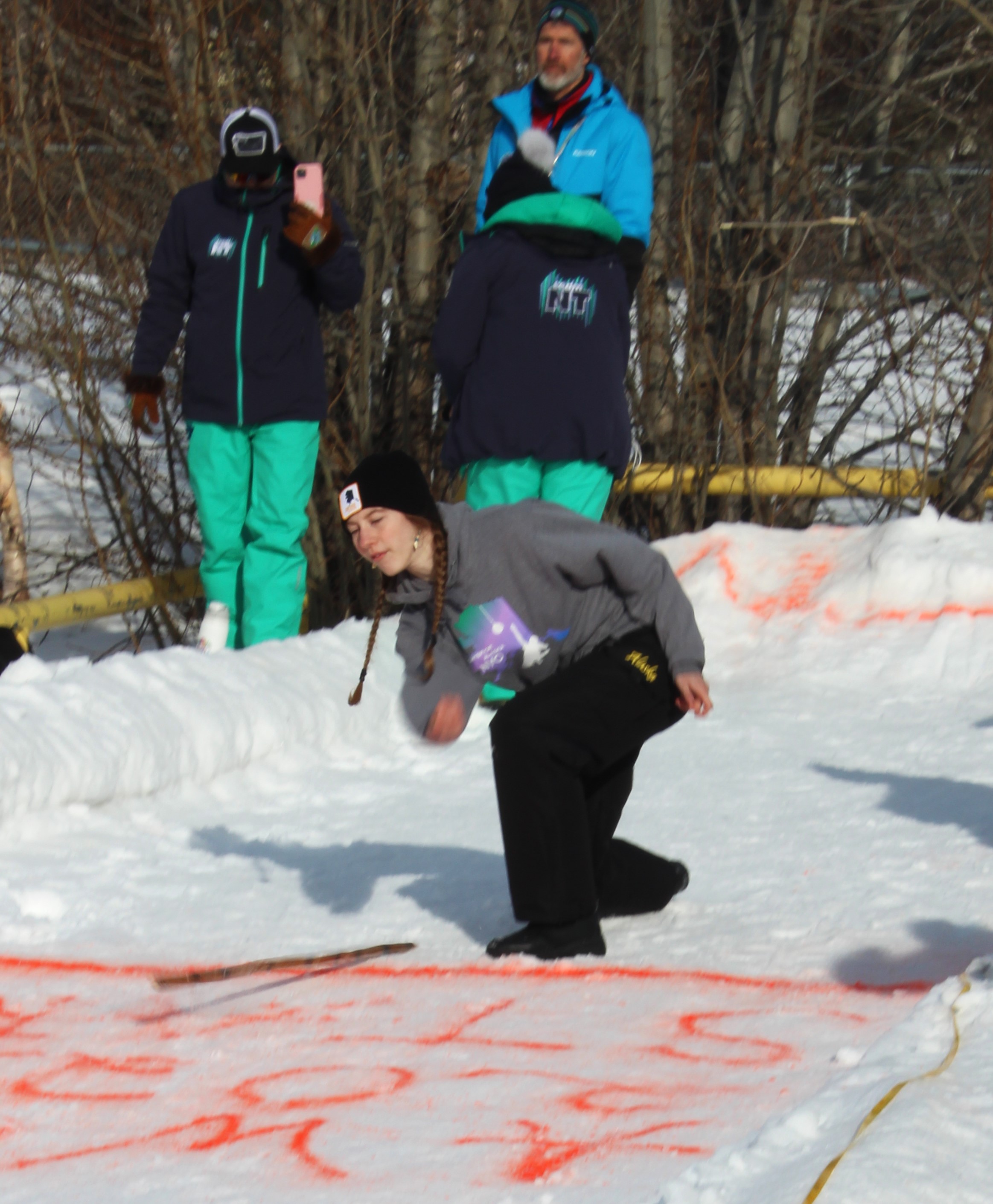
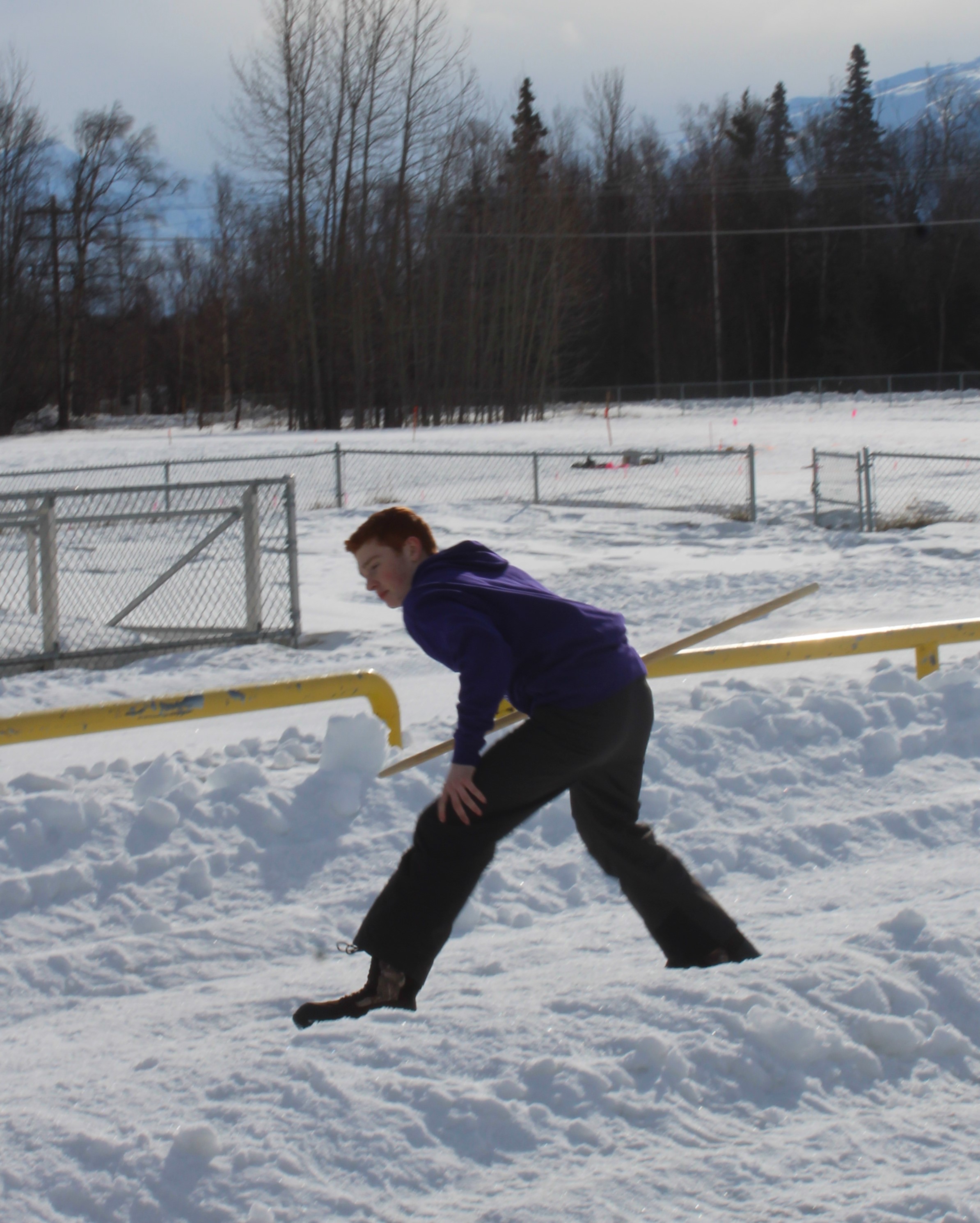
Snow Snake, which is played in the winter and often used to test accuracy, power or technique. Traditionally a hunting tool to catch small game, in competition it is used as a distance game. Similar to the Javelin in track and field, the person that throws the spear the farthest wins. With Snow Snake however the spear is thrown underhand and along the ground.
Snow snake was originally played to teach Dene men how to hunt game such as caribou. Dene hunters would sneak on to snow-covered lakes where the caribou rested and throw spears along the snow to pierce and kill the animals. Because great skill and accuracy was required for this, hunters would have to practice this technique, which eventually became known as the snow snake game. Even though it’s considered a Dene game, other Indigenous peoples play snow snake or versions of it, including the Haudenosaunee and Ojibwa.
The stick, or spear, is ideally a dry spruce or pine stick that’s preferably 1.4 meters (4’6’’) long and 31.75 millimeters (1’ ¼”) in diameter. The surface should be filed, planed, sanded smoothly and pointed at one end.
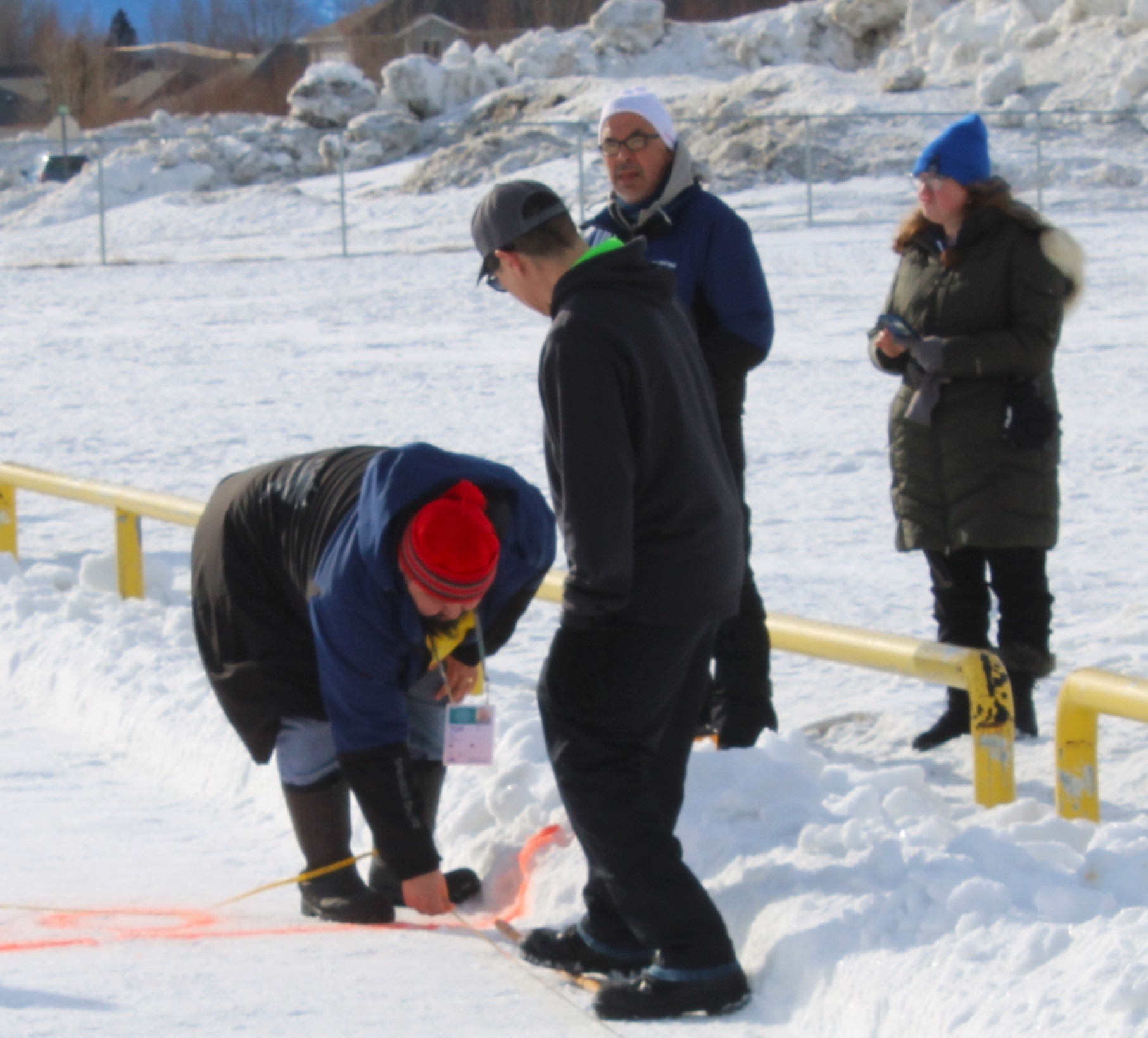
The rules are pretty straightforward. First, find an area with hard-packed snow or an icy surface, about150 meters (500 ft) long and 3 meters (10 ft) wide, with ridges on both sides of the track. Judges or players use spray paint to mark the starting line and distances along the track.
To play, grip the stick at its center and hold it from the bottom, palm facing up. At the throwing line, throw the stick underhand from below the hip. Each player gets three tries. The player who throws the stick the farthest distance wins.
The other four Dene Games include: the Finger Pull is a test of strength and endurance of the arm and pulling hand. One player is on offense and the other on defense. For the player on defense, pain endurance may also be a determining factor in deciding the winner of the contest. It is a game that comes from people of Alaska.
The Stick Pull has a simple concept—pull the stick from the opponent’s hand. Oh wait, don’t forget the bear grease, which was used to grease the stick and to simulate catching slippery fish.
The Hand Games, also known as Stick Gambling, is one of the loudest, and one of the most important traditional games among the Yukon and NWT First Nations. Rhythmic drumming and chanting lend a festive a good opportunity to play as Hand Games is a game of guessing and deceiving, played to a chorus of drums that makes the liveliness of all Dene Games.
On March 12, the Dene Games Snow Snake was held at Palmer Junior Middle School, with Myra Kendi representing Yukon in the 2006 or later female division taking home the Gold after throwing her spear 36.40 meters. Silver went to Horizon Willie, representing Nunavut with a throw distance of 29.16 meters, and Ulunnguaq Rosbach, representing Kalaallit Nunaat, bringing home Silver after throwing 26.26 meters.
Meanwhile, the male team from Nunavut swept the medals for the same age group, with David Joe Audlakiak throwing his spear 105.32 meters for the Gold medal, Levi Matt Natanine getting Silver with his throw reaching 86.65 meters, and Marcus Inuutiq Kigutaqnabbing the Bronze after his throw reached 86.08 meters.
In the Open Throw, female group, Theresa Lynn, representing Northwest Territories, snagged the Gold medal with a throwing distance of 42.83 meters. Judith Alaku Naluiyuk, who represents Nunavik, received the Silver medal after throwing her spear 40.61meters, and rounding out the females was Denise Griffith from the Yukon, reaching a distance of 40.01 meters.
And in the Open Throw, male group, Lionel Willie, representing Nunavut, took home the Gold medal with a throwing distance of 102.57 meters, while Eli Gordon representing Alaska brought home the Silver with a distance 98.17 meters, and Edvard Kruse from Kalaallit Nunaat, took the Bronze with a throwing distance of 95.05 meters.

By Kyle Wilkinson Kyle in the outside Our spring bear hunt was bittersweet this year. We’re heading home without

Frontiersman.com Valley athletes earned titles during the Region III Championships track and field meet last week at Colony High

Leila Petersen Palmer Moose Leila Petersen, a member of the Palmer track and field team, has been named a Frontiersman

By Jeremiah Bartz J’s World August would have been the start of my 25th year as an editor at