Retiring teacher, coach urges Colony grads to ‘find their 68’
By Jeremiah Bartz Frontiersman.com A football coach using a hockey reference as the centerpiece for his keynote address may


PALMER — Septic treatment may be a dirty business, but ultimately, only some kinds of dirt will do.
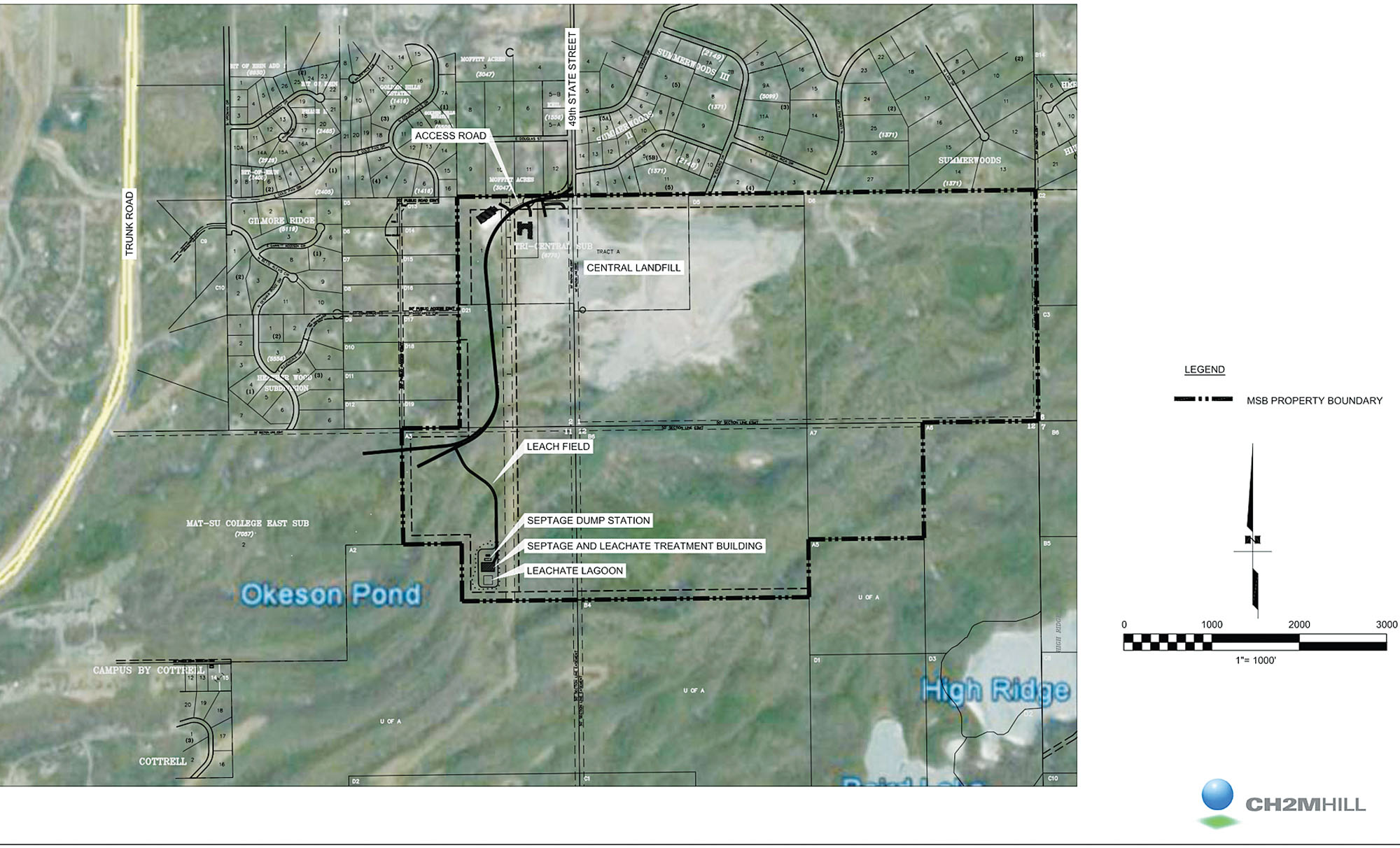
Engineers with a borough-hired consultants tested soils at a pair of remaining sites for a borough-constructed septic treatment plant, and now say only a site near the main borough landfill long recommended by borough staff is suitable for the plant’s needs.
The borough is seeking to construct a septage and leachate treatment facility after receiving word last year that the Municipality of Anchorage’s site would no longer accept waste from the Valley. Anchorage officials say the needed federal permit issued to the municipality likely won’t be renewed.
After examining more than 20 possible sites within a fixed radius in the borough’s core, officials ultimately narrowed the final selection to two locaitons: one near the intersection of Church and Seldon roads, and a second site adjacent to the present site of the borough landfill.
Consultants with CH2MHILL drilled 2-foot core samples at the two sites and examined the cores. They presented their findings Wednesday.
One site trumped the other, according to Cory Hinds, the project manager with the group.
“The big finding we had was that you just can’t get the water into the ground at Church Road,” he said. “The soil was too dense and silty.”
Dense soil won’t allow treated fluids placed in a leachate field to flow naturally back into the groundwater, Hinds said. Instead, denser soils would cause that water to pool on the leachate field, and instead of draining from buried pipes down into the water table, the leachate would pool and flood, Hinds said.
Soils at the Church Road site rules it out from a technical standpoint, he said.
“At one site you just can’t get the water into the ground, so it’s a fatal flaw,” he said.
Borough officials said regardless of the soil testing, the final site decision will be made by the Assembly wich coud take up the matter by August, according to borough engineer Mike Campfield.
Borough officials, Campfield among them, have said they expect user fees, including fees from Anchorage and elsewhere, to allow the borough to recoup the cost of constructing and operating the new plant.
The plant also could reverse the flow of septage and leachate from the Valley into Anchorage.
Business owners like Tom Munoz of Tom’s Septic Service, who’s been hauling sewage in the Valley for 30 years, say the plant’s construction means they could get part of their life back.
“It means more time in my life, instead of wasting time on the road,” he said. “In the summertime, five to six hours a day.”
That means, over the course of the last 30 years, Munoz has spent roughly 93,600 hours on the road between Anchorage and the Valley, sometimes as many as seven trips per day.
Munoz said he expects tipping fees to rise, because a Houston plant operated between 1985 and 1990 charged 7 cents per gallon. Under the current regulatory regime, haulers pay about a cent per gallon.
“It’s going out in the inlet,” he said. “You’re doing your secondary stage, but the majority of it is being pumped out, and that’s wrong. We shouldn’t be pumping anything into the oceans now.”
“We don’t haul our garbage to Anchorage, do we?” Munoz added. “So why haul sewage to Anchorage?”
Contact Brian O’Connor at 352-2269, brian.oconnor@frontiersman.com, or on Twitter @reporterbriano.

By Jeremiah Bartz Frontiersman.com A football coach using a hockey reference as the centerpiece for his keynote address may

Frontiersman.com With its headquarters in Wasilla, the Frontiersman has been a primary source of news for the Matanuska-Susitna

By Katie Stavick Frontiersman.com The next generation of leaders took flight this week as the Houston High School Class

By Kyle Wilkinson For the Frontiersman Keynote speaker and Carry the Cure President Bill Pagaran’s words boomed through the