Retiring teacher, coach urges Colony grads to ‘find their 68’
By Jeremiah Bartz Frontiersman.com A football coach using a hockey reference as the centerpiece for his keynote address may


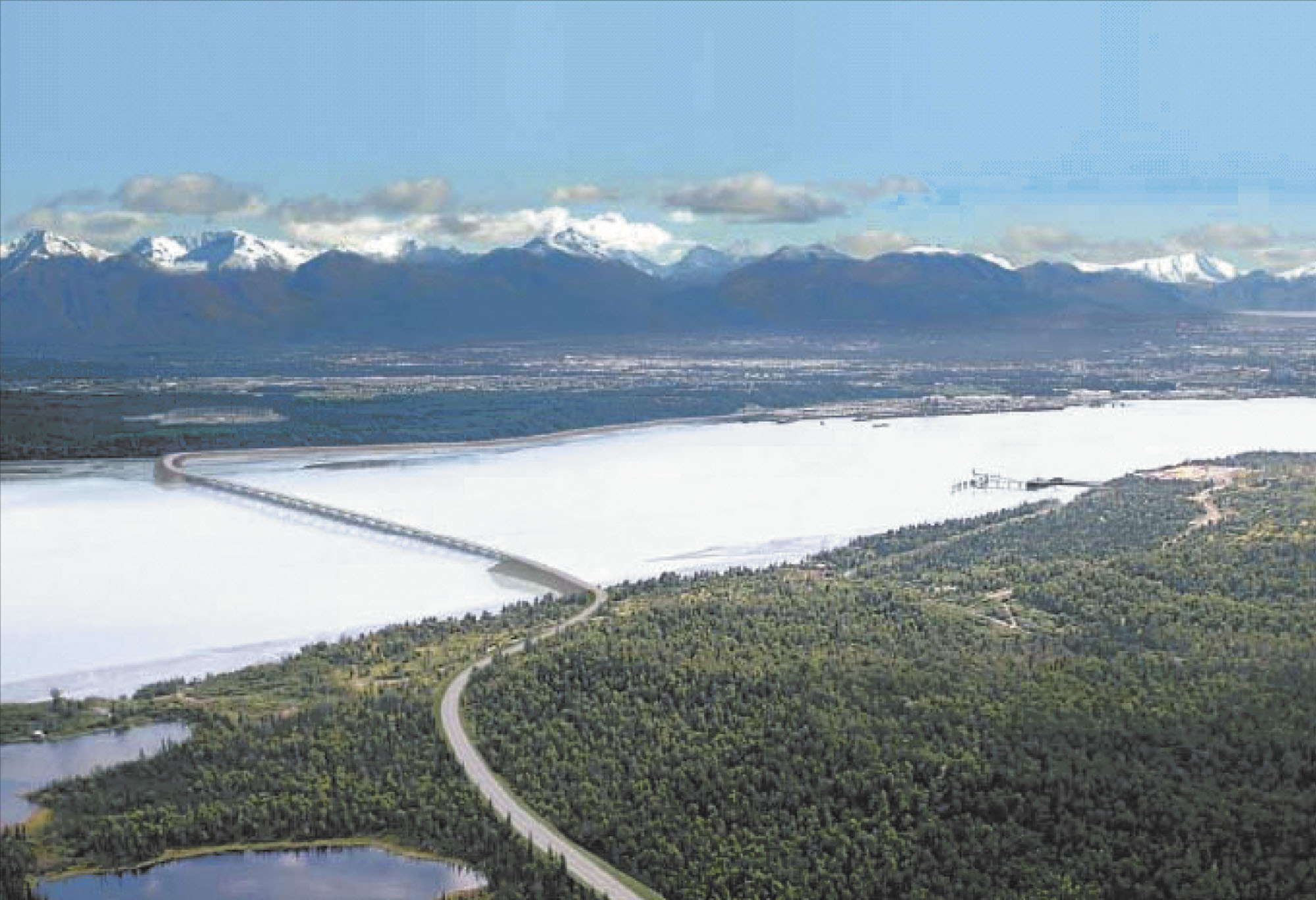
ANCHORAGE — A proposed Knik Arm bridge would be able to support itself financially, if population and economic development projections prove accurate, according to a long-delayed state study has found.
Bridge backers may see the study as a shot in the arm following the project’s transfer from Knik Arm Bridge and Toll Authority, though state officials caution the study was designed to be more analytical, rather than proscriptive, in nature.
The results of a previous traffic report commissioned by the toll authority were considered inaccurate. And an independent review of that study had been promised by December 2013, but never materialized. Then during the most recent legislative session, the standalone project was rolled into the Department of Transportation and Public Facilities.
According to this study’s conditions, it would require a $5 toll and a projected 40,000 crossings of the bridge per day by 2040 to support federally backed Transportation Infrastructure Finance and Innovation Act grant. The Parnell administration had sought this new funding source following the elimination of a previous option.
The study says if the bridged opened by 2020, local motorists, many of whom commute between Valley residences and Anchorage workplaces, would be less likely to use the bridge with a toll —10,200 motorists without a toll, versus 7,600 with a toll.
In addition, the big winners from the bridge would be in Point MacKenzie — where most land is presently tied up with agricultural covenants — and points west: Big Lake and Houston, where using the bridge would reduce time and mileage for travelers.
“It is clear … that the majority of future toll-paying traffic on the KAC is expected to have one trip end in the Point MacKenzie area and the other trip end in Anchorage,” the survey’s executive summary reads in part.
A bridge could also have limited effect on already heavy populated areas of the bridge, according to Department of Transportation and Public Facilities spokeswoman Shannon McCarthy.
“Most of the growth would occur in the Point MacKenzie area,” she said. “The other areas of Mat-Su would grow more slowly.”
Probability estimates show the bridge could make between $5.2 million and $8 million in first-year revenue, and between $119 million and almost $199 million by 2045.
“This is one of those very extensive looks,” McCarthy said.
The study also takes into consideration the change in financing structures sought by the Parnell administration, McCarthy said.
The report was not designed to favor construction, McCarthy said.
“This was not a report in order to drum up support for the bridge,” she said. “These types of studies are used in a wide variety of projects using the best numbers and the most up-to-date numbers.”
Contact Brian O’Connor at 352-2269 or brian.oconnor@frontiersman.com.

By Jeremiah Bartz Frontiersman.com A football coach using a hockey reference as the centerpiece for his keynote address may

Frontiersman.com With its headquarters in Wasilla, the Frontiersman has been a primary source of news for the Matanuska-Susitna

By Katie Stavick Frontiersman.com The next generation of leaders took flight this week as the Houston High School Class

By Kyle Wilkinson For the Frontiersman Keynote speaker and Carry the Cure President Bill Pagaran’s words boomed through the