Retiring teacher, coach urges Colony grads to ‘find their 68’
By Jeremiah Bartz Frontiersman.com A football coach using a hockey reference as the centerpiece for his keynote address may


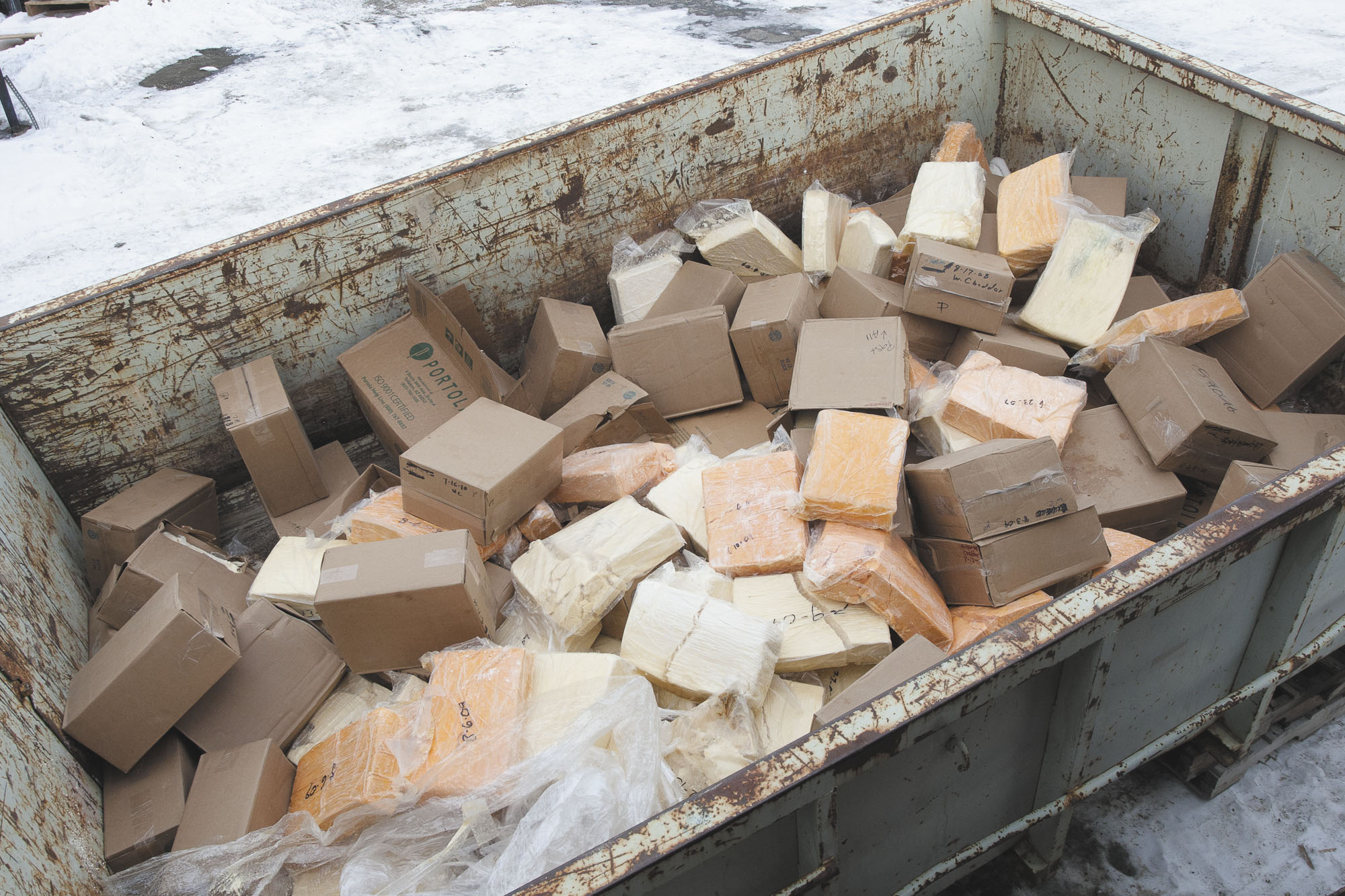
PALMER — A brief five-year run for Matanuska Creamery was partially built on cheese futures. Now some 40,000 pounds of that cheddar has no future.
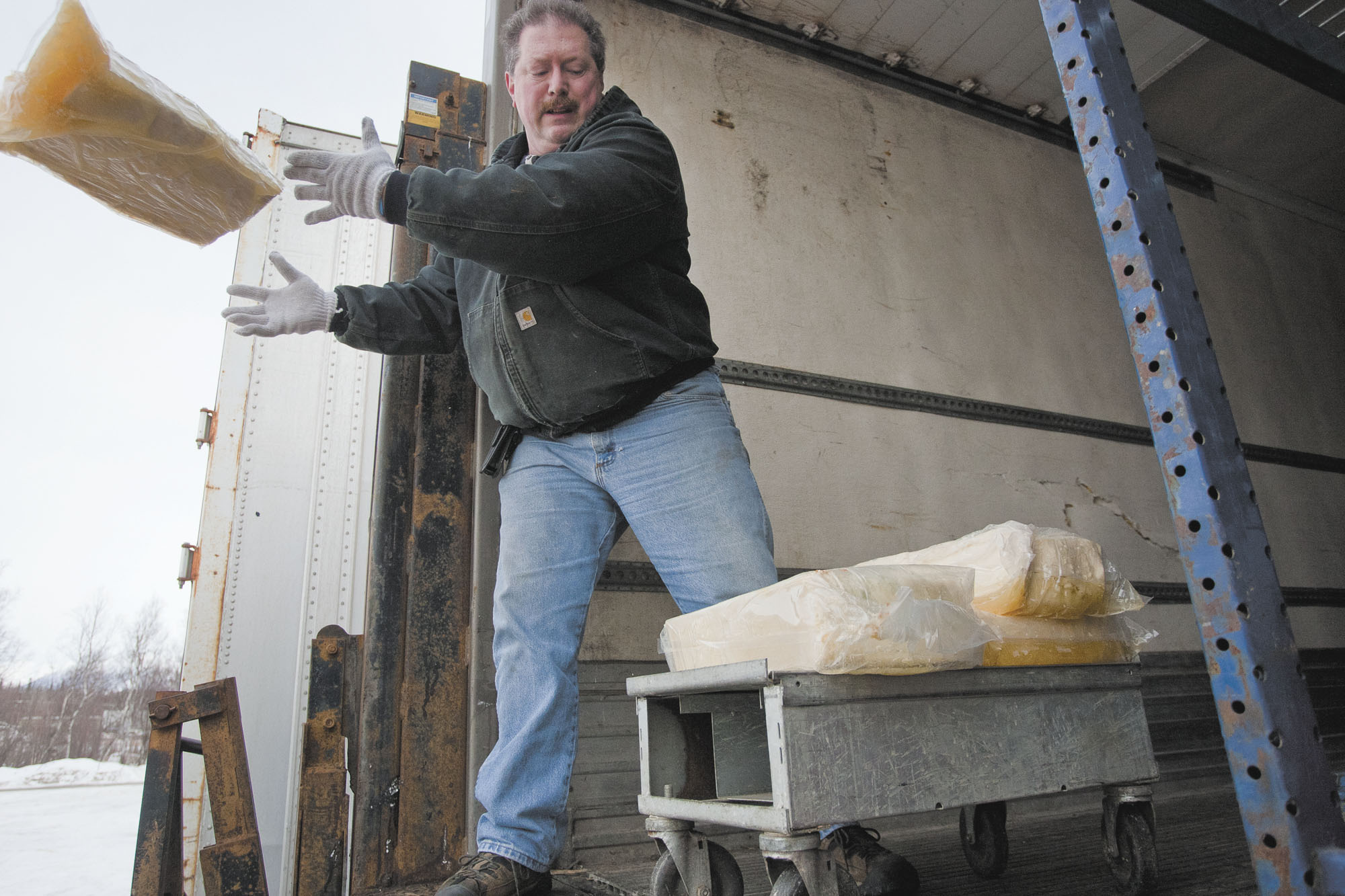
State Division of Agriculture officials spent part of the day Thursday disposing of thousands of pounds of cheese that is unfit for human consumption, said Bob McFarland, the lawyer with the Attorney General’s Office who’s in charge of legal proceedings to liquidate the creamery’s assets after the dairy defaulted on nearly $900,000 in state-issued loans.
The remaining assets will be auctioned at 10 a.m., March 16 and the auctioneer — Denali Auction Co. — is “very optimistic” the equipment and vehicles could fetch between $400,000 and $500,000, McFarland said.
“I think that’s high,” he said, adding he’s not as hopeful about how much the auction will bring in.
The state officially took possession of the creamery at the end of December 2012. Karen Olson, a part owner and CEO of the dairy, said she gave the state the keys to the cheese storage area along with everything else associated with the business to the state on Dec. 30.
Calls to the Frontiersman began on Valentine’s Day saying the state was tossing cheese into the Dumpster at the creamery’s former site along the Palmer-Wasilla Highway.
Contacted that night, Olson said she was concerned a good portion of the cheese — some that had been aging as long as four years — would go to waste.
“That’s expensive cheese,” she said, adding that if it could’ve been sold that “it could have got us out of the (financial) hole.”
That the state has been throwing away the cheese is disappointing, Olson said.
“We can do better, we should do better,” she said. “Not only did (the state) kill a company, but they are throwing away state money.”
While Olson contends much of the cheese was good and could have been salvaged, McFarland sees it differently. He said the only people throwing away state money associated with the dairy were the owners and managers of the creamery.
Since forming in 2007 in an attempt to save Alaska’s dairy industry after the collapse of the state-run Matanuska Maid creamery, Matanuska Creamery secured financing partially through a series of state-issued loans totaling about $850,000. The dairy also raised some money initially by selling “futures” on its expected production of cheddar cheese.
Packages to pre-purchase the cheese ranged from $30 for two pounds to 10 pounds for $150. At one point, a trio of companies each chipped in $25,000 each to purchase cheese futures.
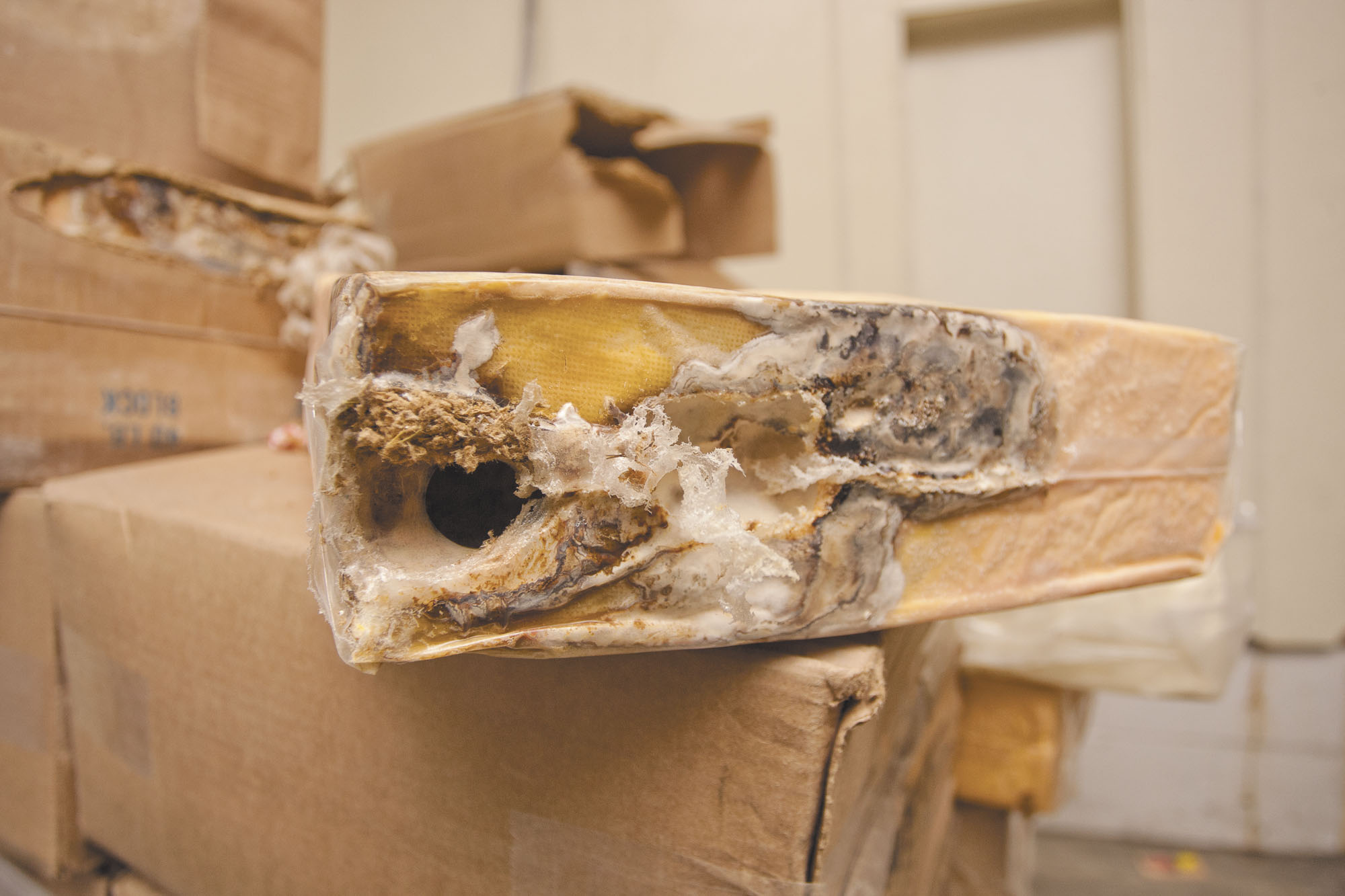
After the state was able to more thoroughly inspect the 20-some tons of cheese, it became apparent that it won’t be salvageable, McFarland said. Some cheese was stored in a trailer on the creamery’s property with other cheese that had previously been condemned as having listeria, he said, adding that the product was “obviously” not fit to eat.
“It was very obvious,” McFarland said about the cheese in the trailer. “The Department of Environmental Conservation did come out a couple of times and inspected it. We’ve got photos that would turn your stomach. A lot of it nobody would even touch with at 10-foot pole.”
The state was hopeful that a large amount of cheese kept in the dairy’s cooler had fared better and could be either sold or donated to local food banks, but that wasn’t the case, McFarland said.
“I think the entire batch is going to have to be destroyed,” he said. “We were hoping to recoup some of that, but after looking more at it, we literally have people who can’t look at it. We thought the cheese that was stored in the cooler inside, that a good portion of that would be acceptable. But after looking closer we found mouse droppings around and on the cheese, cheese where mice had burrowed into the cheese.”
Department of Environmental Conservation officials were out at the creamery Thursday doing more inspection and disposal of the cheese, he said. Also, the state Board of Agriculture at its last meeting saw photos of the product and voted not to sell it.
“I went out there to myself to look at that cheese and was just astounded,” McFarland said. “It’s really, really horrible stuff.”
That the cheese at the creamery was bad or not fit for consumption is “complete bull s---,” said Jake Libby, a dairy board member and private investor into the business.
“Mold makes cheese,” he said, adding that it’s part of the aging process. “When you open up a block, the first thing you do is dump the expelled water — there’s a brine that forms around the cheese — then you shave that portion off the block. News flash, that’s what cheese is. It’s a culture. All cheese has mold until it’s packaged for sale.”
Libby said hindsight shows the creamery got off on the wrong foot financially, a situation that has since led federal authorities to indict Kyle Beus, one of the business’ original founders, for allegedly embezzling funds earmarked for the dairy.
McFarland said the creamery made a good effort to pay off the state loans, but was losing an uphill battle.
“They actually did make quite a bit in the way of payments, but the interest kept going and going and they had some deferrals,” he said.
That the creamery was shut down and thousands of pounds of cheese has been wasted angers Libby, he said.
“If there was a rational answer for the state’s behavior, I would hazard a guess,” he said. “When we turned (the creamery) over to them, we were clear this had to be kept plugged in and they told the crews down there to just top off the Dumpsters with cheese each day. … Once the Division of Agriculture got their — literally — their family up and running, they put the knife to our neck and stomped on our throat.”
Some of the product that’s now being disposed of is prime four-year aged cheddar and could have been sold for top dollar, Libby said. That the cheese is bad is “complete and utter BS,” he said.
Contact reporter Greg Johnson at greg.johnson@frontiersman.com or 352-2269.
What: Liquidation of Matanuska Creamery equipment and fixtures.
When: 10 a.m., March 16; preview 11 a.m. to 4 p.m., March 11-15 and 8 to 10 a.m. auction day.
Where: 7805 E. Palmer-Wasilla Hwy., Palmer
Online: Visit denaliauction.com/dairy.html for more information and photos of available equipment.
ROBERT DeBERRY/Frontiersman.com

By Jeremiah Bartz Frontiersman.com A football coach using a hockey reference as the centerpiece for his keynote address may

Frontiersman.com With its headquarters in Wasilla, the Frontiersman has been a primary source of news for the Matanuska-Susitna

By Katie Stavick Frontiersman.com The next generation of leaders took flight this week as the Houston High School Class

By Kyle Wilkinson For the Frontiersman Keynote speaker and Carry the Cure President Bill Pagaran’s words boomed through the