Retiring teacher, coach urges Colony grads to ‘find their 68’
By Jeremiah Bartz Frontiersman.com A football coach using a hockey reference as the centerpiece for his keynote address may


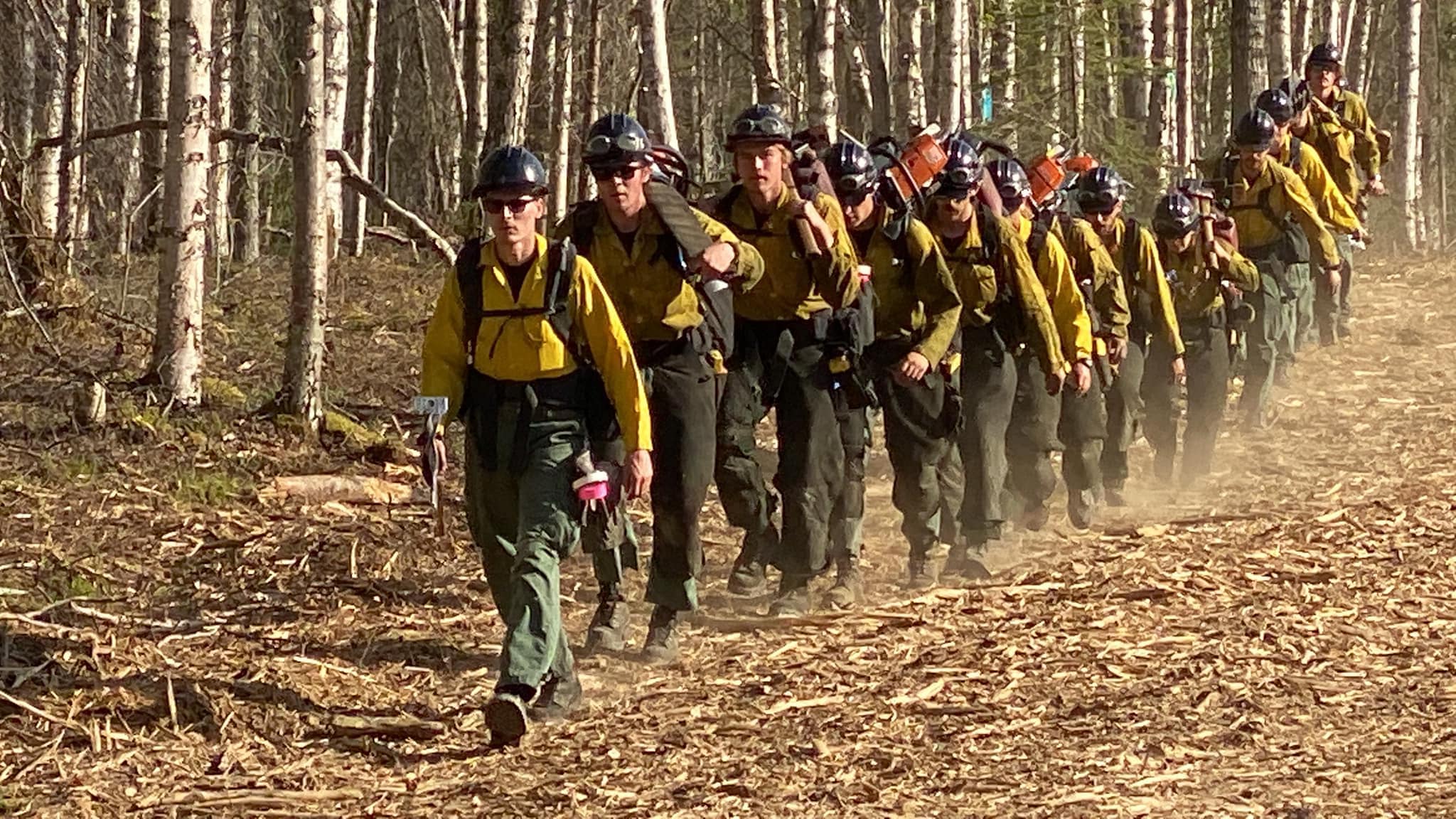
The state will be able to boost wildfire fighting capabilities with a new law on the books that will allow the Department of Natural Resources to hire temporary fire crews for non-emergency work.
Until now crews could only be hired to actually fight fires. House Bill 209, signed by Gov. Mike Dunleavy on June 20, will permit the Division of Forestry to employ crews for fire prevention work, such as clearing out standing or fallen trees that are a fire hazard.
The new flexibility given state foresters will make hiring recruiting seasonal firefighting and prevention work more attractive, creating incentives and helping retain experienced seasonal fire crews.
“This important change lets the State put local fire crews to work more consistently and grow our rural firefighting capabilities,” Dunleavy said. “With more flexibility to prevent wildland fires through fuels reduction projects, not just fight active fires, it’s another tool in our toolkit to keep Alaskans, their homes, and our State’s critical infrastructure safe.”
The bill will also strengthen local economies and provide enhanced public safety for rural communities that can be put in dangered by wildfires, said state Rep. Mike Cronk, R-Tok, who sponsored the legislation.
Traditionally, seasonal firefighting crews have been hired in rural communities but in recent years recruiting and retaining experienced firefighters has been difficult because today there are more employment opportunities that are more dependable.
Firefighting, in contrast, is always uncertain in terms of scheduling because it depends on the number of fires in any given year. Traditionally state and federal agencies, which coordinate firefighting, focus their efforts on fires that threaten communities or remote industrial facilities, like mines.
By allowing seasonal workers to do work related to fire prevention the state’s ability to retain trained temporary workers is strengthened.
The new law amends current law to allow the Department of Natural Resources to use state general fund appropriations to pay emergency personnel to perform non-emergency hazardous fuels reduction work.
If Alaska seasonal firefighters are not available crews must be imported from out of state at much higher costs. Also, Alaska-based firefighting crews are trained in tactics that are effective for Alaska conditions that are effective at fire prevention and suppression.
Also, having trained crews in state will greatly reduces response times to dangerous fires, as it can take timeto mobilize and transport crews from the Lower 48 states.
esponse times are greatly reduced to aggressively attack and address dangerous wildfires, ensuring a smaller overall fire footprint. Fuels reduction costs are also reduced by having a local team of trained professionals.
“This is a big step in reestablishing our state-based emergency firefighting crews from rural Alaska,” Cronk said. “As a former EFF (emergency firefighter) myself, I know the important role that our village crews played in fighting fires across Alaska and the Lower 48,” he said.
“This bill will allow us to rebuild our village EFF crews, provide for consistent employment during the fire season, and will bring back a sense of pride to our people,” he said.

By Jeremiah Bartz Frontiersman.com A football coach using a hockey reference as the centerpiece for his keynote address may

Frontiersman.com With its headquarters in Wasilla, the Frontiersman has been a primary source of news for the Matanuska-Susitna

By Katie Stavick Frontiersman.com The next generation of leaders took flight this week as the Houston High School Class

By Kyle Wilkinson For the Frontiersman Keynote speaker and Carry the Cure President Bill Pagaran’s words boomed through the