Retiring teacher, coach urges Colony grads to ‘find their 68’
By Jeremiah Bartz Frontiersman.com A football coach using a hockey reference as the centerpiece for his keynote address may


PALMER — It was easy to find the fish skin tanning workshop at Palmer Junior Middle School, just follow the melodious sounds of women laughing.
There in the second floor home economics room nine women gathered around tables with their sewing projects spread on tables in front of them — scissors, sinew, skin, razor sharp needles and pliers.
Instructor June Pardue’s artwork has been exhibited at the Alaska Native Heritage Center, as a folk festival participant at the Smithsonian Institute, at the United Nations in New York, and in Milan, Italy.
But this was the first time Valley students had a chance to learn from Pardue, a Frontier Scientist who teaches and creates Inupiaq and Alutiiq art, during a three-session workshop that ended April 4.
Students struggling to pull the sinew through the skin ask if perhaps the sinew should be smaller or the needle larger. Pardue moves in for a closer look.
“No, this is right,” she reassures the student. “That’s what the pliers of for.”
While fish skin may seem a delicate material, the tanned skin was astoundingly tough. Some students used small hole punches to aid the process, but most muscled through as Pardue showed, mindful of the needle’s sharp edges.
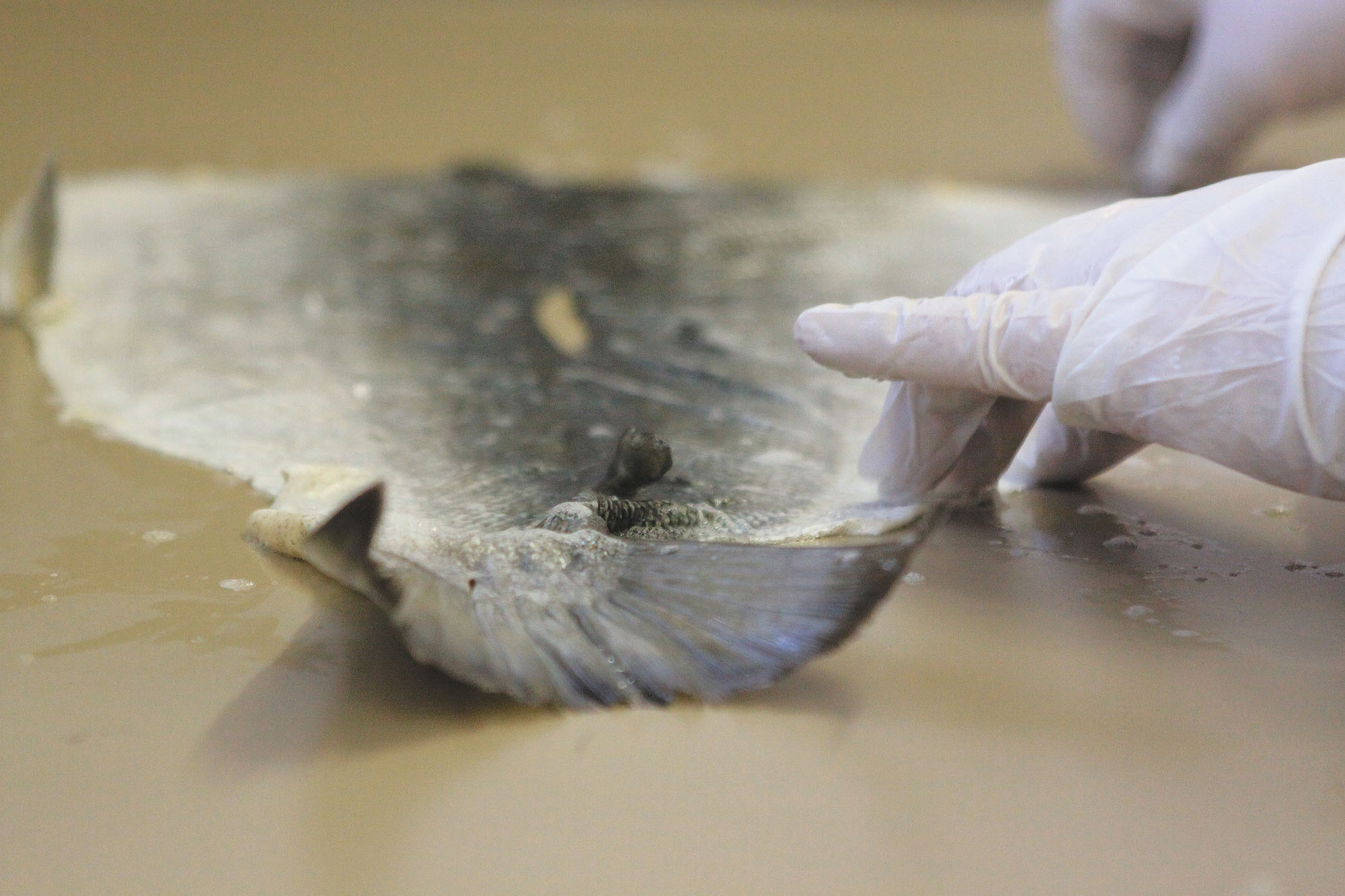
The class started with frozen fish pulled from participants’ freezers. Pardue said she showed students how to skin the fish and carefully removing the dorsal fin before putting it in the first batch of tanning solution. It is placed in a second solution for three to five days and then rinsed before drying, she said.
“There’s a trick to removing the fin without damaging the skin,” Pardue said.
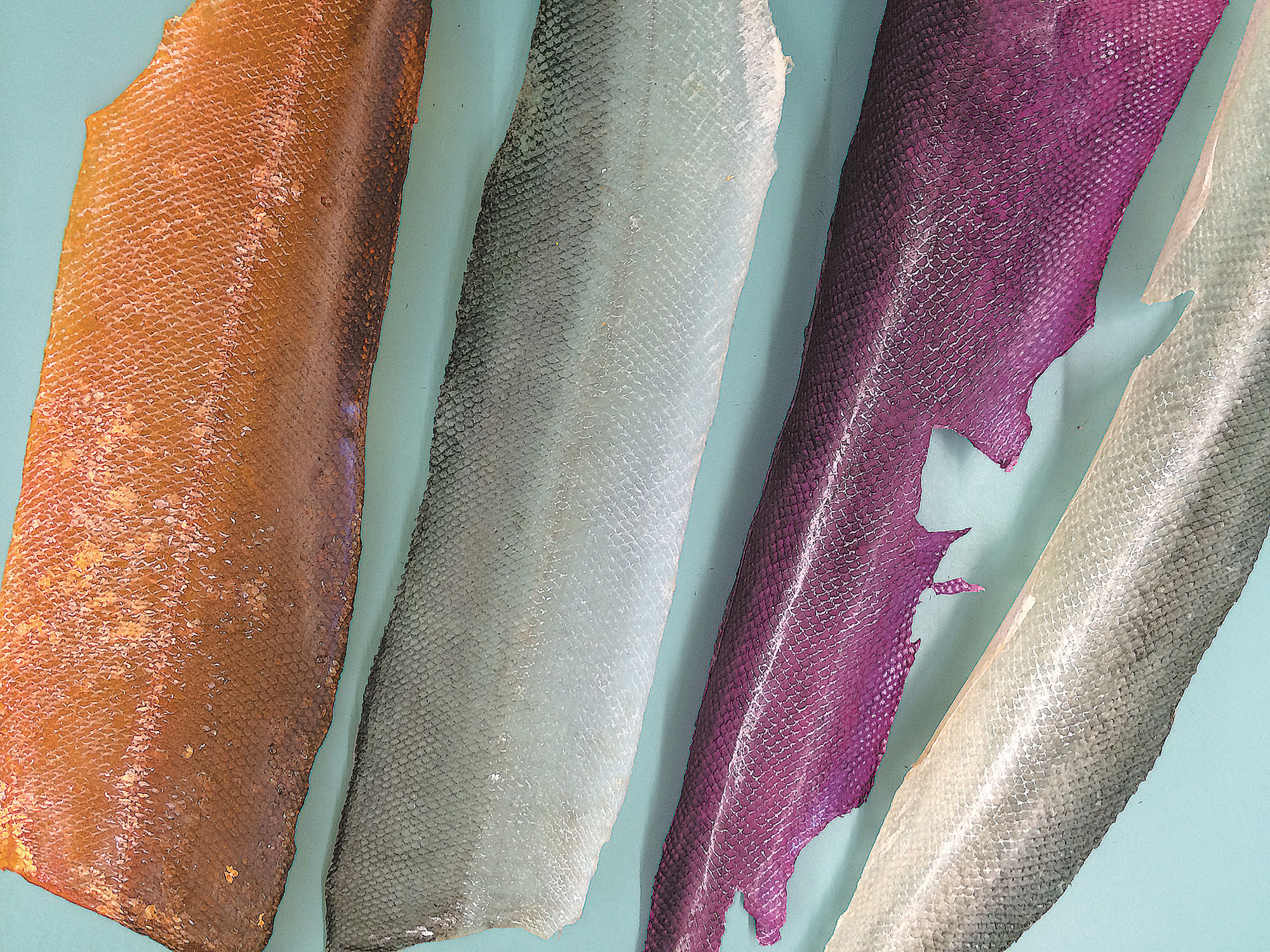
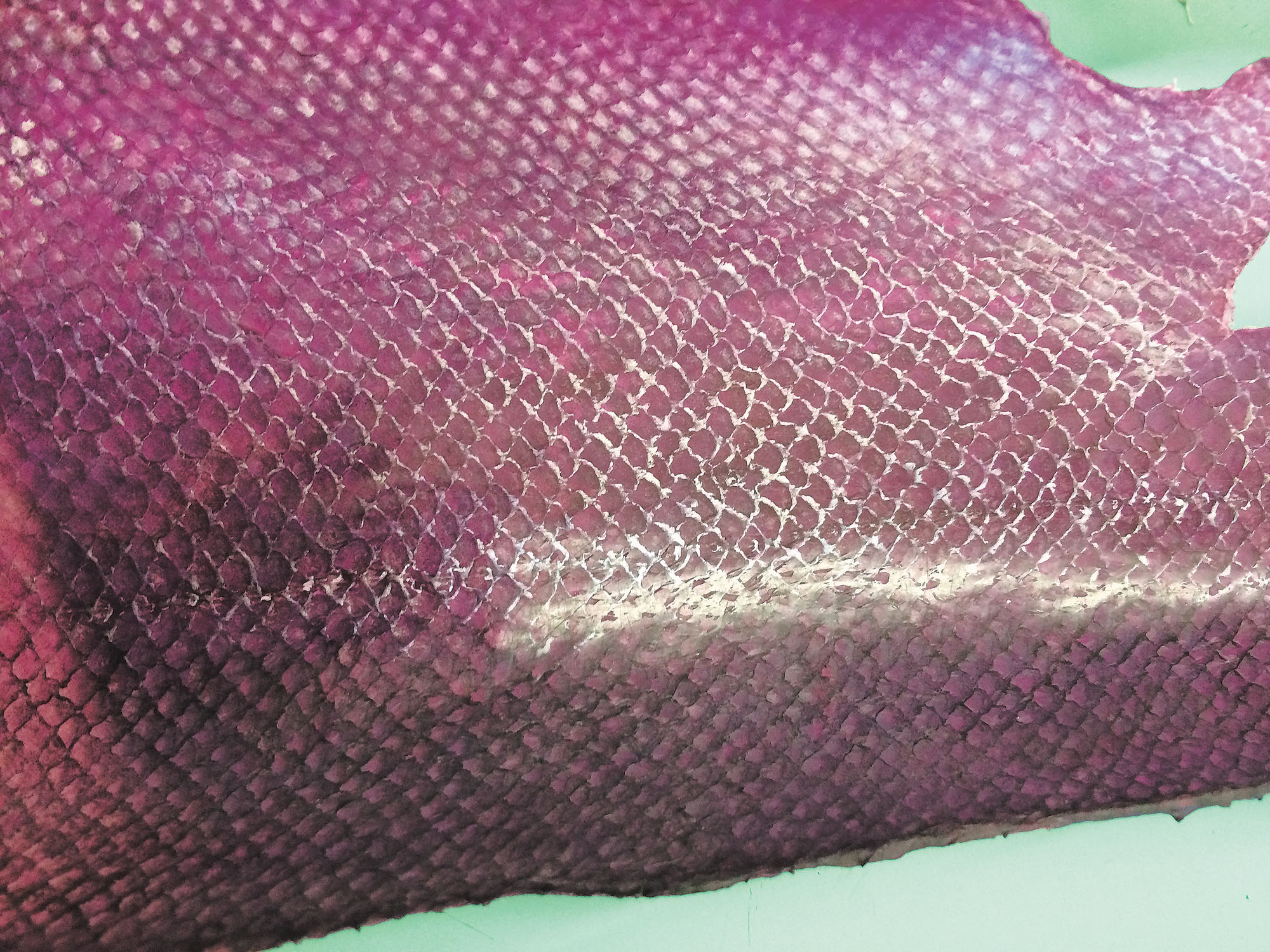
The finish on the skin depends on the surface it is placed on to dry, she said. Smooth surfaces produce a gloss finish and textured surfaces produce a matte finish.
Pardue said she has her own top-secret techniques for creating natural dyes, but for the class, students used Ritt Dyes.
She said the tanning process works with fresh, frozen, or cold smoked salmon.
Pardue said she teaches a contemporary method of tan that doesn’t use urea. She explained to students that crispy salmon skins are similar to pork rinds and are considered a delicacy by some Alaska Native people.
She said the contemporary method she teaches uses a chemical tanning solution, not the traditional urea — urine — that her ancestors would used.
“It’s not edible,” Pardue said of the tanned skins. “Tell your friends.”
The fish skin tanning workshop is one of several Alaska Native arts and language classes Pardue has taught to students since the 1970s.
She also teaches classes on basket weaving, dyeing with natural dyes, beading, basket weaving, and this fall she plans to teach an Alutiiq language class.
“There’s more than one way to learn a language,” Pardue said.
Her class will incorporate traditional songs and dances to help teach people about the language and the culture.
Among Alaska Native cultures there are 20 main languages and more than 200 dialects.
“We don’t all speak the same language,” she told her nine students.
To illustrate her point, Pardue introduced herself, first in English and then in a variety of Alaska Native languages, including Tlingit and Alutiiq. She said no matter which class she is teaching, she always shares some general information about Alaska’s Native cultures with her students.
Pardue was born in Old Harbor on Kodiak Island and has lived in the Valley off and on for the past 10 years. She calls Sutton home.
“Not everyone lives on the Island,” Pardue said of Kodiak Island where Alutiiq is the language traditionally spoken by its Sugpiaq people.
Of students in the skin tanning class, only Barb Leppanen had taken one of Pardue’s classes previously.
“I like to learn different crafts and June is a good teacher,” she said.
Leppanen said Pardue creates high-quality work and does a good job conveying those skills to her students. She said she took a beading class from Pardue the first time around.
The class will forever alter how she sees and harvests salmon, she said. The salmon she skinned for class, she pulled right out of her freezer. When the skin was removed, she took the meat back home and ate it.
“It all got used,” she said.
Leppanen said Pardue’s class showed her a way to use more of the salmon her family harvests.
“I can’t wait to try it with smoked skins,” she said.
Pardue also is a featured artist at the Machetanz Art Festival June 6-7 at Mat-Su College. There she will teach a class on making cups from intestine. Students will use sausage casings though, not intestine from protected marine mammals, she said.
Pardue said there is a lot of interest in Alaska Native arts.
“There’s a renaissance happening,” she said.
Contact Heather A. Resz at 352-2268 or heather.resz@frontiersman.com.

By Barbara Hunt Palmer Buzz It was 6:43 on Friday morning and the Plant Owner was sound asleep when

By Kyle Wilkinson Frontiersman Memorial Day Weekend was filled with a variety of events in Willow. From live music to

By Kyle Wilkinson For the Frontiersman The Susitna Valley Emergency Preparedness Fair will be held at the Willow Community Center

By Barbara Hunt Palmer Buzz Green-Up happened at exactly 9:34 am on Saturday morning in Palmer. This was