Retiring teacher, coach urges Colony grads to ‘find their 68’
By Jeremiah Bartz Frontiersman.com A football coach using a hockey reference as the centerpiece for his keynote address may


SUTTON — Emotions ran high at a Sutton Community Council meeting last Wednesday evening where guest speakers from the Mat-Su Opioid Task Force clashed with residents concerned about the repurposing of Palmer Correctional Center.
The task force was invited to meet with the council after touring Palmer Correctional (PCC) last month in the hopes of using the closing facility for opioid detoxification and treatment, to include work therapy. Department of Corrections (DOC)Commissioner Dean Williams had promised the task force 10 beds for such rehabilitation if the group could develop and execute a workable plan for the program.
The task force had previously toured Point MacKenzie Correctional Farm for the same purpose, but most members deemed PCC a superior location, especially since the prisoners there were already moving out.
However, after reading about the task force and DOC’s intentions in the Frontiersman, members of the Sutton Community Council said installing a detox and treatment center at the closing prison would require a special permit, or else violate the community’s comprehensive plan, which states: “...drug and alcohol rehabilitation centers catering to individuals mandated to seek drug and alcohol rehabilitation should be conditionally permitted in the Sutton Planning Area.”
In explanation of the recommendation, the plan states:
“The rural community of Sutton lacks the job opportunities, public services, and other community infrastructure necessary for such a facility to be successful; however, it recognizes that some type of treatment facility may be appropriate, with adequate public input and safeguards.”
Sutton councilman and Republican state house candidate George Rauscher said the community’s main problem with the task force’s proposition — and the prison closure — was lack of adequate public input, which was meant to be remedied at the meeting.
Afterwards, though the prison closure couldn’t be addressed by the task force, Rauscher said the community was still denied adequate input regarding the treatment proposal.
“When the community members are raising their hands, and they’re giving you their opinion, it would be nicer if you took their opinion instead of squashing it real quick, because … you’re just gonna build up walls, and they’re not gonna wanna talk to you,” he said.
While some residents raised practical questions about facility security and patient access to emergency medical care, others took the non-structured meeting as an opportunity to deliver personal jabs and accuse the task force of bringing crime to their town.
Kyle Kirsch, for one — who described himself as an “ex-addict” of 18 months, and admitted to having dozens of verifiable convictions for misdemeanors and minor offenses — was particularly vocal.
“You’re looking for a place where you can bring a bunch of opiate users that belong in prison, not out to a community where there’s a very small amount of police force,” he said. “Who’s gonna pay for the extra police force that the Valley is gonna need…?”
Task force chair Michael Carson effectually said no extra force would be needed because the addicts would have been offered the chance to go through the treatment program and volunteered for it in court as alternative to jail time.
“The people that (would be) coming to (the facility) that are looking for detox and treatment, they’re looking to end their drug use,” Carson said. “They wanna change their lives, and have a different, healthier life,”
“For how long?” Kirsch asked. “I know what it’s like for people that are opiate addicts that wanna come in, get sober for a little bit so they can go back out and get a cheaper high, and you wanna bring that out to the community.”
Task force member and former addict Terria Walters attempted to address Kirsch’s comments with her own testimony and the idea that the reason addicts commit crimes is “because we don’t have the resources” to get clean. The detox and treatment center would provide those resources, she said, and encourage users to find purpose through work therapy and counseling.
“You give somebody a purpose … then their success rate goes up,” she said.
“(Kirsch’s) concern about people using again, that’s going to happen,” Carson added, “but what we wanna do is we don’t wanna discount the people that are wanting to change their lives.”
Kirsch argued that, since he quit cold turkey, others should be able to as well. Addicts who couldn’t or wouldn’t do that, he said, would only go to a treatment facility like the one the task force was proposing “for a cush lifestyle,” then “go right back to the way that they were doing things.”
“Why doesn’t this happen in Anchorage where there’s a stronger police force that can continue to apprehend people?” he asked
“Because addiction is not a crime, being an addict is not a crime,” Walters said.
Other meeting goers began to speak up and talk over each other at that point, still worried about criminals being brought to Sutton, while Kirsch badgered Walters about her family’s drug use, rather than focusing on the detox/treatment plan.
To calm the escalating argument, Chickaloon Village Traditional Council member Lisa Wade stepped in with her perspective, as someone who works in the Sutton area.
“As somebody that works with substance abuse issues every day … I know how much is in our community already, so the idea that it’s not here is pretty farfetched,” she said. “We have serious problems in our community with meth, with heroin, with alcohol, with all different kinds of substances here.”
Wade went on to say that most of the people she works with are not able to get clean the way Kirsch did, especially those who have experienced trauma.
Kirsch took that personally, saying he witnessed his father’s suicide and therefore knew enough about trauma to know it doesn’t prevent one from getting clean. He kept on the issue about lack of police, said fully served prison sentences would allow addicts time to get clean, and suggested the task force take their treatment center to a remote island.
Though Carson did say, since the program would be voluntary, no one could physically bar a recovering addict from leaving the facility, Dr. Michael Alter, for one, said implementing the treatment plan the task force had in mind at a remote island would be “unrealistic.”
Alter, who joined the task force at the beginning of the year as a Mat-Su Regional ER doctor tired of watching addicts die, also commended Kirsch for his fortitude, but explained that a person isn’t really clean after just a seven to 10-day detox.
“A person might not be sick, but the mind is not healed in seven to 10 days,” he said.
As to fully served prison sentences, parent John Green reminded the community that his daughter Kellsie died while detoxing in prison, in part because most DOC staff members don’t know what to do when a prisoner is detoxing. She didn’t have a chance to serve her whole sentence, he said.
Green also said that the reason his daughter was even in jail in the first place is because he and Kellsie’s mother didn’t know where else to send her.
“There’s nothing that has changed between now and then (as far as) what an addict can do and what kind of treatment they can get into in Alaska,” Green said. “If there had been a program like this for her to go into … she might still be alive today.”
Sutton mother Marci Hawkins said she was in support of the proposed task force program, as she also had a child who died as a result of drug use, and another who tried to get help while imprisoned at Goose Creek Correctional Center, but failed.
While the Goose Creek website lists “substance abuse counseling” among its programs, “There is no real recovery program in jail,” Hawkins said.
As to bringing criminals to Sutton, Hawkins said she recently had her home broken into by someone she thinks is local, involved with drugs, and not recently released from PCC, though she “can’t prove it,” she said.
“When we have an offer to potentially get people clean and sober, and we say, ‘not in our backyard,’ ladies and gentlemen, it’s already in our backyard,” she said.
Still, at least one DOC employee, who lives in Sutton but did not give his name, said he wasn’t sold on the task force’s plan.
“I really, for one, am not for putting a treatment facility within our community,” he said. “I am not, because I know what happens.”
This same speaker called Walters the “exception to the rule” when discussing what an addict is capable of (good or bad), while Kirsch was labeled the same by other meeting-goers.
At the end of the evening, though, most people seemed at least grateful for the discussion, however many questions were left.
“I really appreciate the discussion, because I learned a lot,” said Sutton Community Council Chair Mark Bertels.
That said, neither he nor vice chairwoman Roberta Mason felt like the community could fully support the task force’s proposal until they received some closure on the decision to close PCC.
“I see the prison and this program being complementary,” Bertels said. “I feel really positive about what you’re saying, but they should be totally complementary.”
“We are very upset about the way they handled the closing of the prison,” Mason added, “and until we feel we have at least had a chance to express our anger at how we were treated … I just think our community isn’t ready right now to hear anything else.”
Bertels said that he hadn't “heard a discussion this passionate in a long time,” and the council would be open to more conversation on the topic.
“I think it’s something that’s very needed, the only concern that I have would be, an individual who wants treatment looking at the cost,” said Sutton resident Chris Spitzer, knowing similar facilities can cost a couple hundred dollars a day.
“Families just don’t have that kind of money,” Sutton resident Evelyn Davis agreed. “If you gotta take out a loan to get your kid into detox, that’s, that ain’t gonna fly.”
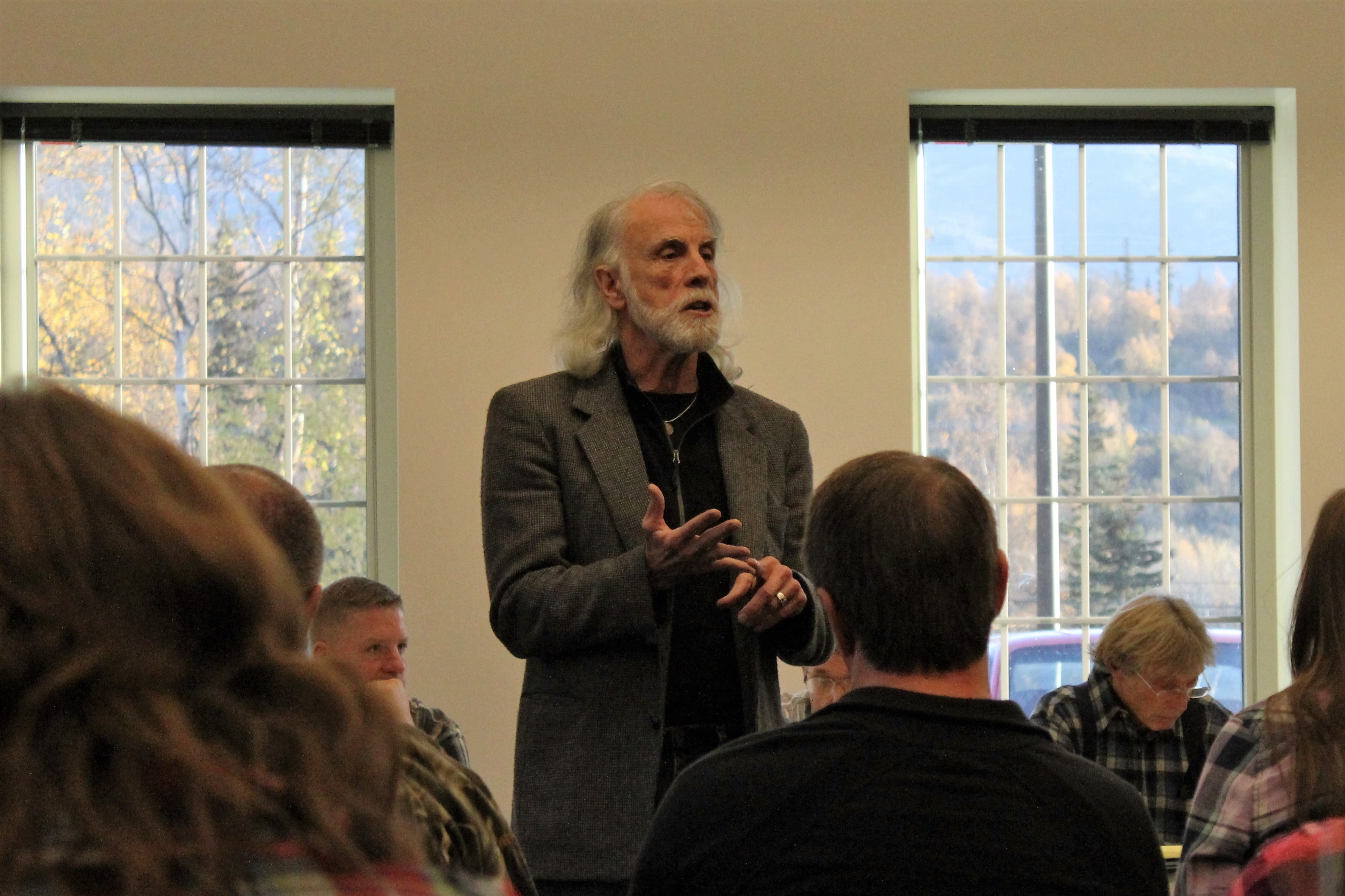

By Jeremiah Bartz Frontiersman.com A football coach using a hockey reference as the centerpiece for his keynote address may

Frontiersman.com With its headquarters in Wasilla, the Frontiersman has been a primary source of news for the Matanuska-Susitna

By Katie Stavick Frontiersman.com The next generation of leaders took flight this week as the Houston High School Class

By Kyle Wilkinson For the Frontiersman Keynote speaker and Carry the Cure President Bill Pagaran’s words boomed through the