Retiring teacher, coach urges Colony grads to ‘find their 68’
By Jeremiah Bartz Frontiersman.com A football coach using a hockey reference as the centerpiece for his keynote address may


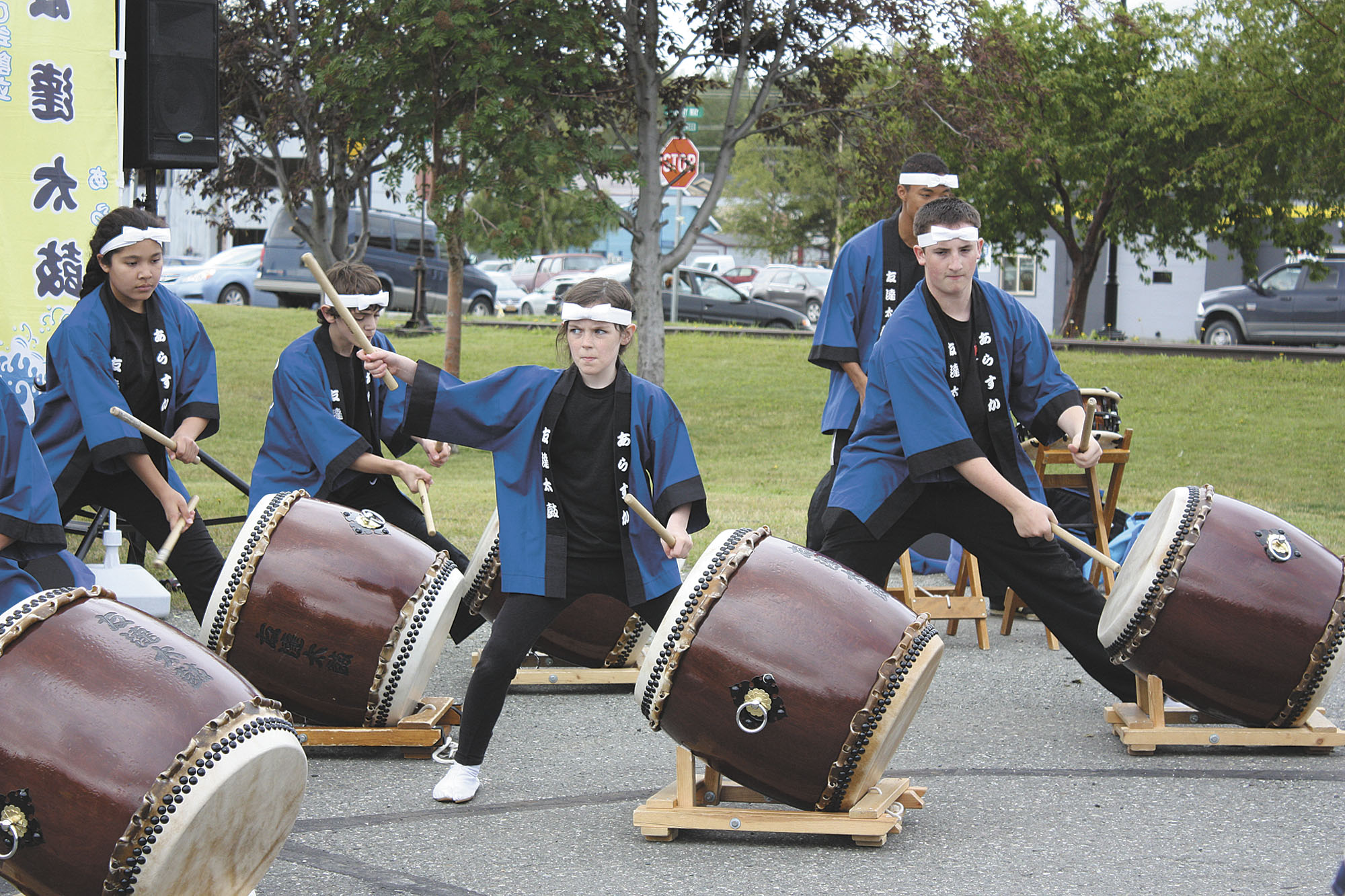
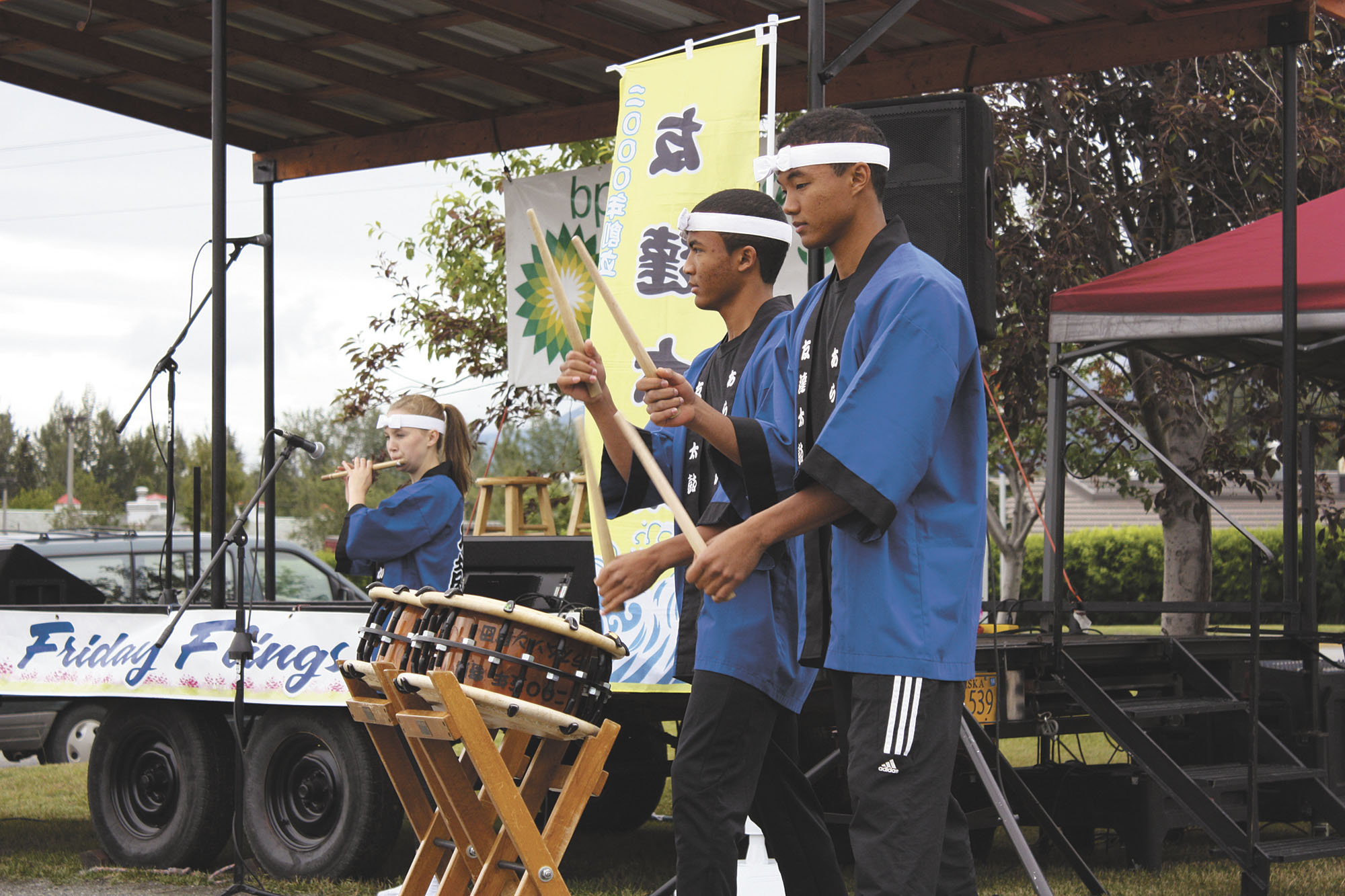
PALMER — At Friday Flings this weekend, Anchorage taiko drumming group Tomodachi Daiko brought volume to the voices of Palmer Saroma Kai, a group of volunteers that supports Palmer’s Sister City program with Saroma, Hokkaido, Japan.
Tomodachi Daiko teachers Mari Jones and Toshio Kono led eight elementary through high school aged students in their performance of 11 traditional Japanese songs at the weekly festival on June 27. The songs had a range of themes, spanning from rain to the samurai’s march into battle.
Kono’s wife founded the group in 2000, in connection with the Japanese immersion program at Sand Lake Elementary, Mears Middle School, and Dimond High School. Olivia Hansen, soon to be a junior at Dimond, described entrance into the program as something like a raffle.
“I was lucky enough to get in. You can opt out at any time, but you can’t get back in,” Hansen said.
Hansen is one of the many students who will follow through with the program to completion, and intends to continue her study of Japanese language and culture after graduating high school and obtaining an engineering degree. After that, she hopes to obtain a three-year paid internship to work in Japan.
No Japanese immersion program like the one of which the taiko drummers are a part currently exists in the Valley, but locals’ interest in Japan is evident through Palmer-Saroma Kai. Officially declared Sister Cities in 1980, Palmer and Saroma formed a friendship, which led to the exchange program that Palmer Junior Middle and High schools currently share with the Saroma schools.
Tanya Lang, treasurer of the Palmer-Saroma Kai and granddaughter of the program’s founder, Ed Holmes, has been involved since she first visited Japan with her grandfather in 1984.
“What I learned at 8-years-old has stuck (with me) more than the year of Japanese I studied in college,” Lang said.
Lang used the phrase “to spread awareness” multiple times to describe the goals of Palmer Saroma Kai, emphasizing the importance of international communication and understanding, especially at a young age.
Part of the need for this understanding is perhaps illustrated by the difference between American taiko players and those who have been trained by Japanese.
“We have Japanese people come from Japan and teach (Tomodachi Daiko) the traditional songs,” Kono said. “There are so many taiko groups in the U.S. but our drumming is more traditional. All American players play (taiko) as percussion but we play as special taiko drum.”
Performer and junior student at Dimond High, Osamu Jones, also spoke of the unique quality of authentic Japanese taiko drumming.
“Most people haven’t seen it before, so they’re just amazed by it,” Jones said.
Jones, like Hansen, has visited Japan and grown up studying Japanese. He hopes to continue his immersion in the language and culture as a translator in the military or with the FBI.
In both Jones’ and Hansen’s cases, the use of Japanese in their respective dream jobs necessarily involves fostering community and understanding between different cultures. Taiko exemplifies this community aspect.
“The essence of taiko is not only the skillful playing of percussion instruments, but also the disciple of mind and body in the spirit of complete respect and unity among the drummers,” reads the Tomodachi Daiko homepage. Such unity was apparent in the performance on Friday as various members played flutes, small drums called shime, and a sort of chime called kane to lead the group. Vocal calls were also used “for encouragement, communication and expression” during the performance.
When asked about his favorite part of being a member of Tomodachi Daiko, Jones said, “Just the satisfaction of making people happy.”
Next year, the mayor of Saroma will travel to Palmer with a delegation of other Japanese sister city program members to celebrate 35 years of “sisterhood” and potentially draw more Valley students to Japan and its culture. A Palmer delegation also has been selected to go to Saroma to celebrate its 50th anniversary in 2020.
For more information, and a list of upcoming events related to Japanese culture in the Palmer area, visit cityofpalmer.org.

By Jeremiah Bartz Frontiersman.com A football coach using a hockey reference as the centerpiece for his keynote address may

Frontiersman.com With its headquarters in Wasilla, the Frontiersman has been a primary source of news for the Matanuska-Susitna

By Katie Stavick Frontiersman.com The next generation of leaders took flight this week as the Houston High School Class

By Kyle Wilkinson For the Frontiersman Keynote speaker and Carry the Cure President Bill Pagaran’s words boomed through the