Retiring teacher, coach urges Colony grads to ‘find their 68’
By Jeremiah Bartz Frontiersman.com A football coach using a hockey reference as the centerpiece for his keynote address may


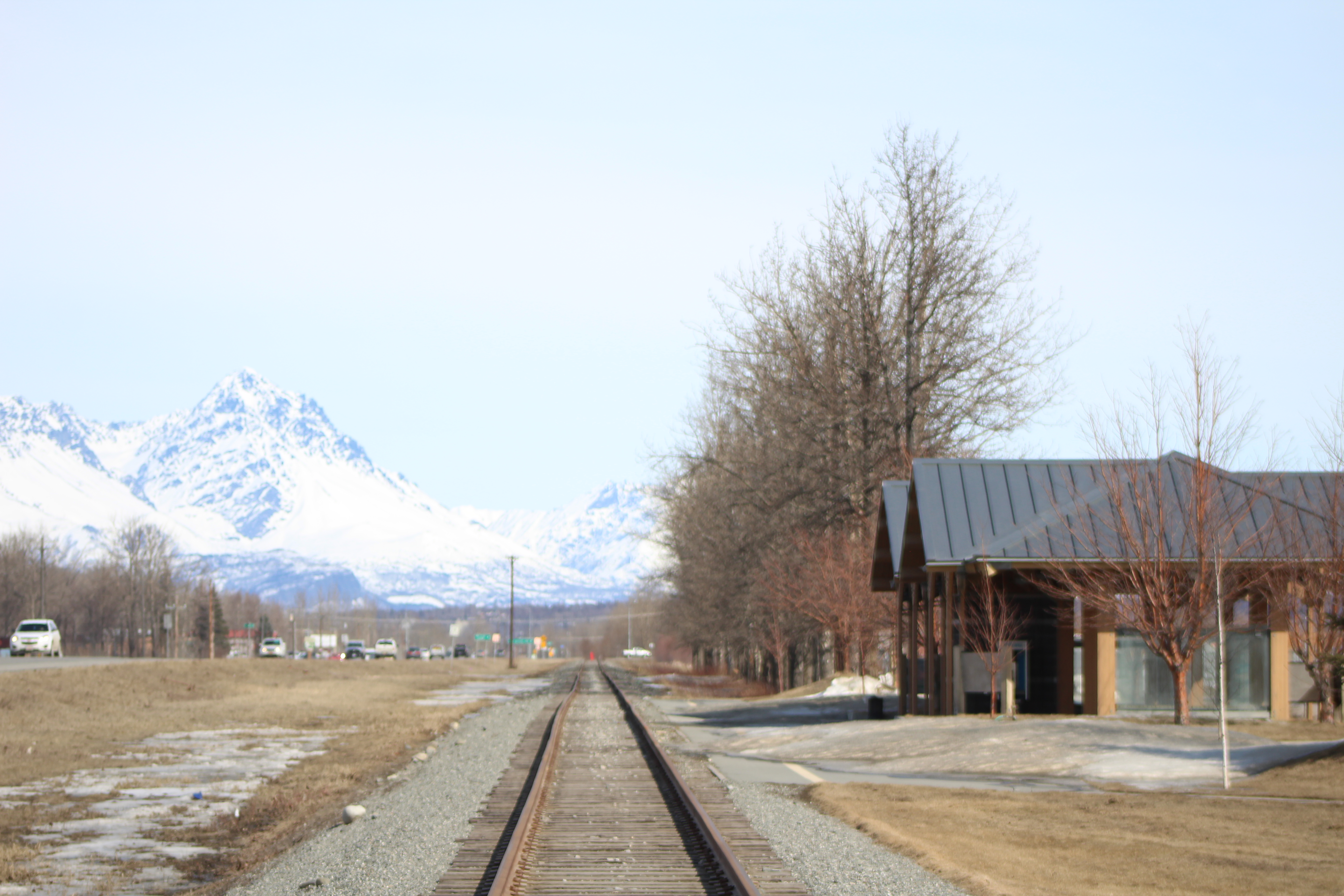
WASILLA — The commuter rail task force met on March 30 to discuss logistics and planning for the pilot project and long term commuter rail options.
Many ideas were discussed amongst accompanying problems. The main issues discussed were speed, where the train would stop, what times the trains would leave and the equipment and functionality of the cars themselves, who they would be accessible to and what amenities would be offered. The ‘Bridgepocalypse’ of last month, which made the already arduous commute from the Valley to Anchorage, also garnered some discussion as the railroad was preparing for emergency trains to shuttle commuters to prevent them from being stuck in traffic on the road for hours.
“We actually put together some contingency plans and presented them to the governor on Friday and looked at what it would take to get stuff together on Thursday. We were waiting for someone to pull the panic button and made some changes on Friday. We were prepared to go on Monday if asked and we weren't,” said Ernie Piper of DOT.
Though commute times bordered on ridiculous, the bridge has been safely repaired, to the great delight of Dave Kemp DOT public facilities director.
“I told my folks is lets get it done but let’s do it safely. One thing I was happy about I think it’s a miracle no one was hurt when that accident happened and no one was hurt when we repaired it and stabilized it,” Kemp said.
The 71- to 72-minute ride from Wasilla to downtown Anchorage was used as the benchmark. However, discussion on how many stops would occur between then start to elongate the travel time. Stops in Eagle River and JBER would increase travel time by two to three minutes each, as well as if there were to be a stop at the Glenn Highway/Parks Highway interchange for Palmer-area riders.
“We’ve done a lot of straightening over that track for the last 20 years there are three or four projects left that will cut that time down considerably, but all the low hanging fruit has been picked,” Piper said.
A South Wasilla project that would cut five minutes would cost around 40 million. Another project that would shave a minute would cost $12 to $15 million. Concern over speed of the train was mostly left unresolved.
“To go from 10-30 miles an hour you get a lot of bang for that buck. To go from 30 miles an hour from 50 miles an hour you’re going to spend twice as much money and gain a third of the time,” Kemp said.
“The fundamental problem with a diesel locomotive is they aren’t designed to go fast and they’re not designed to go fast quickly. You’ve got to have a locomotive that loads fast, goes fast, and stops fast,” said Piper. “Last summer we spent a lot of time putting together what we think would be a reasonably credible pilot program with the intent of trying to make it as affordable as possible recognizing that doing anything was going to be expensive.”
“Something that may emerge from here to piggyback on those orders so that you would be getting a good price for equipment that would be really good for that. That’s why I encourage you to imagine what you want not what you think you can get,” said Piper.
Along with the $4 million set aside by the governor, estimates rose as high as $10 million for completion. Rivaling funding destinations also dominated considerations. Mat-Su Borough Mayor Vern Halter repeatedly stated that he would prefer to see Alaska State Troopers fully funded, given the hypothetical choice. Public seat holder Cynthia Wenworth also noted that highway maintenance costs would not evaporate and those needed to be considered alongside the startup of the six-month pilot commuter rail and further costs should the commuter rail be determined sustainable and become a permanent option.
“The costs of highways always need to be given when you talk about costs of commuter rail..."
I’m an economist so I always think that way in terms of alternative costs. If everybody can see the other costs you just have a more realistic picture of what's going on,” said Wenworth.
Time spent in the car was closely examined. Mayor Halter made repeated claims that there must be wireless internet for it to be viable. If the commuter rail becomes permanent, additions would have to be made for sight and hearing impaired passengers to be able to know when to get off as well as wheelchair bound passengers who would need a lift to ride. Discussion on the time of departures fell under this category. Wasilla Mayor Bert Cottle detailed survey results that helped the task force get a grasp of what the community desires.
“The city of Wasilla took our first stab at a survey trying to figure out would you pay for a round trip. Ninety-nine percent of answers come back zero, 27 percent said 7 a.m., 31 percent said 8 a.m. The more information we get, the better it is for all of us. Sixty-seven percent said yes they ‘would you take part in a pilot program’. The Frontiersman did its own survey without our help, 56 percent said they would likely use a commuter train. If I could get 50 percent of the cars off the road that would be great. The more we can gather as far as public information the better pilot program could work...The first meeting we had in Anchorage it took us an extra 20 minutes to get to Anchorage because they were pulling out ditch divers,” Cottle said.
The cost of adding additional cars to a train does not have a major effect, Cottle said. Seventy-two riders can fit on one car. However, additional times of trains does increase costs by $40,000 a year.
“The commuter rail furthers (Anchorage Mayor Ethan) Berkowitz’s goal of being the most energy-efficient city in America… In terms of climate change and C02 emissions, a rail would really reduce C02 emissions. It’s one-third of the energy that’s used nationally,” said Wenworth.
Of the 14,000 cars that make the commute every day, Cottle would like to see 3,400 of those ride the train instead. Of that number, 3,000 commute to JBER daily. Cottle’s concern with texting while driving would be eliminated if those drivers were on the train. Discussion over what types of amenities would be offered to riders as far as drinks and newspapers were left unresolved but would likely be served at stations rather than on the cars.
“Millennials want to get around differently because they want to live in different kinds of communities than a lot of us. I’m 60. The picture of our community when I grew up is a lot different. Right now in the world of commuter business, these are really mobile workplaces. The locomotives that AKRR has right now, they’re not geared for going fast… The equipment that AKRR has right now is not capable of doing this in terms of passenger comfort and not capable of doing this in terms of meeting federal requirement,” said Piper.
Former Gov. Bill Sheffield, a member of the Board of Directors of the Alaska Railroad currently, detailed his further plans for stops.
“Twenty years ago (Sen. Ted Stevens) gave me $28 million and we built the rail depot at the airport in Anchorage for a commuter rail,” said Sheffield.
Sheffield further detailed a hotel to be implemented over the depot, and the availability of Valley airplane passengers to use the rail to stop at the hotel prior to or following a flight out of Anchorage. Sheffield also proposed weekend stops in Girdwood for skiers.
“There’s all kinds of advantages,” said Sheffield.
Public commenters provided alternate uses for riders of a possible commuter rail.
“A commuter rail would be great for college kids. Twenty-five percent of the population at Mat-Su College do not own a car. I did a survey over at the college about six or seven years ago on how much they would be willing to pay for transportation. Most of them would use it for games and personal time, going to dinner as well as work. They would like it to be on the weekends and nights as well so they could participate in sporting events and not have to drive and not have to park and they could walk when they got downtown because the train is there,” said Kenda Huling. “I think that's a demographic that ought to be on your communities is colleges.”
“I want to have a car for the ladies to put their makeup on. You’ve got to have the train a fun place to be or no one’s going to get on it,” said Bob Hackinson.
Ideally the study will finish in July of 2018 to allow time for purchase of new cars and equipment. Trains would roll October of 2019.

By Jeremiah Bartz Frontiersman.com A football coach using a hockey reference as the centerpiece for his keynote address may

Frontiersman.com With its headquarters in Wasilla, the Frontiersman has been a primary source of news for the Matanuska-Susitna

By Katie Stavick Frontiersman.com The next generation of leaders took flight this week as the Houston High School Class

By Kyle Wilkinson For the Frontiersman Keynote speaker and Carry the Cure President Bill Pagaran’s words boomed through the