Retiring teacher, coach urges Colony grads to ‘find their 68’
By Jeremiah Bartz Frontiersman.com A football coach using a hockey reference as the centerpiece for his keynote address may


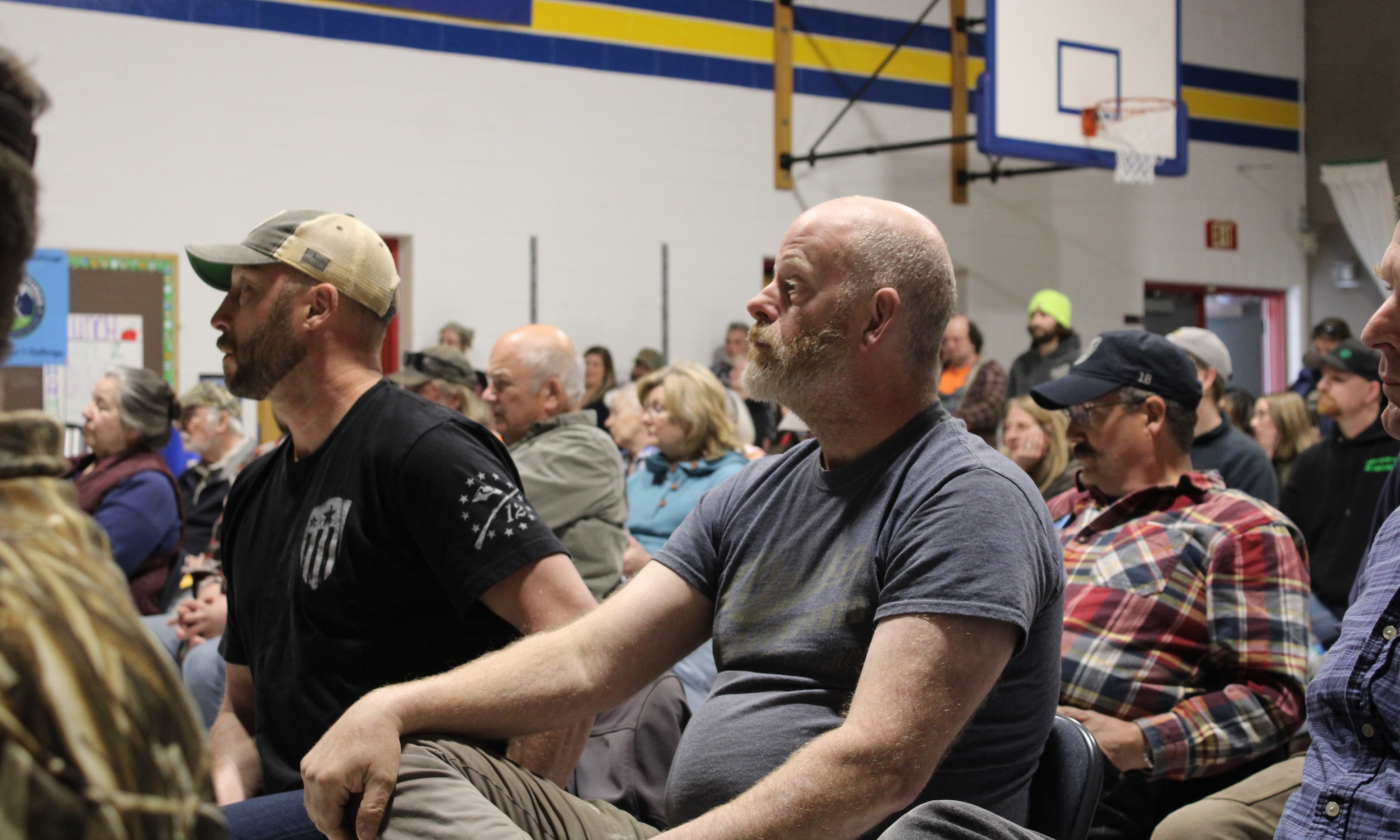
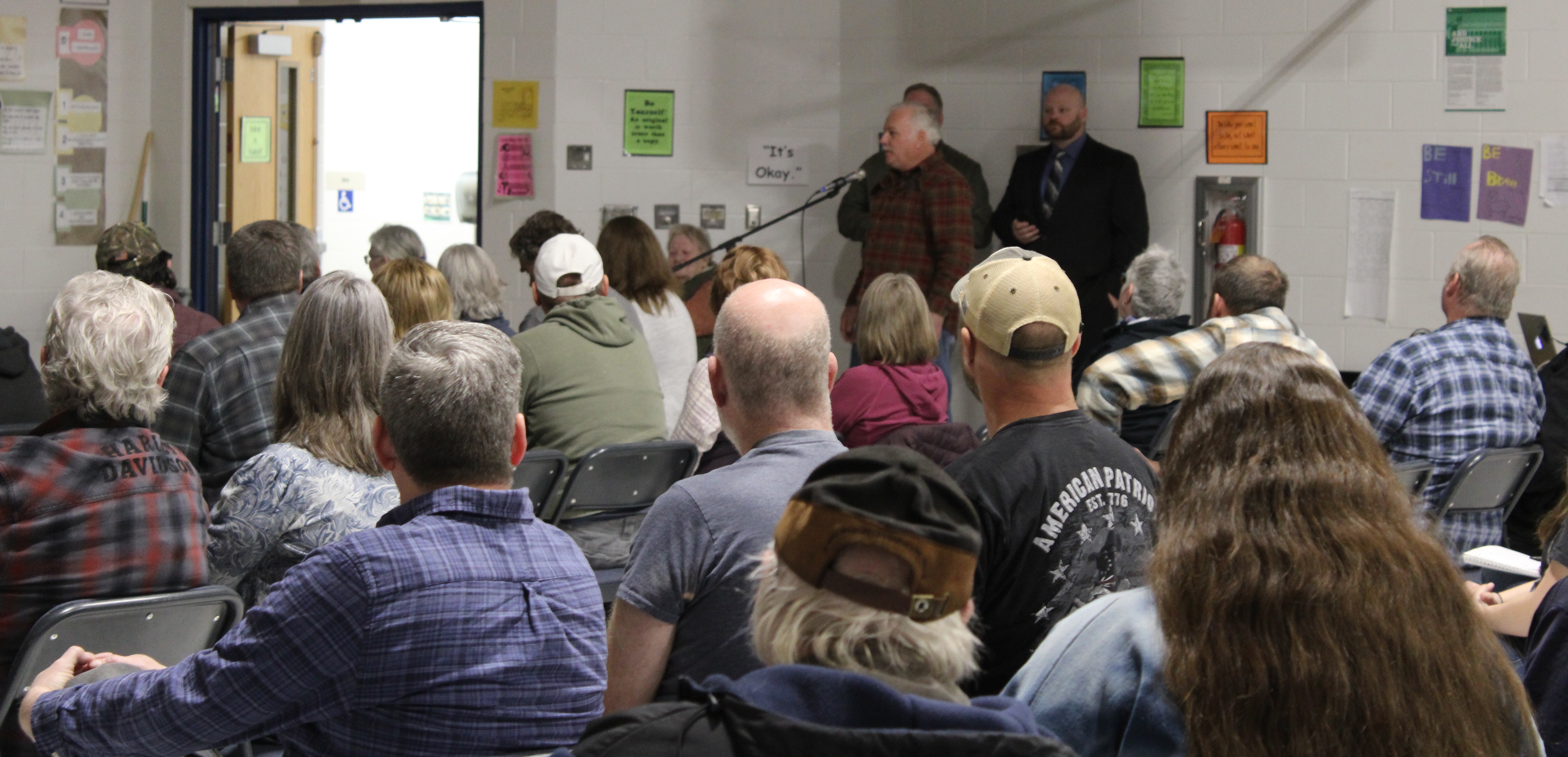
Mistrust was deep and tensions were high at a packed the Sutton Elementary School during an hours-long public meeting as the Chickaloon Tribal Police Department (CTPD) held an information session as it seeks to expand its police force and their responsibilities.
The meeting came about as Chickaloon’s new Justice Director and Police Chief Donna Anthony, seeks to build the CTPD to be able to answer more serious crimes committed by tribal members. To do that requires a change to Alaska state statute regarding tribal police powers. After presenting information to the Sutton Community Council, Anthony presented her plan to the local community.
Current Alaska state statute only allows one agency to resolve serious issues that arise within the community. Under Anthony’s plan, officers would share police responsibilities within the community and be better able to provide timely response to those more serious crimes, along with having the ability to assist with any investigations.
“We’re asking to be recognized in regards with the state statute,” Anthony told the audience. “If I go to a domestic violence call for a tribal citizen and it’s a misdemeanor, we can handle it in our tribal courts. But if it turns into a serious physical injury and becomes a felony, we have no authority. I have to call for a trooper to help us out,” further explaining that it can sometimes take hours or days to get someone to investigate out in some villages.
The CTPD currently has jurisdiction over tribal misdemeanors committed by tribal members. Incidents involving non-natives are handled by the state.
Se. Mike Shower and Rep.George Rauscher were also on hand and both who were very clear that they had not yet decided where they stand on the issue.
CTPD officers are required to meet the same standards as other law enforcement officials in the state, and Anthony laid out a lengthy training protocol the officers will be going through.
Anthony hopes that Sutton and surrounding communities agree to the plan which would require the state statute to be changed. Chickaloon officers would be able to serve much like the Alaska State Troopers, responding to felonies, such as assaults, weapons violations, theft, abuse, or domestic violence.
She believes it is important for any non-tribal community to have buy-in and input when it comes to how CTPD officers serve those communities.
“We want the community involved,” she said. “The last thing we want is division.”
However, there is clearly mistrust and division, based on audience comments and questions. One question that came up a few times was in regards to the CTPD having authority over non-native residents, and specifically where the boundaries would be drawn for the CTPD.
Anthony explained that Chickaloon is unique. Where most villages in the state are remote and typically there are no other agencies beside AST.
“If the CTPD were to become state certified, they would have the same authority as any other police agency in the state, but that there would need to be an agreement over what areas the CTPD would cover, which has not happened yet,” she explained. “This is a pilot program, meaning this hasn’t been done before in the state. When you call 911, we’re not the ones answering, MATCOM is. If the troopers can’t respond that’s what we’re hoping to do-provide an agency assist. We’re not taking over the calls in Sutton.”
There have been issues in the past with CTPD, when former Chickaloon justice director, Matthew Schwier, was arrested for possession of child pornography, and misrepresented himself to have proper qualifications and certifications required to become a Tribal Peace Officer. Many had accused the Chickaloon Village Tribal Council of trying to cover up what had happened.
There are also apprehension over the way Chickaloon tribal leadership has handled other situations in the past, resulting in a strained relationship and concerns over how this may influence policing priorities and the way the Chickaloon Justice Department deals with non-Natives.
“We’re looking at a policing system that would mirror the Troopers, where they would have the same power and authority, but the control would be under the Chief (Harrison),” said Brian Endle with much applause, during a comment in which he stated he did not support the change.
Shower also acknowledged that there is a lot of mistrust in the based on past experiences and whether trust could be re-built with the CTPD being run by the tribe moving forward.
“If you are not convinced and we can’t get to a point where you trust this, it’s going to be really hard for him (Representative Rauscher) and I to get to a point where we can move forward,” Shower said.
He went on to say that while he trusts Anthony, he knows people will question her motives and what would happen when she’s no longer there.
Also in attendance was Chickaloon Native Village Chief Gary Harrison, who stated at one point that “we’re not asking for sovereignty or take your rights. We’re asking to be able to work with the community.”
“We can work together or have animosity…we offer this out to work together,” he stated.
Another issue was the funding for the proposed expansion. While Anthony insisted that there wouldn’t be a new tax or an increase in the Mil rate, and changes implemented if the state statute is adopted would come from federal funding and federal grants, many were still skeptical with some in the audience speaking out of turn, stating that federal money comes with strings attached and that the federal government has no place in their community.
Many attendees took notice of the lack of Alaska State Troopers, the Department of Public Safety, or anyone from Palmer and Borough administration to weigh in on the proposed change to the statute. Senator Shower was quick to address the short notification period, along a holiday weekend, but assured the citizens that they would indeed be at the next meeting. The absence of other groups also meant that those questions pertaining to jurisdiction could not be fully answered at Saturday’s meeting, and that there would be at least 1 more meeting, or several.
Anthony addressed those concerns as well, saying that the Palmer Police Department has been helpful and the CTPD is in the process of adopting policies and procedures from Palmer Police. She also has plans for CTPD officers to attend the AST academy next year in Sitka.
Senator Shower also stated that if the appropriate leadership was not in attendance for the next meeting, he would do nothing, stating that “I need to see that the community supports it and that it’s done correctly…I don’t know where I stand yet.”
Senator Shower also reiterated that if he and Representative Rauscher do decide to start the legislative process, it is a long way off as there are less than 4 weeks left in the current session.
“From a timeline perspective, this wouldn’t happen this year,” he said, stating that the earliest this proposed change would hit the Alaska House and Senate floor would be the 2023-2024 time frame.
Representative Rauscher also addressed the audience, telling the group that “There could be unintended consequences, there’s going to be results, and there’s going to be cause and effect, and we have to look at every one of those things before we write a law.”
It was also re-iterated throughout the long meeting that this is just the first step in a lengthy process and that very careful consideration is needed as the proposed change would not simply affect the Chickaloon tribe and Sutton residents, but would be a change across the entire state.
“We have to take into consideration that there are native tribes all over Alaska…that this will effect, so there is more to it than just Chickaloon having its own police department. We have to make sure that this works everywhere including here,” said Rep Rauscher.

By Jeremiah Bartz Frontiersman.com A football coach using a hockey reference as the centerpiece for his keynote address may

Frontiersman.com With its headquarters in Wasilla, the Frontiersman has been a primary source of news for the Matanuska-Susitna

By Katie Stavick Frontiersman.com The next generation of leaders took flight this week as the Houston High School Class

By Kyle Wilkinson For the Frontiersman Keynote speaker and Carry the Cure President Bill Pagaran’s words boomed through the