Retiring teacher, coach urges Colony grads to ‘find their 68’
By Jeremiah Bartz Frontiersman.com A football coach using a hockey reference as the centerpiece for his keynote address may


PALMER — In America, we have any number of holidays that lend themselves to military appreciation. Memorial Day is probably the most emotionally intense of these, but perhaps none links a particular battle with a nation’s very survival like each Oct. 18 in South Korea.
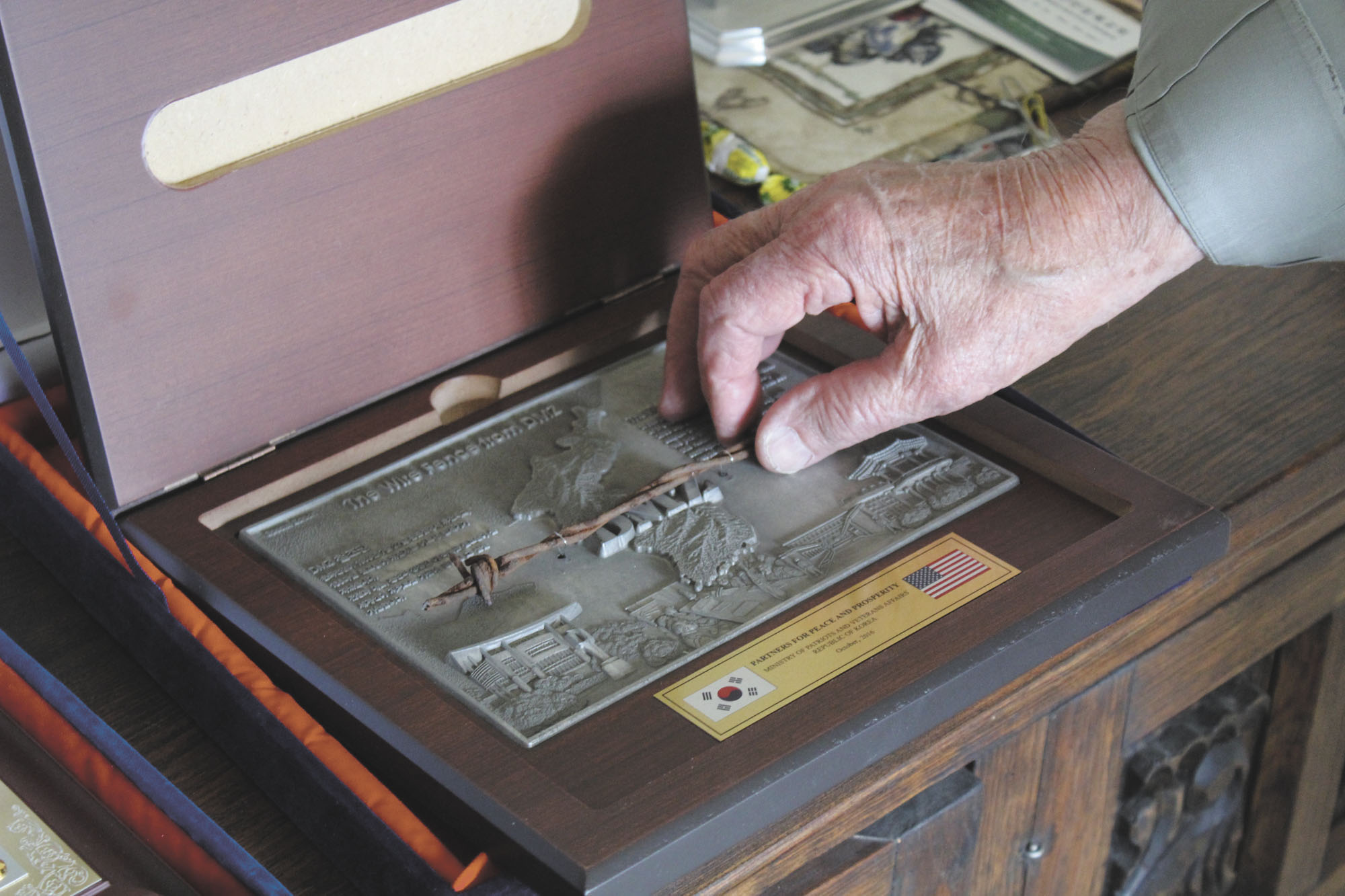
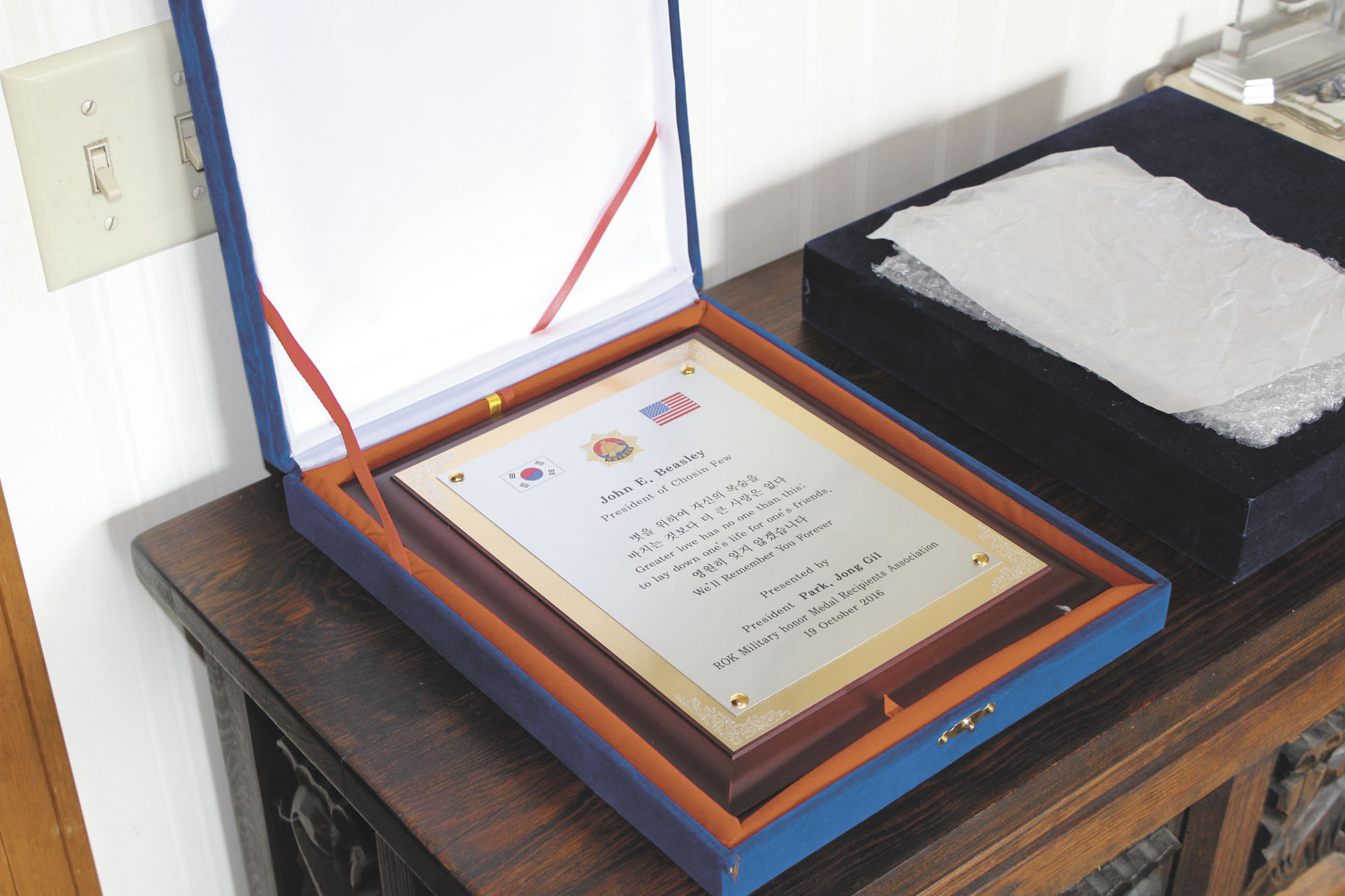
Palmer veteran John Beasley found that out first hand last year, when he was one of two Americans invited to speak to a huge crowd in Seoul. It was his first trip back to the peninsula since the Korean Conflict, when he and tens of thousands engaged in one of the most brutal and famous fights in the history of the Marines — the Battle of the Chosin Reservoir.
“It was amazing. Seoul was flattened when we went through. There were horrible, horrible civilian casualties, little kids with no parents — all of Korea was that way,” Beasley recalled from his shed at his home in Palmer, where he has equipment that helps him track meteors that pass into Alaska airspace. “I went back and it’s New York City. I’m looking at high-rises and condominiums — it’s a clean, spotless city.”
Koreans, especially on Oct. 18, 1950 — the official start day of the Chosin ordeal, when Chinese forces piled into North Korea to force an inevitable bloodbath that killed more than 30,000 U.S. Marines — make no bones about the importance of the sacrifices of U.S. forces and allies.
In each Oct. 18 ceremony they thank the fallen and the survivors directly for their very existence and status as the first country to go from a foreign aid recipient to an aid donor.
“We’re an international group and we started out with 3,500 survivors, but I tell you, the Good Lord is taking us. We’re down to about 1,500 paying members now,” said Beasley, the president of the Chosin Few the last three years.
At the ceremony, Beasley spoke to the crowd about the particular rigors of two-week, nonstop combat in record November-December cold 66 years ago and how those factors made Chosin perhaps the worst battle ever fought by Marines.
“It was a bitter, record-breaking cold that came in from Manchuria… several times it got to 40 below zero,” Beasley told the crowd. “I don’t remember a day above zero, though to us it felt good at minus 10. Our combat problems were two-fold. For one, we’d never heard of hypothermia, and we didn’t have clothes fit to handle it. The other was the CCA, the (Chinese) Communist Army launched coordinated attacks on the night of Nov. 28. Flares went up and all we could see were masses of people charging… wave after wave, leaving a wheat field of human beings.”
A wireman and radio operator with his battalion, Beasley survived day after day of combat in the foxholes, with no end in sight and death an almost certainty for all. Beasley recalled going outside the foxhole and finding bodies frozen in the ground like “ice chips in your freezer.”
“We had to fight frostbite, plus the enemy,” Beasley said. “A Marine in a foxhole not far from me was hit two times straight through the chest, and he said, ‘Doc, please don’t let me die,’ and those were his last words. He died. The first attack was over and still they sniped at us, even in daylight. It went on and on… sniping in the daytime and firefights at night. I should have died but I made it here today.”
Beasley said his closest brush with death at Chosin came when an enemy soldier broke into the foxhole and began strangling him as he slept. Beasley struggled to reach for his knife and when he did he stabbed his assailant in the abdomen. A fellow Marine finished him off with a rifle.
Beasley credited the training he and his fellow Marines received with being to able to withstand the mental challenge of staring down almost certain and imminent death.
“In the Marine Corps, there’s Parris Island — it’s a Marine Corps factory and it’s a horrible place. Brutality is the name of the game for 13 weeks — heavy brutality with swagger sticks across the back,” Beasley said. “You come out of that place, you’re dedicated. The day you leave Parris Island, you’re able to use the term, ‘Semper Fi’… It stays with you all your life… The first part of combat that gets you is in the stomach, but after that, the hell with it — go for it; it’s that kind of attitude.”
The only time Beasley cracked, he regrets even to this day. An injured Marine was set to be transported out of the foxhole, and with the rescue came a runner who could deliver mail. Beasley took the opportunity to write a letter telling his mother and father what to do with the $10,000 in insurance money they’d receive from their son’s death. The day it arrived at the Beasley home in southeast Virginia, the newspapers read, ‘in big, bold headlines: ‘We’ve lost the Marines’,” Beasley recalled.
“My preacher told me years later that was the saddest day of his life meeting with my parents,” he said. “Imagine doing something that dumb, but I was only 18, 19 at the time.”
Beasley grew up a farmer in rural Virginia. As he approached 18, his father gave him an acre of land, the profits from which he could keep.
“The last year, the potatoes didn’t sell — that was it,” Beasley said. “I didn’t get any money.”
So Beasley enlisted, having no idea he’d survive one of the most famous battles in the history of war.
After the war, Beasley went on to work in information technology in Paramus, N.J., until one day in 1968, they told him he was being transferred to work on the contract his company had won for the White Alice Communications System in Alaska.
“I got off the plane, an Alaska Airlines flight, their first 737, in an East Coast business suit and I go by Bob Reeve, a famous bush pilot, and he’s got this sweater with burn holes in it and he looked at me and said, ‘god damn, where in the hell did you come from?’ That was my first experience with Alaska.”
Alaska, which Beasley considers doing right by veterans better than most any state in the union, has remained the home for he and his wife Peggy ever since.
Today, Beasley keeps a shed behind their house between Wasilla and Palmer full of computers — many of which he built himself — where he charts meteorites coming into the atmosphere in and around Alaska. Many of them, Beasley says, carry valuable information, called ‘media bursts.’
“This is when a tiny meteor leaves a tiny ionized tail behind it. It’s there long enough for you to bounce a radio signal off it and get some data… you don’t get a whole lot of data, but you store it forward,” he said. “There’s thousands a day from a nanometer in size all the way up to the size of a knuckle.”
When he’s not tracking meteorites, Beasley is organizing the bi-annual meetings of the Chosin Few. He said he tried to resign as the group’s president, but the board of directors refused to accept it, and what was he going to do, quit?
Recently he was in Norfolk, Virginia, making preparations for the next Chosin Few meeting there in August 2018. He had business to tend to, as military requirements seemed to indicate all the members would need passports to board a ship for the reunion. As he pulled into the U.S Naval Air Station to begin arrangements, he was stopped at the gate by MPs and Marine personnel.
“You were at Chosin? Pull over here,” Beasley recalled them saying. “They liked to have talked me to death, to tell them stories. I guess I talked with them like a couple of hours, which, you know, I had things to do. But they were so interested in the Chosin. It’s really amazing, it really is. Those guys when I went into the base to get a pass, they looked like kids.”

By Barbara Hunt Palmer Buzz It was 6:43 on Friday morning and the Plant Owner was sound asleep when

By Kyle Wilkinson Frontiersman Memorial Day Weekend was filled with a variety of events in Willow. From live music to

By Kyle Wilkinson For the Frontiersman The Susitna Valley Emergency Preparedness Fair will be held at the Willow Community Center

By Barbara Hunt Palmer Buzz Green-Up happened at exactly 9:34 am on Saturday morning in Palmer. This was