Retiring teacher, coach urges Colony grads to ‘find their 68’
By Jeremiah Bartz Frontiersman.com A football coach using a hockey reference as the centerpiece for his keynote address may


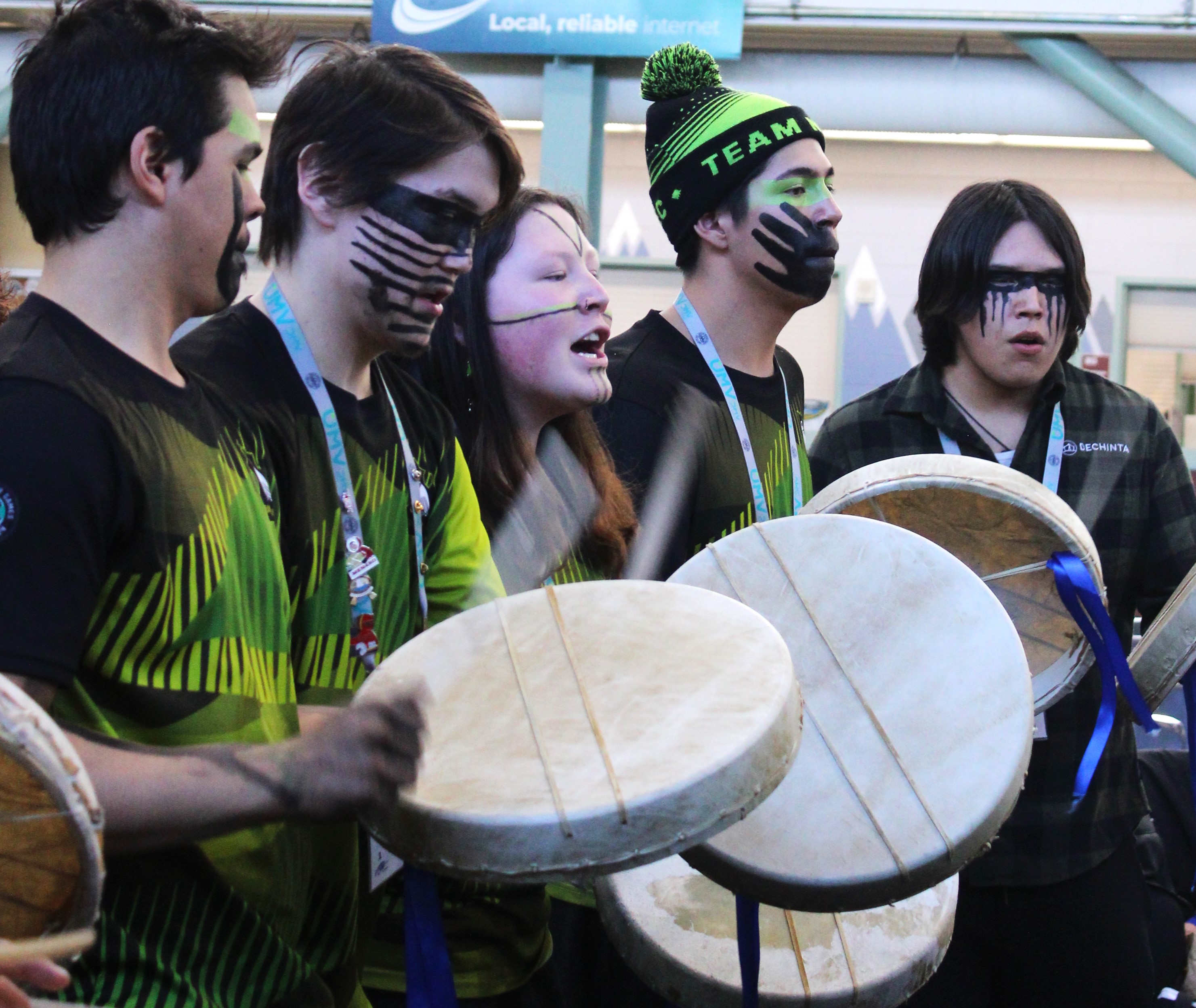
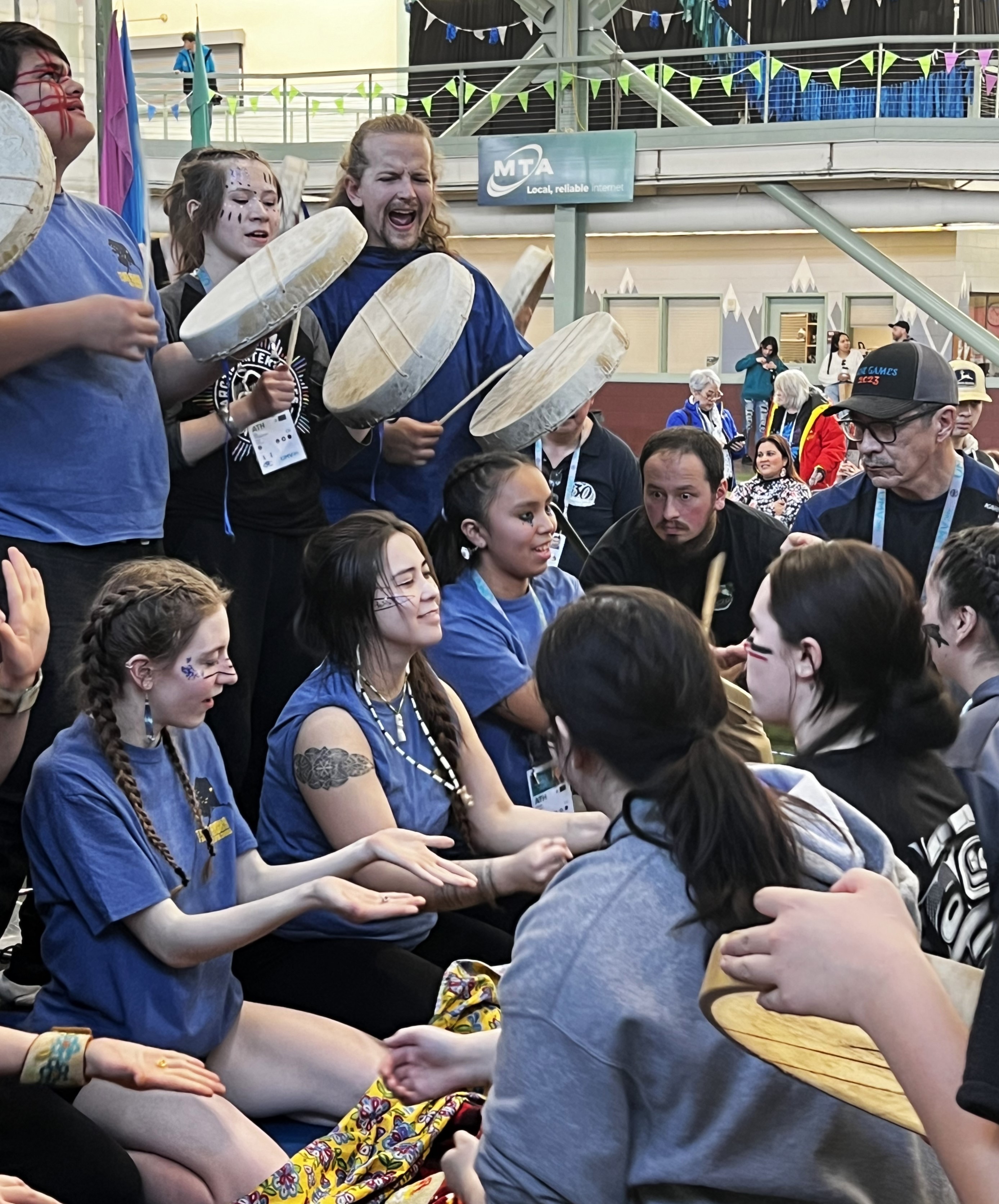
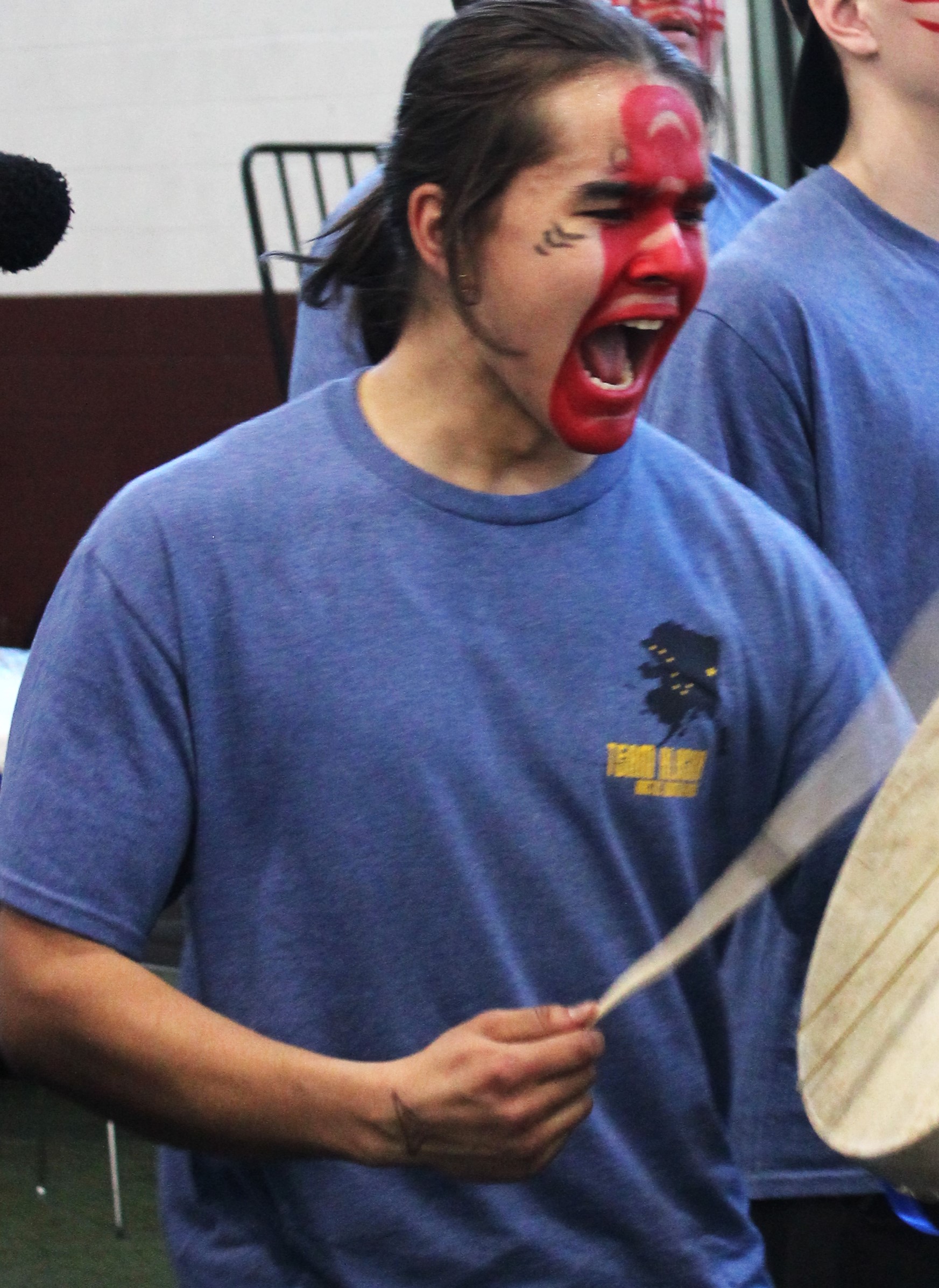
The drums beat a tempo, the crowd chants and sings, and a roar builds as the tempo reaches a crescendo while teams move their hands and bodies in a trance-like state as they rhythmically dance and move as they try to outsmart their opponents to prevent them from finding a hidden object, all part of the Hand Games, a traditional part of the Dene Games.
This team sport is one of the most widespread games played among Dene First Nations. Unlike many other Dene games that tested physical ability the Hand Games, sometimes referred to as stick gambling, is an elaborate guessing game, like the shell game. It is a fun pastime that requires a good sense of “reading people” and concealment. The players who compete with high energy, humor, good sportsmanship and performative gestures are often the most fun to play with and to observe.
There are different rules and various hand signals of the game across the north; however, the object of the game and how it is played is essentially the same.
The Hand Games was created a long time ago to settle land disputes. Land was fought for a long time ago, namely because of hunting rights, and at the time, hunting provided for the community. So instead of two territories fighting for that bit of land where animals were, the Dene developed this game so that hunters wouldn't get hurt. It moved into trading for bullets, knives, furs, stuff of necessity at the time. And of course, money.
The original version of the Hand Games had two teams of about 20 men sitting opposite each other, often separated by blankets spread on the ground. With singing and drum music playing in the background, one party hid small objects in one of their hands, while the other party tried to guess the location of the objects. In order to confuse the guessing party, players moved their hands and arms around their bodies or under the blankets. Guessers used hand signals to indicate where they believed the hidden objects were located. Sticks were awarded to correct guesses. The team with the most sticks won the game, and consequently, any goods or items that were bet on its outcome.
The modern version of Dene Hand Games is very similar to the original version, but instead of two teams of 20, the version played during the Arctic Winter Games has 2 teams of four players facing one another, with blankets or jackets dividing the groups. One team hides objects in their hands and then moves their hands around rhythmically, to the sound of the drum music, placing their hands under their clothing or blankets. Often, players cross their arms over their chests, and use other body movements, facial gestures and sounds to try and outsmart the opposing captain, who must guess where the hidden objects are located.
When the captain is ready to make a guess, he or she indicates so by whistling or making a loud sound. The captain uses a variety of hand signals in order to make a guess. Opposing players must show the captain their closed fists and then open the hand selected. If the captain’s guess is wrong (i.e., there was no object in the player’s hand), a stick is awarded to the opposing team. If the captain’s guess is correct, the opposing player is eliminated. The game goes on until the captain makes all the guesses possible or the opposing team wins all the sticks (often 12 in one game).
During the AWG, the Hand Games provided some most excitement as the Team Alaska Hand Games, open female tournament, came from behind to land in the championship match versus the undefeated Team Yukon. Adding to the drama, as Team Alaska won the first match, because Yukon was undefeated the championship came down to a double elimination. As the drums beat wildly and the chanting growing louder, whipping players and fans into a frenzy, Yukon prevailed as the winner.
“It was still so exciting, so glad we’re here!” said Brittany Woods-Orrison from Team Alaska after the match.
With Team Yukon taking the Gold in the Women’s Open Female, and Team Alaska taking Silver, Team Nunavik took the Bronze. In the Men’s category, Team Nunavik grabbed the Gold medal, Team Nunavut walked away with the Silver, and Team Kalaallit Nunaat took home the Bronze.
In the Hand Games, 2006 or later Female, Team Nunavut won the Gold, Team Alberta North won Silver, and Team Yukon won the Silver. The 2006 or later Male, the Gold went to Team Kalaallit Nunaat, while the Silver went to Team Northwest Territories, and Team Nunavut took home the Bronze.

By Jeremiah Bartz Frontiersman.com A football coach using a hockey reference as the centerpiece for his keynote address may

Frontiersman.com With its headquarters in Wasilla, the Frontiersman has been a primary source of news for the Matanuska-Susitna

By Katie Stavick Frontiersman.com The next generation of leaders took flight this week as the Houston High School Class

By Kyle Wilkinson For the Frontiersman Keynote speaker and Carry the Cure President Bill Pagaran’s words boomed through the