Retiring teacher, coach urges Colony grads to ‘find their 68’
By Jeremiah Bartz Frontiersman.com A football coach using a hockey reference as the centerpiece for his keynote address may


In 1853, Commodore Matthew Perry of the U.S. Navy sailed into Tokyo Harbor and demanded that Japan open up their ports to trade. Intimidated by the threat of force, Japan obliged. This marked the beginning of a tumultuous time for the formerly isolated nation, when its citizens were allowed to emigrate en masse for the first time in centuries. Many of them left Japan for distant nations, seeking better economic opportunities.
According to Tony Nakazawa, a Japanese-American professor of economics at the University of Alaska Fairbanks, many of the Japanese who immigrated to the lower 48 became involved in small farms, mostly in the West and Midwest. This is what Nakazawa’s family did; his Mom’s side moved to California and started a farm, while his Dad’s side moved to Arizona and started a farm. They usually formed tight-knit communities since there were so few of them, and “formed linkages, supported each other, and became Americans,” Nakazawa said. Today, this has resulted in numerous organizations dedicated to supporting Japanese Americans, such as the Japanese American Citizens League, or JACL, the Alaska chapter of which Nakazawa founded. However, he says that the way the first Japanese came to Alaska was different. Most of the early Japanese immigration to Alaska happened through explorers. One of them was a man whose last name was Moto. Not much is known about him, but he made it all the way up to Deering, judging by how now there are several families in Deering whose last name is Moto. Another one is Jujiro Wada, a Japanese explorer who is notable for pioneering certain areas of the Iditarod trail. Eventually, Japanese people started making families and having children, grandchildren and great-grandchildren.
At the same time, tensions between America and Japan had been steadily growing for the better part of the first half of the 20th Century, mostly because of increasingly aggressive and often brutal Japanese imperialism and expansionism.
These tensions exploded infamously on December 7, 1941, when Japan bombed Pearl Harbor in Oahu, Hawaii killing about 2,400 Americans. America then declared war on Japan, furthering participation in the bloodiest war in world history. Alaska would then become the only territory in the US to be partially invaded by Japan, when the Emperor seized Attu and Kiska. By 1945, it was clear that the Axis had lost the way, but Japan refused to surrender. On August 6, the United States dropped an atomic bomb on Hiroshima. Japan still refused to surrender, so another was dropped on Nagasaki three days later. It’s estimated that about 275,000 Japanese were killed between the two bombings.
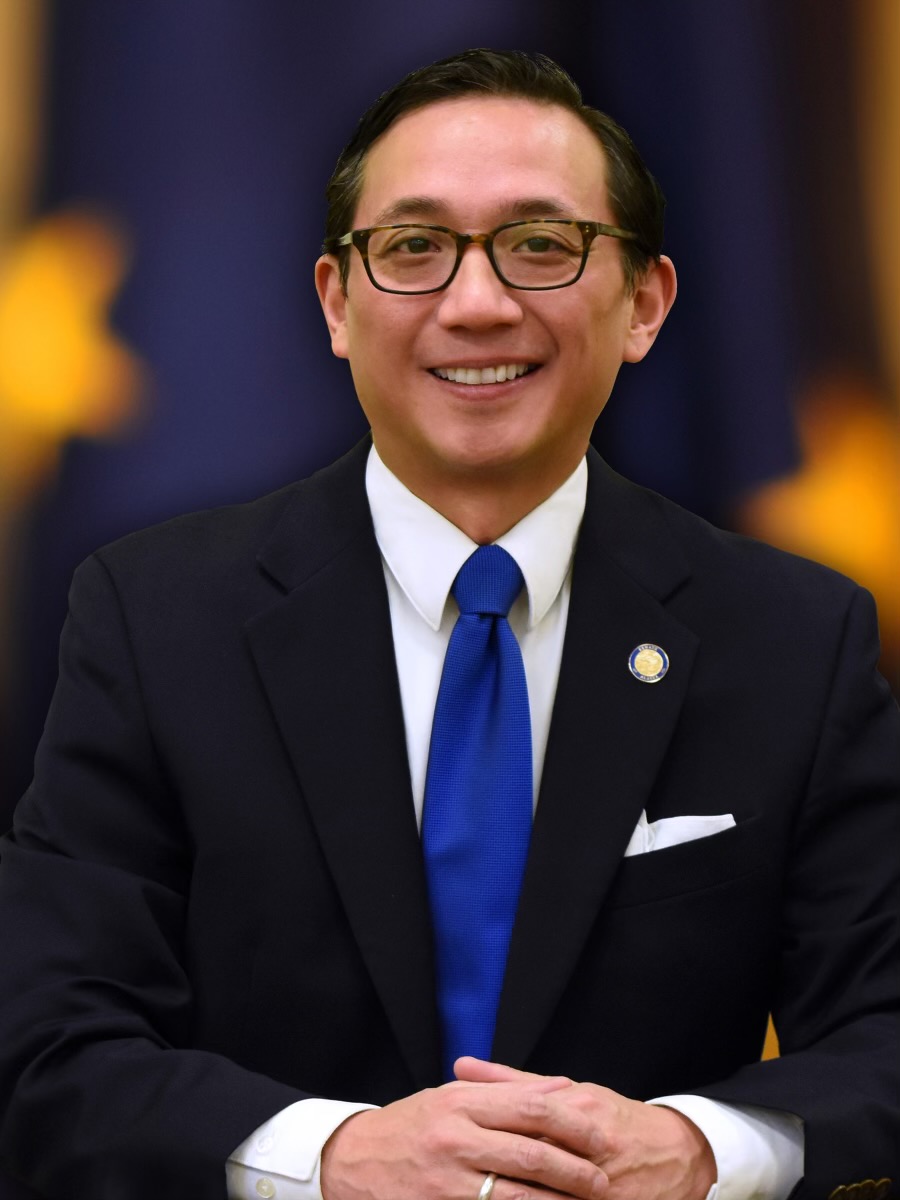
To this day, many Japanese-Americans still have parents and grandparents who were directly affected by the massive conflict. One of them is Senator Scott Kawasaki of Fairbanks, the only Asian-American currently serving in the Alaska legislature. His father was interned in Arkansas after Pearl Harbor, and two of his uncles were later born in the same internment camp. His mother was living in Honolulu when Pearl Harbor was bombed, which caused lasting PTSD, he said.
“It was an unfortunate time in history...that I hope we never repeat,” Kawasaki said.
But a cursory look around the world today sees the bond between the U.S. and Japan very friendly and unbreakably so. Likewise, Japan and Alaska share a mutually fruitful relationship.
All five Japanese-Americans interviewed for this article were asked what they thought about the relationship between Alaska and Japan. All five of them used words such as ‘terrific’, ‘tremendous’, ‘optimistic’, ‘fortunate’, and ‘very strong’ to describe it — a dramatic turn from the days when Pearl Harbor — and less famously — Alaska were attacked.
After WW2, America provided 2.2 billion dollars of aid to Japan to help rebuilding efforts, which equates to about $18 billion in today’s money. This caused Japan-U.S. relations to steadily improve through the 20th and 21st centuries, and the U.S. now considers Japan to be the closest of allies.
This is particularly evident in Alaska, where Japan has become the largest state’s second largest trading partner. Kawasaki said that Japan is an energy-poor country, and their only other options for natural gas imports are Russia and Indonesia. Japan-Russia relations are chilly, and the Indonesian government tends to be unstable. Because Alaska is such a preferable option for energy, trade between the two has become vital and accounts for about $1 billion of Alaska’s gross revenue. Nakazawa calls Japan’s economic interests in Alaska “huge.”
Kawasaki said he once met with the president of Mitsui, one of the largest corporations in Japan, as well as the world. The president casually mentioned that he had met up with Alaska’s governor the week before to talk about gas sales from Alaska directly to Japan.
“It was just kind of funny and shocking,” Kawasaki recalled.
In the 1980’s, owing to the strong economic relationship between Alaska and Japan, parents began advocating for a program that would teach their kids Japanese from Kindergarten to 12th grade. The Anchorage School District (ASD) agreed that it was a good idea, and started planning a trip to Japan for the principal and staff of Sand Lake Elementary so they could do research on Japanese culture and education. The only problem was that they couldn’t find a school to tour in Japan, since the Japanese Department of Education tends to be relatively reserved and secretive.
Davis Sensei, who was teaching English in Japan, heard about ASD’s struggles to find a school to tour, so she asked her father to talk to the principal of the school she graduated from, since her father was friends with the principal. The principal agreed, and gave Sand Lake’s principal and staff a tour from K-12. The tour went well, and the Japanese Immersion program was started by ASD in 1988.
To give students the best of a chance of learning Japanese — widely considered one of the hardest languages to learn — the program started in Kindergarten and went all the way up to 12th grade. In elementary school, students would spend half the day learning Japanese with a Japanese teacher, and then spend the other half in English with an English teacher. In middle school, the time spent learning Japanese was reduced to two periods out of six; the two Japanese periods were social studies and Japanese. In high school, the time spent learning Japanese was reduced to just one period a day. But before the Immersion could get started, it needed to find Japanese teachers who were willing to teach in Alaska. Davis and Kono Sensei were two of the first. Davis Sensei would take an open position at Sand Lake, and Kono Sensei would leave her job as a French teacher in Fairbanks and fill another position at Sand Lake soon after.
At the time that the Japanese Immersion program was started, there were only 11 other Japanese Immersion programs in the nation, Kono Sensei said.
“Everything was an experiment, it was an almost impossible 007 mission,” he said.
Davis Sensei had similar feelings. “No, no, it’s impossible!” she recalled. “When I first came to the program, it was very hard to speak Japanese to kids with brown hair and blue eyes.”
Needless to say, there wasn’t much funding set aside for the program.
“Personally, it was very difficult for me to say, ‘I’m gonna believe in this; I’m gonna do this,’ because it’s such a new thing,” Davis Sensei said.
Japanese teachers used vacation time to go to workshops to work on curriculum, while Tomonokai, a PTSA (Parent Teacher Student Association) specifically for the Japanese Immersion program, raised money to better fund the program. In addition, the administration at ASD “firmly believed Japanese Immersion could work, and that anyone could do it,” Sensei said.
Eventually, things started getting smoother. Kono Sensei remembers seeing her son graduate from the program and thinking, “this is it.” Davis Sensei remembers eventually thinking “I really, really enjoyed it. I remember feeling “oh my gosh, I get paid for doing this? This is an awesome job!”
It was also clear that it was benefitting our community more in general; both teachers have seen a lot of students come into the Immersion program that are children of former immersion students, and when Anchorage was a finalist to host the Winter Olympics, students from the program helped translate for the visiting Japanese dignitaries.
As the Immersion program became less shaky and more refined, it added several exchange programs using the funds raised by Tomonokai. These included an exchange trip to Chitose (a city in northern Japan) in elementary school, another exchange trip to Japan in middle school, and a host student program where Japanese students would live with Alaskan families and go to school for anywhere from a couple months to a whole school year. Many of the exchange students decide that they want to spend more time in their host country, and later come back to look for a job. This is similar to what happened to Yamamoto Sensei, a Japanese teacher at Dimond High School. He went on an exchange trip from Osaka, a Japanese city with a population of about 2.7 million people, to a small, rural town in Iowa while in his sophomore year of high school. The town only had a church, two gas stations, and a locally owned pizza place. Yamamoto said it was “extremely different,” and the difference between cultures sparked his interest in coming back to America. After consulting with professionals, he decided to go into education and teach Japanese in America. After teaching in Indiana, Oregon, Virginia, and Ohio, where he taught for 10 years, he found an open position at Dimond for a Japanese teacher, and got the job. Similarly to Kono Sensei, he believes the program’s goal should be to give students the opportunity to use Japanese once they graduate from high school, or as Kono Sensei says, “to become global citizens.”
“I think (the Alaska-Japan relationship) looks bright, I think it looks brighter as we look into the future,” Kawasaki said.
“I think it’s always going to be strong, if not stronger in the future,” Nakazawa said.
Yamamoto Sensei says he believes it’s “very optimistic and fortunate,” and added that he sees a lot of retired Japanese people in Alaska. He says this is highly unusual, because most Japanese will go back to Japan after retiring, so them choosing to stay in Alaska means they like it here.
Each year in Alaska, the Asian Alaska Cultural Center presents one particular culture for Asian Culture Night. In 2018, it was Japan’s turn.
No one knew what to present, so Davis Sensei said, so she decided to have her students do a multiplication dance in Japanese that they had learned. She says she saw some of the elderly Japanese people, some of whom were likely alive during WW2, cry.
“They saw these kids with brown hair and blue eyes speaking Japanese, and they had never seen that before,” she said. “They were just blown away that it was possible.”

By Jeremiah Bartz Frontiersman.com A football coach using a hockey reference as the centerpiece for his keynote address may

Frontiersman.com With its headquarters in Wasilla, the Frontiersman has been a primary source of news for the Matanuska-Susitna

By Katie Stavick Frontiersman.com The next generation of leaders took flight this week as the Houston High School Class

By Kyle Wilkinson For the Frontiersman Keynote speaker and Carry the Cure President Bill Pagaran’s words boomed through the