Retiring teacher, coach urges Colony grads to ‘find their 68’
By Jeremiah Bartz Frontiersman.com A football coach using a hockey reference as the centerpiece for his keynote address may


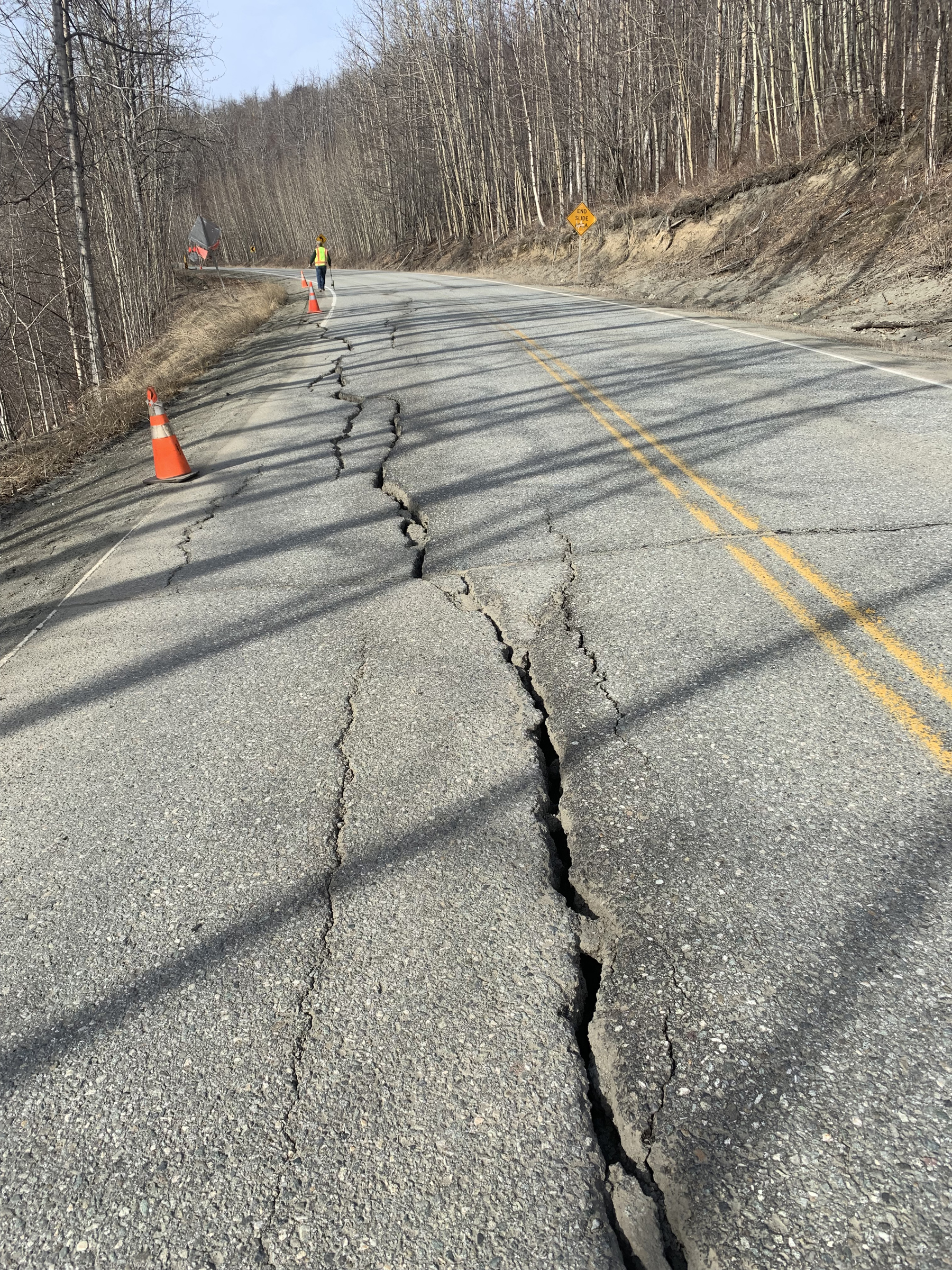
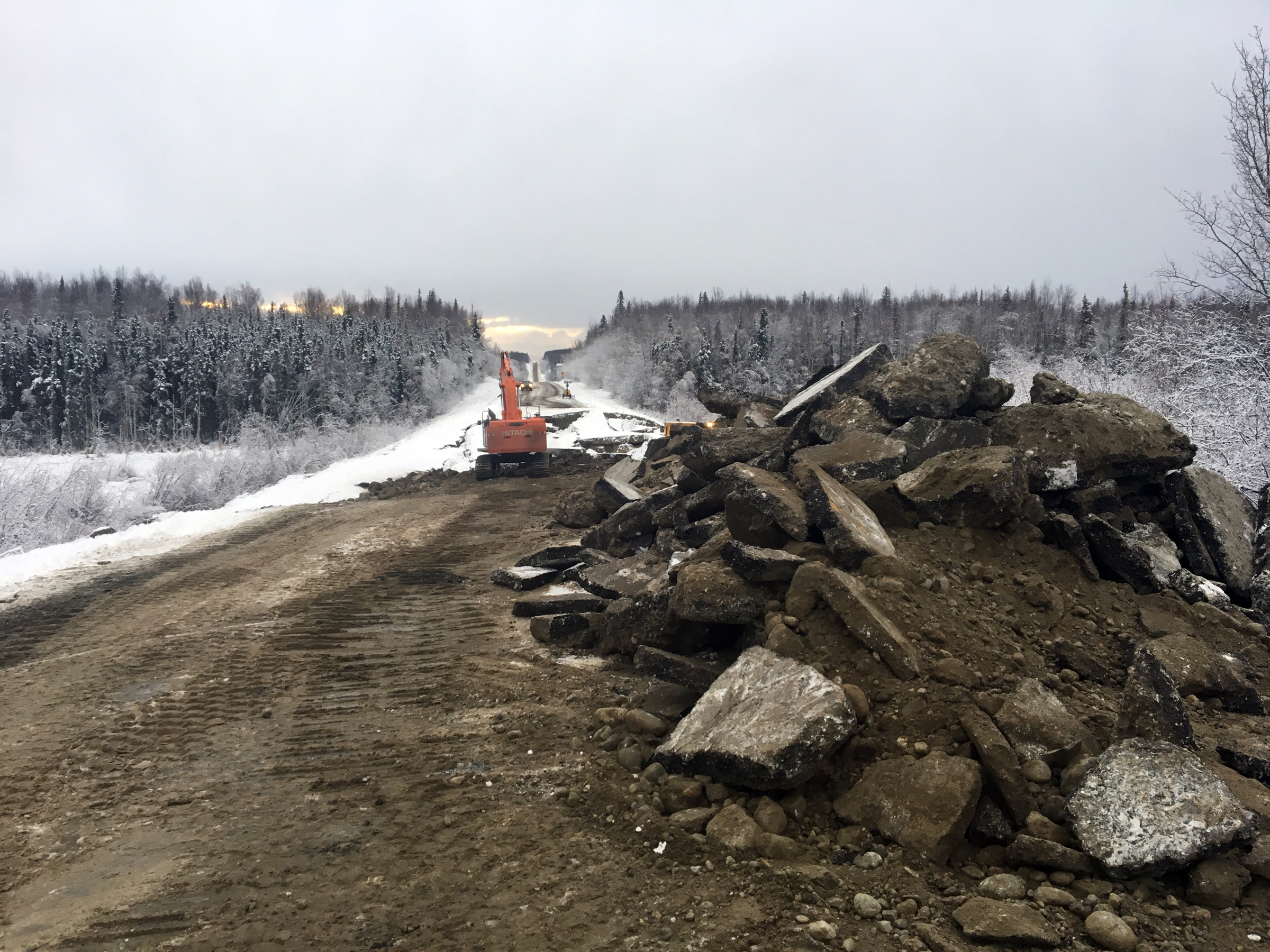
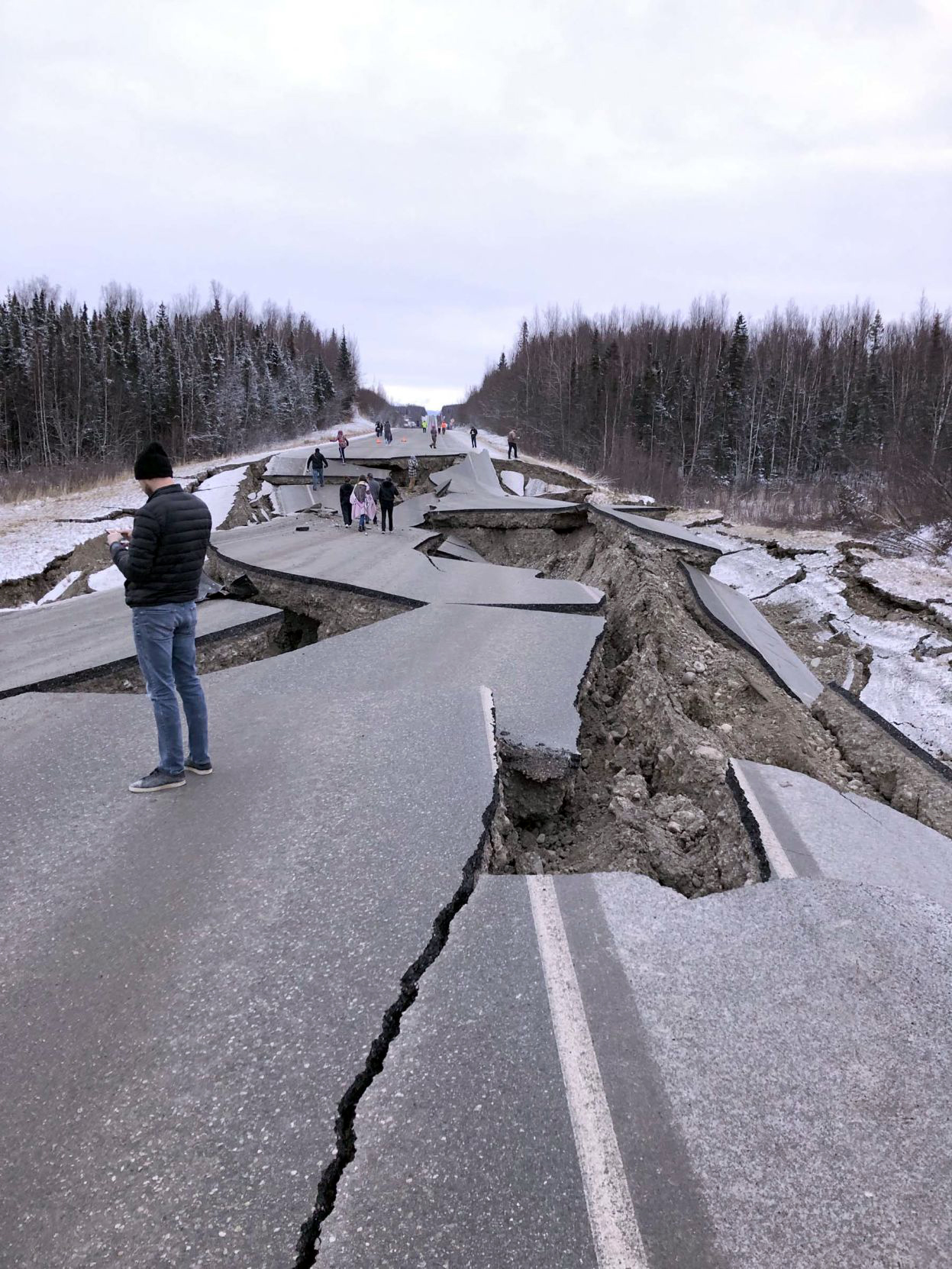
WASILLA — The aftermath of the destruction left in the wake of the magnitude 7.1 earthquake that struck Southcentral Alaska on Nov. 30, 2018, put an industry to work that had just shut down for the winter.
Alaska Department of Transportation spokeswoman Shannon McCarthy said that over 220 road sites have been identified as having earthquake damage from Knik-Goose Bay Road all the way down to the Kenai Peninsula. When all of the earthquake damage repair is complete in the summer of 2021, the total cost of repairs is estimated to be between $60 and $70 million dollars, according to McCarthy.
“We wanted to restore the roads quickly and we even exceeded our own expectations and a lot of that is thanks to our hardworking and just willing to just jump in there contracting community,” McCarthy said.
Working for DOT, McCarthy had unique experience in responding to major quakes before in Fairbanks. McCarthy did learn something new during the shaker last year, not to be caught without gas in her tank. McCarthy had worked from Anchorage on low fuel on Nov. 30 and planned to meet a reporter at the office that following Saturday to detail the damage when she began calculating how many miles she could drive, still unable to fill up. McCarthy recalls the uneasy feeling of continued aftershocks rattling through the night.
“That first night the whole earth shook all the time,” McCarthy said. ““I hate those aftershocks. I hate them more than the actual earthquake.”
McCarthy said that initial repairs required $5 million in funds. During last summer’s road construction season, another $10 million went toward earthquake repairs. Summer 2020 will see the bulk of the repairs to roads that suffered earthquake damage.
“It was probably pretty fortunate that it happened in early winter to get the response that it did from contractors,” Matt Ketchum said.
Ketchum co-owns and operates K&H Civil Constructors and completed four earthquake repairs in the months following Nov. 30. KH Civil supplied gravel to Vine Road and repaired a section of Fairview Loop for the DOT last February.
“The one that we did in February was insane because what happens when the road gets below freezing, traffic drives the frost down deeper and icy gravel can sometimes be harder than solid rock and in order to dig it up we have this aggressive frost bucket that had these teeth on it that looked like a prehistoric dinosaur just to dig the gravel up,” Ketchum said.
Ketchum also oversaw two other earthquake repair projects, including one north of Sutton on the Glenn Highway for DOT. Ketchum said that KH Civil had just prepared to shut down operations for the winter when the quake hit and contractors around the Valley got to work repairing roads. Ketchum worked with Northern Asphalt Paving to supply the temporary fix to Vine Road, which will see a permanent fix in the summer of 2021. Ketchum said that the industry was raring to go for work that needed to be done.
“I think people in the heavy civil business enjoy building stuff that lasts,” Ketchum said.
Ketchum noted fellow contracting businesses that shouldered the bulk of the immediate repairs around the Valley.
“The contracting community really responded and responded in a big way,” McCarthy said.
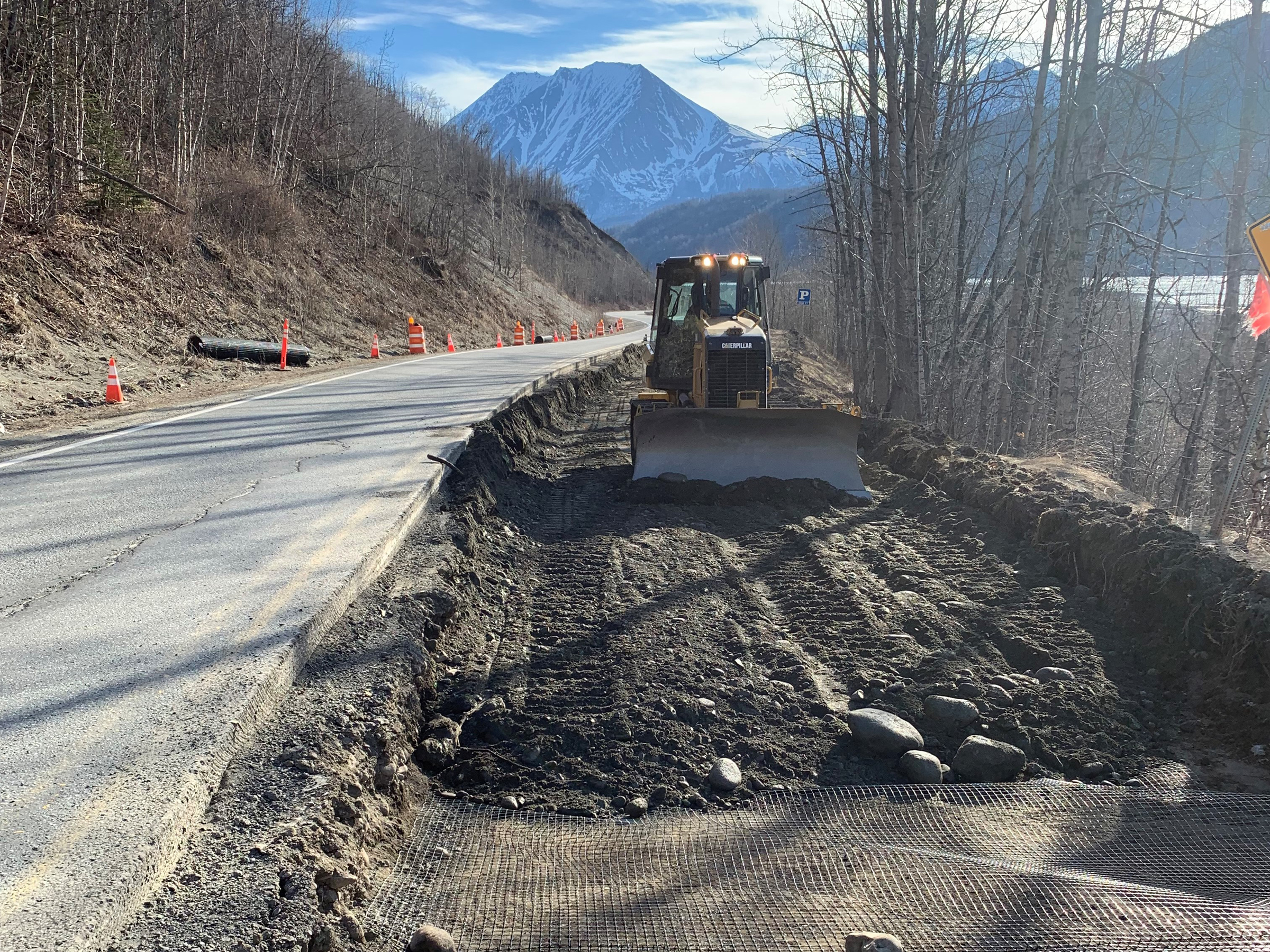
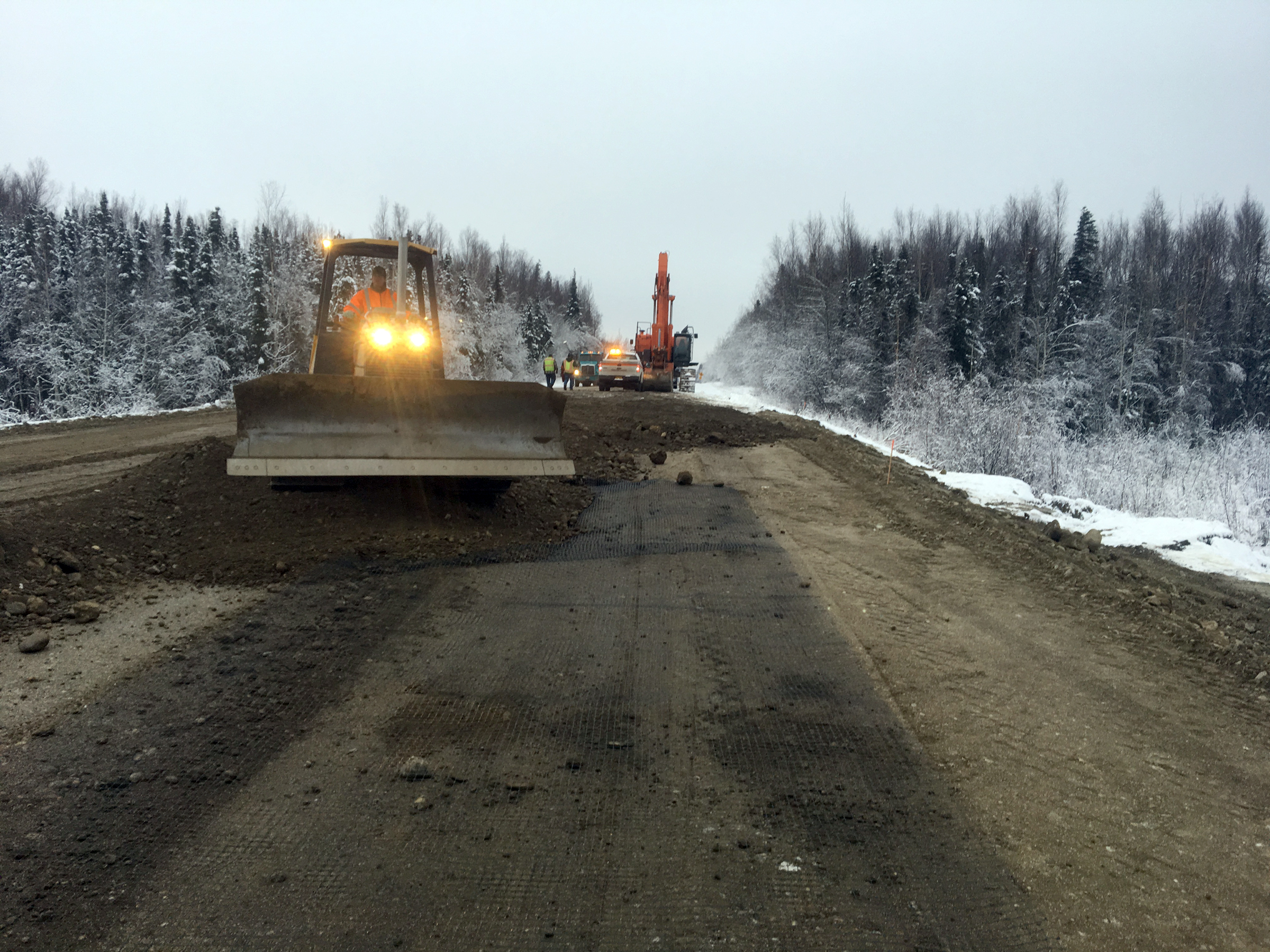
McCarthy said that DOT is going to continue to monitor the Glenn Highway exit toward Palmer referred to as the Glenn flyover. Last summer, DOT crews made quick work of the exit that had been paired down to one lane following the dramatic slough off of large chunks of earth from the side of the exit bank. The gravel was dug out, wrapped in geotechnical fabric and compressed repeatedly until it was suitable for vehicle traffic. The Glenn flyover may need additional repairs, but will be continually monitored by DOT. At the internal awards hosted by DOT, McCarthy said that nearly 100 awards were handed out for heroics during the quake cleanup. While Alaska DOT deals with road issues unique to many parts of the country, they were prepared by another unique apocalyptic type event that had plagued motorists in the past.
“What really changed for DOT was when we had that bridge strike on the Glenn,” McCarthy said
McCarthy said that following the bridge strike that left commuters in a traffic jam for days, DOT ran through possible scenarios requiring alternate routes around the Glenn Highway. McCarthy said that DOT prepared fortified conference rooms as a space for a command center with electrical backups and communications backups that would work in case of an emergency. McCarthy also said that DOT sent more staff through incident command training.
“We really were working on that practicing on that, taking a look at the Glenn and coming up with bypass strategies in the short term and long term and that set us up for success on November 30,” McCarthy said.

By Jeremiah Bartz Frontiersman.com A football coach using a hockey reference as the centerpiece for his keynote address may

Frontiersman.com With its headquarters in Wasilla, the Frontiersman has been a primary source of news for the Matanuska-Susitna

By Katie Stavick Frontiersman.com The next generation of leaders took flight this week as the Houston High School Class

By Kyle Wilkinson For the Frontiersman Keynote speaker and Carry the Cure President Bill Pagaran’s words boomed through the