Retiring teacher, coach urges Colony grads to ‘find their 68’
By Jeremiah Bartz Frontiersman.com A football coach using a hockey reference as the centerpiece for his keynote address may


“This is definitely the craziest thing I’ve ever tried.” said former Boeing machinist and local artist, Jim Morris.
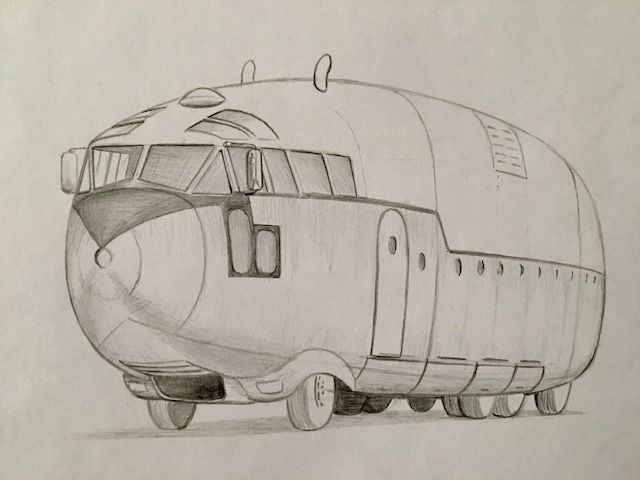
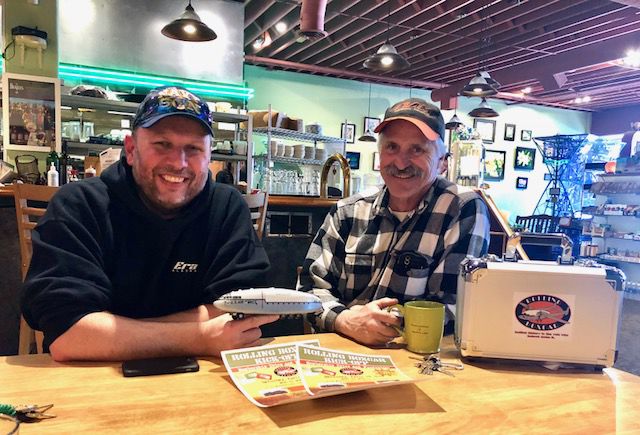
What Morris is referring to is the reconstruction of a vintage Fairchild C-119 Flying Boxcar aircraft into a mobile museum, art gallery, performance venue, and coffee shop — which Morris will complete as Vice President of the non-profit organization, Rolling Boxcar, Inc., along with project President, John Will.
The first step toward even considering the project was to gather the funds, which is why Rolling Boxcar, Inc. is throwing its first in a series of fundraisers this Saturday, April 14 at the American Legion Post 28 in Anchorage.
The original spark for this wild idea was quietly simmering in their heads until one day Morris finally spoke up.
After their shifts de-icing airplanes at Ted Stevens Anchorage International Airport together, they’d park their trucks next to an old C-119 that had been planted there for over 25 years, sinking in the dirt.
Looking at it for so long, Morris turned to Will and casually said, “Wouldn’t that make a great party bus?”
“It all just exploded from there.” said Will.
His reply to Morris was, “It’s funny you should say that because I’ve been thinking, ‘Man, we could do something with that. It’d be a shame to just watch it rot.’”
The two began some research and started getting serious about their idea that eventually evolved into something much more elaborate.
They discovered the C-119 at the airport was unattainable and had a long history of complicated paperwork attached to it. But they pressed on, anyway.
“They’re intense and they’re enthusiastic.” said Rachel Saxby, Board Chairwoman for Rolling Boxcar Inc. “The Boxcar Boys are on a mission and cannot be stopped.” Saxby said.
The best option for their C-119 in good shape is in Nevada. Will believes they can get their hands on that plane soon so they can begin their work and possibly be able to display it at the Alaska State Fair in August. Realistically, however, completing it by then may not be possible at this point since they do not officially have a plane yet.
A project of this size has no room for mistakes, nor do they need to rush it. “We want to do it right, we want a class act.” Will said.
Thinking ahead, the Boxcar Boys found other C-119 planes in other locations if the one in Nevada does not work out.
Once they get their hands on one, though — look out.
Morris and Will have no previous experience combining their particular skills together on any projects — unless you consider de-icing airplanes.
Morris’s skills fall toward the artistic side having a background in architectural drawing and painting. Morris also has extensive experience working as a engine and airframe machinist.
Being an avid and detailed painter of aviation scenes and more, Morris said, “This’ll be my first 3-dimensional aviation project.”
Will served in the Air Force as a KC-135 Stratotanker mechanic and crew chief.
“I think with both our skills put together, we can really make some things happen.” said Will.
Things are happening. They already have the blessing and legalities worked out with the D.O.T. Will called them up and arranged a meeting to bounce around every idea they had regarding a drivable airplane.
“I thought they was going to look at their watches and wait until we leave.” Will said. But the reaction they got was quite the opposite. “They opened up a conference room and they had a bunch of people there and were very pro this idea.”
Not only did they explain to them that they could do it legally, but they were supportive of their inventiveness.
Will mentioned the D.O.T representative added, “If you have any trouble let us know, we want to see this thing go.”
The repurposing of a vintage C-119 like this has never been considered by anyone before, they said, and knowing that it is doable now got the project rolling faster for the boys physically and mentally.
“We must be meant to build this thing.” Morris said.
Every obstacle they found was always overturned and green-lighted either through reassurance from the D.O.T, research, or Morris’s knowledgeable consultant, Troy Stoneking.
Here is their ambitious plan:
Once Morris and Will get their hands on a C-119, they will travel to its location and dismantle it.
Many parts of the planes fuselage will be cut off for the redesign; the tail, wings, twin boom, the engines and landing gear. It will then be smoothed out and prepared for a road trip to California where Will’s brother offered his land and workshop to continue their plans.
During the summer in California, all the fine detail work will be underway, including the connection of the C-119 boxcar to the diesel-fueled, automatic transmission 40-foot bus chassis.
The busses transmission and engine are located up front where it will fit within the seven feet of room given within the boxcar, so there will be no obstacles to maneuver about inside the open boxcar once completed and on display. The original floor of the C-119 will be thoroughly flat as if the whole joining of the two machines were a happy marriage.
“Every time we did that math we’d say, ‘wow that lines up perfectly.’” Morris said.
To make it legal and safe as possible for the road ahead, the boxcar will have extended side mirrors and cameras installed for much-needed vision. The 84-passenger bus chassis will also be altered to include two extra wheel axles for greater stability.
When traveling in some states, the boxcar will require a pilot car to be driven ahead, which can be stored inside when it is not necessary.
The cockpit will be kept to its fundamental layout during the reconstruction phase in hopes to have veterans sit in it and relive their days of flying C-119s and aircrafts like it.
“We want to restore the cockpit to its original design.” Will said. “You get an old pilot to sit in there, they’re going to have a story. Whether it be days over at Vietnam or Korea — you’re going to get stories.”
The controls will not function of course, but getting it anatomically correct is important for veterans to recognize it.
“The hardest part for us will be getting it built.” Morris said. “The fun part will be getting all the markings on it accurate.”
The exterior of the C-119 boxcar will feature the classic motif of the models built in the late 1940s and 50s. “It just looks like 1950s art-deco,” Morris said.
When the whole thing is completed in the small town they’ll be building the Rolling Boxcar in, it’ll be time to hit the road — north to Alaska.
Although an airplane without wings driving like a truck on the highway will be a spectacle to see anyway you view it, it will not be taking up the whole road believe it or not. The dimensions of the boxcar are surprisingly smaller than you may think.
From tip to tip is 6 feet; from top to bottom will be near 14 feet and the width is 11.6 feet. Understanding the size of large vehicles, that it not much larger than a tractor-trailer.
Being one of the only planes ever made exclusively for cargo, the inside is larger than most aircrafts ever built. “You can fit two Chevy Suburbans in there,” Will said.
They’ll need that large open area inside, because once they reach Alaska, they’ll be showcasing all the elements inside, complete with a strong Alaska theme.
“We want to keep it Alaska,” Will said. “Alaska has a lot of draw to it.”
When the boys take the Rolling Boxcar on tour, they want to represent Alaska through its license plates, all the artwork, and then continue the theme right down to the coffee being served, sourced out of Palmer.
The Rolling Boxcar’s future tours will stop at various air shows, fairs, VFWs, AMVETS, American Legions, VA hospitals and Veterans Day Parades all across America.
“If this was parked anywhere, its going to draw attention,” Will said. “The press is going to find out and it’ll stir a lot of people up and get them there.”
Getting people there was always the goal.
“The Rolling Boxcar project is about bringing Alaska’s military history to the public through entertainment and art,” Saxby said.
The public has opportunities to be a part of the project through the website and the traveling tours and fundraisers.
Rolling Boxcar, Inc. is celebrating the opening fundraiser and membership drive Saturday from 4 to 9 p.m. at the American Legion Post 28 at 7001 Brayton Drive. There will be food and drink, door prizes, artwork and handmade jewelry on display, split the pot, a silent auction and a variety of live bands featuring John Will himself playing with the Nuther Brothers.
This event is intended to help raise the main thing they need — roughly $75,000 to fund the entire project.
Details about this project and how to contribute can be found @ www.rollingboxcar.com
Robert Foran III’s work can be followed through Foran Brand Journalism on Facebook & foranbrandjournalism.com

By Jeremiah Bartz Frontiersman.com A football coach using a hockey reference as the centerpiece for his keynote address may

Frontiersman.com With its headquarters in Wasilla, the Frontiersman has been a primary source of news for the Matanuska-Susitna

By Katie Stavick Frontiersman.com The next generation of leaders took flight this week as the Houston High School Class

By Kyle Wilkinson For the Frontiersman Keynote speaker and Carry the Cure President Bill Pagaran’s words boomed through the