Retiring teacher, coach urges Colony grads to ‘find their 68’
By Jeremiah Bartz Frontiersman.com A football coach using a hockey reference as the centerpiece for his keynote address may


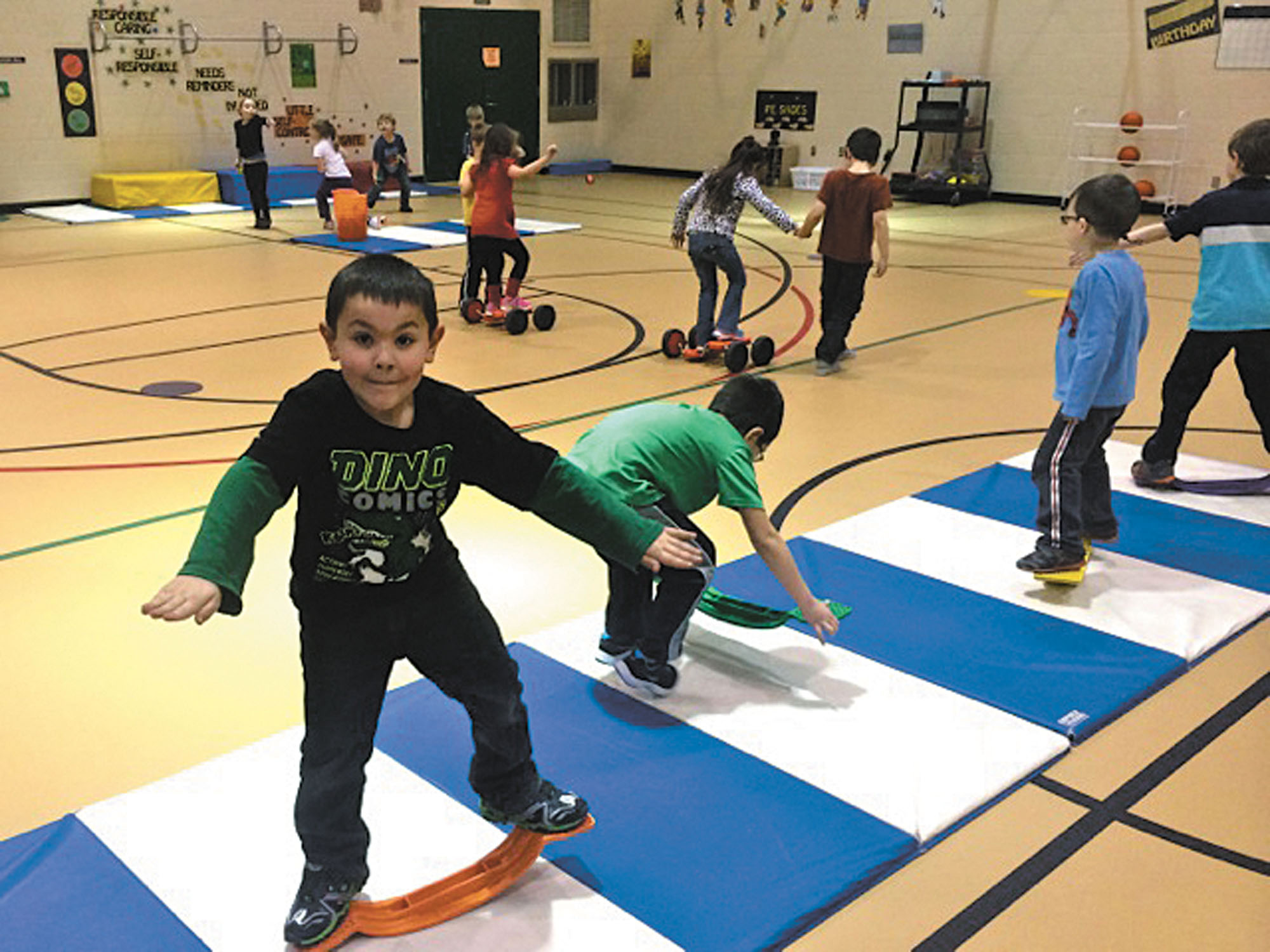
In most elementary schools, there are certain subjects referred to as “specials.” These subjects often include physical education, music and art.
For many students, this is the most anticipated part of the day. This is the space that invites self-expression, creativity, exploration and discovery.
Some people think these are the extras, the frills, of our public education system, but I disagree.
Our students, our teachers and our schools are deemed to have succeeded or failed based upon student scores on high-stakes, standardized tests. There is much discussion related to the accuracy of these measures, but there is no debate as to whether “specials” programs benefit our students’ academic and future success.
Did you know that students who learn to play an instrument do better at math? Did you know that students who are physically fit perform better on academic tests?
At all ages, brain development is enhanced by participation in aerobic activity containing both social and complex components. You can see this on any episode of “Dancing with the Stars,” or experience it first-hand in your child’s physical education class.
Physical education, music and art classes are the perfect venues to cultivate “soft skills.” Soft skills are the personal qualities, rather than specific technical skills, that one needs to be successful in the working world.
Communication, problem solving, motivation, teamwork and creativity are a few examples. These traits are highly considered in hiring decisions, and are often cited as lacking when problems arise in the work place.
I recently came across a statistic that reinforced this premise. It was reported that students who participate in the arts (including sports) are three to four times more likely to get elected as class officer.
This is not surprising when you reflect upon the skills developed in these settings. Students gain confidence through self-expression.
They learn to appreciate the spectrum of expression in others. They pursue their own individual goals, whether it is to learn a piece of music, create a unique work of art, or achieve a personal-best in their chosen sport or fitness objective. They work to bring out the best in their teammates, be it as a member of the orchestra, ensemble or athletic team.
These students work doggedly to succeed. In their pursuit, they develop self-management skills and improve their ability to communicate with others. It is no wonder such students are viewed as leaders within their peer group.
Students will tell you that these are the “fun” classes. But don’t let that fool you. Hidden within the fun, there is plenty of learning taking place. I suppose that is what truly makes these classes so special.
Nancy Blake teaches physical education at Goose Bay Elementary School.

By Jeremiah Bartz Frontiersman.com A football coach using a hockey reference as the centerpiece for his keynote address may

By Katie Stavick Frontiersman.com The next generation of leaders took flight this week as the Houston High School Class

By Kyle Wilkinson For the Frontiersman Keynote speaker and Carry the Cure President Bill Pagaran’s words boomed through the

By Jeremiah Bartz Frontiersman.com The community of Palmer is known for a couple of things. At or near the