Retiring teacher, coach urges Colony grads to ‘find their 68’
By Jeremiah Bartz Frontiersman.com A football coach using a hockey reference as the centerpiece for his keynote address may


WASILLA — When Fallen Up Ministries Founder Terria Walters introduced the Bridge to the Mat-Su Opioid Task Force this week, members’ attentiveness suggested an initial “too good to be true” attitude.
“I call it the Star Trek device, because it’s like, how does this thing even work?” Walters said at a regular task force meeting at MY House homeless youth center on Tuesday.
Physician’s assistant and Bridge representative Paul Finch, who works for Turning Point Counseling Services in Fairbanks, attended the meeting with a client to explain.
“This really is magic,” Finch said, holding up a small plastic bag containing the device. “It’s not perfect, but it really does work very well.”
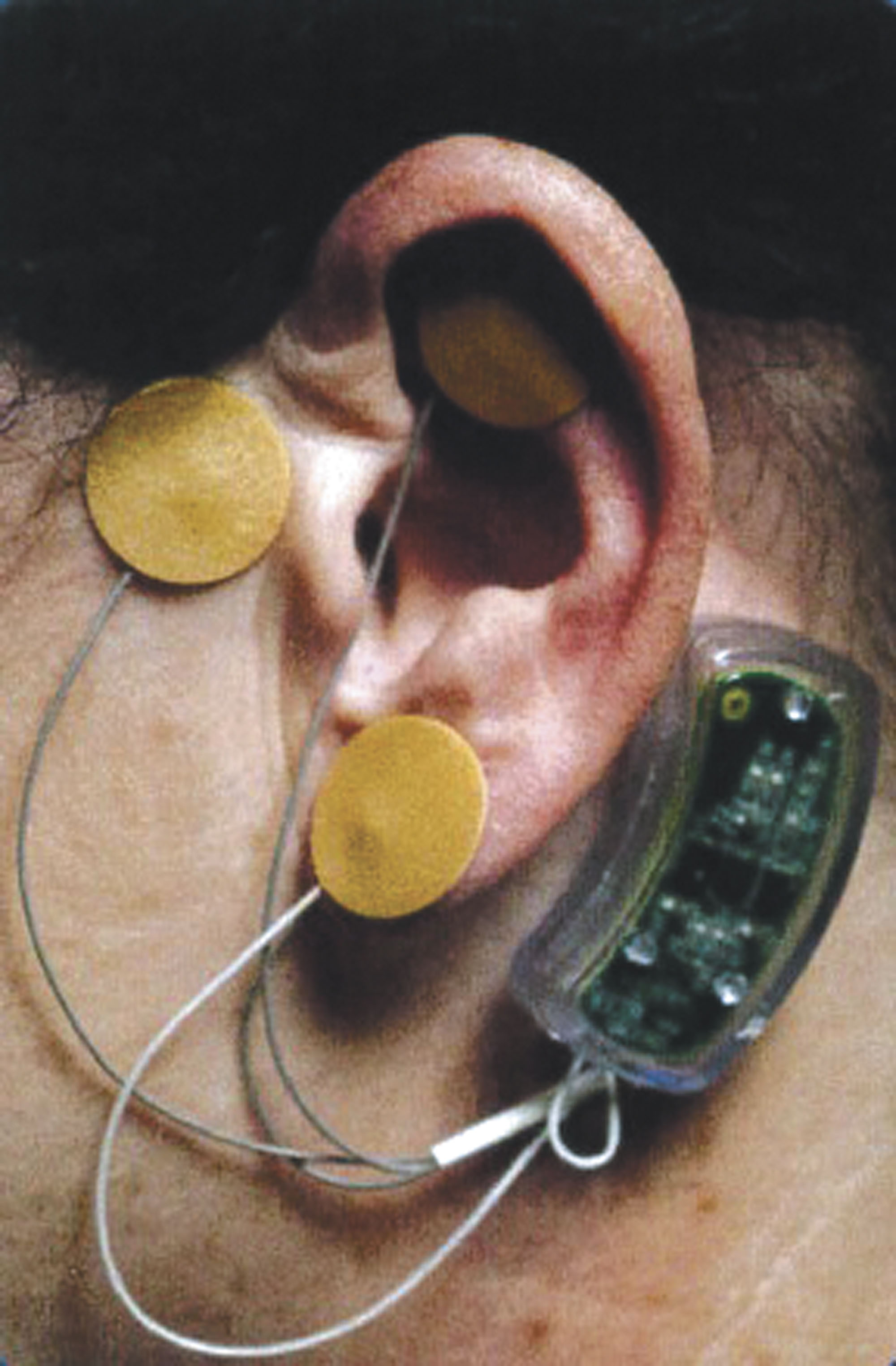
According to the product website, the Bridge is a non-invasive, FDA-approved neurostimulator designed to reduce opioid withdrawal symptoms. It consists of a roughly one-inch-long, ¼-inch-thick battery connected to four electrode patches, and looks “kind of like a hearing aid,” Finch said.
Patches are applied to the earlobe, tragus, fossa (upper inside of the ear) and concha (back of the ear). The battery is adhered to the skin above the mastoid behind the ear with a kind of glue, prepped with tincture of benzoin so as not to cause irritation.
When initiated, the device creates a small electrical field that stimulates the nervous system, producing endorphins, increasing circulation and decreasing inflammation, Finch said. Side effects can include mild euphoria and dizziness, he said, but it’s always more bearable than going through withdrawals without the Bridge.
“It works 100 percent of the time, and it takes at least 75 percent of the symptoms away. Some kids say up to 90, 95 percent, it depends,” Finch said.
Still, “everybody withdraws different,” he said, and patients might require “comfort meds,” in addition to the Bridge, to get past symptoms Finch likened to “the flu from hell in a warzone.” Patients can also use two devices, one on each ear, he said, to better cope with the withdrawal.
“It does the heavy lifting,” he said.
The Bridge works continuously for 120 hours, expiring after five days, Finch said. The battery is not replaceable and the device must be treated as a biohazard, disposed of as medical waste, he said.
After use, patients may experience some “residual effects,” Finch said, so physicians should wait about three days before administering Vivitrol or other relapse prevention drugs. Patients who are pregnant, prone to seizures, or use pacemakers may not want to use the device, he said.
“You gotta choose your patient,” he said.
The device itself costs the patient about $600, but should be “part of a package,” Finch said, to include at least one follow up appointment with the administering physician and counseling support for the duration of detox. The device does not have to be installed by a physician and a buyer does not need a medical license to purchase one, he said, but the likelihood for patient relapse increases without a continuum of care.
Task force member Dr. Michael Alter expressed high hopes for the device in Mat-Su, especially given the cost.
“A few hundred bucks … is chump change in the medical world,” Alter said.
Finch, playing devil’s advocate, said that few hundred bucks “might as well be a million” to “someone on the street” without adequate insurance, but the two men — and Wasilla Mayor Bert Cottle — agreed that the Bridge was “not out of reach” for opioid users looking to get clean.
“Six hundred bucks, I don’t know anybody who wouldn’t pay that for their kid or their grandkid,” Cottle said. “This is a cheap starting point, and you’re not gonna get a better deal.”
Walters suggested those interested in the device check out the INSynergy Stl YouTube channel, which shows patients in the early stages of detox before and after application of the device.
“Because I’m in recovery and I know what it’s like to detox, I recognize the symptoms and the signs as they are changing after the device is applied, so that’s why I’m like super optimistic about this,” she said.
Task force members tossed around the idea of getting an organization like Fallen Up Ministries or Alaska Wisdom Recovery in Wasilla to write a grant to obtain funding for the wholesale purchase and administration of 100-200 Bridge devices, but Finch’s patient was a reminder that additional treatment options have to be in place.
The 26-year-old told the task force he’s used the Bridge three times, and successfully detoxed each of those times. He said he was using between half a gram and two grams of heroin a day, in addition to methamphetamines, when he first used the device. He still felt some mild tingling in his arms during the detox period, he said, but even that lessened the second and third times he used the device.
The problem was, he relapsed shortly after the first detox, before he was able to get the Vivitrol shot.
“The three days in between, you gotta like stay on top of it, because once you get it off … it’s like, see ya,” he said.
The second time, he made it through detox, got the shot, and felt “cured,” so he didn’t think he needed additional therapy. Since he quit meeting his counseling appointments, he wasn’t permitted to receive anymore Vivitrol shots, and relapsed a couple months later.
The young man said he’s been clean for a month now, and living in an RV on his mother’s property has helped to keep him accountable. However, he couldn’t say for sure he’d have the willpower to stay clean on his own.
“It’s gonna really screw up a lot of (expletive), if I (leave),” he said.
While the patient and other task force members acknowledged the road to recovery is a long one, the Bridge, John Green said, is a start.
“I think to really make a difference in people’s lives, all options have to be on the table,” he said.
Contact reporter Caitlin Skvorc at 352-2266 or caitlin.skvorc@frontiersman.com.

By Jeremiah Bartz Frontiersman.com A football coach using a hockey reference as the centerpiece for his keynote address may

Frontiersman.com With its headquarters in Wasilla, the Frontiersman has been a primary source of news for the Matanuska-Susitna

By Katie Stavick Frontiersman.com The next generation of leaders took flight this week as the Houston High School Class

By Kyle Wilkinson For the Frontiersman Keynote speaker and Carry the Cure President Bill Pagaran’s words boomed through the