Retiring teacher, coach urges Colony grads to ‘find their 68’
By Jeremiah Bartz Frontiersman.com A football coach using a hockey reference as the centerpiece for his keynote address may


A management plan issued 36 years ago this month for the Matanuska Valley Moose Range is getting an update from the state as conflicts between user groups fester and expanding recreation threatens the wildlife the plan was put in place in part to protect.
The about 130,000 acre wildlife and recreation area stretches from near Hatcher Pass east past the Long Lake State Recreation Site. It includes four creek or river drainages, and hosts subsistence and recreation hunting and trapping, resource extraction like mining and timber and year round motorized and non-motorized recreation.
The current plan, issued in 1986, allows for those wide-ranging uses across the Range with few constraints. But the Borough’s population has almost tripled since it was written, creating areas where heavy use conflicts with salmon and other habitat. And since plans like this one are only meant to last 15 to 20 years, the area is well ready for a refresh, said Sue Goodglick, a habitat biologist for the state who is helping write the new plan.
“It’s long overdue,” she said. “Just to keep up with public resources and public use of the area, it’s something that should happen anyway.”
The new plan will guide use and management of that area for the foreseeable future, including deciding if some trails will be closed to motorized use. Residents can contribute comments on what they think should happen through October 31 via the state’s public comment system or by taking the online questionnaire.
In the original plan the Moose Range is divided into the three sections — the eastern section, which includes most of the Chickaloon River and Boulder Creek drainages, the middle section, which includes Kings River and Granite Creek drainages and the heavily used western section, which includes the recently created Jonesville Public Use Area near Sutton and the popular skiing, fat biking, ATVing and snowmachining area near Wasilla-Fishhook Road.
Jonesville Public Use Area, which is inside the larger Moose Range, was created in 2018 to mitigate recreation safety problems near Sutton, including the accidental shooting of a man in 2016. The Moose Range reassessment, Goodglick said, is being conducted as a part of the management planning for that new area.
While the Moose Range as a whole doesn’t have the same problems the Jonesville region has experienced, there are nonetheless simmering conflicts between user groups as more and more people turn to the trails for recreation, particularly in the western section near Hatcher Pass.
Both state-recognized and social trails in that area are groomed for skiing in the winter by the MatSu Ski Club, but then are open for all user groups. That means skier safety can be at risk from snowmachiners whipping around turns, while motorized users may feel skiers are needlessly monopolizing the area. Heavy ATV use has also left many of the trails gutted with deep ruts, an especially persuasive problem during a very wet summer.
Borough officials have been working ahead of any new plan to protect salmon habitat by rerouting existing trails away from some wetland while creating stream fords that help avoid deep, problematic ruts, said Mike Campfield, a project engineer who is overseeing work in the area.
“The trails have definitely had more wear and tear on them — they’re in pretty rough shape now to the point where it’s almost hard to still ride a four-wheeler out there,” he said. “We’re spending the money doing the work … and then hopefully people will stay out of that area while the wetlands heal.”
Two regular Moose Range users said they hope planners mitigate overuse by designating some trails as non-motorized only. Kaylene Johnson, whose family lives nearby and uses the trails for horse riding, ATVing and skiing, said much of the area is currently usable.
“These trails have become inaccessible because of four-wheeler use, the only thing that can get out there now on the trails are the ATVs,” she said. “For a place that’s supposed to be allowing public access, it’s not anymore.”
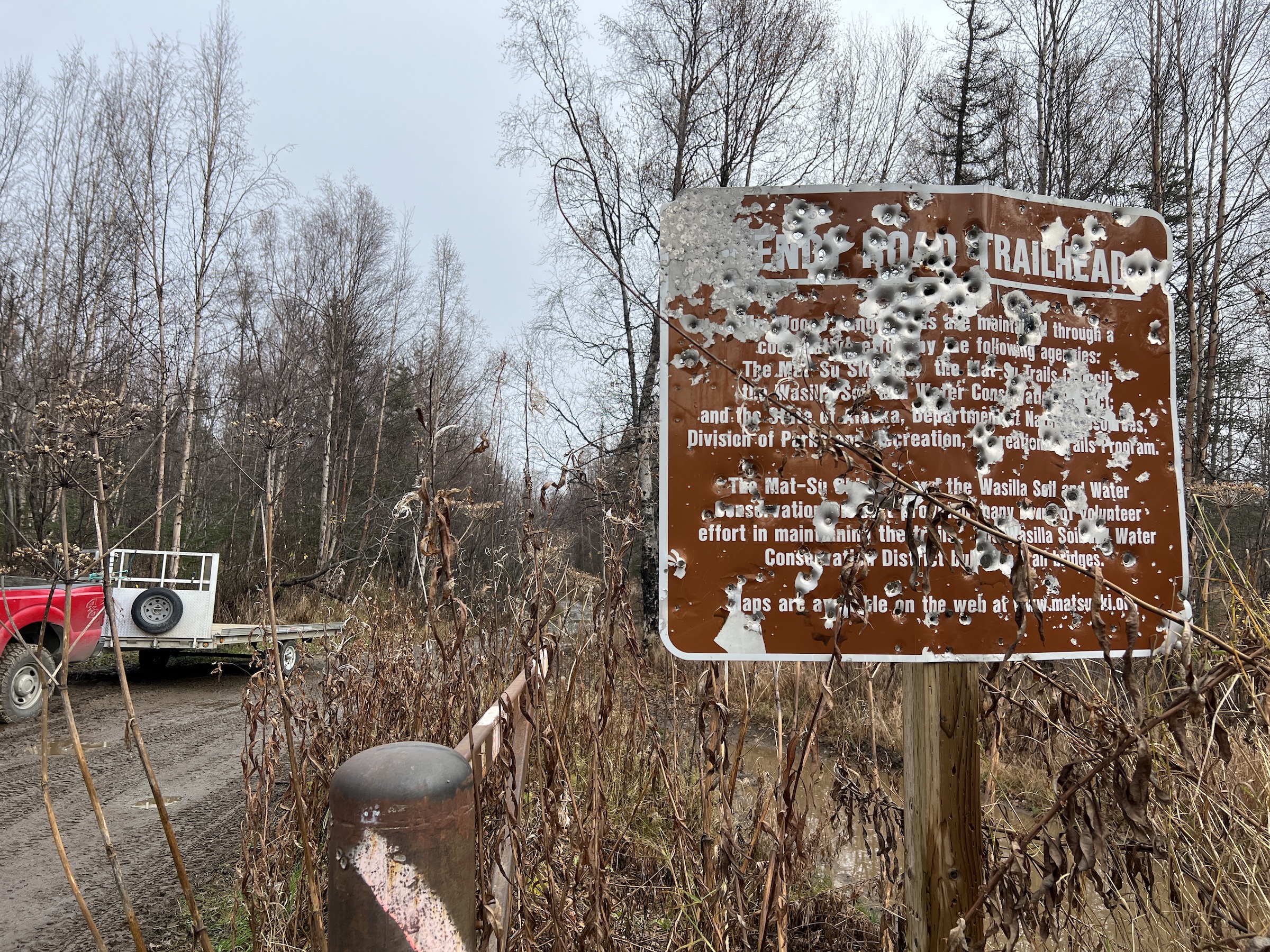
Johnson said some inconsiderate hunters leave behind trash and caracasses. And unchecked shooting and target practice near and on trails also creates a dangerous situation for all users.

By Jeremiah Bartz Frontiersman.com A football coach using a hockey reference as the centerpiece for his keynote address may

Frontiersman.com With its headquarters in Wasilla, the Frontiersman has been a primary source of news for the Matanuska-Susitna

By Katie Stavick Frontiersman.com The next generation of leaders took flight this week as the Houston High School Class

By Kyle Wilkinson For the Frontiersman Keynote speaker and Carry the Cure President Bill Pagaran’s words boomed through the