Retiring teacher, coach urges Colony grads to ‘find their 68’
By Jeremiah Bartz Frontiersman.com A football coach using a hockey reference as the centerpiece for his keynote address may


PALMER — Forty people walked a mile-and-a-half loop visiting historic buildings on Wednesday on a tour led by Alaska Picker Kelly Turney.
Did you see them, or did they make the whole loop in the underground tunnels?
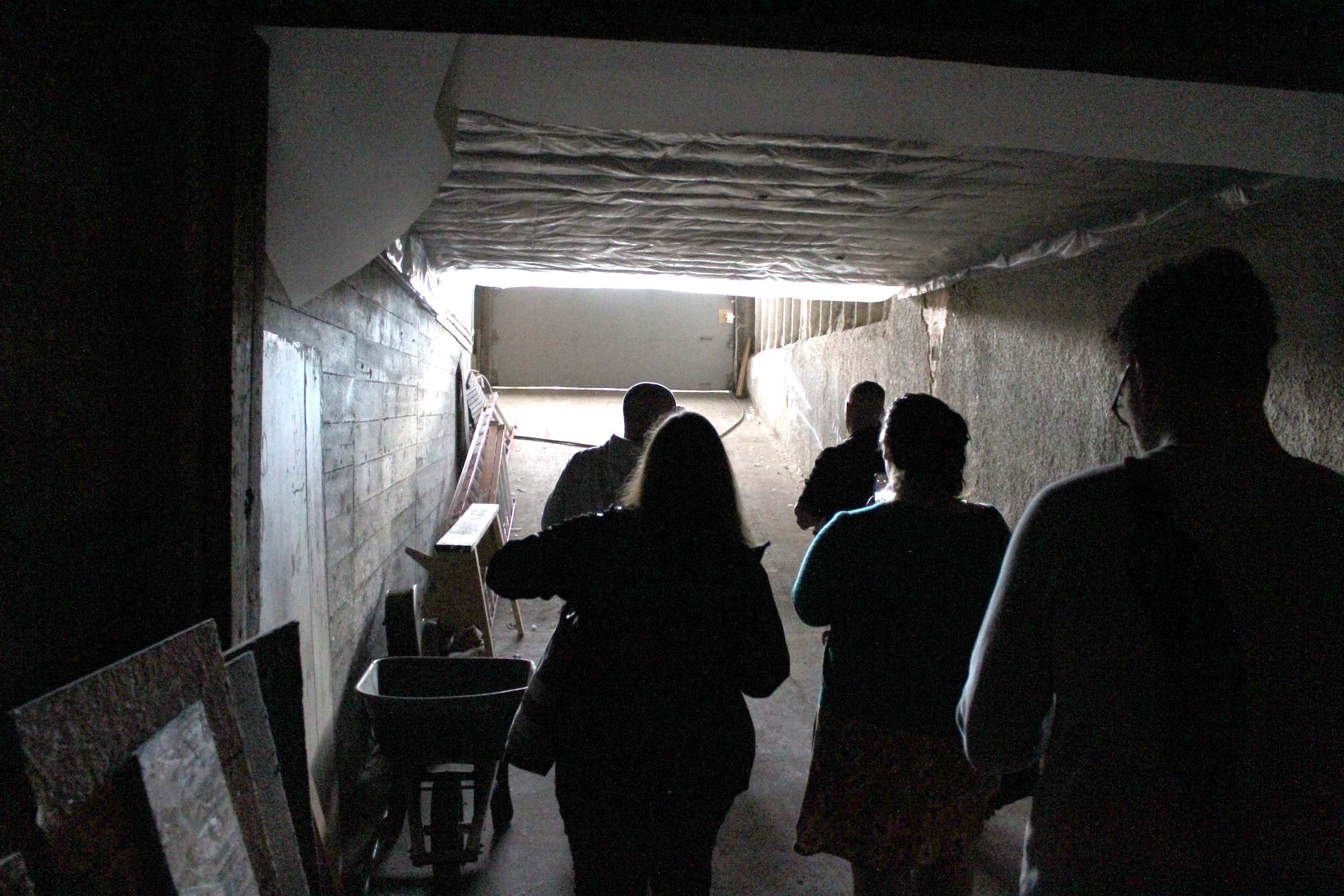
The tour started at Alaska Picker and headed west toward the Colony Inn, a building which originally housed the teachers at the central school, now the Mat-Su Borough’s main office building. Turney noted historical buildings on East Dahlia Avenue. Many tourers (because tourists are not from this place, and everyone on the tour was very concerned with their hometown, hence making them tourers) were surprised to hear that in the basement of what is now the Palmer Alehouse was at one time an indoor shooting range where Alaska State Troopers and Palmer Police Department officers would sight in pistols. In 1935, buildings on this block were central to the original Matanuska Colony, and possibly none more essential than the Inn Cafe.
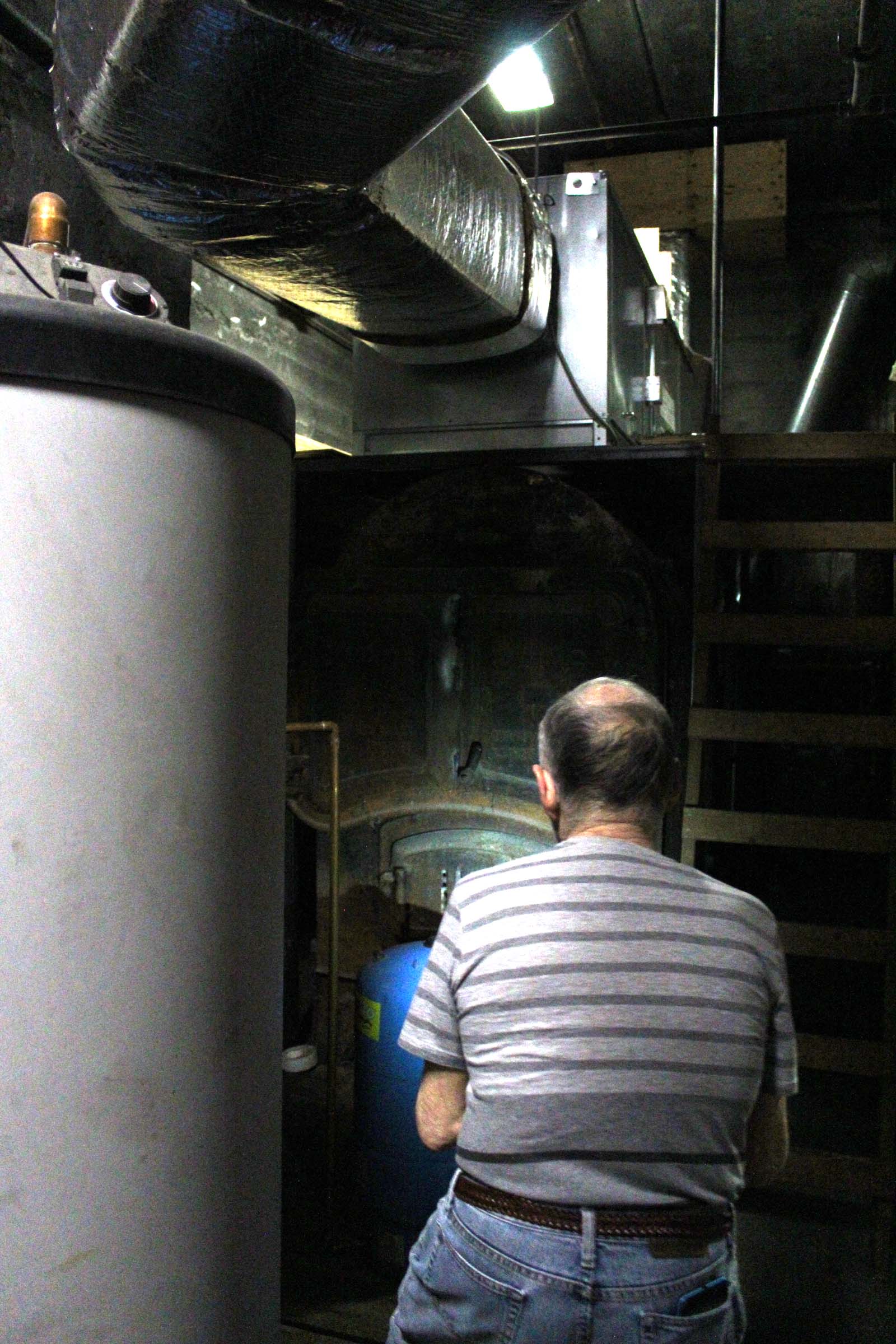
Two massive coal boilers are located two floors beneath the ground level at the Inn Cafe. Originally, these boilers sent steam out to heat buildings on that side of the railroad track. In a coal room 20 feet high, a slanted chute reaches up to the street. This chute is where trucks would dump coal into the room to be piled up and used to send heat out through the utilidor.
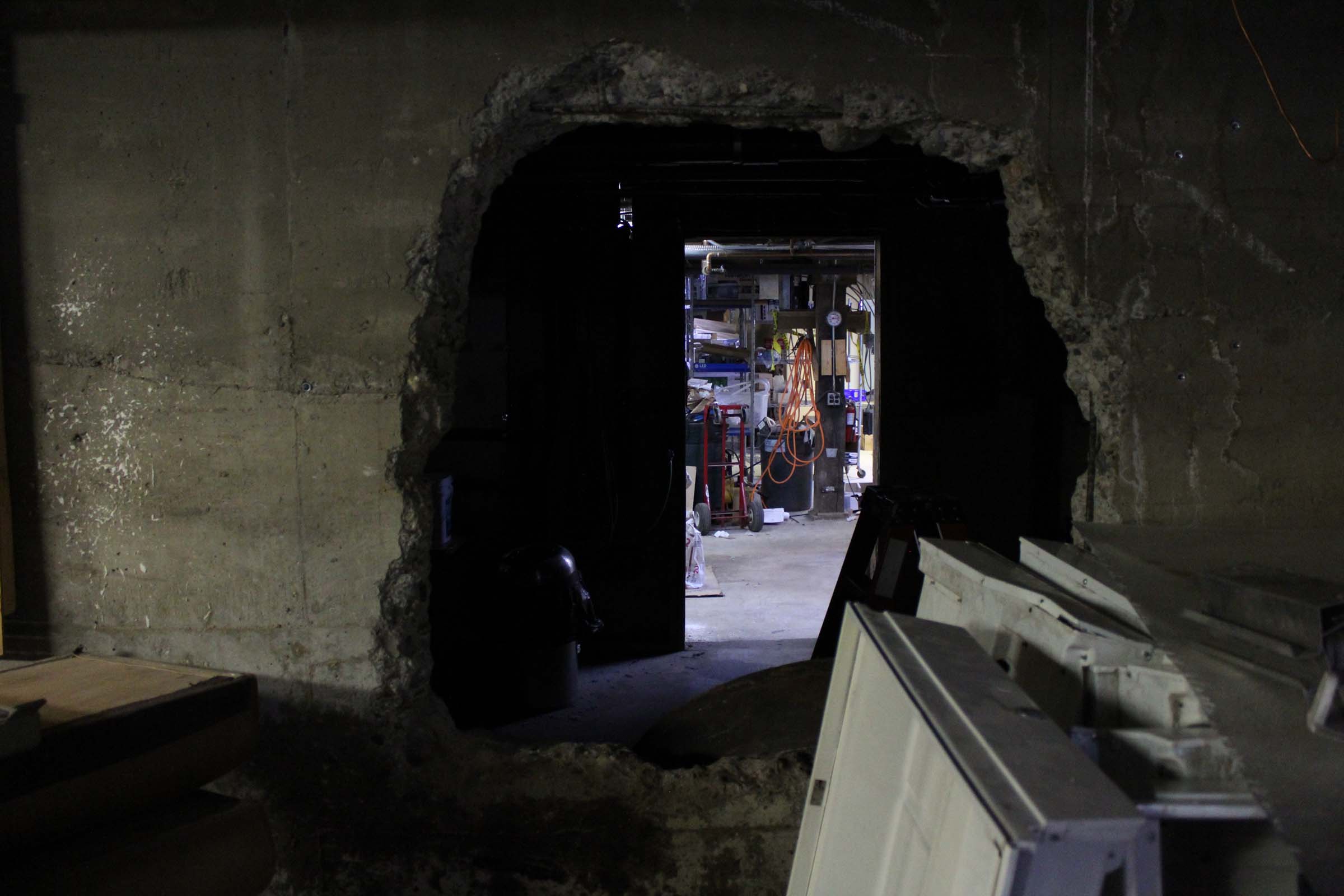
While the building has been remodeled many times, it still bears the marks of the history it was right in the middle of. In the boiler room adjacent the coal room is a square, four-and-a-half feet by about five feet that has been cemented over, once the maintenance access to the utilidor that ran across the street to heat the superintendent’s home, which is now the Colony House Museum.
Although it may seem that rampant property crime in the Valley has become worse than ever, at least it isn’t as bad as 1973.
THE BOMBING
Turney led the tour to the Palmer Train Depot to show off some old lumber and dusty light fixtures. Turney discussed how to spot original Colony house features, and those that may have been changed. Slanted window sills, fir floors, and stencils on lumber showing an order number are all telltale signs of history. The Palmer Train Depot is the closest thing the town has to a community center, Turney said. He led the tourists in amazement to the basement, showing some of the original light fixtures that hung in the depot, and why the depot has a bad history with cats. The basement that Turney took the tourists to is nothing out of the ordinary. But look up, and you’ll see order markings from when the lumber was originally ordered from yards in Southeast Alaska. Turney is training his eager audience to spot signs of history that someone might walk past every day.
Palmer City Hall is one of the most resilient, if not versatile buildings in Palmer’s brief history. It has housed, at one time or another, the city hall, the library, the jail, the Department of Motor Vehicles, the Fire Department and the Police Department. It was also the site of the city’s only documented bombing. In 1973, a man who was allegedly working as an informant for PPD was arrested by Anchorage Police, swearing up and down he was working with the good guys. When he was eventually released, he planted two bombs on each of the front corners of the Police Department. On August 16, 1973, at about 9:55 p.m., one of those bombs exploded in the basement. Officers evacuated the building, and just as officers began to radio Anchorage Police, the second bomb went off, possibly due to the radio waves.
The extent of the damage of a bombing in 1973 was that a Police vehicle was never quite the same.
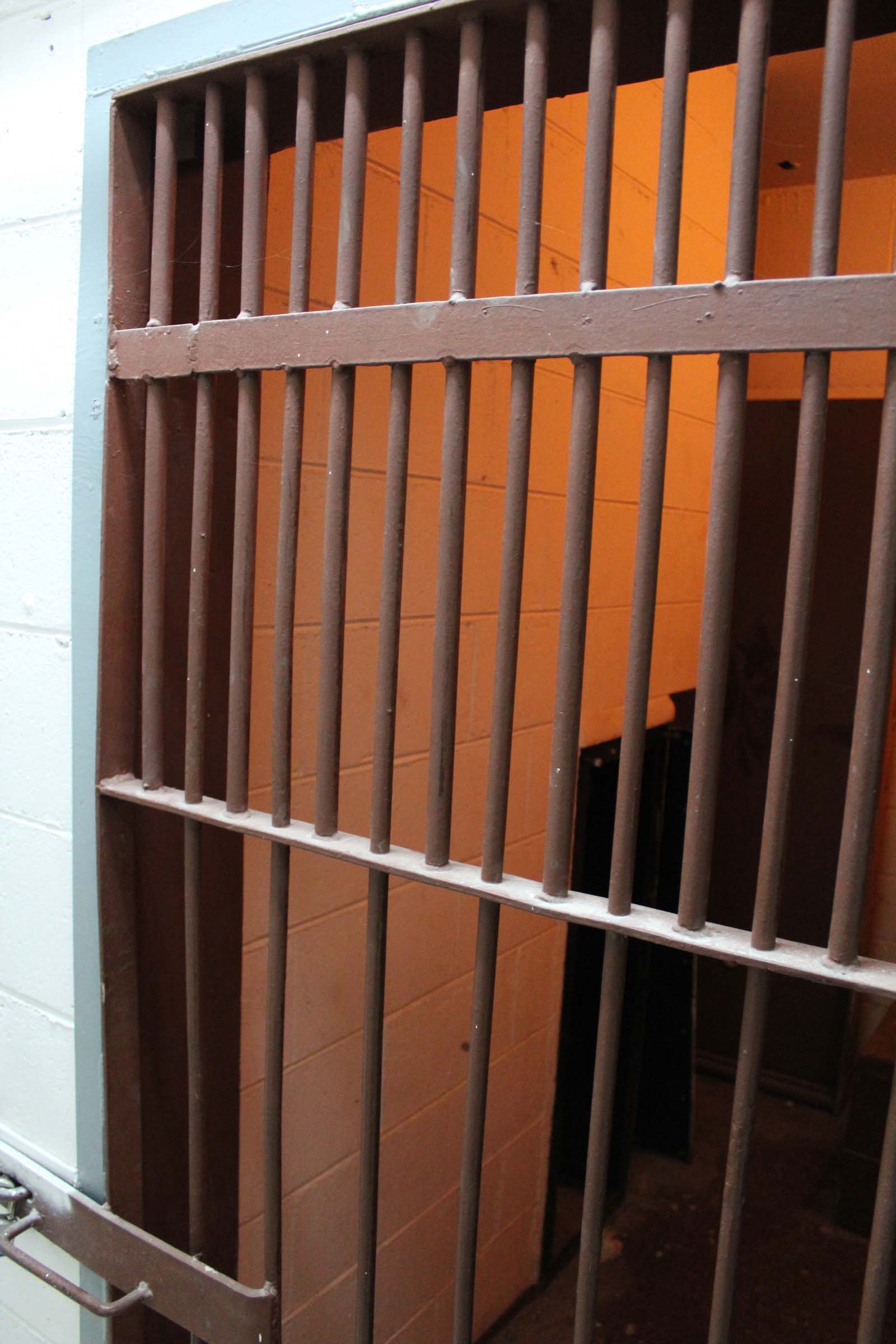
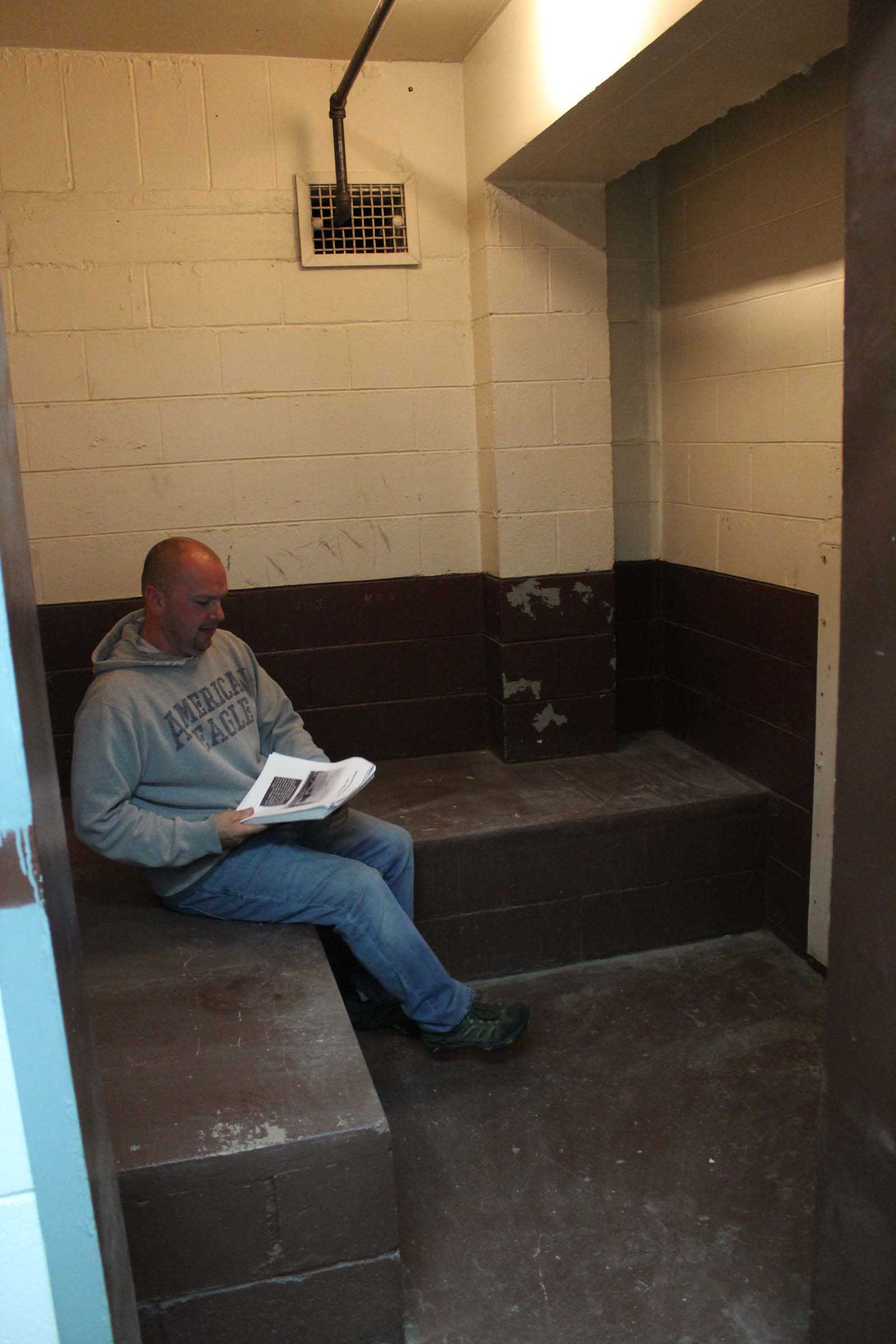
Those on the tour were able to put a little more of a picture to the story, going into the basement to see the two jail cells that still remain. An L-shape of cinder blocks curls around the outside for what could be considered bedding. The restroom facilities are very creative in their use of space. Turney reported that there had been one documented escape of someone who was able to crawl through a hole and get free, but was later picked up at the bar.
THE LIGHT, THE WHISTLE AND THE SWITCHBOARD
Various hidden clues have been left throughout Palmer’s history that remain in plain sight today. A light that sits atop the Valley Hotel is almost never used. When it is lit up, its color is red. Why? The light is connected to another old piece of history left only to be remembered. The light was the original police and EMS signal. Officers would drive around making left turns, waiting to see the light go on, described Turney.
“So if you ever see the red light it’s like the bat signal for historical Palmer,” Turney said.
A whistle that sits atop the Fire Department has had varied effectiveness over the years. It used to be connected to the steam utilidor, and the power of the sound coming through the whistle was much louder, rumored to be able to be heard in Sutton. It mysteriously disappeared, and then reappeared in a barn. Though it used to sound at 8 a.m., 12 p.m., 1 p.m., and 5 p.m., it now only sounds at 8, 12, and 5.
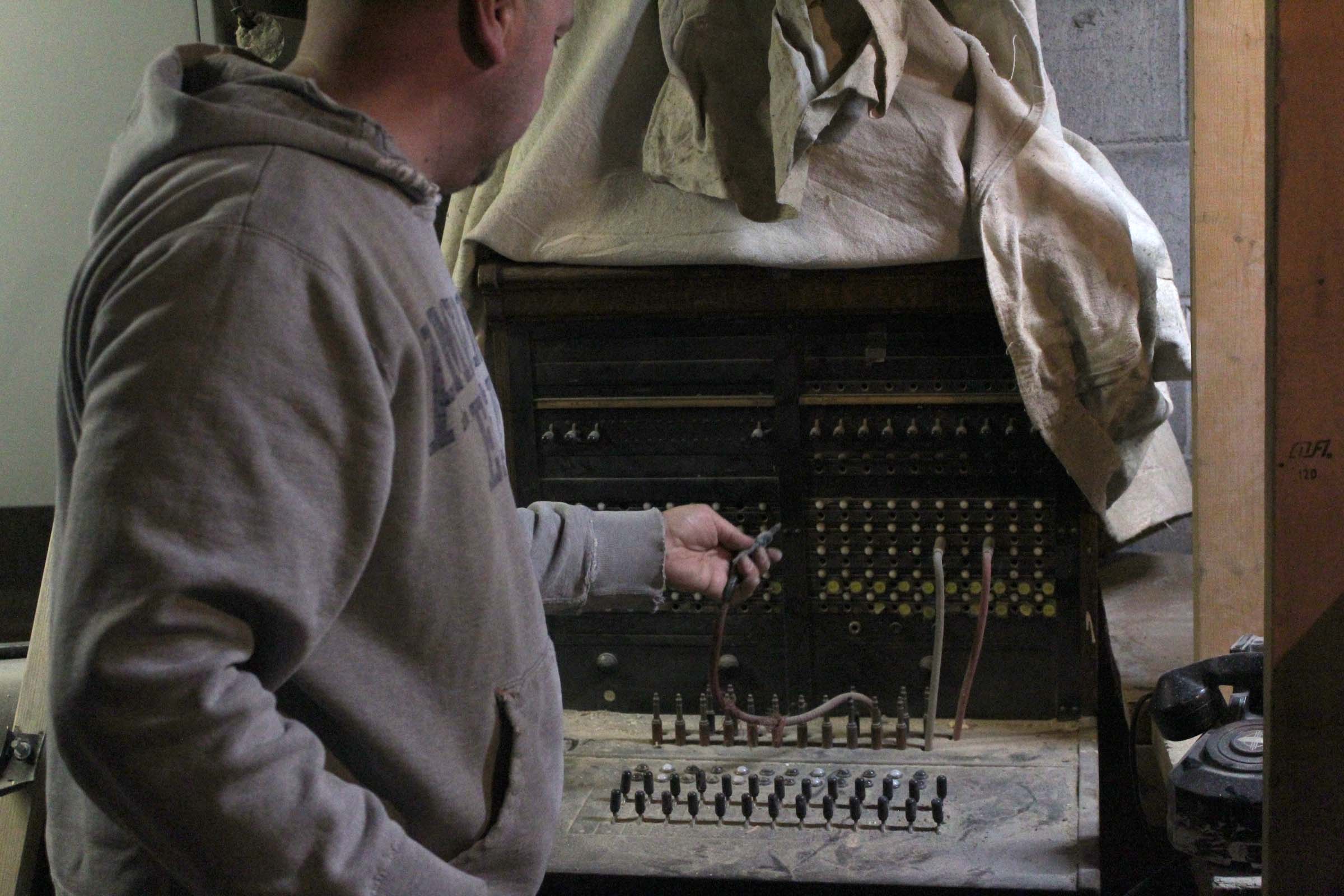
Turney took the tourers through the metal doors to the basement of the Valley Hotel and lifted a piece of canvas off of a crucial part of Palmer. After hours, calls would have to go through a switchboard, likely donated by the Army Signal Corps, to get to the person you were trying to call. The original switchboard is still in the basement of the Valley Hotel, with the original phone. The switchboard operator became the de facto police dispatcher, allowing whoever was running the switchboard to light light when necessary.
“When businesses do these remodels on these old buildings that they’re very conscientious about, these small cool little history things, our history is not that old. This part of town starts in ‘35. Our state starts in ‘59. Basically before the 1890’s when the gold rush happened, there’s not a lot going on up here. So our history is within our reach. A lot of the folks that worked in these places are still around and have great stories to tell,” Turney said. “Every single time they’ve taken the time to either set the record straight, tell me a story I can’t repeat, or tell me the real story. So either way you’re getting an answer about what’s going on in town.”
THE TRUTH
Are there tunnels underground connecting the buildings of Colonial Palmer? If they exist, what were they used for, and how often? The access to the steam utilidors have mostly been blocked off, as they are no longer necessary with modern heating. The tunnels were very short and very narrow, and likely there were no secret societies that existed within them. They were likely used very sporadically for the checking of lines and maintenance of the utilidor. Various pieces of the connecting tunnels still exist, but only a few feet at a time, as they have been cemented off on both sides. The tour that Turney led was almost entirely above ground. After the Palmer Historical Society and the Palmer Arts Council had led a similar tour from 2010 to 2013, it was discontinued. Turney and Gordon Fletcher decided to revive it, and as soon as they began planning, pieces started to fall into place. The tour would not be possible without the private owners allowing the groups to walk through and witness history. Many buildings in downtown Palmer have basements, but they are not connected by a system of tunnels.
CONVEYOR BELTS, CHAINS, WHOREHOUSES, COURTHOUSES, AND POST OFFICES
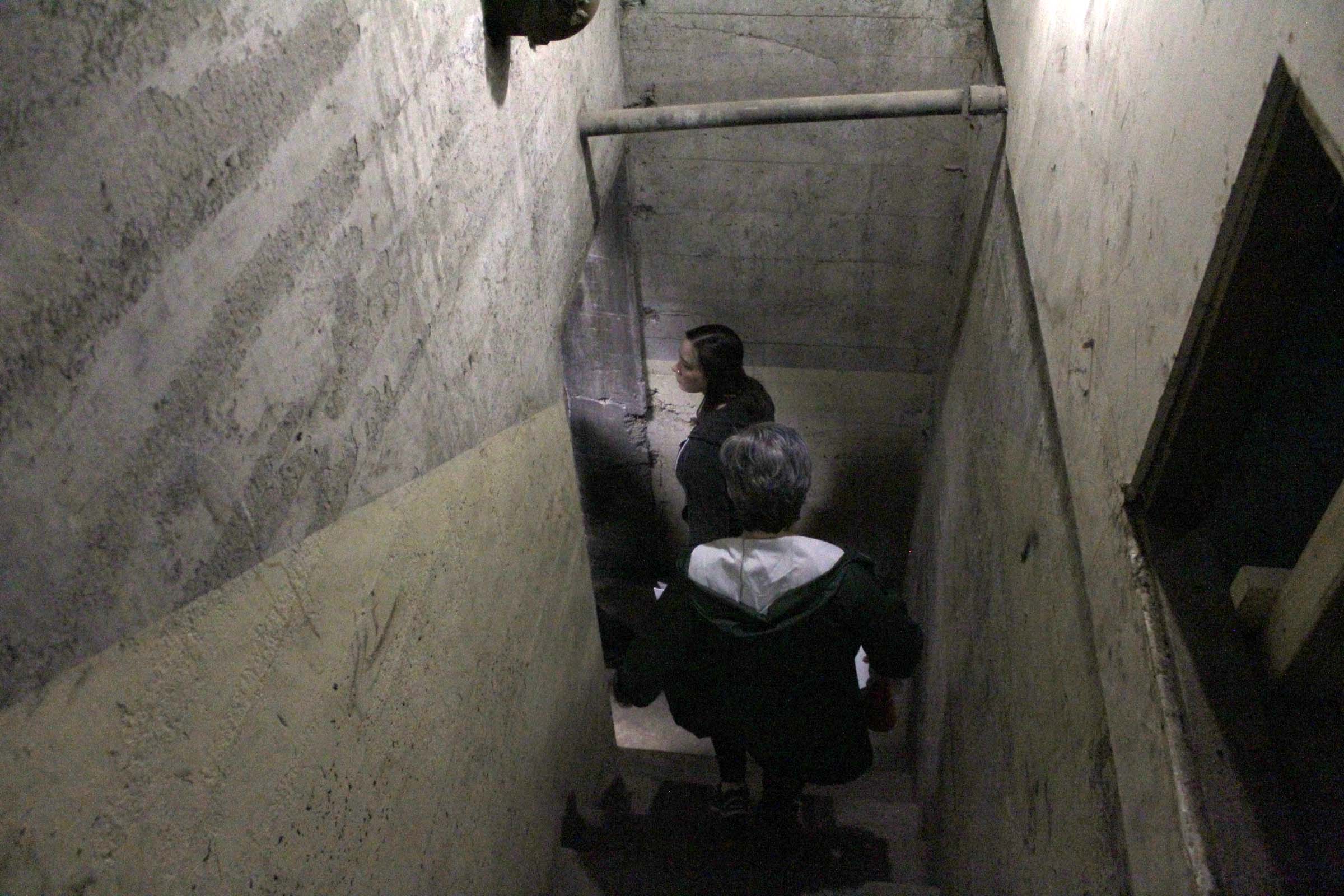
Although most of the original Colony historical buildings and remnants have long gone, the history is still close enough to feel. Turney felt the strong urge to cross his legs, cross his arms, and lie down on a conveyor belt. The building that currently houses the Annex was the morgue from 1952-1966. One garage door still exists, but originally there was an entrance … and exit. The tour walked down the steeply slanted garage bay and down into yet another basement, where Turney demonstrated what spooky history the unassuming building has. Walking along from the depot to City Hall, Turney points out more history. Turney makes a note of the railroad tracks having a very real divide between the state side and what he describes as the cash side of the town. In the basement of where the Moosehead Saloon now sits was a bar and pool hall. On the top floor was a brothel, and the establishment was called Horton’s Roadhouse. To Turney’s knowledge, that was the only brothel on that side of the tracks, the other was in the Butte.
The original jail is not even the one under city hall. The first incarnation of a means in which to keep people from being drunk and in public was what Turney describes as a closet with a logging chain wrapped around the doors. That closet with a logging chain was located in the basement of what is now the Eagle Hotel. The basement also served as city hall at that time.
“One night, one guy got drunk and climbed the water tower. His family would not take him back, so they put him in safe keeping until he was sober. He decided to berate every city council member, drunkenly, from the cell all night long. Shortly thereafter they decided they needed to build a separate location for city hall,” Turney said.
Among the many rumors dispelled on the tour, one of them was the myth that there is a tunnel connecting the courthouse and jail house. There is a beginning of a tunnel on each side, but they were never connected. Turney nor any of the amateur historians of the tour knew why there were not finished either.
“One of the reasons I do the tour is to dispel the bulls--- and the rumors because the rumors of the underground is what caused one of the buildings to burn to the ground. Kids lit a warming fire because they were looking for the underground tunnel… I cringe when people talk about the tunnels because they don’t have the right perspective of what they are. Was there illegal gambling in Palmer? Yes, absolutely. I’ve never heard of them being in the underground. The tunnels that we’re talking about are strictly for the maintenance of the steam utilidor and yes you could walk from this building to that building but people did it maybe because they were checking the lines it’s not like it was a regular traffic flow,” Turney said.
After watching Turney lay on an ominous conveyor belt, there was more history just down the street. On Valley Way, Turney details the history of each building still standing, and what it once meant to the community. The YAK was a Ford and Buick dealership before it was Hartley Motors. Humdingers Pizza had been a gas station. The maroon building in front of it was once the grocery store. Along the dirt road is one of the oldest buildings on either side of the tracks, what used to be the Felton’s General Store and Post Office, even to the arrival of the colonists.
Turney used the examples of the properties changing hands and businesses to bring more attention to preserving the past.
“Even though Palmer is changing and there’s some development going on, people are still mindful of what it was like and that feel and that look and are trying to incorporate that,” Turney said.
The community that preserves the historical items of the original citizens does not battle with one another for who found what first, but collaborates and cooperates to preserve the history for everyone, a value Turney is hoping to teach with the tour.
“Everybody in this town is willing to drop what they’re doing and help you in any way they can and that’s what makes this town so different,” Turney said.
All of the proceeds from the event were donated to the Palmer Historical Society. Turney plans to do the tour again in May. Rather than regurgitate rumors, Turney hopes to engage a community of eager Palmer historians.

By Jeremiah Bartz Frontiersman.com A football coach using a hockey reference as the centerpiece for his keynote address may

Frontiersman.com With its headquarters in Wasilla, the Frontiersman has been a primary source of news for the Matanuska-Susitna

By Katie Stavick Frontiersman.com The next generation of leaders took flight this week as the Houston High School Class

By Kyle Wilkinson For the Frontiersman Keynote speaker and Carry the Cure President Bill Pagaran’s words boomed through the