Retiring teacher, coach urges Colony grads to ‘find their 68’
By Jeremiah Bartz Frontiersman.com A football coach using a hockey reference as the centerpiece for his keynote address may


Editor's note: The following is the the sixth story in a yearlong "Digging in the Archives" series by reporter Caitlin Skvorc. The series typically looks 25 years into the past and updates readers on stories that were big news in 1991 — a slight departure was made in this case to pay homage to the effects of the Miller's Reach Fire of 1996.
BIG LAKE — In Alaska, a lot changes in 20 years. Amidst that change, some businesses survive, others go by the wayside, but the owners and the memories often remain.
Especially the memories of watching one’s lifeblood go up in flames.
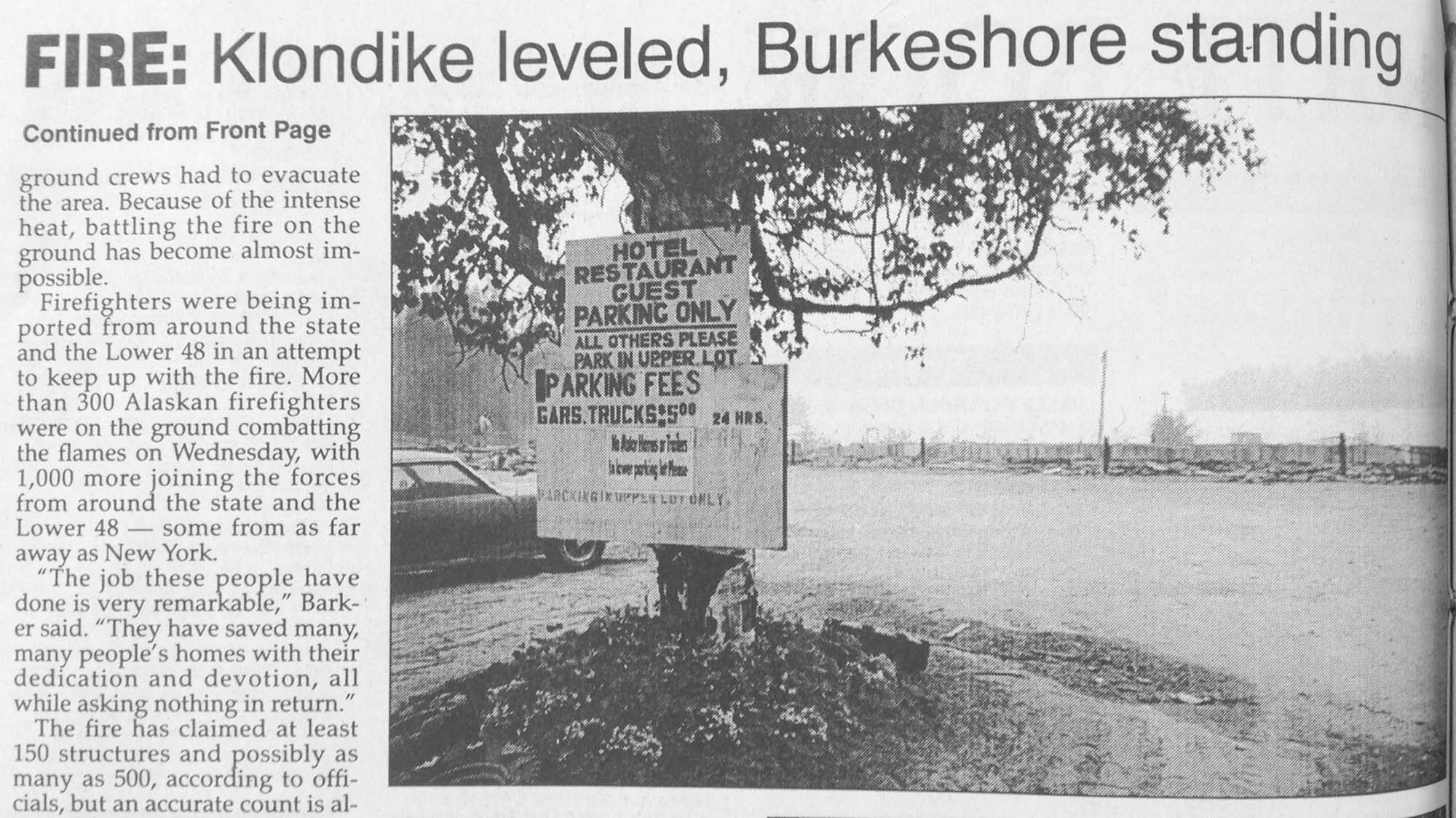
During the summer of 1996, the Miller’s Reach Fire claimed ample real estate in the Frontiersman, producing dozens of eye-catching headlines that attempted to console and provide information for suffering citizens. But only one referenced the effect of the fire on Big Lake area businesses, passing it off as almost too minimal to write about:
“Many fire area business are undamaged, open,” an inside headline read in the June 19, 1996 edition.
The body of the article did refer to a June 7 story that described the loss of the Klondike Inn in a ball of fire — “It was the most awesome thing that I’ve ever seen,” a witness said — as well as the destruction of a few storage sheds around the Burkeshore Marina, but little follow-up was apparently done with either business. McGuire’s Greenhouse, which was also razed in the blaze, apparently merited no mention at all.
All the June 19 article revealed was that the unnamed inn owners expected to open temporary buildings that weekend and “rebuild soon,” and tourists should rest assured that “the whole Valley did not burn up.”
However, at least a few Big Lake residents said there was more to the story.
The burn
Bert and Ardi Kleinenberg, who bought the Klondike Inn in 1987, were the first to say that starting over after the fire was no small matter.
“It was absolutely devastating,” Ardi said.
Being less than 100 feet from the northernmost shore of Big Lake, the couple had assumed they’d be able to defend the inn themselves. Trees had already been cleared away from the building and they had a 2-inch-diameter fire hose running straight from the lake to the roof day and night.
On Tuesday, June 4, 1996, some firefighters and state troopers came by to tell the Kleinenbergs to evacuate.
“We were very angry about that,” Ardi said, reasoning that she and her husband could have fought the fire themselves.
Grudgingly, they left their home with little more than the clothes on their backs. At 10:30 that night they got a call that the Klondike was on fire, and the inn was gone before the clock struck 12.
Earlier that day, on the other side of town, a young Rebecca McGuire was on her way home from the local Food Mart with a friend when she encountered a man running with a suitcase, yelling about a fire. For a moment, the girl who had just celebrated her 16th birthday the day before thought he was some kind of lunatic. Then she saw the black wall of smoke headed in the direction of her mother’s commercial greenhouse — the one McGuire would someday own — and ran.
“When I got back my mom was frantic,” McGuire remembered.
McGuire’s father rushed to help her mother, Della “Patti” Sutton, who was in the process of practically throwing their belongings — including the cat — out the door and into the back of their minivan. In a matter of minutes, McGuire and Sutton were on their way to Wasilla with two vehicles full of valuables.
McGuire didn’t have a driver’s license at the time, so when a state trooper pulled her over, she gave them the only line she had:
“I said, ‘you know, the town is burning down, I’m not driving around trying to be a delinquent.’”
A line of cars was building up behind McGuire, and soon people began piling out to see what the hold up was. Seconds passed, and the trooper waved her on.
Meanwhile, McGuire’s neighbor and future husband, Mike Naumann, was scurrying around with his father and friends, using fire hoses and pumps to water lawns and douse the flames encroaching on nearby properties.
Many homes were saved thanks to Naumann and his father’s efforts, McGuire said, but the greenhouse was lost.
Picking up the pieces
Once the ash had settled and families began returning to their homes, McGuire and Naumann barely recognized the neighborhood.
“It was like a war zone,” Naumann said.
The metal frame of the greenhouse was essentially all there when McGuire and Sutton returned, but the plastic covering, plant baskets and most of the plants had burned away.
“It was a huge setback,” McGuire said.
Of the flowers that remained, some were even lifted by people who thought the business owners didn’t need them anymore, she said, forcing her family to install a gate on the property.
Luckily, Sutton’s Anchorage greenhouse (where McGuire’s father had been during the fire) was still operating as usual and able to keep the family financially afloat until the following spring, but Big Lake business was over for the year.
“Greenhouse season is kinda like fishing — you get one shot at it,” McGuire said.
Back at the Klondike, the Kleinenbergs wasted no time in finding a way to bring the business back as quickly as possible.
Calling on his connections with the roadside catering businesses, Bert and his employees were able to haul in three or four 40-foot trailers from Anchorage for a makeshift motel a few days after the fire. The insurance on the inn allowed the Kleinenbergs to outfit one of the trailers with a kitchen and bar, and a loan covered inventory purchases they needed to start cooking again.
It took a few weeks to get the business up to code, Bert said, but by Fourth of July weekend, the couple signaled the inn’s reopening with the words “Klondike Inn, Again” duct-taped to the side of one of the trailers.
It was a sight to behold — however hodge-podge.
“Everybody was tickled, and many people just poured out of Anchorage because they wanted to come and see it,” Ardi remembered.
Still, the Kleinenbergs had their work cut out for them, keeping the kitchen staffed and the rooms in good shape while taking on the reconstruction of a permanent inn.
After a couple months of cleanup, the formal rebuild effort began in September. When December rolled around, the Kleinenbergs and the half-finished Klondike were featured in an Associated Press story printed in Arizona’s Daily Courier, and by January they had the new restaurant and bar up and running. Come April, the Klondike Inn was reborn, bigger and better than ever.
Where are they now?
Though the Klondike and the greenhouse both rebuilt, the inn, the Kleinenbergs found, was on borrowed time.
“Business really was down after the fire and never came back,” Bert said.
For some reason, the Klondike began attracting more unsavory types, and eventually Bert “got tired of fighting drunks out there,” he said, and closed up in February of 2001.
The Kleinenbergs then moved on to manage the Montana Creek Campground between Willow and Talkeetna for a few years, then finally “retired from retiring,” Bert said, in 2007.
The Klondike was converted into condominiums shortly thereafter, and in a way still stands at the edge of Big Lake, housing dozens of lake lovers every summer. Bert and Ardi live right next door, in what used to be the inn’s overflow parking area.
Though retired, Bert currently serves as vice president of the Big Lake Aurora Lion’s Club, which hosts a pink salmon fishing derby for children age 15 and younger every August to raise money for Camp Abilities Alaska.
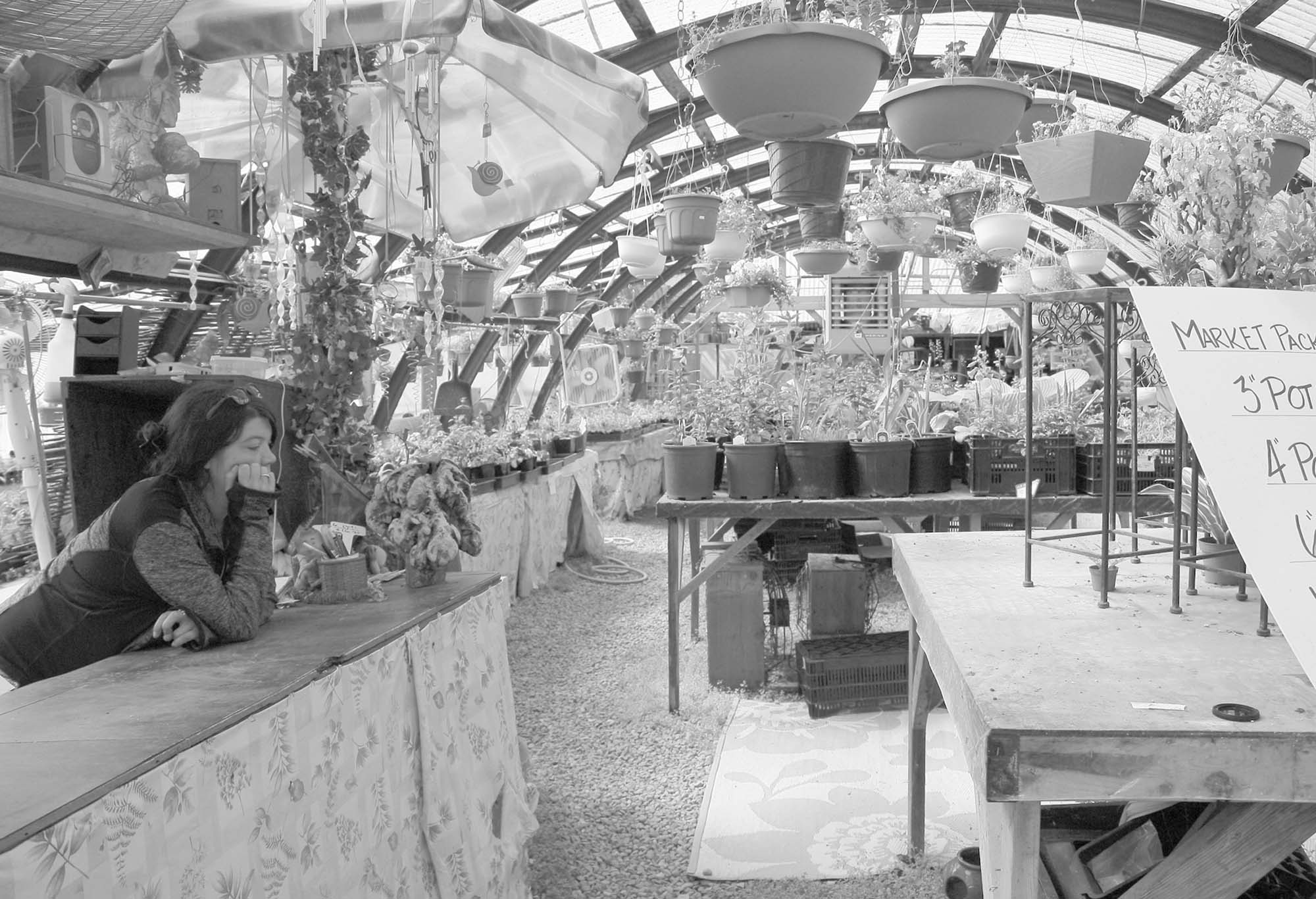
McGuire’s Greenhouse is still open for business at the same location on Maplewood Drive after 27 total years (as is Sutton’s Greenhouse in Anchorage, which has been in McGuire’s family for 52 years, she said). Even one cottonwood tree that survived the fire still stands behind the house, now among young alders and aspens instead of highly flammable black spruce.
The Marina has changed hands a few times over the years since Todd and Tim Brannon started the business in 1992, but still serves the Big Lake community. Burkeshore is now owned by Nick Gittlein and his family, who took charge of the operation in 2010.

By Jeremiah Bartz Frontiersman.com A football coach using a hockey reference as the centerpiece for his keynote address may

Frontiersman.com With its headquarters in Wasilla, the Frontiersman has been a primary source of news for the Matanuska-Susitna

By Katie Stavick Frontiersman.com The next generation of leaders took flight this week as the Houston High School Class

By Kyle Wilkinson For the Frontiersman Keynote speaker and Carry the Cure President Bill Pagaran’s words boomed through the