Retiring teacher, coach urges Colony grads to ‘find their 68’
By Jeremiah Bartz Frontiersman.com A football coach using a hockey reference as the centerpiece for his keynote address may


When students set foot into Mr. Steven Novak’s class at the Mat-Su Career and Technical High School (CTHS), they are definitely in for more than Literature or Algebra.
They are learning to build a plane.
But they are also learning so much more than that.
Steve Novak, the Aviation program teacher at CTHS, brings his extensive experience as a pilot, having over 20 years of experience in the skies above Alaska. He first worked for Era Aviation flying several different fixed-wing planes for the airlines, then moving to Guardian Flight as a medevac pilot, eventually becoming the assistant chief pilot. Those responsibilities included training, checking, and hiring. And while he enjoyed the job, Novak decided after 8 years, it was time for a change.
“I wanted a change, but I didn’t want to be in the airlines,” he said. "There are great people who love that, but seniority lists, hotels, unions, is great for some, but it wasn’t for me.”
Novak had previous teaching experience before becoming a pilot, and when deciding his next move, the opportunity came about-one that had been presented to him several times before-to teach at CTHS.
“I was gifted this program.” And what a program they have built. At the time, there was no curriculum, which allowed Novak the freedom to plan out the framework and build the airframes program. An experience from his youth gave him an idea.
“I remember as a kid my dad built an early kit, and that was a great project with a lot of skills and a lot of support from the company.” When he reached out to the company his father used, Vans Aircraft, they in turn put Novak in touch with Tango Flight.
The airframe program is part of an agreement with Tango Flight, which sponsors a program in which students work to build a plane, under supervision of advisors to ensure they are doing the right work, starting with the cataloguing of nearly 1 million parts. CTHS has the distinction of being the only school in the state to offer the Tango Flight program, which lets students apply classroom knowledge to building an actual, FAA certified airplane.
“Tango Flight has done 22 of these across the nation, and the fastest was done in 14 months. We plan on taking 2 years, especially because we’ve made a couple mistakes, which means we have to re-order parts, and that can take a while.”
Novak says that Tango is hopeful to expand their program to more schools in Alaska, in part because it can be expensive to get everything up here.
The program is not a solo effort, as Novak explains there are 4 mentors for the Aviation program, adults within the aviation community who are present and part of the program, not only as another set of eyes and offer input.
“It’s nice to have an adult voice to share their experiences. We’ve had some amazing people come out of the woodwork to be part of this. It’s been one of the most rewarding parts of all this.”
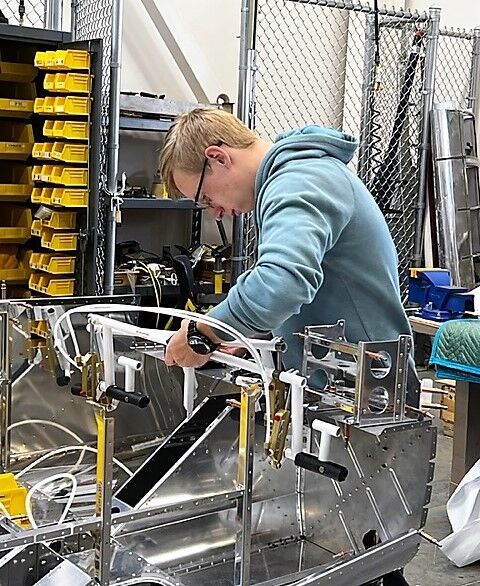
To anyone looking at what the students have accomplished so far, it might not seem like much, seeing a skeleton frame of the seating and plane’s instrument panel being constructed. But appearances are deceiving.
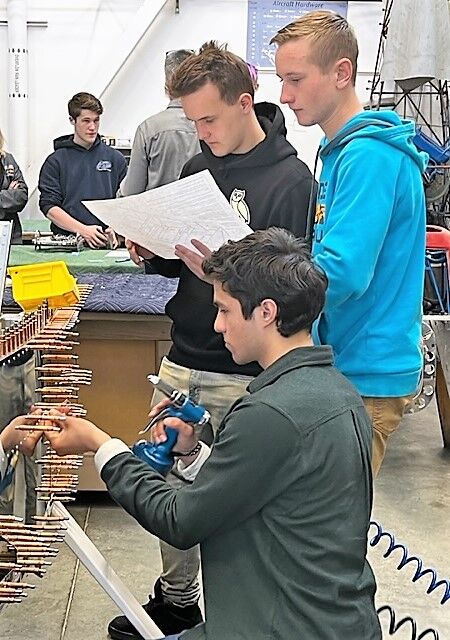
“What you see here has taken months to build. I have 23 kids working on this, in 2 different classes, and 4 build groups working simultaneously.”
The kit his students are building arrived in September, and they have already completed the tail parts, which are housed in an outer building on the school grounds. The engine is set to arrive in during the fall, and the avionics will arrive shortly thereafter.
“The parts are already pre-punched, pre-shaped, they have numbers on them, you line them up and stick a rivet in them.” He is very much over-simplifying what the students are doing. There is a lot of work that goes into building the aircraft, but having a high degree of knowledge or background of mechanics is not required to be a part of this class.
“The cool thing about what I do, what CTE teachers do, is that it is so different from what they’re doing in Math or Science or English. They see a thing, they are building something,” he says, adding, “It’s not when I have kid who can work on his own cars, tear down his own engine and rebuild it. The coolest part is when I get that kid that doesn’t even know how a socket wrench works, or I have to show them how to reverse the direction or a drill. They have an ownership. Years from now, they’ll have that memory of being able to learn something new. That’s what I get a charge out of.”
Novak says there have been setbacks waiting for parts, correcting errors, and sometimes having to undo someone else’s work, but those are valuable life lessons and serve as a great learning tool for the students. Even during the tour, Novak had to stop several times as students explained the re-work they were doing. And a time or 2, he had to pause a student, reminding them to think about the fact that someone will be steeping into the aircraft that high school students built.
The class isn’t just for those kids interested in pursuing a career in aviation mechanics or wishing to pilot their own plane someday. Novak says the purpose of the class is two-fold.
“It’s the experience of being around the construction of a plane that’s going to fly. In the meantime, they do learn some skills if they want to pursue a career in aviation maintenance, learning about sheet metal-the work, the assembly, the re-assembly, the tools that correspond to airframe structures,” Novak says. He is also realistic in knowing that they are not training a fleet of future mechanics, but training future aviation enthusiasts.
“We try to make it fun. Then there’s the challenge. The soft skills that they are getting out of this. Teamwork, focus, minimize distractions, dealing with frustrations. Building confidence in building a plane that’s going to fly. Most people don’t have that experience.”
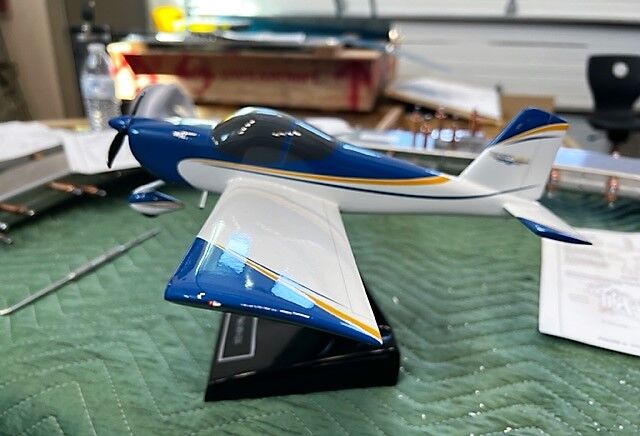
Upon completion, the students will be able to go for a ride in the 2-seater airplane.
“The ultimate culmination activity,” says Novak. Students who complete Novak’s class with a ‘C’ or better, and also score a 75 or higher on the final also get an official FAA endorsement letter for the written test for the private pilot license.
And what about the students?
“I like building stuff,” says junior Jackie Trabits, who would like to be an auto mechanic, and who also has a pilot’s license. “I started flying at 10. I don’t so much anymore, but I like this part.”
“I like planes,” is a resounding choral response from Gideon Salmans, Josh Pehrson, Aila Johnson, who is also going after her pilot’s license. “It beats some of the other classes. And we get our hands on things while we’re here,” said Salmans.
“It’s great because my Diesel Hydraulics class counts as science credit, and I’ll take that over regular science. My Construction Trades class counts as math. It’s awesome. It’s hands-on and not trying to read out of a book,” says Trabits.
For Jakub Babezid, who is at CHTS as an exchange student, it’s about trying to build something not out of just wood.
“It’s about building something different, trying something new. We are learning to use different tools than just hammers and screws.”
“It’s unique and the metal-working skills are cool. It’s a good skill to have out in the real world,” said Sawyer Kelpe.
For Branson Starheim, who is already a licensed pilot, and Dennis Gayvoronskiy, it’s about how the thing they are flying is constructed.
The one senior in the class, Caden Dekruif, wanted the hands-one experience.
“I’ve been interested in aviation and getting my pilot’s license. I’m headed to college first for Mechanical Engineering and thought learning more hands-on work like this help me learn more about aviation.”
For Novak, watching the students come together, learning and working together to build the plane, he has this to say:
“It’s been amazing!”
For people who want more information about the Aviation and airframes program, Novak wants everyone to come out to the Aviation Gathering at the Alaska State Fairgrounds, hosted by the Alaska Airmen’s Association on May 5 and 6.
“I want the whole Mat-Su Valley to know what we’re doing here, to be aware of what we’ve been doing here, and beyond. So their kids can go here, so they can support what we’re doing for the future.”

By Jeremiah Bartz Frontiersman.com A football coach using a hockey reference as the centerpiece for his keynote address may

Frontiersman.com With its headquarters in Wasilla, the Frontiersman has been a primary source of news for the Matanuska-Susitna

By Katie Stavick Frontiersman.com The next generation of leaders took flight this week as the Houston High School Class

By Kyle Wilkinson For the Frontiersman Keynote speaker and Carry the Cure President Bill Pagaran’s words boomed through the