Retiring teacher, coach urges Colony grads to ‘find their 68’
By Jeremiah Bartz Frontiersman.com A football coach using a hockey reference as the centerpiece for his keynote address may


On Thursday, a proposal that would have put on the Houston ballot an amendment to the city code to limit the number of marijuana licenses issued out by the city failed to get a second, thereby failing to bring the proposal to a vote by the Houston City Council.
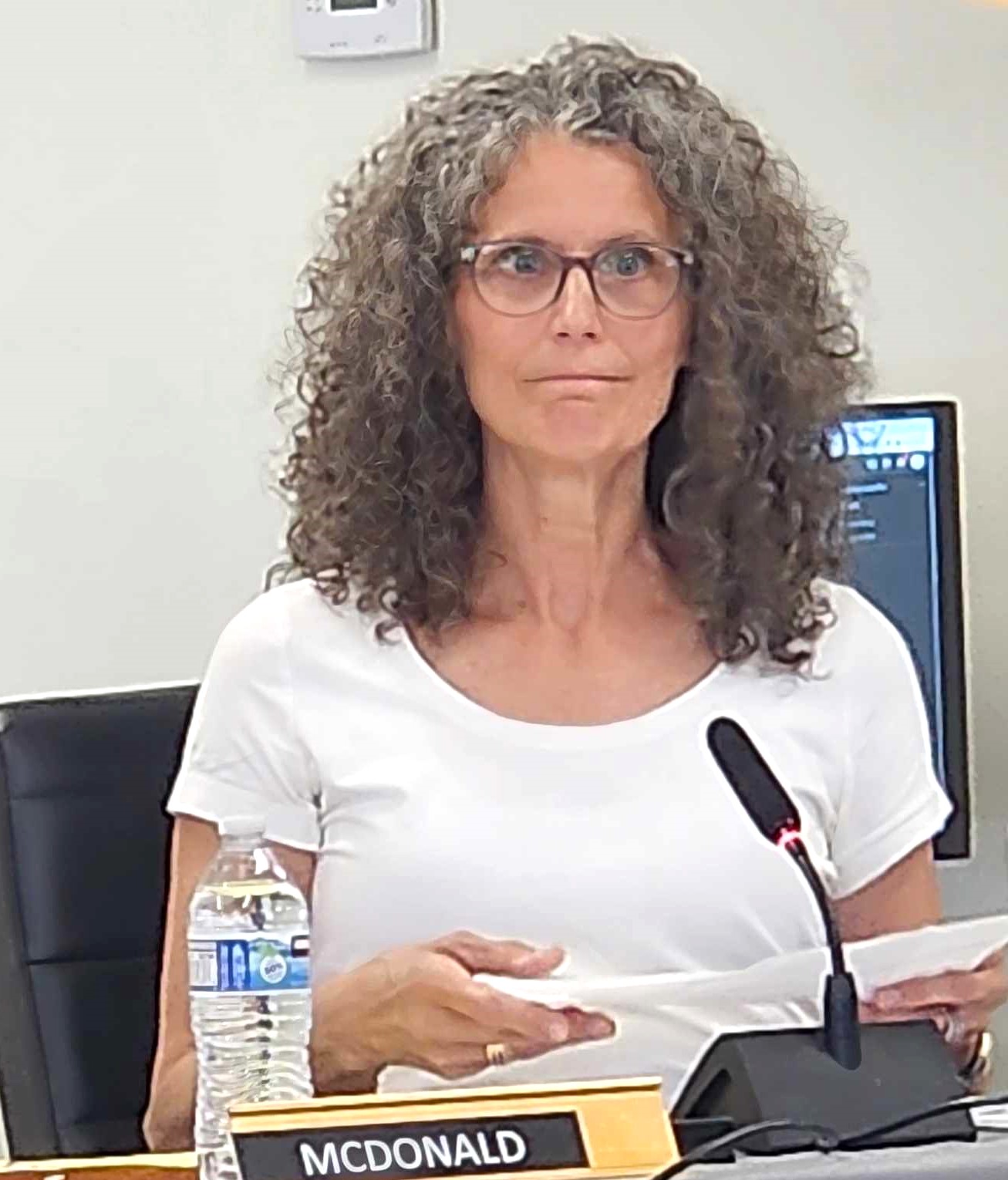
Sponsored by council member Sandy McDonald, the proposed ballot initiative would let voters decide if the city should place a limit on the number of retail marijuana licenses to 2 per 2,500 city residents. If the city population exceeded 2,500, an additional retail license, if submitted, would have been considered by the City Council, in line with the current procedures for obtaining such a license already in place in Houston.
A decrease in the city’s population would not have affected the number of licenses for retail marijuana.
“We need the business, we need the growth, we need new energy,” said Ron Bass during the public hearing, when he spoke in opposition of the proposed ballot measure.
“I think you would be shooting yourself in the foot limiting the businesses,” said Tony Kuse. “The tax revenue is going to go down with this.”
Council member David Childs said via telephone that this proposal would not only impact the free market system, but could potentially negate the purpose of the city council.
“In my mind, this defeats the purpose of the council. I don’t see with our current population of Houston that this is wanted.” He did not elaborate on his comment.
After the public hearing for the proposal, a motion was made to approve the item, but no one from the city council seconded the motion, effectively killing the proposal, meaning it will not be on the ballot in October.
Also introduced at the meeting were 2 ordinances pertaining to the usage of burn barrels. The first ordinance would add the following to the Public Nuisance section of the city code:
“The burning of trash and litter that the ash or products of combustion can be detected from an adjacent property, as defined by the presence of fine particulate matter of 100 parts-per-million.”
The 2nd ordinance would amend the current Houston Municipal Code to add a new chapter, “Open Burning Control” which would clarify what constitutes a burn barrel, open burning rules to include specifications that the burning of garbage and trash that emits black smoke is illegal; additionally, no open burning within 25 feet of any structure or forested land.
The amendment would also place an automatic burn restriction on open burning from June 1 to July 30 each year. There would also be burn restriction limits on all residential burning to include yard waste such as trees, shrubs, and grass clippings.
Recreational fires would be allowed in private pits at residences when surrounded by 25 feet of non-combustible space around the fire pit, a charged water line is present, and the fire is attended at all times.
Also clarified within the proposed ordinance is that there is to be no open burning when wind speeds or gusts exceed 10 mph, unless prior approval is obtained by the State of Alaska Division of Forestry and Fire Protection and Houston Fire Department.
The ordinances move to public hearing at the next city council meeting.
A resolution was presented to establish an annual music festival, Matanuska Thunder Festival, which would have been held at the Houston Grass Station, a private entity, and requesting the City of Houston to support it.
“I do believe that this particular piece of legislation would be better dealt with at the Chamber of Commerce level. I don’t necessarily feel like the city needs to be involved in this,” said council member Dave Duren, who voiced support for the idea of a music festival as a great event that brings communities together. He had also put forth an amendment to change the name to Houston Thunder Festival to dispel any notion of brand identity or supporting any one business.
Other council members questioned the legalities surrounding the quasi-judicial nature of the city on a private property function when there is no current permit process for such an event, though everyone supported the idea of a music festival being held in Houston.
“Why would any independent business want to ask the government to get involved? Usually it’s the other way around-‘mind your own business, this is my land and I can do what I want on it.’ But here we have an independent business actually asking for the city’s support,” commented council member McDonald.
Mayor Carter Cole did clarify that the proposal was brought to the city attorney.
“According to our city attorney, there’s no risk to the city to support it, there’s no material support to it,” he said, acknowledging the code could be looked at for possible changes in the process in the future for such events.
Ultimately, the ordinance did not pass.
Also introduced was a resolution to establish an Ad-Hoc Houston Airport Selection Committee, which would make recommendations to the Planning and Zoning Commission, the City Council, and City administration regarding future locations for an airport in the City of Houston.
Meanwhile, Houston residents voiced concerns and displeasure at the state of some roads—specifically, that more needs to be done when it comes to plowing and repairing. Mayor Cole said that while there is an order of precedence when it comes to which roads get repaired first, he would work with the residents to see what additional support he could get to help.
The city council welcomed new Public Works Director Jared Eison, who is stepping in after George Thompson, who resigned earlier this summer.
The next Houston City Council meeting will be held September 14 at Houston City Hall.

By Jeremiah Bartz Frontiersman.com A football coach using a hockey reference as the centerpiece for his keynote address may

Frontiersman.com With its headquarters in Wasilla, the Frontiersman has been a primary source of news for the Matanuska-Susitna

By Katie Stavick Frontiersman.com The next generation of leaders took flight this week as the Houston High School Class

By Kyle Wilkinson For the Frontiersman Keynote speaker and Carry the Cure President Bill Pagaran’s words boomed through the