Retiring teacher, coach urges Colony grads to ‘find their 68’
By Jeremiah Bartz Frontiersman.com A football coach using a hockey reference as the centerpiece for his keynote address may


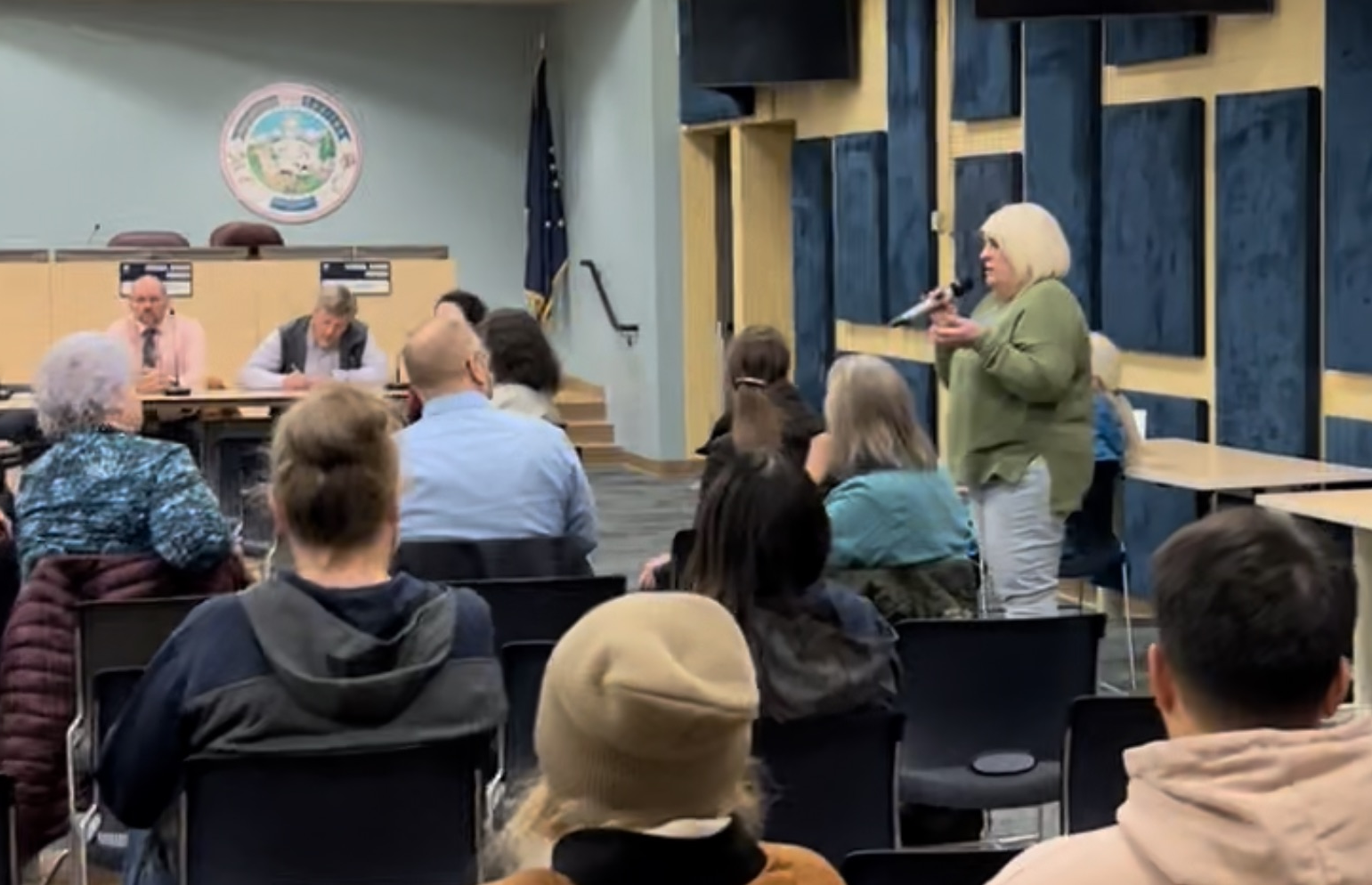
Members of Palmer City Council, Palmer Police Department, and Borough officials met with local community members, including many local business owners and residents to address a growing homeless problem, or acute vagrancy, onOct. 14..
“This is about hearing the issues, brainstorming ways to help, and making connections within the community,” said Palmer City Councilwoman and Deputy Mayor Pamela Melin, who organized the meeting.
“A couple meetings ago, we had several citizens that came out and basically said we gotta have some help,” said Melin as the reason behind the meeting. She also wanted to keep the tone of the meeting as a conversation and keep out the vitriol that many had expressed on social media when the meeting had been announced.
“This is really a conversation, the first of many, among the public and the people who want to help, who have ideas and motivation in order to help come up with solutions and collectively come together to work on this issue.”
This meeting had no specific agenda, but rather was broken into 2 sections meant to listen to current experiences and look for viable solutions.
Opening up the meeting, several business owners expressed frustration and worry for their employees over incidents involving some of the homeless.
“We’ve had instances going on for the last 5 years, at least, of people trespassing on our property,” said Lorie Coppenberg, owner of Purple Moose Espresso and Vagabond Blues, both located in Palmer.
She worries about the young women who work at Purple Moose and fears something could happen to them similar to Samantha Koening, who was working in an espresso stand in Anchorage, closing up for the night when she was kidnapped, assaulted and murdered by Israel Keyes in 2012.
“A few months ago, we did have a gentleman try to break in to our Purple Moose building. I have an alarm system on there and have a picture of him trying to break in. PPD responded and the responding officer did climb in through the window to make sure no one else was in the building. It’s a nightly occurrence,” Coppenberg said.
She said they do have cameras installed and she can see what happens and says most activity happens after midnight until early morning.
“They come from the hotel near Fred Meyer’s, go to Carrs and back and forth.” Coppenberg said that her cameras may have even picked up a drop after a man put something in one of their garbage cans and later that night a different person take something out of that same garbage can.
“My concern is I have nightly bakers, I have young people working until 7 or 8 at night. So these are issues that need to be dealt with. There are needles found during cleanup every spring, it’s an ongoing situation. I think it’s time for Palmer to step up and do something” she said.
Marley Moses, owner of Pink Boutique, recounted incidents in her shop. “We’ve had a couple of situations. One night, the door was left unlocked and someone came in and used an upstairs restroom, leaving it destroyed. Usually the messes that are left behind are sometimes a hazardous waste situation.” Moses also said she had found someone camping out in a storage area behind her shop, and has seen people sleeping outside.
“Last night driving near Fred Meyer, there was a person that just laid down on a sleeping bag to sleep on the side of the road.”
Palmer Police Chief Dwayne Shelton presented statistics in regards to how often the Palmer Police are called for homeless people, saying that the different calls associated with the homeless-criminal trespass, public assist, shoplifting, and disturbances. Chief Shelton said trespassing is the most frequent call his department receives when dealing with homeless people, noting that so far this year PPD has had 138 calls for trespassers, compared to last year that had 158 calls.
“There are about 40 homeless people we deal with on any given day,” he said, acknowledging that most in attendance deal with the same people. “At least twice a day, officers are dealing with vagrancy in some sort of fashion.”
He also identified that there are 9 repeat offenders that live within Palmer and that those individuals have created 1011 calls since January 2021.
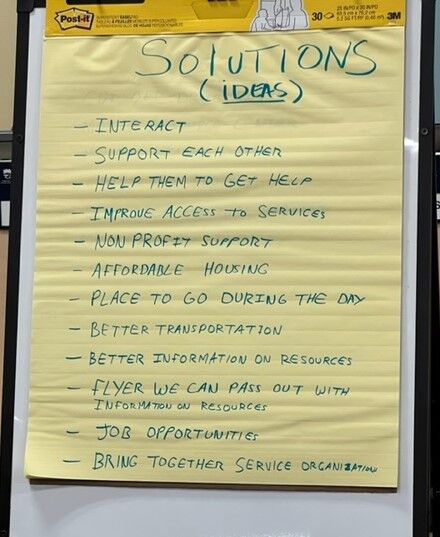
The second half of the meeting focused on ideas for solutions, along with reminders to others who might be angry or frightened.
“They’re our people,” said Jessica Fireside Books. “It is so easy to get into that situation than you think.” She identified a lack of services in Palmer such as public transportation or warming shelters.
“Think about what you would want in that situation.”
Todd Smoldon, who works for Governor Mike Dunleavy’s office in Mat-Su Valley, briefly addressed the audience, saying that this is an important item for the Governor and the People First Initiative, which created Homelessness Task Force that is going to be reporting to the governor on potential solutions for statewide.
“There is a lot of talk around this, including transportation, providing services for mental health and substance use.” Smoldon then got personal, saying that homelessness can happen to anyone at any time.
“This could very well be you or your brother or your mother. Personally, I’ve experienced it myself for a few weeks when I was 19, so it really can happen to anyone.” He commended the city for bringing the community together to talk about homelessness and vagrancy and reminding everyone that taking a pro-active approach from a place of compassion is a good start.
“I can’t serve everybody, but we’re there…I want to be part of the solution. I’m hoping we can come up with some solutions. But we are out there, and there are agencies do want to help. So even if I don’t have all the answers, call us so we can help,” offered Polly-Beth Odom, Daybreak, Incorporated Executive Director, whose company provides case management services.
Among the needs that were identified were public transportation,
“Let’s face it, if you live remotely outside of the city (of Wasilla), you have a hike to get anywhere, and half the year that’s just not a viable option, especially if you have a disability.” said a woman who identified herself as Claire.
“We used to have a bus. Public Health, the Jobs Center, food pantries-they’re all in Wasilla. All of the resources are in Wasilla and there’s nothing to go back and forth.”
Other needs included affordable housing, and shelters and/or warming centers, especially as the temperatures dip and winter approaches. Right now, Palmer does not have any sort of shelter, and the closest one being the Salvation Army located on Palmer-Wasilla Highway, is currently closed since they do not have a sprinkler system.
Borough Mayor Edna DeVries did put out a call that anyone owning a building with a working sprinkler system that could act as a warming system to call either her office or the Salvation Army.
“I don’t know if you’ve looked at rentals lately but there aren’t enough and when one does come up there is already a line of applicants and the prices are exorbitant,” said Claire, who offered an idea to help alleviate that which would be grouping tiny houses.
“Bigger than a shed, smaller than an apartment, but they’re individual structures that can offer transitional housing, they’re affordable, they’re easy to build, and they’re not the large apartment buildings that many don’t want to see.”
Nancy Chavez, owns Idita-Wash Laundry and Showers, and has seen some of the homeless come in and out of her shop and knows that there are some who are a little more “rambunctious” that have necessitated police assistance, also echoed the need for a place for resources.
“I don’t think they know what’s available and they need to have a place to go to find out what is available,” she said, adding that she works with Connect Palmer, who will send clients to her with coupon vouchers for showers and laundry.
Something seen throughout the solutions part of the meeting was a willingness to help, whether it was a place to charge cell phones for those who needed to simply call for a ride or family, or business owners like Chavez, who offered the agencies a space where they can set up a place where people can go to find any agency they need to get help.
“People don’t know about these things unless someone else tells them or there’s somewhere they can find them.”
While there were no definitive solutions, the meeting got the conversation started, which is what Councilwoman Melin wanted.
“There’s going to be a lot more conversations about solutions,” said Melin, though she was not sure what that would look like yet, suggesting it could take the form of a Steering Committee or a volunteer task force.
“It is important to get to know what is happening in your city so you can solve issues as they rise.”
“There will always be people that are part of our society that will need help, that’s just a fact of life. Things happen. People face challenges that they don’t know how to deal with. I believe it’s not just one issue, but it’s a lot of issues. There’s a lot of need and a lot of people who don’t know how to get help,” said Claire.
The meeting brought out people from outside of Palmer, like Loren Karro, who lives near the Knik River.
“I don’t live or work in Palmer, but I try to do most of my shopping here, and I’ve seen people in need,” said Karro, who came out to the meeting because is concern for the people.
“There has to be an answer and that’s not to bus them, or make them feel like they’re not ‘us’ or human,” she said in response to one man’s heated answer to the vagrancy issues. “I know people who’ve been on the street, it could be anybody. And I think this is a good start, something that we need.”
“I want people to understand that this isn’t a political issue, this is a city issue, a community issue, and it’s going to require everybody to see what we can do,” said Melin.

By Jeremiah Bartz Frontiersman.com A football coach using a hockey reference as the centerpiece for his keynote address may

Frontiersman.com With its headquarters in Wasilla, the Frontiersman has been a primary source of news for the Matanuska-Susitna

By Katie Stavick Frontiersman.com The next generation of leaders took flight this week as the Houston High School Class

By Kyle Wilkinson For the Frontiersman Keynote speaker and Carry the Cure President Bill Pagaran’s words boomed through the