Retiring teacher, coach urges Colony grads to ‘find their 68’
By Jeremiah Bartz Frontiersman.com A football coach using a hockey reference as the centerpiece for his keynote address may


Owning a peaceful slice of the Alaskan dream versus breaking out the toys and having fun. It’s a battle waged often all throughout Alaska, raising the issue of how to have a balance between the two sides.
It can be a divisive issue, pitting neighbor against neighbor, and it is something the residents surrounding Beverly Lake have been struggling with since a Beverly Lakes Lake Management Plan (LMP) was first initiated in the summer of 2021.
In a summary statement issued by the MSB Planning Division, the Beverly Lake LMP was initiated 2021 for the same reasons as the 41 lakeside communities created before them: as populations grow, there is an increase in conflicting uses of the land and water being developed.
“When this happens, the residents have an option of initiating an LMP to resolve conflict among current neighbors while setting a standard for incoming residents.”
LMPs provide a guide for how the surface of the lake is used and makes recommendations regarding public access and educates lake users to meet the goals of the plan. They are also one of the tools at the Assembly’s disposal to help resolve conflicts such as Beverly Lake.
Crafting an LMP is a grassroots planning option, meaning that LMPs must originate in the lake community. Once initiated, the residents work together to develop the regulations they think are appropriate for said lake. It is then that the MSB Planning Department staff acts as researchers, writers, and neutral meeting facilitators.
There is precedent for adopting a plan based on the size of a lake, something residents who opposed to motorized access of Beverly Lake had taken issue with.
In 1999, the Borough Assembly adopted Ordinance 99-103, which established guidelines for appropriate regulations based on the size of the lake. Beverly Lake measures 42 surface acres with an average depth of 9 feet. By comparison, Wasilla Lake is 374 acres.
Residents of Beverly Lake began the process by filing a valid petition with the Borough Planning Department after acquiring the necessary signatures of over 50% of all property owners within 600 feet of the shoreline who had agreed to initiate a plan. Beverly Lake residents had 53% of the residents sign off on the petition.
In accordance with MSB regulations, the planning staff mailed ballots to every parcel within 600 feet of the shoreline, asking if residents would support or opposed initiating an LMP. 84 ballots were mailed; 59 ballots were filled out and returned to the MSB.
Of those 59 ballots, 37 voted in favor on an LMP, which translated to 62% in support.
Two public meetings were then scheduled and held to discuss resident concerns, ideas, and work towards a consensus for the LMP and regulations to be implemented in adopted.
While Jet Ski usage was the primary issue, other issues loomed over discussions, including property and water safety, wildlife and environmental protections, and motorized watercraft and personal watercraft use.
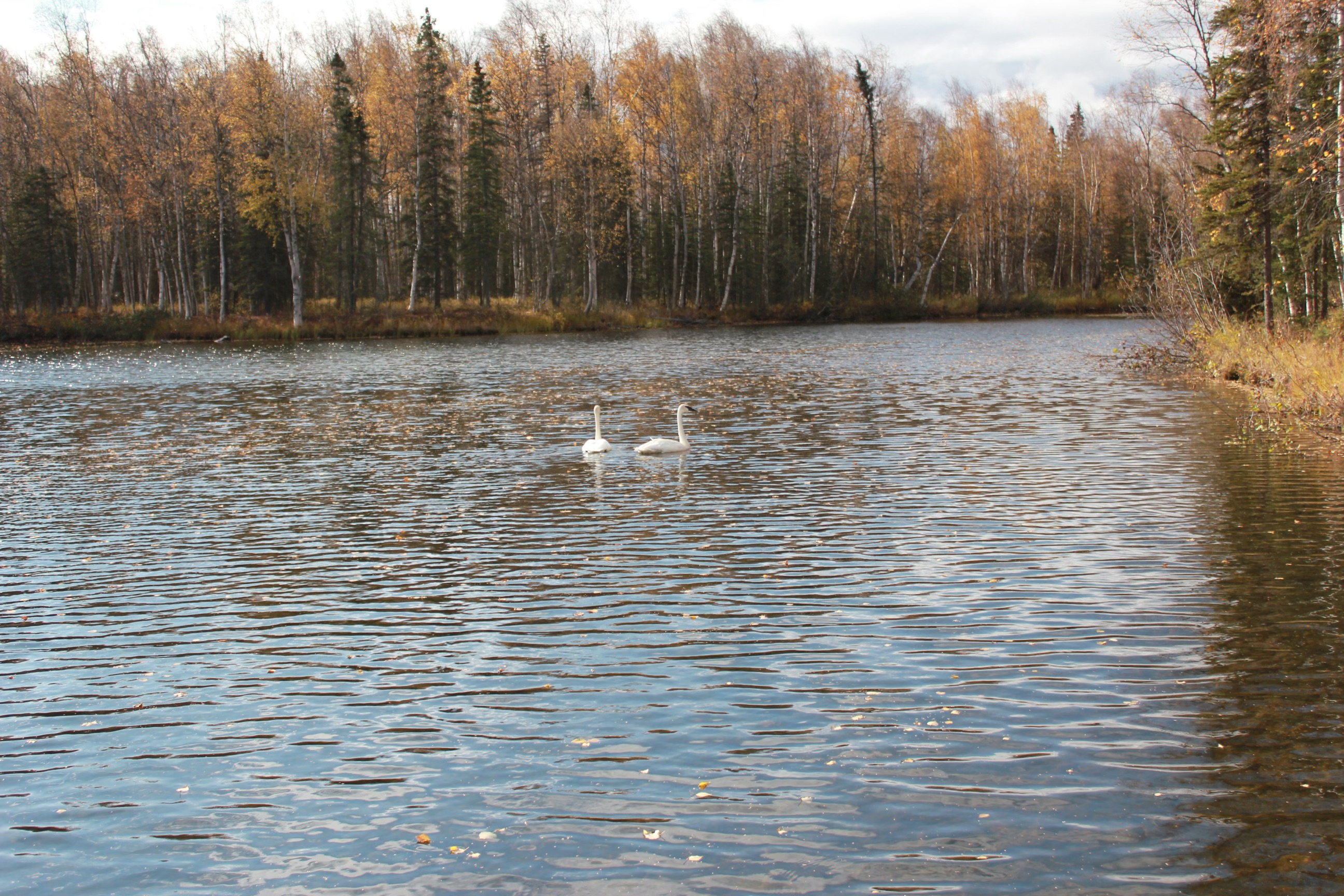
The Beverly Lake LMP development has been heated, as some residents argue that the lake is simply too small to accommodate the jet ski activity, large horse-power boats, and other personal watercraft, citing a decrease in loon and swan life and activity on the lake, as well as erosion on the lakefront.
“I’ve noticed a dramatic decline in the number of nesting swans and loons on the lake over the last 2 years. I have also witnessed jet skis on the lake doing figure-8s and donuts over and over, making waves that crash the shoreline, eroding and deteriorating the bank,” says Beverly Lake resident Craig Odom.
Other residents point to excessive noise created by the jet skis, along with reverberations felt inside homes from the vibrations of the jet skis, and needing to keep windows shut during the summer days to reduce the noise.
“There is no escaping the noise or heat anywhere in my house,” wrote Carol Tillett to the Planning Commission. “I don’t know the decibel level of the large motorized water vehicles, but the sound really carries on that lake.” She compared the noise levels to having a car race in front of her house.
Opponents to the LMP say that they specifically purchased property on the lake because there were no restrictions, there could be a decrease in property values, and that in the past, motorized and non-motorized users were respectful to the wildlife and each other.
“We live on a very quiet lake with wonderful neighbors. After a 7-month long, brutal winter, we feel happy to see families enjoy their days on the lake,” wrote Robert and Wendy Stevens to the Planning Commission.
“Living on this lake has been an amazing experience for our family. Our kids, grandkids, our whole family loves the memories and good times we are sharing on this lake.”
During a 3rd public meeting held back in April, planning staff presented a draft LMP, with the goal being that both sides could find common ground on the regulations included in the LMP, which would then lead to a resident vote before bringing the final draft to the Planning Commission, and ultimately to the MSB Assembly for adoption into the code.
But with such a contentious issue, residents weren’t able to come to a mutual agreement. Instead of returning to the drawing board, residents were asked to vote on 3 options in a rank-choice vote. Again, only the residents within 600 feet of the shoreline were eligible to vote.
Option “A”, which proposed quiet hours from 10:00 pm-8:00 am, Sunday through Saturday; 150 feet no-wake zone, no personal watercraft; motorized watercraft allowed up to 15 horsepower.
After the votes were tallied, Option “A” narrowly won over having no LMP at all.
The ordinance was then submitted to the MSB Assembly as part of the adoption process, which was fraught with more debate, which came to a head when the Ordinance was to be adopted through a regular assembly meeting on December 12.
Initially, the Ordnance passed.
During the December 8 MSB meeting, the plan looked like it was good to go, but there is a little-known clause within MSB regulations that says Assembly members have the right to reconsider their vote, which is what Assemblyman Mokie Tew chose to do.
According to MSB 2.12.112, a motion to reconsider a vote may be made only by a member who voted with the prevailing side. The motion shall be made during the meeting at which the action is taken and/or upon written notice to the clerk by 5 p.m. the next business day.
“After the initial meeting, I received quite a few phone calls, and it sounded like there was some confusion on the voting and that some of the voting didn’t happen. Most of the phone calls I heard was good people calling to try and resolve an issue,” said Tew during the December 20 meeting.
He went on to express that he had hoped the residents could have solved the LMP issue on their own, saying, "Honestly, I wish they didn’t call me. I wish you guys would’ve figured it out yourselves… But at the end of the day, I felt like we need to talk about this some more, and so I put in this reconsideration.”
“I spent 10-12 hours on the phone with members on both sides to see if some sort of compromise would be the best. I believe that we as assembly members, and we of the MSB should be in the business of bringing communities together, and not dividing them. And this process has definitely divided this community,” said Yundt, before adding that he hoped the assembly would vote for reconsideration
“I would also push for reconsideration and give this community a chance to heal.”
Meanwhile, Assemblywoman Dee McKee disagreed with the reconsideration, saying that the plan was something people had put tremendous amount
The motion for reconsideration passed, with only MSB Hale and McKee dissenting.
Assemblyman Yundt worried that the outcome of the LMP would only serve to further fracture the neighborhood.
“The way the code is written right now, my fear is that if we don’t create something that works for everybody, we’re gonna end up with neighbors keeping track of whose houses are on the market and as soon as 1 or 2 of the people who were for the lake management sell, everybody is going to be trying to find out who the new neighbors are and how they feel about it, and we’ll be back here in a couple years.”
He presented an amendment that would offer a common sense compromise to those who want peace and tranquility with those who want to play.
“Its 4 days a week of non-motorized, 3 days a week of motorized, with the exception of the 2 summertime holidays. It also has a 100-foot wake zone. I think that should be common sense. I live on Wasilla Lake, and we’ve been lucky because nobody rips by the shoreline (which doesn’t have a public launch).”
Yundt said when speaking with constituents on both sides after filing the amendments, there was a consensus of fairness, and probably something that would stand the test of time, “which means a lot to me because I do not want to see people keeping track of who’s doing what.”
Not all of the Assembly was in agreement with the amendments, with Assemblywoman Dee McKee voicing concerns that the amendments were not what the residents voted for.
“We are a government of the people, by the people, and for the people, and the people have spoken. I don’t care if it’s 1%, 2%, or 10%, they followed the rules, they spoke,” she said, adding that later on, residents can come together and talk to each other to figure something out.
“I don’t think we should be figuring it out for them. I think that’s up to them. So let’s do what they asked us to do and approve their 54% vote. If they want to do something later on, then go for it.”
“These lake management plans have apparently worked pretty well because we have 40+ of them, and we don’t have people knocking down our door every day to ask us to change them,” said Assemblywoman Stephanie Nowers. “When you start to grow or have more people, you need to have some kind of rules. That said, about having a process and following it and giving consistency. The lake management plans is the attempt to find something that’s workable.” She also commended the resident participation in the LMP process, citing that 95% of the lake residents voted
“That’s a lot of participation. You are an engaged, educated group of people,” she told those gathered at the MSB meeting. “I can support a compromise in this case because I want to see these lake management plans work and I do think there’s a window for the community to come back in a few years and say this is not working.”
Assemblyman Yundt stood by his amendments.
“We’re not a democracy, we’re a republic. We give a voice to minorities in this country... If this lake management plan passes as is, it gives no voice to those people who live on this lake who want to use their jet skis from time to time that have never had an issue. I did not author the amendments for myself. I offered it for the people on the lake.”
The amendments passed with a majority, with Assembly members McKee, Jesse Sumner, and Tim Hale opposing the amendments.
When the voting and discussion turned back to the now-amended plan, the LMP ultimately passed with only Assemblywoman McKee opposing.
When asked about the outcome of this LMP, Borough Manager Mike Brown said,”I am process oriented so I am satisfied with the outcome. Our job as staff is to follow code and bring legislation forward to the Assembly ensuring they have all the available information to make a decision. I believe our staff put forward a great effort and were very responsive to the public’s comments and requests.”
“We’ve offered them the spirit of what they asked for with this,” said Assemblyman Yundt.

By Jeremiah Bartz Frontiersman.com A football coach using a hockey reference as the centerpiece for his keynote address may

Frontiersman.com With its headquarters in Wasilla, the Frontiersman has been a primary source of news for the Matanuska-Susitna

By Katie Stavick Frontiersman.com The next generation of leaders took flight this week as the Houston High School Class

By Kyle Wilkinson For the Frontiersman Keynote speaker and Carry the Cure President Bill Pagaran’s words boomed through the