Retiring teacher, coach urges Colony grads to ‘find their 68’
By Jeremiah Bartz Frontiersman.com A football coach using a hockey reference as the centerpiece for his keynote address may


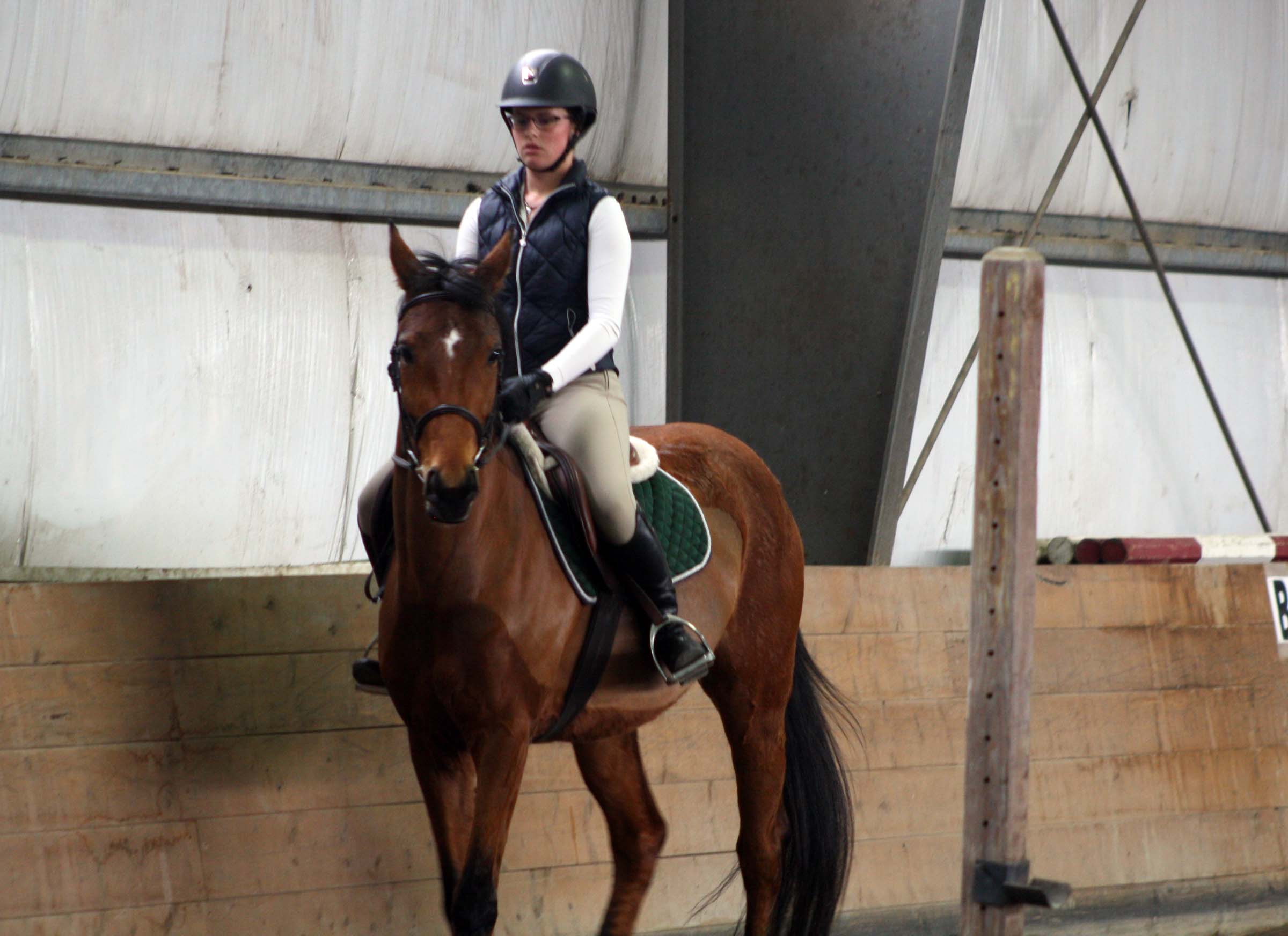
PALMER— Camille Focht, 13, Bronte Beck, 14, and Blaine Senden, 16, have all been riding horses for about half of their lives.
“It’s hard work, sweat and tears, and glamour,” Jenny Rousey, co-owner of Sindorf Equestrian Center said.
All three of the girls sharpen their skills at the Sindorf Equestrian Center, located off 49th State Street behind Colony High School. All three made it to regional competitions with the Interscholastic Equestrian Association for middle and high schoolers. Focht made it to nationals, and is set to compete at the end of the month.
“I’m so proud of their dedication and their hard work,” Rousey said.
Rousey established the Sindorf Equestrian Center with seven partners to provide a safe and educational facility for people to board their horses, ride horse available onsite, utilize the space for indoor and outdoor riding, and train with a variety of equestrian classes and instructors available.
“It’s wonderful to be able to train year round especially with all the knowledgeable trainers. We feel very fortunate,” Beck said.
Rousey said that there aren’t enough horses, riders and resources to form local teams to compete nationally like other states. She said that the lengthy winters don’t help either. In Alaska, winters are notoriously long and cold while the summers are fast and fleeting, limiting outdoor riding options with most of the action in the summer.
The opportunity for the Sindorf riders to compete nationally arose when they were able to join a team in Scottsdale, Arizona. This gives the girls a way to put their training to the test while mixing up their off-season.
“We thought it would be a great way to keep ourselves inspired for these long winters. Number one was just keeping them going, having something to look forward to and just a great learning experience seeing how it’s done outside,” Rousey said.
There is a horse show circuit in Alaska, Rousey said. She said that during the summer, they compete in shows with clubs like the Alaska Horse Show Association. She said that the summer is so short up here so that’s why they’ve broadened their horizons to shows down in the Lower 48. During the long winter, they can beat the elements inside the warm indoor arena.
“We’re fortunate enough of have such a beautiful arena to ride in, you need to keep them a little more skills-honed, which has really advanced their riding this winter alone,” Rousey said.
Rousey said the best part of this was the fact they don’t have to fly their horses down to the Lower 48. That would be a laborious and expensive endeavor. Whenever the girls go down to Scottsdale, they draw a random horse from a hat, never knowing who they will end up with. Rousey said that makes it much more of a challenge than riding with horses they’re familiar with. All the other riders have to draw a random horse too, according to Rousey.
“Which is kinda’ cool because it puts everybody on an even playing field,” Rousey said. “Everybody draws out of the hat. It just shows your riding skills, how you can adjust to any personality and different traits.”
Just like snowflakes and fingerprints, no horse is the created same. Rousey said that each horse comes with their own particular personalities, complete with attitudes, dispositions, quirks, strengths and weaknesses, “which makes it very exciting every day.”
“You just don’t know what’s gonna’ happen right?” Rousey said.
Each day is different when you’re riding horses, even the ones you’ve been riding for years, according to Senden. She said that while a horse will have their own base personality, they have moods that vary day by day. A normally mild mannered horse will act differently if they woke up on the wrong side of the stable so the rider has to be observant and adapt their day based on the horse’s mood, according to Senden.
“You have to be prepared for a horse to come out with a different attitude every day,” Senden said. “One day your horse can be perfect and the next day they can be wild.”
Rousey said that there are seven qualifying shows per season and participating riders can only compete in five of those to qualify for regionals. Once riders make it to regionals, they accumulate points and need to place in the top three to move on to zones. Competing riders in the zones must take first place to qualify for nationals. Rousey said that Beck won the highest number of points for the 2019 season.
“That was pretty exciting,” Rousey said.
Focht said that her horse Cameo is “goofy,” and “very smart.”
“Anything you’ll want to teach her, she will pick up on quickly,” Focht said.
Focht said that equestrian sports are very different than typical sports. She said that she enjoys forming connections to the animals.
“You’re dealing with another live creature and you have to be considerate of their feelings and work as a team,” Focht said.
Rousey said that horses are effective teachers. She said that they teach riders a variety of life skills, “whether you want to or not.”
Handling horses is a lot of work and it takes a lot of time. Beck said that every time she makes breakthrough in training or notices notable progress, she gets very encouraged.
“It’s such a hardworking and dedication sport, to be able to see that is very rewarding,” Beck said.
It’s a complicated process as each living creature learns to speak each other’s languages, according to Rousey. She said that the local horse community in Alaska may not be very large but it’s very competitive because it’s not easy and people invested so much in it so they take it very seriously.
Focht said that she’s learned a lot by training with horses, which has trickled into all facets of her life. She said that it’s boosted her communication skills, dedication and patience. She said that her journey with horses has humbled her and strengthened her resolve, giving credence to that age old adage, ‘get right back on the horse after you fall.’
“You go through rough patches and you have to continue. You can’t just stop and quit,” Focht said.
Focht said that she was shocked to find out she took first place at the zones competition in March. This gave her the opportunity to compete on April 26 in Pennsylvania.
“I didn’t think I would win,” Focht said with a laugh.
Focht said that she is going to train diligently while utilizing as many different horses at the center as possible so she can be ready for any horse she draws from the hat.
Rousey said there’s a total of 26 stables with 24 horses currently boarded at the center. She said that a majority of the horses are privately owned and she keeps a variety of horses on site for training programs and several trainers onsite.
“There’s one for every type of person out here,” Rousey said.
Contact Mat-Su Valley Frontiersman reporter Jacob Mann at jacob.mann@frontiersman.com

By Kyle Wilkinson Kyle in the outside Our spring bear hunt was bittersweet this year. We’re heading home without

Frontiersman.com Valley athletes earned titles during the Region III Championships track and field meet last week at Colony High

Leila Petersen Palmer Moose Leila Petersen, a member of the Palmer track and field team, has been named a Frontiersman

By Jeremiah Bartz J’s World August would have been the start of my 25th year as an editor at