Retiring teacher, coach urges Colony grads to ‘find their 68’
By Jeremiah Bartz Frontiersman.com A football coach using a hockey reference as the centerpiece for his keynote address may


PALMER — Alaska State Troopers say understanding and addressing cyber bullying is a matter of public safety.
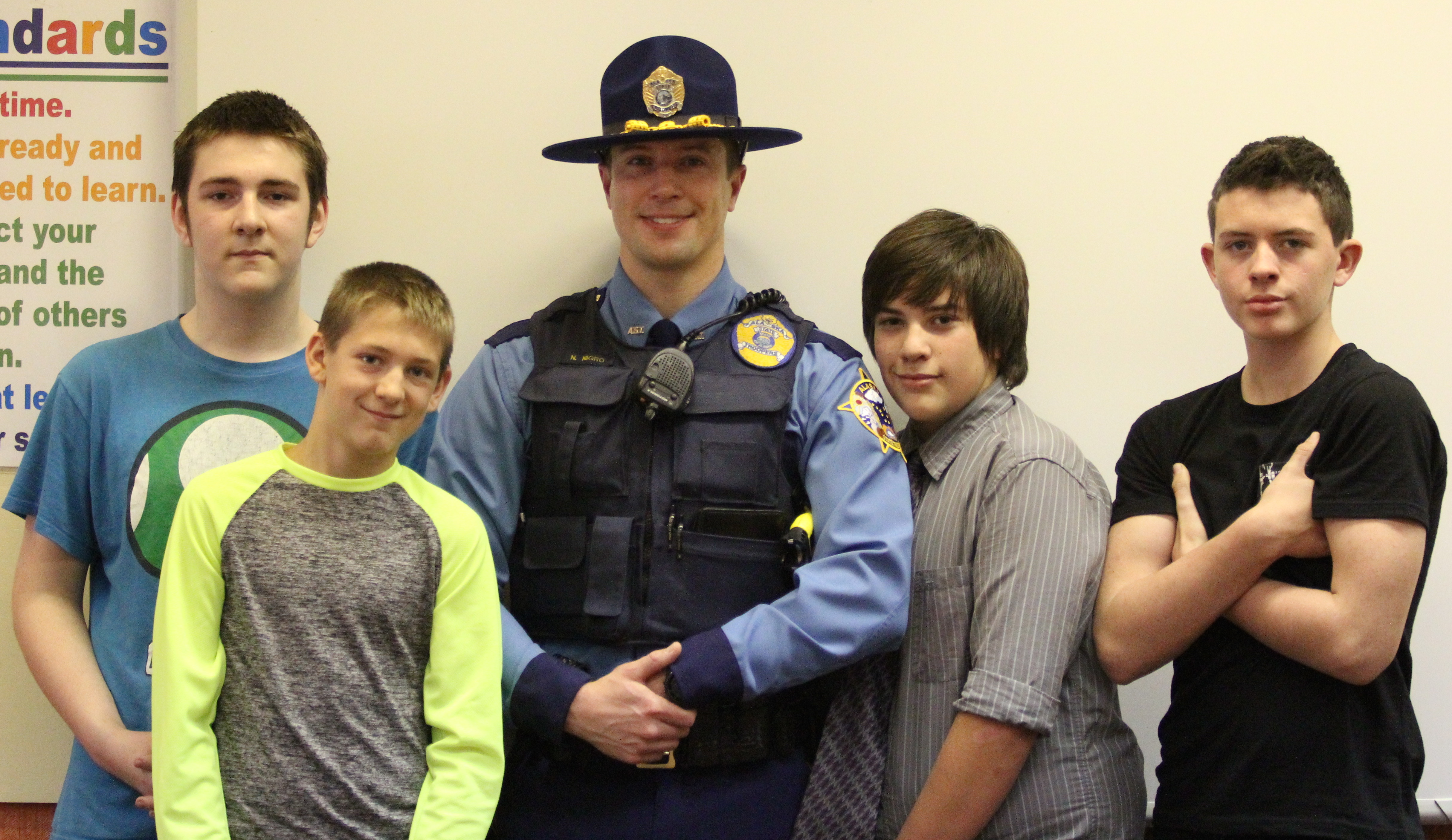
About 70 eighth-grade students filled the library of Colony Middle School on Friday morning to listen to a presentation by Trooper Nick Nigro on cyber bullying, internet crime and how to catch criminals via social media.
“Where there is cyber crime, there needs to be cyber safety,” Nigro told the students.
Colony counselor Angie Buresh said she invited Nigro in part because the school has received numerous reports from parents regarding threats of harm and inappropriate pictures being sent to their child from other students since the first month of school.
“We wanted to address it quickly because it’s already a problem,” she said.
Nigro — who majored in “non-proliferation of weapons of mass destruction and terrorism studies” at Middlebury Institute of International Studies in Monterey, California — agreed that cyber crimes have increased dramatically in the U.S. as a whole.
According to the 2014 report of the FBI’s Internet Crime Complaint Center, Nigro said during the presentation, crimes increased by 12 percent “just within the social media sphere” from 2013 to 2014.
“That is huge, that’s absolutely huge,” he said.
Even in Alaska, troopers have received “an increasing number of calls for service due to cyber crimes,” and Nigro himself has had to respond in such situations in the Mat-Su Valley, he said.
Then again, many instances of cyber bullying are never dealt with.
Eighth-grader Anthony Gronlund said after the presentation that he had received “one bad text” last year from an unknown person that upset him. After telling the person to quit before he got the cops involved, Gronlund deleted the message because he “didn’t want to even see it anymore.”
Buresh said that’s the kind of action school officials hope students don’t take, so something can be done about the harrassment.
“We always say don’t delete it, bring it to us,” she said.
In the case of the propagation of inappropriate photos — whether of physical bullying taking place or of a person’s private parts — via text or on social media sites like Facebook and Twitter, trooper Public Information Officer Megan Peters said it’s best to take a screenshot, in case the poster deletes it. Even if that person shows remorse, they still may have committed a crime, simply by taking the photo in the first place.
“A lot of these kids don’t realize that, if they send a naked picture to their boyfriend or girlfriend, that’s child pornography,” Peters said.
Sections a(1) and (2) of AS 11.61.123 state, “A person commits the crime of indecent viewing or photography if, in the state, the person knowingly views, or produces a picture of, the private exposure of the genitals, anus, or female breast of another person and the view or production is without the knowledge or consent of the parent or guardian of the person viewed, or who is shown in the picture, if the person who is viewed or shown is under 16 years of age … and at least 13 years of age.”
That means that, like Peters said, if a 14-year-old boy sends a 14-year-old girl a photo of his genitals without his parent’s consent, for example, he commits the crime of indecent viewing or photography — a class C felony, according to the statute.
“Most people think of creepy adults (as child pornographers), not middle schoolers sharing personal photos,” Peters said, but that’s not always, legally, the case.
It doesn’t help the situation, either, when parents insist on defending their child on the basis of “my kid would never do something like that,” Peters said.
“Kids do tons of stuff we don’t want them to do all the time, I know, I have kids,” she said.
Then again, people can be blamed for something they didn’t do at any age.
During Nigro’s presentation, one student asked, “what if you’re framed?”
“There’s a whole legal process, it’s called the judicial process, and it’s in place because sometimes, people are thought to be guilty of a crime and they’re not,” Nigro said. “We’re not always right. We make mistakes too. But with the limited information available, we do our best to figure out, does anybody here need to go to jail … and then we act on that.”
After the presentation, another student asked about embarrassing photos — what if someone posts a photo in multiple places and refuses to take it down?
Nigro referenced a photo a co-worker once took of him at a birthday party that traveled further than he had hoped in his response.
“If it’s just an embarrassing double chin picture like mine, nothing’s gonna happen, because partially, it’s your responsibility to make sure that that embarrassing content doesn’t get out,” he said.
Nigro clarified later that students could best prevent the dissemination of embarrassing or private photos by not acting out or showing anything they wouldn’t want seen by others.
He offered the acronym THINK as advice for all posts by social media users: safe content is True, Helpful, Inspiring, Necessary and Kind.
However, stopping the stream of cyber crime in the Mat-Su Valley at this point will take more than an annual presentation to students by state troopers, Nigro said.
“We need to start charging more youth with the cyber crimes that they’re committing because, it’s become such a big problem so fast, law enforcement is still catching up.”
Contact reporter Caitlin Skvorc at 352-2266 or caitlin.skvorc@frontiersman.com.

By Jeremiah Bartz Frontiersman.com A football coach using a hockey reference as the centerpiece for his keynote address may

By Katie Stavick Frontiersman.com The next generation of leaders took flight this week as the Houston High School Class

By Kyle Wilkinson For the Frontiersman Keynote speaker and Carry the Cure President Bill Pagaran’s words boomed through the

By Jeremiah Bartz Frontiersman.com The community of Palmer is known for a couple of things. At or near the