Retiring teacher, coach urges Colony grads to ‘find their 68’
By Jeremiah Bartz Frontiersman.com A football coach using a hockey reference as the centerpiece for his keynote address may


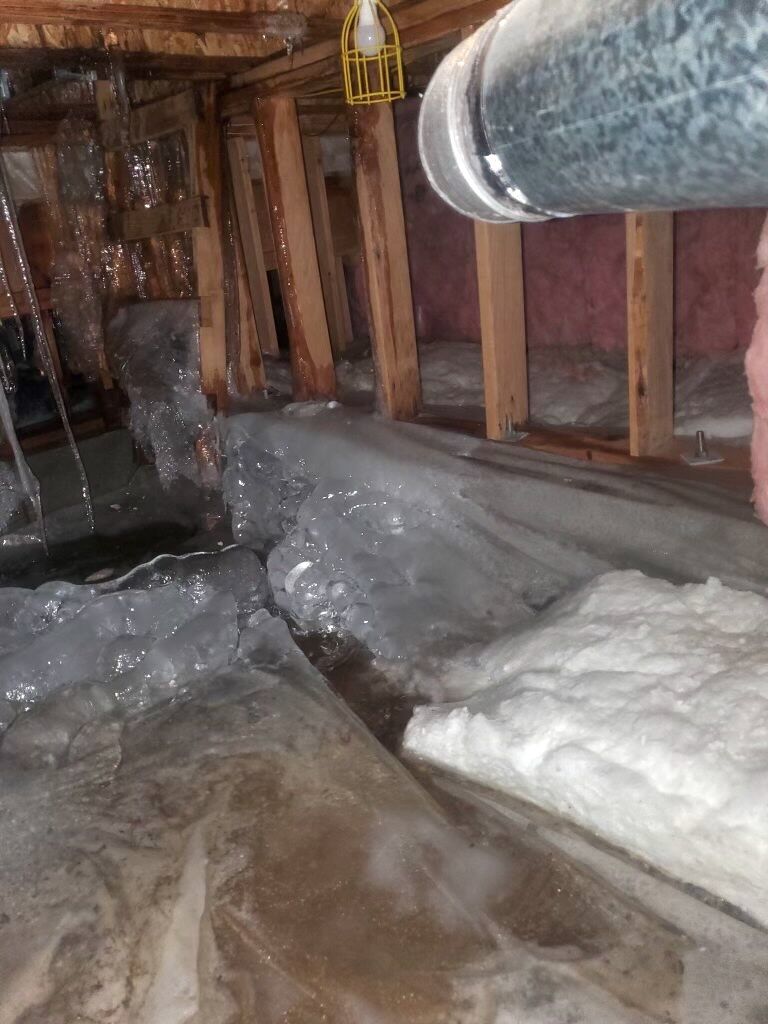
Mat-Su Valley heating and plumbing contractors have been busy since the winter storm ravaged homes in early January. Local plumbing and heating business owners shared advice that might help homeowners during future emergencies.
“I think the public needs to get better educated on things they can do,” Dan Hardy, owner of Hardy Heating, said. “And we’re trying to let people know.”
Hardy and his team have been responding to emergencies since the storm. He believes that they will be responding to these issues until February.
Chris Vogel, owner of Rock Solid Heating and Plumbing, also has team members responding to heating and plumbing failures in the Valley. He experienced many plumbing issues that could have been avoided when the power went out.
“Turn the water main off to your house, generally in your crawlspace, or in your utility room, or in your garage,” Vogel said. “And you need to know how to turn the water off. It’s that basic. Like that could literally prevent so many problems.”
Vogel said that once the water main is shut off, open a faucet to decrease pressure in the pipes.
“So now what you’ve done is you’ve given your pipes a place to have the water expand to and potentially have either less breaks in your piping, or no breaks in your piping, if it does really freeze up,” Vogel said.
Hardy suggested the installation of surge protection on heating equipment. He mentioned the use of an inverter when using a generator to provide clean power to your heating equipment.
“And test that stuff out before something like this happens… have peace of mind,” Hardy said. “Have it ready to go and then test it, make sure it all works.”
An electric heat source is also important if there is a heating system failure, according to Hardy. An electric backup is beneficial for homeowners even if there isn’t a winter storm.
“We find out a lot of times people have no backup whatsoever,” Hardy said.
Vogel mentioned that decorative gas fireplaces are often overlooked in terms of emergency heat during a power outage.
“If you have a gas fireplace, know that it can be used as an alternative heat source,” Vogel said. “And most if not all of them do not require electricity to operate.”
Another alternative heat source is the wood stove.
“People who had wood stoves probably fared the best,” Vogel said.
Vogel also mentioned that homeowners should open up cabinets below sink bases to allow warm air to move around pipes.
“Because just having a little bit of ambient airflow does help… that could make a couple of degrees difference,” Vogel said.
If there is the threat of a power outage, Vogel suggested turning the heat up in the house. This will allow the inside temperature to stay warm longer.
“It gives you that much more of a buffer, it gives you that much more time of temperature drop before you have serious freezing issues,” Vogel said.
Hardy also suggested filling a bathtub with water. Having this reservoir available can allow homeowners to flush toilets or provide some form of potable water.
Hardy emphasized that many hardware stores in the Valley were sold out of supplies like generators and extension cords during the storm. Homeowners should purchase these materials before they need them.
Hardy pointed out that contact with other people in the community is important during the winter. He mentioned several instances where neighbors and families worked together to get through the storm. If someone is planning on being out of town during winter, they should consider having a friend or neighbor check on their property.
“A network of friends and people and alternative plans,” Hardy said. “A lot of people were out of town on vacation and stuff.”
Hardy admits that the heating and plumbing professionals in the Valley weren’t prepared for such an event either. Emergencies such as these are not common.
“And for us, we weren’t super prepared with a lot of inventory on things,” Hardy said. “We’re limited on stuff because we rely on our suppliers. We got three suppliers out here [in the Valley], suppliers in Anchorage. But all of the sudden, they’re running out.”
Both Hardy and Vogel also pointed out that an ongoing supply chain issue has caused parts to be less readily available.
Hardy believes that Valley residents would benefit from learning from this experience in case of a storm in the future.
“I think for the most part it’s gonna be an eye opener for people to start being a little bit more prepared for something like this,” Hardy said.

By Jeremiah Bartz Frontiersman.com A football coach using a hockey reference as the centerpiece for his keynote address may

Frontiersman.com With its headquarters in Wasilla, the Frontiersman has been a primary source of news for the Matanuska-Susitna

By Katie Stavick Frontiersman.com The next generation of leaders took flight this week as the Houston High School Class

By Kyle Wilkinson For the Frontiersman Keynote speaker and Carry the Cure President Bill Pagaran’s words boomed through the