Retiring teacher, coach urges Colony grads to ‘find their 68’
By Jeremiah Bartz Frontiersman.com A football coach using a hockey reference as the centerpiece for his keynote address may


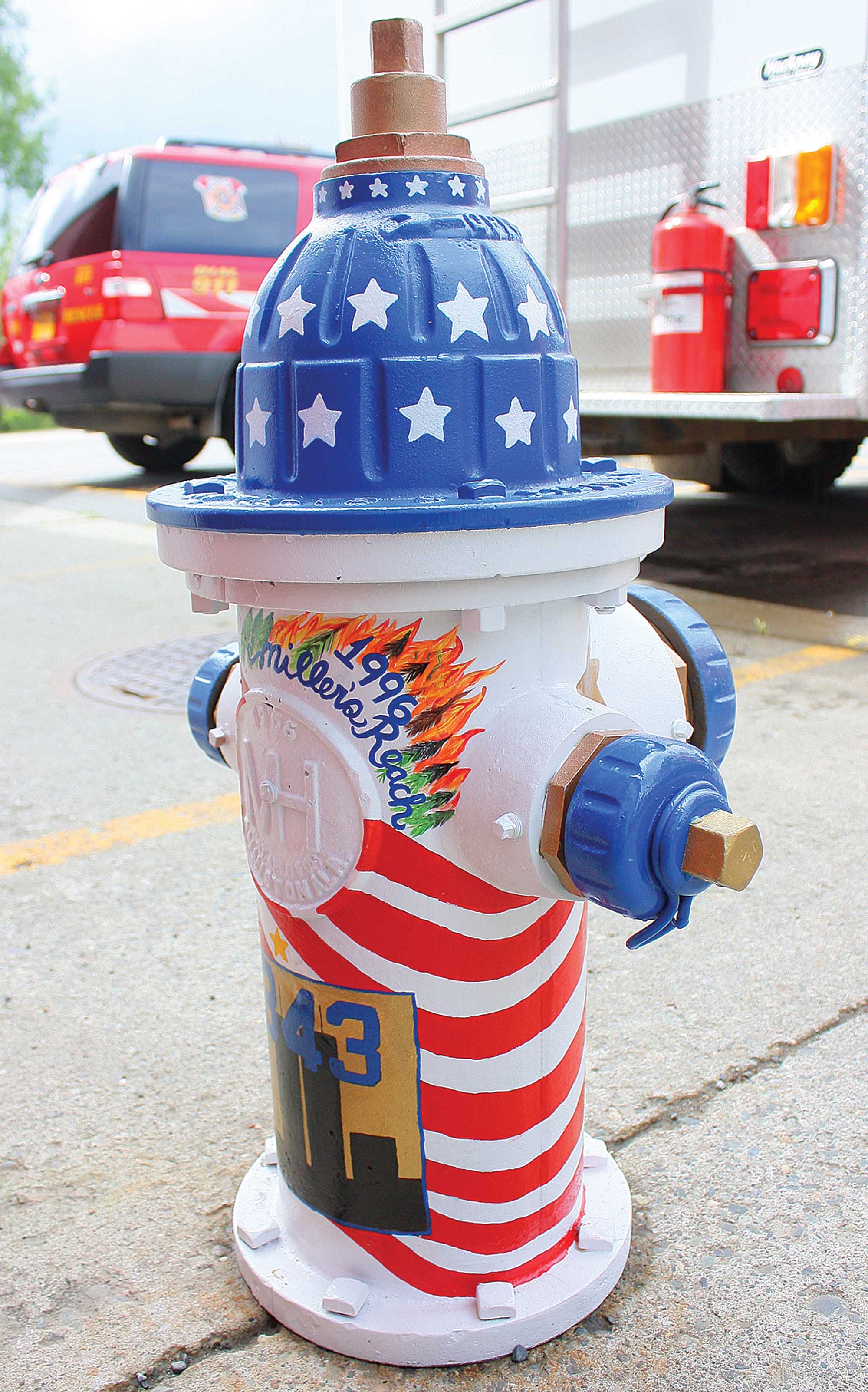
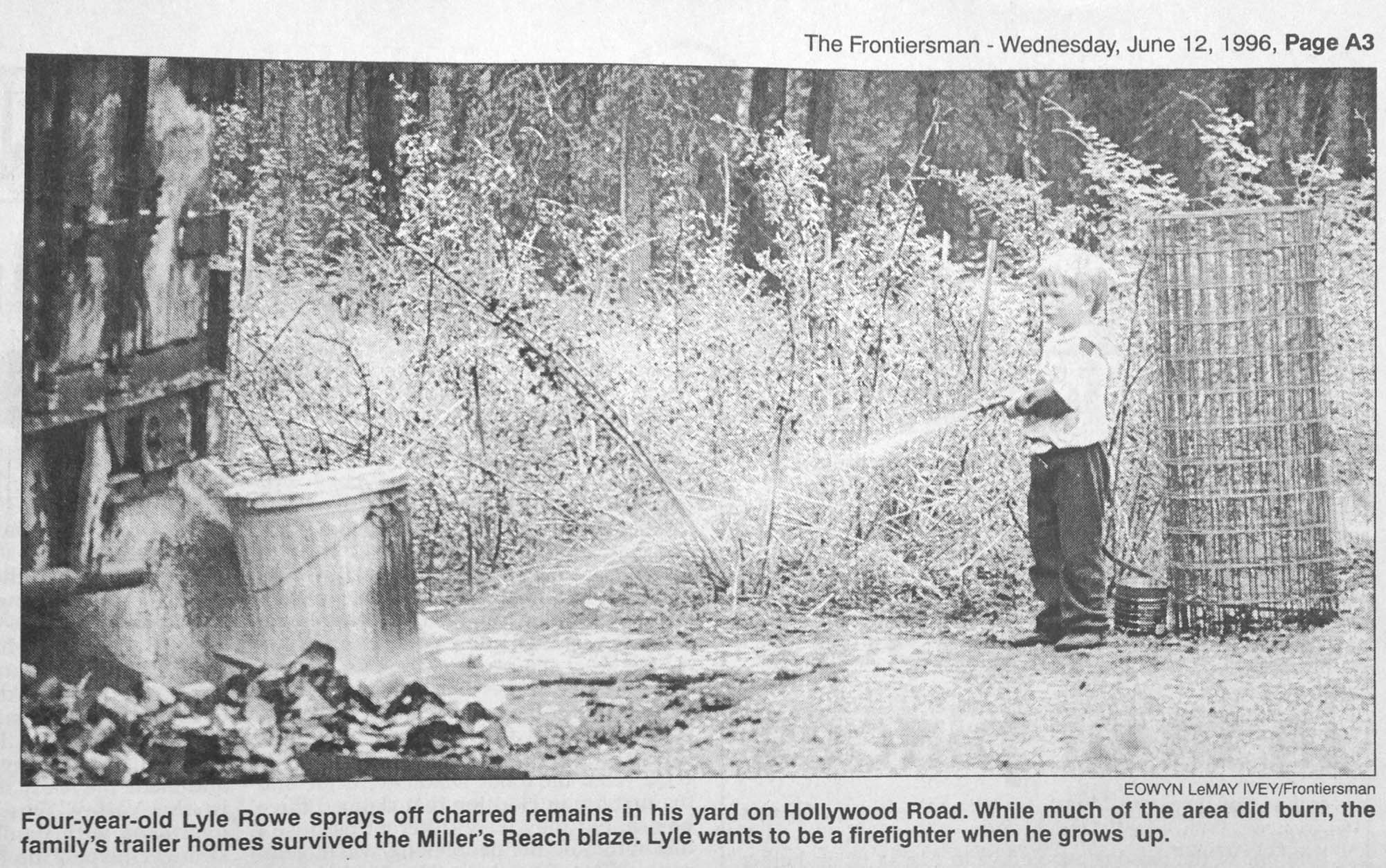
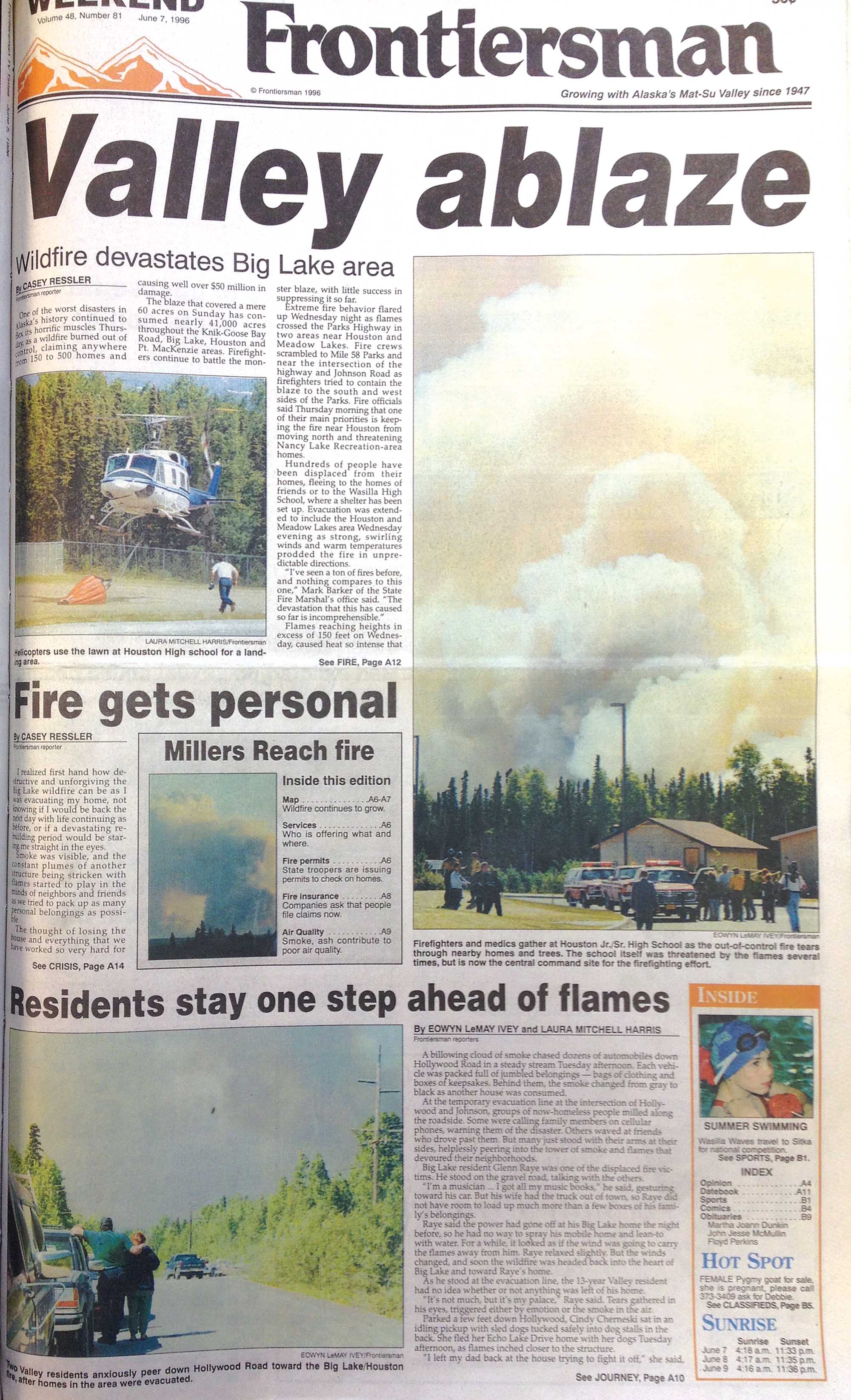
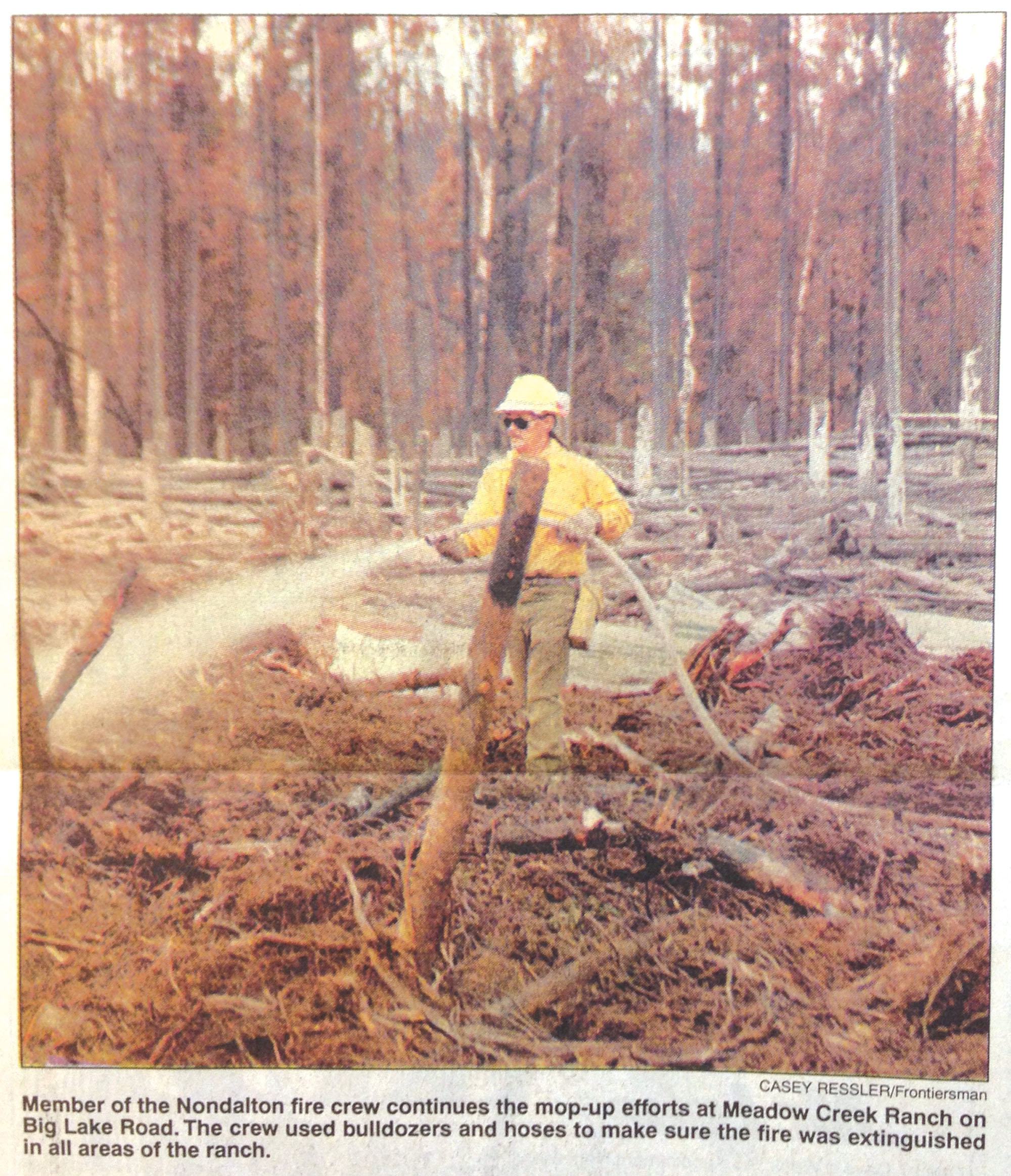
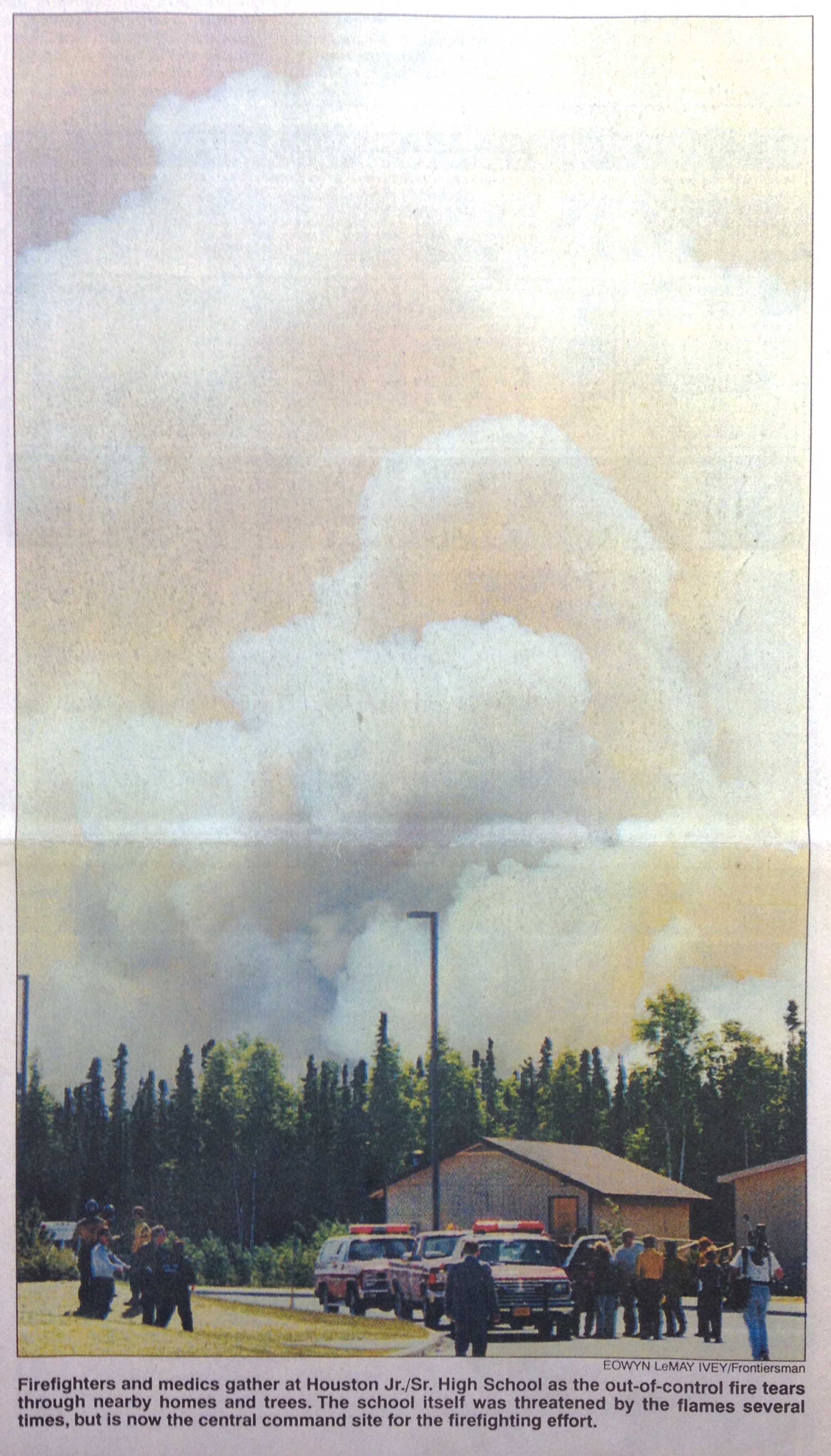
BIG LAKE — Two decades after a wildfire consumed 37,300 acres of the Mat-Su Valley, residents are still reflecting on what they lost, what they learned and how they felt in the wake of destruction incurred by the Miller’s Reach Fire.
“It was just like yesterday,” said Mat-Su Borough Director of Emergency Services Bill Gamble at a Big Lake Block Party on Saturday.
When the fire began on the night of June 2, 1996, Gamble was a volunteer firefighter who also was working as an air traffic controller in Anchorage. At 5 p.m. on that hot, dry Sunday — reports from the time describe temperatures in the high 70s with a weeks-long lack of rain in the area — an “all-call” was issued for the Meadow Lakes, Big Lake, Houston and Willow fire departments to respond to what would become known as “Miller’s Reach Fire No. 1.”
Miller’s Reach Fire No. 2 — the one that whirled out of control after high winds gave rise to a mile-wide, 200-foot-tall wall of flames — began the following evening.
In total, the fire razed 454 structures and caused the loss of more than $15 million in private and community property, according to the Mat-Su Borough’s Miller’s Reach Wildfire After Action Review.
Gamble’s story is one of many publicly documented in the spiral-bound book, “Up From the Ashes: Stories from the Miller’s Reach Fire Disaster,” compiled by Project Fireweed and edited by Renee Georg.
In the 128-page document, tales ranging in length from a few paragraphs to five 8.5-by-11-inch pages are punctuated with photos, poems and safety tips, all of which bear witness to the terror — and sometimes even amusement — of the events surrounding one the state’s worst wildfires in history.
Writers described it as “hellish,” “your worst nightmare” and “a breathtaking sock in the gut.”
Several stories referenced the struggle of evacuating not just sled dogs, but menageries of animals, including (but not limited to) turtles, guinea pigs, cats and caged birds. Many of these animals ended up at the long-since closed Valley Feed and Seed warehouse, which opened its doors for boarding free of charge.
Children remembered what they were watching on TV when news of the fire interrupted onscreen, as well as the uncertainty of what to bring as they left their homes behind. Adults, too, struggled to comprehend what was necessary and what was trivial in the heat of the moment.
“Why, among all the things I possessed, did I run out of the house carrying a hack saw and a flat iron?” Anna Belcher asked in her story.
Most stories end with thanks — to firefighters, businesses, family members, friends and strangers who helped in the most desperate of situations; who prevented the loss of any human life.
Some stories, however — written by the firefighters themselves — recounted the acute hostility directed toward those who put their lives on the line to keep the fire from spreading.
James Steele, who is now the District 1 Chief of Central Mat-Su Fire, told of some bystanders who approached him and other emergency personnel in 1996 “screaming, yelling, cursing that we didn’t know what we were doing.”
Steele called the interaction “devastating,” but didn’t let it color his attitude on the whole.
“During the fire we certainly saw the worst of people — but very little of that. Most of all we saw the best of people,” he wrote.
Steele’s phrase resurfaced at the Big Lake Block Party last weekend, where a plaque commemorating the 20th anniversary of the community’s valiant effort against the fire was unveiled near the entrance to West Lakes Fire Station 81. The plaque reads, “Most of All We Saw the Best of People,” beneath the words “Miller’s Reach Fire,” above the current year and the year of the fire.
“Out of something really, really bad, something good happened,” Gamble said during the anniversary ceremony.
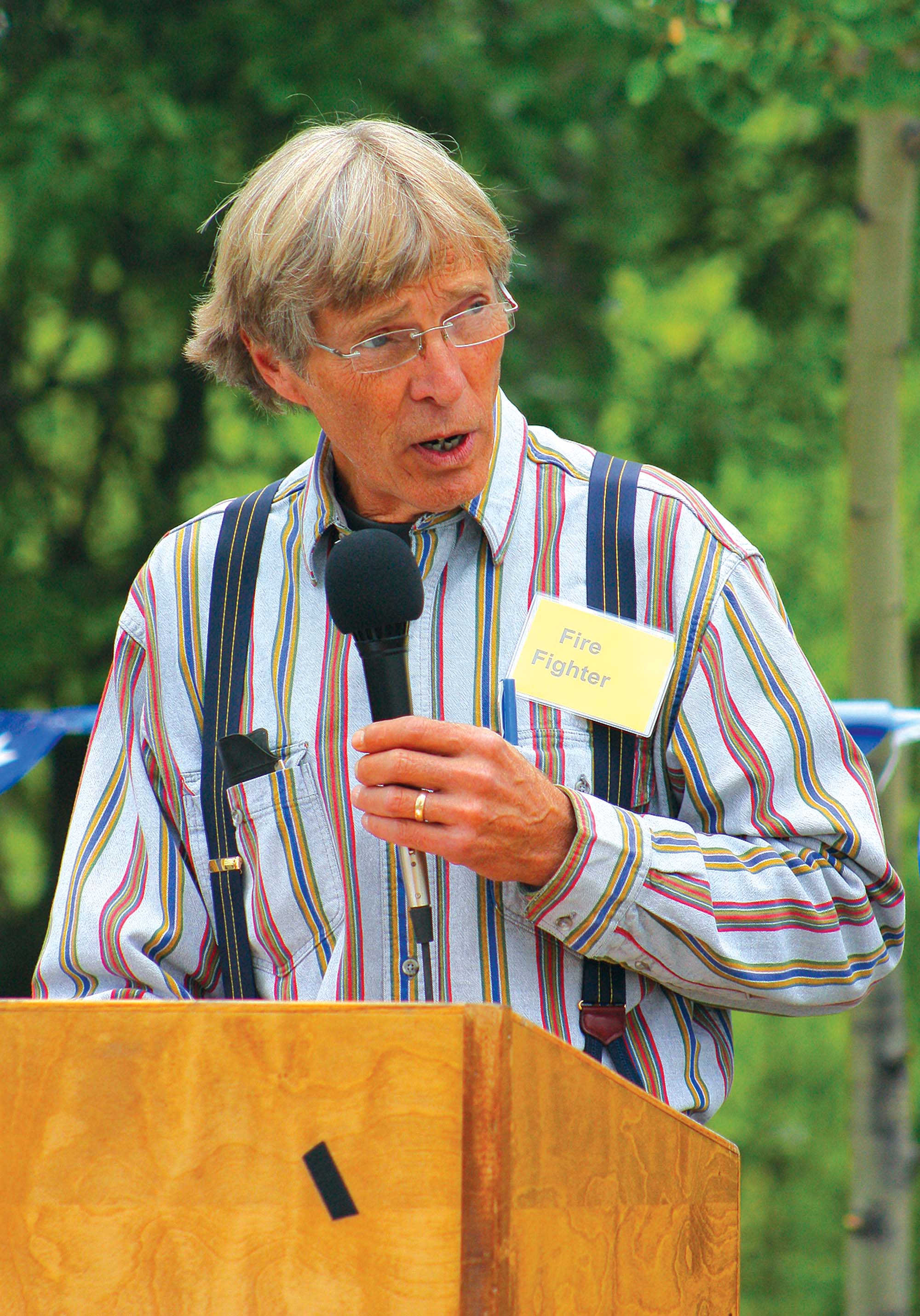
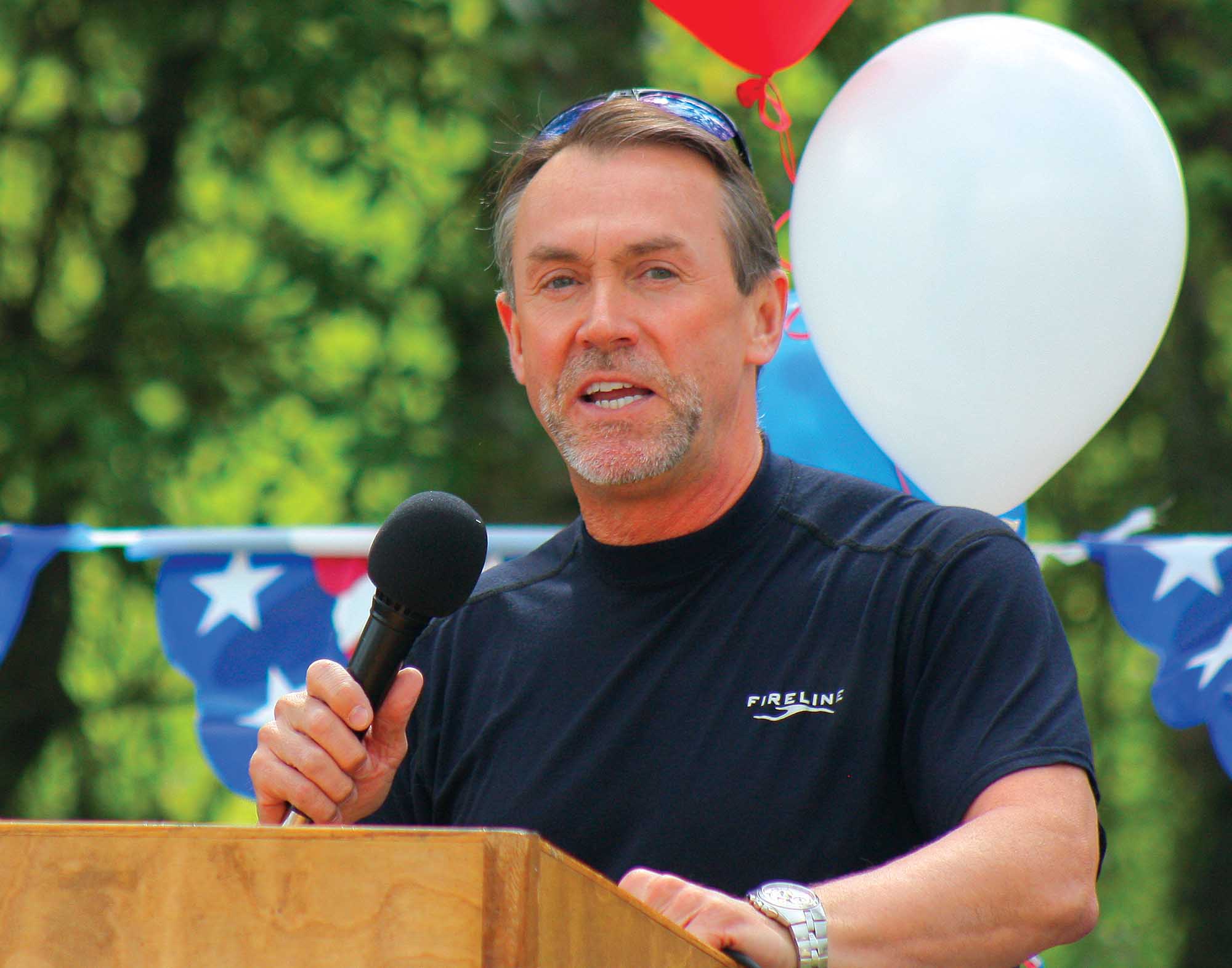
As light raindrops began to sprinkle on the heads of the roughly 100 people in attendance, Gamble and Alaska Division of Forestry (DOF) Technician III Mark Bertels, DOF Fire Management Officer Norm McDonald, former KMBQ radio reporter Chas St. George and Horseshoe Lake Firewise Community Coordinator Cathi Kramer — whose brand new 3,200-square-foot home burned to the ground in a matter of minutes all those years ago — each spoke highly of the people who fought the Miller’s Reach Fire, as well as the area’s much improved firefighting strategies.
For one thing, “public education of wildfire risk has increased dramatically,” since the Miller’s Reach Fire, thanks in large part to the Firewise program, Bertels said.
“The Firewise program has helped communities proactively reduce the threat from fire and prepare themselves, should another fire occur,” he said.
Bertels also noted the implementation of better training for emergency service personnel in “all risk events,” as well as advanced communication technology and effective use of funding for “wildland fuel reduction and defensible space.”
These improvements showed in the fighting of last year’s Sockeye Fire, which, while immensely destructive, devoured only 7,200 acres — less than 20 percent of the total area destroyed by the Miller’s Reach Fire.
McDonald described the difference between firefighters’ responses to the two fires as “night and day.”
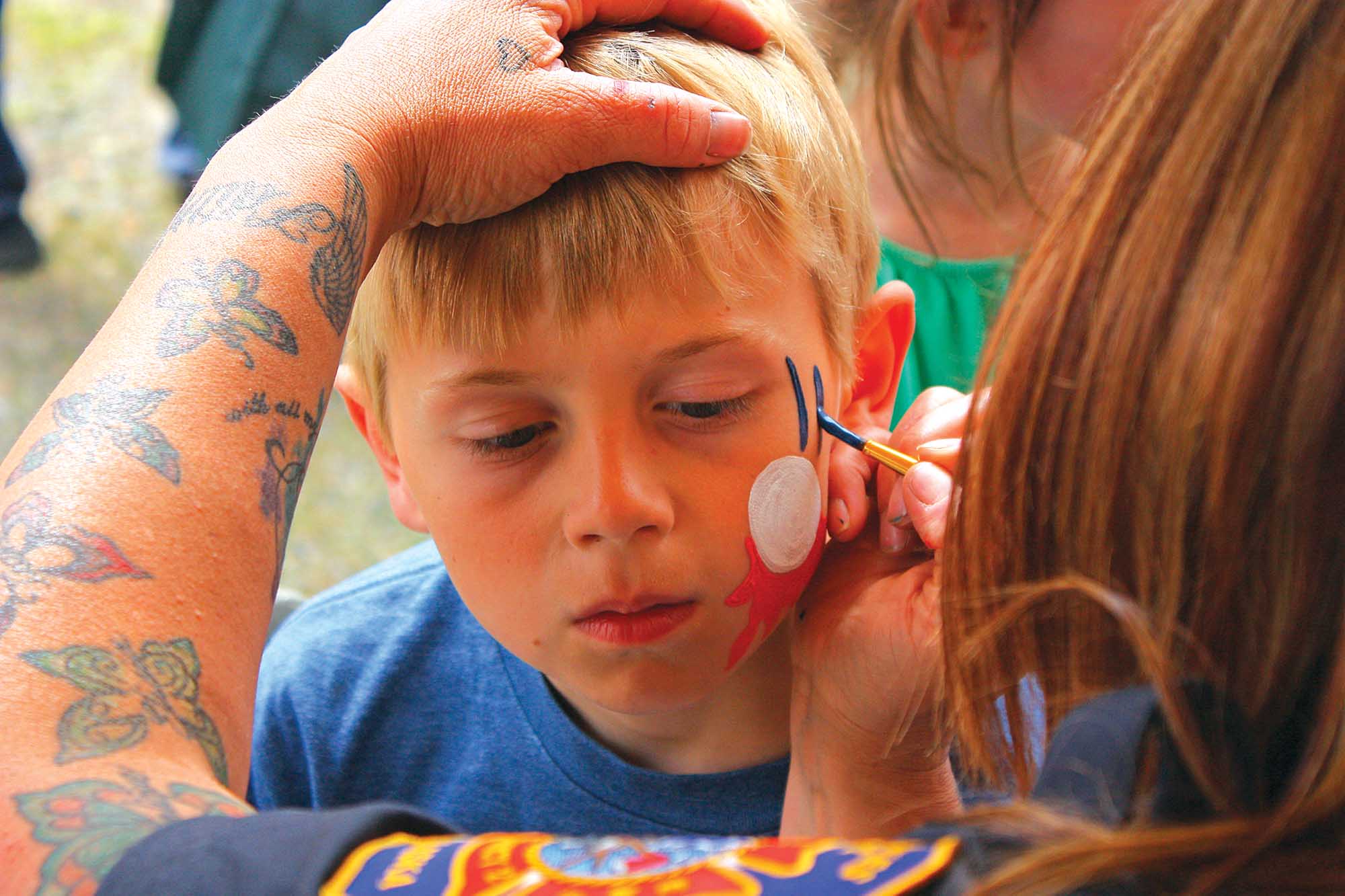
Kramer, who organized the party and paid for it with a grant from the Big Lake Community Council, said that’s something to be proud of.
“So many of us lost homes and had to rebuild our lives, and this community has rebuilt stronger than ever,” she said.
Contact reporter Caitlin Skvorc at 352-2266 or caitlin.skvorc@frontiersman.com.

By Jeremiah Bartz Frontiersman.com A football coach using a hockey reference as the centerpiece for his keynote address may

Frontiersman.com With its headquarters in Wasilla, the Frontiersman has been a primary source of news for the Matanuska-Susitna

By Katie Stavick Frontiersman.com The next generation of leaders took flight this week as the Houston High School Class

By Kyle Wilkinson For the Frontiersman Keynote speaker and Carry the Cure President Bill Pagaran’s words boomed through the