Retiring teacher, coach urges Colony grads to ‘find their 68’
By Jeremiah Bartz Frontiersman.com A football coach using a hockey reference as the centerpiece for his keynote address may


WASILLA — Almost as soon as he stepped out of his truck Wednesday, Lance Mackey was posing for photos, cracking jokes and chatting with reporters.
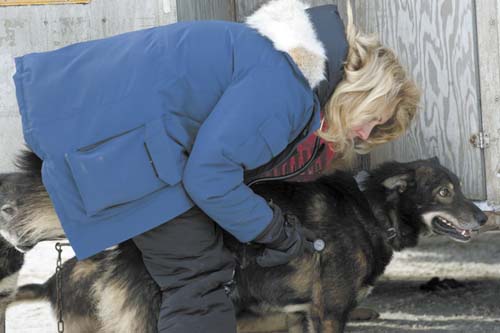
“This is the easy part,” the four-time champion told a member of his dog team at the morning’s veterinary check at Iditarod headquarters.
Mackey said he thinks this year’s mandatory kennel cough vaccinations are a good idea, though the price to get shots for every dog was steep. Without mandatory vaccinations, he said, there is often a lot of skimping on the part of mushers.
“I was one of those people,” he said. “The team that we know we’re taking we’ll vaccinate.”
As for his team, Mackey said the vets will obviously have the final word, but he’s psyched.
“In my opinion, they’re 100 percent ready to roll,” Mackey said. “To me, they look great and I’m excited to get out there with them.”
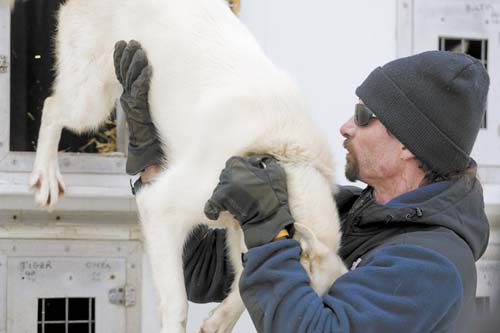
Volunteer veterinarian Bill Liska said he’s been working with the Iditarod through eight races. He said vets are paying a lot of attention to cardiovascular functions in the dogs as well as their lungs, legs, joints — everything, really. Even their weight.
“There won’t be any obese dogs running, but if there are skinny dogs we should note that,” Liska said.
He said vets can pick up on things mushers might miss. Vets and mushers, he said, are working together.
“They want that, too. They want their dogs to be healthy,” Liska said.
But, Mackey said, the check is serious business. Without an OK from vets, mushers can’t race.
“Without a dog team passing today, who cares what happens next week?” Mackey said.
In another section of the driveway, Anjanette Steer said Iditarod officials always make the veterinary check a smooth, easy process. She said she’s excited for the race, but is realistic about her chances.
“I’m a rookie, so I’m looking to finish,” she said.
Steer is married to Iditarod veteran Zack Steer, who isn’t racing this year, nor is the Steers’ racing partner, Roger Bundtzen. So there was no competition for dogs from the kennel.
“I got the pick of the litter,” Steer said. “I’m excited to get on the trail.”
Weather at Sheep Mountain where the Steers live has been much the same as everywhere else this year — cold, lots of snow, she said.
Training has required a lot of trail breaking. Steer said she’ll be keeping an eye out for “chicken foot” — a condition in which ice builds up behind a dog’s wrist and can lead to serious medical problems. She said she will have leggings for her dogs on hand if she needs them.
Prior to Mackey’s arrival, Karin Hendrickson from Blue on Black Kennels between Talkeetna and Willow had wrapped up her vet check and loaded her dogs back on the truck. She said the team checked out just fine.
“Hopefully, they look as good when we get farther into the race,” Hedrickson said.
Like Steer, her dogs have done a lot of trail breaking this winter. Asked for a prediction about what that cold, snowy winter will mean on the trail, Hendrickson said that every year people fret about too much snow or not enough.
“Every year you get out on the trail and it’s fine,” she said.
Moose could be problematic. Deep snows have led to quite a few stressed ungulates, but Hendrickson plans to be prepared.
“I’ll be packing (a gun),” she said. “I’ve already had two moose encounters this year.”
Farther up the driveway, Pat Moon of Unalakleet said he’s racing for his village, not for a win. He wants people to know that in Unalakleet, mushing is a lifestyle. Actually, it’s a dying lifestyle as snowmachines become more ubiquitous. But for the people who mush, dogs are important.
“It’s to let people know that Unalakleet is a subsistence village,” Moon said. “Unalakleet doesn’t have dogs to race, they have dogs to live.”
Contact reporter Andrew Wellner at andrew.wellner@frontiersman.com or 352-2270.

By Jeremiah Bartz Frontiersman.com A football coach using a hockey reference as the centerpiece for his keynote address may

Frontiersman.com With its headquarters in Wasilla, the Frontiersman has been a primary source of news for the Matanuska-Susitna

By Katie Stavick Frontiersman.com The next generation of leaders took flight this week as the Houston High School Class

By Kyle Wilkinson For the Frontiersman Keynote speaker and Carry the Cure President Bill Pagaran’s words boomed through the