Retiring teacher, coach urges Colony grads to ‘find their 68’
By Jeremiah Bartz Frontiersman.com A football coach using a hockey reference as the centerpiece for his keynote address may


By the numbers...
2,740pounds of trash was hauled to the Palmer Landfill in yellow bags during the Williwaw Spring Clean Up
75(at least) attended the following block party
50(and growing) “Williwaw Watchers” are participating in the neighborhood watch program
29 incidents in the Williwaw area are on record, according to the AST dispatch (entries from Jan. 01, 2018 – April 27, 2018)
3 local politicians appeared at the block party
WASILLA — The Williwaw subdivision is one of the oldest neighborhoods in the Mat-Su Valley. It has a history and reputation as one of the most crime-afflicted areas, a place to avoid. The people who can’t avoid it, the ones who live there have stirred up attention. After assembly meetings, letters from the Borough mayor, sit-downs with politicians, call after call with law enforcement, brainstorming sessions with community groups and leaders, patrols, mounds of research, and constant contact down a phone tree, the “Williwaw Watchers” are ready for the next steps to change the narrative of their home.
On April 21, Michael Fernandez, Tara Sutton, Michelle Swan, Matt Morris, and several other Williwaw residents launched their first spring clean-up/block party. They hope it will become an annual event.
“A third of my life has been in this neighborhood and I’ve never seen anything like this,” Fernandez said. “This is great but it could always be better. This aint dying out; it’s wildfire.”
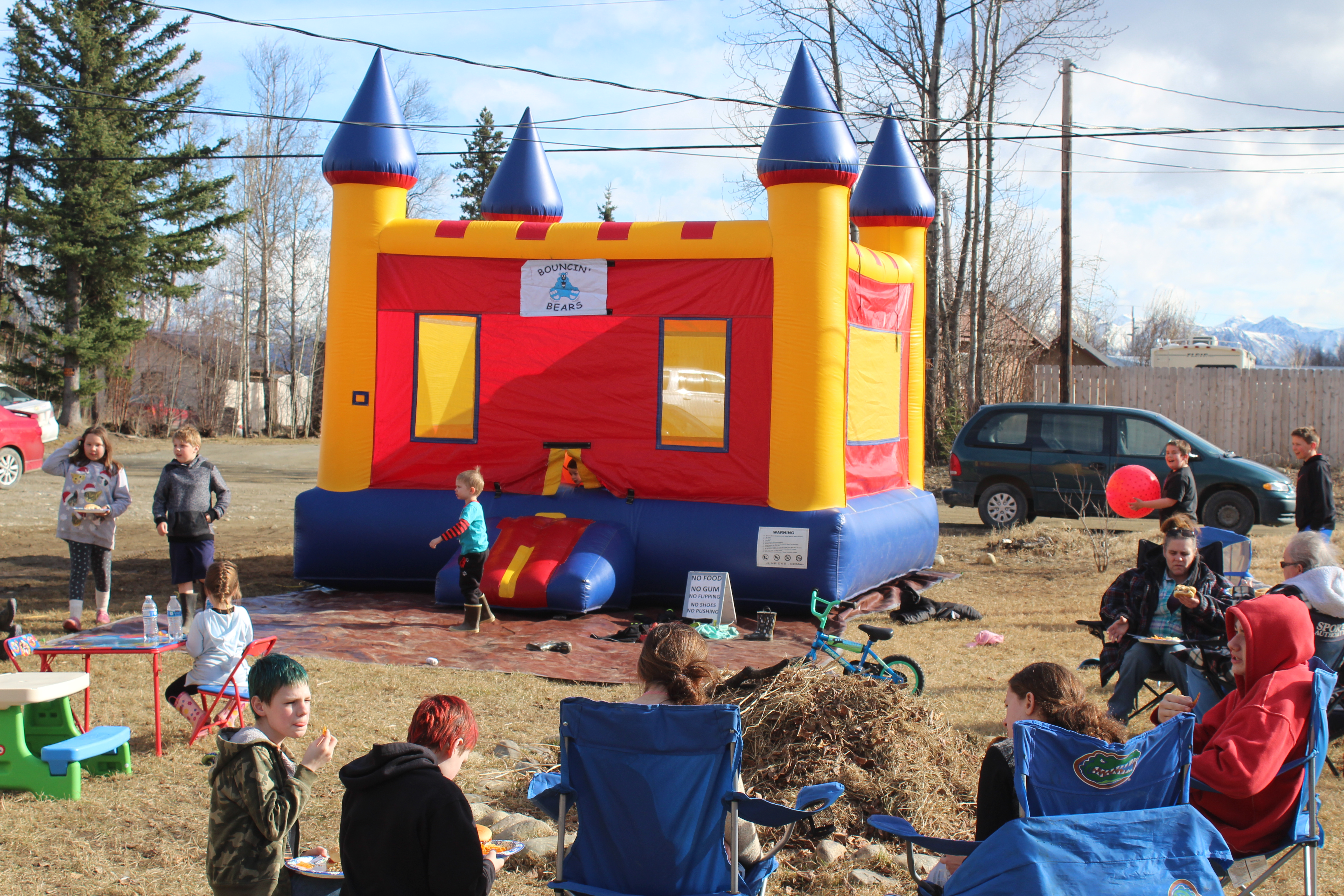
Starting in the morning, groups swept through the subdivision with yellow trash bags, picking up all the trash they could get their hands on, from smashed cans to used needles. They took 2,740 pounds of trash to the dump by mid-afternoon. The block party kicked off afterward. Kids jumped in an inflatable bounce house and adults talked over coleslaw and barbecue smoke. Some people said they felt safer and more empowered together than before, even if it was just for a moment.
“It’s nice to see the streets jam packed because of something good for once,” said one longtime resident who did not want to be named.
District 4 Assembly member, Ted Leonard, his wife, Colleen Sullivan-Leonard, State House Representative for District 7 and District 3 Assembly member George D. McKee were the three politicians who came to the block party after Fernandez’s mass invitation.
“I’m thoroughly impressed they showed up,” Fernandez said.
“I think we’re making the first steps. We just have to continue to work on this neighborhood, on all neighborhoods. The assembly members are talking. They’re pretty much saying, ‘OK, we’ve got to do something now.’ It’s the Borough’s job to ensure safety to all of our people even with no public safety powers. So we have to work with the state and that’s the challenge — getting the two governments to work together,” Leonard said.
Leonard has expressed his distaste for SB91 in the past and after hearing several testimonies from the residents, a month after his first walk through the subdivision, he still wants to repeal what he calls a “catch and release” system. He said that he’s seen countless cases of individuals coming in and out of the system, getting arrested for the same crimes.
“I see the results from the citizens. It’s affecting them. It’s got to be a combination of the two governments working together. More than that, it’s about the people. Today I saw the people of Williwaw stepping up and working together,” Leonard said.
The Wasilla Sunrise Rotary Club is anxious to build a playground on a lot that will be donated by the Mat-Su Borough (MSB), according to past Rotary president, Dan Kennedy.
“They will own it and maintain it as their asset,” Kennedy said.
The residents of Williwaw will have to establish a homeowners association, officially file as an entity and they also need to become a non-profit organization, according to Kennedy. The MSB does not manage any residential parks and/or playgrounds; that is up to each area to maintain, according to George Hays, Deputy Borough Manager for the Borough. He said the Borough only manages a handful of places like the Butte and the Matanuska Park.
“These community parks throughout the Borough and different subdivisions,most all of those are owned by the homeowners association or they’re owned by some private entity. We don’t maintain any of them,” Hays said.
Once all the pieces are in place, Kennedy said the Rotarians are confident that they can raise grant funds from the club and organizations like the Mat-Su Health foundation. This reminded him of a similar Wasilla Sunrise project from the past. This Williwaw project will be just like their Newcomb Park project at Wasilla Lake four years ago, complete with slides, swings and other age-diverse play things, Kennedy said.
“A lot of people are working together on this. It’s going to take a community to take care of that urban blight; and we’re hopeful under the leadership of Michael Fernandez. There are so many home owners that are eager to make that happen and community leaders that are poised to help,” Kennedy said.
Another Williwaw resident, Jennifer Noffke, has Williwaw’s future in her crosshairs, particularly the road conditions. She came to the party after talking extensively with the RSA board.
“I am still moving forward with paving the roads and fixing the drainage issues. It appears the neighborhood is full of people with a variety of strengths. The Williwaw community is a diverse group of people including members of the military, homebuilders, electricians, artists, musicians, contractors, technicians, business owners, house cleaners, truck drivers, nurses, and the gentlemen who graciously pump the waste out of your septic system. Most of us need that service and we should be grateful that someone is willing to do the job,” Noffke said.
I was truly proud to be part of the cleanup last weekend. It was impressive how the neighborhood came together. It’s a very diverse group with one common goal — to have a safe neighborhood we can all be proud of.
“This is a good step for them,” McKee said.
McKee doesn’t believe the police are doing enough. He doesn’t blame the individual officers on the ground but cast doubt from the top. He said that about 70 percent of crimes occur at night, and most of the AST shifts are during the day.
“Managers need to manage. Get more cops at night. That’s when crime happens,” McKee said.
Kayla Coker moved to Williwaw five years ago. She was holding her two year old and mingling with her neighbors. What she said was repeated by several others throughout the night: “This is this first time I’ve met any of these people.”
Coker lives on a small road where she sees “bad tenants” scuttling from house to house. She said their erratic behavior, trespassing, and haggard living conditions indicated the throes of drug addiction. She called AST after the tenants trespassed on her property. She said the landlord eventually kicked them out after running well past their rent dues. Her husband walked the landlord into the house after they left. She said they found piles of human feces strewn across the house.
“It was rough for a bit. A nice family moved in and it’s getting nice again,” Coker said.
She said it was good to come out of her shell and see others do the same, breaking the old Williwaw mentality, I’ll stay in my bubble and you stay in yours, live and let live.” After going to her first assembly meeting earlier this month, she felt her morale boost.
“There’s more good people here. It’d be nice to get the bad apples out. I think it’s only the beginning. I’m excited,” Coker said.
She supported the idea of a homeowners association, as long as it wasn’t too restricted and not too picky about things like grass length and window trim colors. She said it also needs to be affordable and figured many of her neighbors would feel the same. The property in Williwaw is cheaper than most other areas.
“We came here because it was a bargain,” Coker said.
She said she was lucky and hasn’t had any incidents. She noted that traffic regularly picks up late at night and she also noted how the past few days leading to the block party were slightly slower by comparison.
“They know people are watching,” Coker said.
During the block party, Tara Sutton picked up a megaphone and ran a raffle with items donated by the neighborhood, community members, companies, and groups. She thanked several people and entities, including the provider of the party’s center piece, the bounce house.
“Thanks to Bouncing Bears for throwing positive energy our way and giving our kids something to do,” Sutton said.
Shannon Gregory lives in Williwaw. He’s been fairly familiar with the area most of his life.
“Some people won’t come over because of where I live,” Gregory said.
He said the root of the area’s evil is addiction, particularly meth and heroin.
“When they come down, they get sick and they’ll do anything for that next hit,” he said.
He was open to the idea of a homeless shelter, particularly one for adult men, since women at least have one in Palmer and minors have MyHouse down the road.
“You can’t help anyone who isn’t willing to help themselves,” Gregory said.
There’s a difference between people who take advantage of the system and people who were kicked in the teeth and need some help up,” Gregory said.
Halfway through the block party, an AST vehicle rolled slowly by. Several people turned and waved and the trooper waved back. Some people shouted, “thank you!”
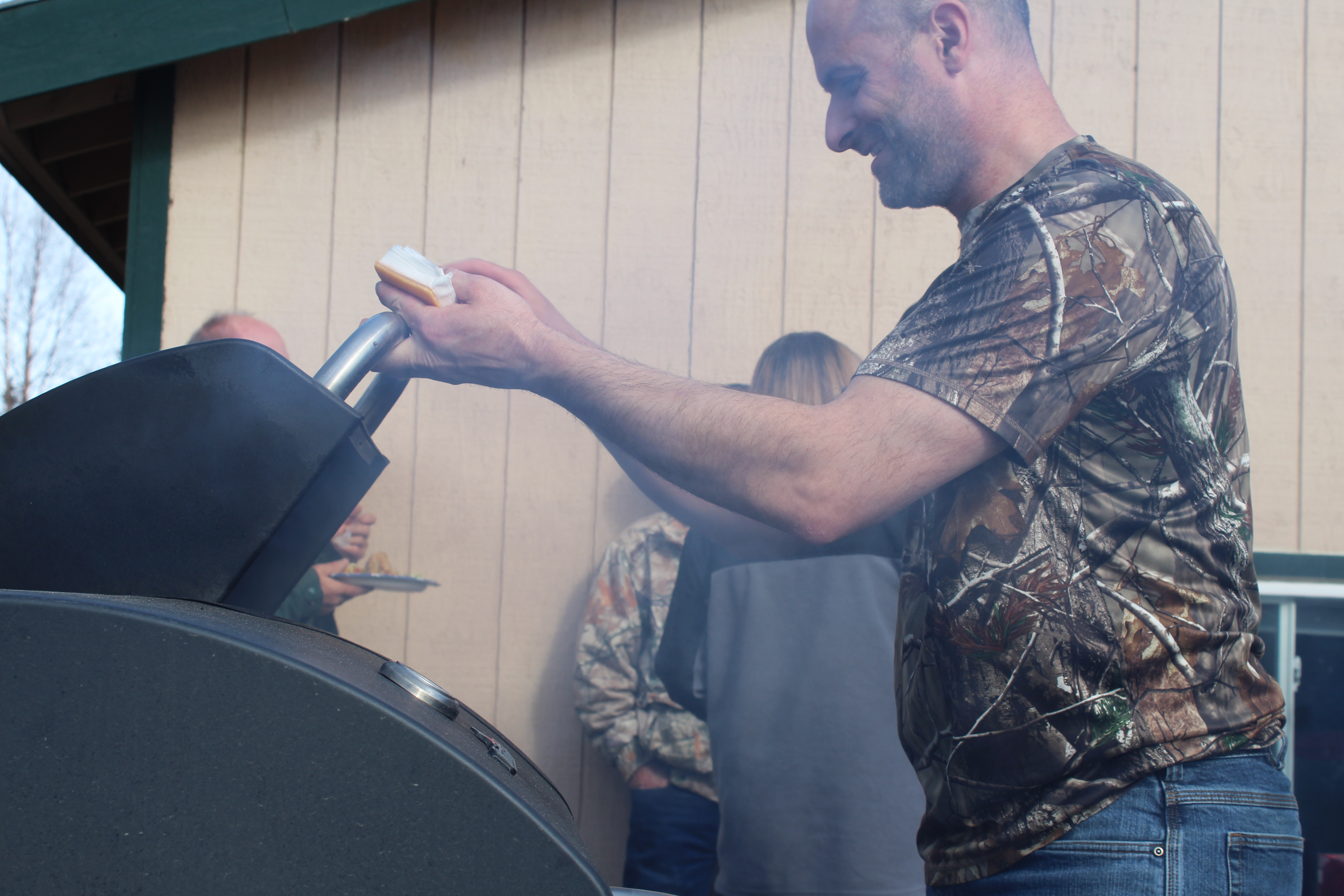
Fernandez was preoccupied with his grill duties, busily cooking hot dogs and burgers. As the party came to a close, he found out about the trooper. He got teary eyed after a day of holding it in.
“That’s so awesome,” he said, wiping his eyes.
B. has lived in Williwaw for 38 years. This is where she grew up. She brought another perspective to the table. She saw the block party as a chance to meet Fernandez and clear up something that’s affected her during this campaign. Fernandez used a photo of her house among others when he was first making his case with the Borough, citing her home as “junky.”
“Fifty percent of this neighborhood does drugs, pushes it or is the middle man. One of the three major drug dealer houses is right next to me,” she said before looking across the street. “It’s well known.”
B.’s property has an eight-foot tall fence around it, keeping would be trespassers. B. talked to Fernandez, who felt like he ate crow.
“I admit it; I can be judgmental.” Fernandez said. “I’m sorry.”
B. lives in the backside of the neighborhood and said a lot of the people at the part were front. She said that some people in Williwaw may have more eccentric-looking lots but not all are junked or condemned.
“I think he has a new understanding of who we really are. That’s part of why I came here, to see other people’s points of view.”
The Williwaw Watchers have established a community board with seven members.
“We don’t want to force people out,” Morris said.
They are meeting with a lawyer to brainstorm how to start a homeowners association while trying to keep everyone’s needs in mind. On the top of the list is cracking into the original covenant, which no one at the party had any say over, Fernandez said.
“We need signatures to get stuff done,” he said.
His face flushed and his eyes crinkled. Hot tears rolled down his face. He looked across the street. One of the alleged drug dens in the subdivision.
“That man is tearing this neighborhood apart,” he stammered.
He looked across the yard. A hefty man with a gruff voice was telling a lively story to the remaining crowd.
“Real change comes from within. There’s a recovering addict here today who’s lived through all of this. He’s helping with the change. This is his home and this is real and this is happening. If this fails, I hope somebody somewhere learns from it and makes it work,” Fernandez said.
With the party in the rear-view, the onus now is on community members and government leaders to keep up the momentum.
“As public servants, board members, Mayors, Assembly Members, State Representatives, property managers, parents, teachers and general members of the larger community we all reside in, it’s our job to make this world a better place, to give our children hope and a safe community to grow up in,” Noffke said.

By Jeremiah Bartz Frontiersman.com A football coach using a hockey reference as the centerpiece for his keynote address may

Frontiersman.com With its headquarters in Wasilla, the Frontiersman has been a primary source of news for the Matanuska-Susitna

By Katie Stavick Frontiersman.com The next generation of leaders took flight this week as the Houston High School Class

By Kyle Wilkinson For the Frontiersman Keynote speaker and Carry the Cure President Bill Pagaran’s words boomed through the