Retiring teacher, coach urges Colony grads to ‘find their 68’
By Jeremiah Bartz Frontiersman.com A football coach using a hockey reference as the centerpiece for his keynote address may


WASILLA — The science of cold-climate housing continues to evolve in the far north, as builders, engineers and consumers weigh in on the materials and designs needed to produce an energy-efficient structure.
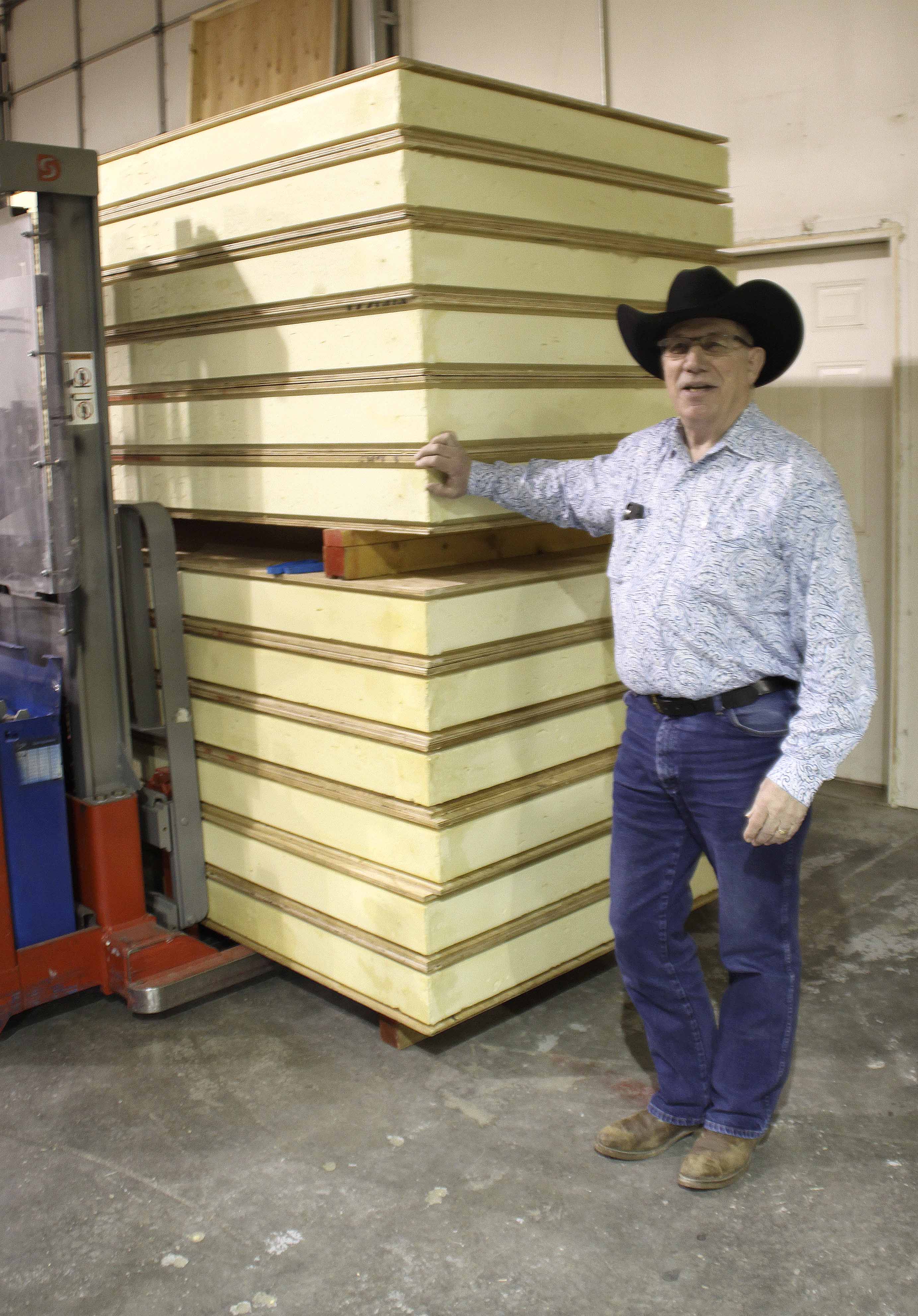
Wasilla entrepreneur Ron Burkhardsmeier is part of that mix, forging a business vested in keeping out the cold. Burkhardsmeier owns Alaska Insulated Panels, which manufactures home kits with walls created from foam core panels that consistently receive 5- and sometimes 6-star energy efficiency ratings.
Burkhardsmeier lives in one and easily rattles off the energy savings that can be realized from using the structural insulated panels, or SIPs. He is one of two manufacturers in the state to offer the walls.
“My first house, a 3,400 square-foot model, we were in for 12 years,” Burkhardsmeier said Friday. “Our total gas bill in 12 years was less the $5,000.
“I have never built a stick-frame house,” he added. “They have all been panel walls — there is nothing better to build with.”
He built a few houses in the Valley, and marketed the walls to Native corporations and residents as a distributor in the early 2000s. But since 2013, Burkhardsmeier has been focused on kit manufacturing from his own 6,000-square-foot plant with an eye not only toward rural Alaska, but the road system as well. Some 350 of his structures can be found from Southwest Alaska to Barrow — even the Aleutians.
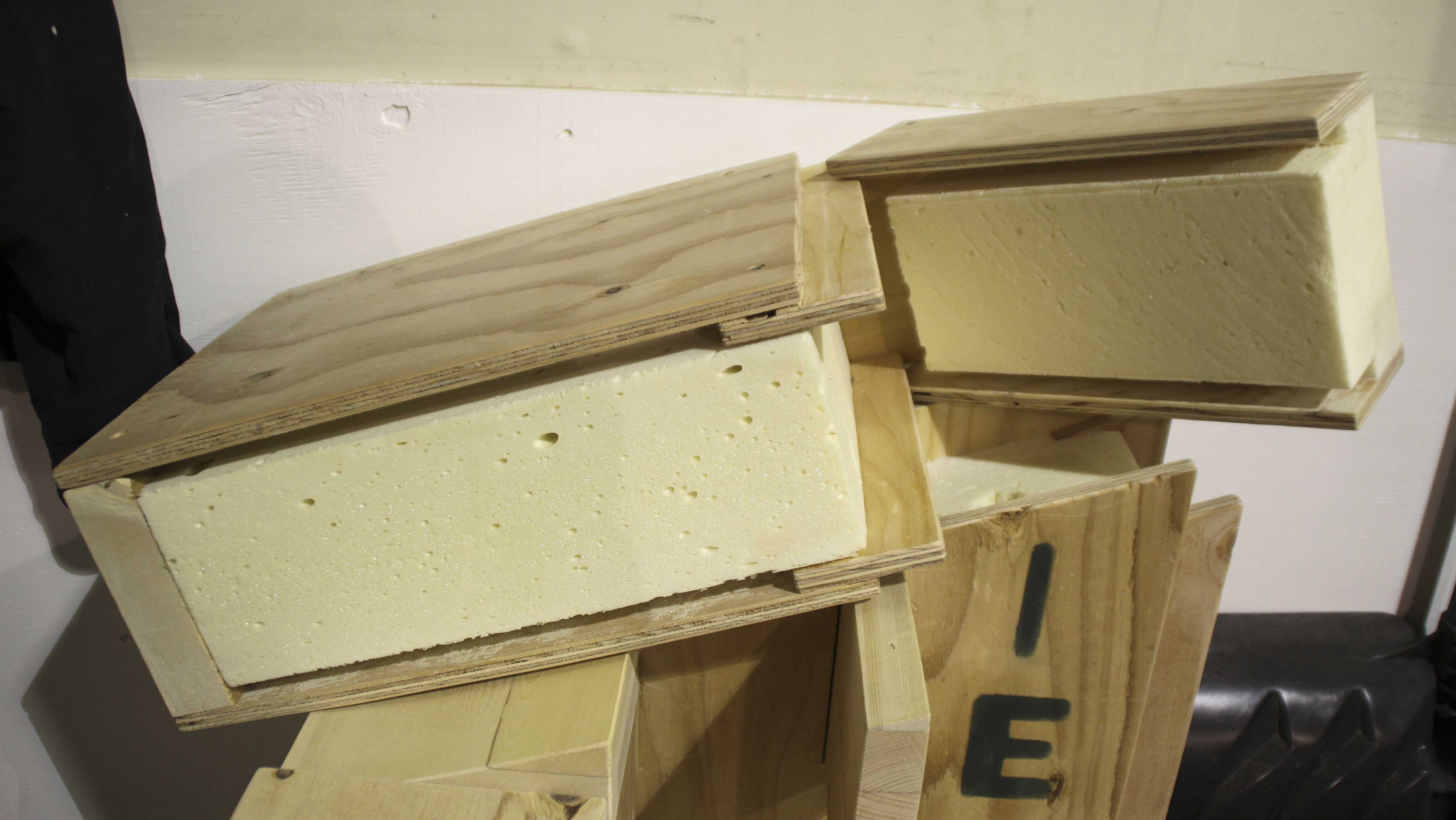
Burkhardsmeier’s SIP panels are created by injecting polyurethane foam between two sheets of heat-treated, half-inch plywood. From an insulation standpoint, the lack of a wall cavity prevents convective heat loss. Stick-frame building with studs also can lead to “thermal bridging” — another source of heat loss in a cold climate. The walls are manufactured in primarily 8-, 9-, and 10-foot lengths.
Burkhardsmeier prefers plywood over the standard OSB, or oriented strand board, because of OSB’s propensity to absorb water.
“Plywood is much stronger than OSB,” Burkhardsmeier said. “Plus, it ships a whole lot easier. Many of these kits go out on barges, then have to be stored in the villages at the work site. OSB doesn’t perform well.”
A North Dakota native, Burkhardsmeier moved to Alaska in 1982. He previously used a Canadian distributor for the wall kits, but NAFTA restrictions later forced him to seek out Lower 48 outlets, which posed quality issues.
“I was at a point where I needed my own manufacturing plant or I needed to quit,” he said. The plant got the vote. “I needed a better way to control the quality, which is essential.”
These days, Burkhardsmeier said the orders begin to roll in around January in anticipation of the spring barge season. By March, his staff usually swells from three to 10 to meet the demand.
Currently, his kits feature eight floor plans from 625 to slightly more than 1,200 square feet. Most are geared to rural Alaska housing, but Burkhardsmeier said plans can be customized to meet the homeowner’s needs. Once the plans have been set, the walls — his system also can be used for roofing and foundations — are assembled in numbered pieces with doors, windows and electrical cutouts in their respective positions. Once on site, either the do-it-yourself homeowner or a contractor assembles the kit.
“There’s no waste at the job site,” Burkhardsmeier said. “That’s another benefit.”
The walls are joined and secured, then the joints sealed. That sealing is an important part of the process, one that Burkhardsmeier said he spells out in detailed assembly instructions.
While his rural Alaska market remains steady, Burkhardsmeier said he is looking for potential business the road system, where shipping costs can be lowered substantially. He also is considering expanding the operation.
“We could use a 20,000-square-foot shop,” he said.
His homes cost a little more, but they are worth it in the long run, Burkhardsmeier said.
“Say the home is 5 percent more,” he said. “That’s a one-time cost. The savings you will see through reduced utility bills — even in a smaller heating system — is the real value over time.”
Contact reporter Steven Merritt at 352-2269 or steven.merritt@frontiersman.com

By Jeremiah Bartz Frontiersman.com A football coach using a hockey reference as the centerpiece for his keynote address may

Frontiersman.com With its headquarters in Wasilla, the Frontiersman has been a primary source of news for the Matanuska-Susitna

By Katie Stavick Frontiersman.com The next generation of leaders took flight this week as the Houston High School Class

By Kyle Wilkinson For the Frontiersman Keynote speaker and Carry the Cure President Bill Pagaran’s words boomed through the