Retiring teacher, coach urges Colony grads to ‘find their 68’
By Jeremiah Bartz Frontiersman.com A football coach using a hockey reference as the centerpiece for his keynote address may


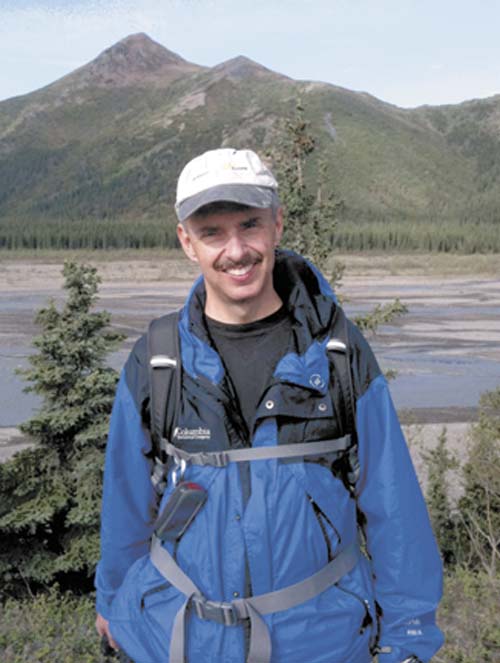
SEATTLE — Chris Marshall, 51, never expected to make history, to speak to reporters at a press conference or to walk around without a heart.
But he did all that March 21 when he was discharged from the University of Washington Medical Center.
Chris and his Kathy Marshall left Wasilla and flew to Seattle Jan. 23 for what they thought was a two-day trip to meet with heart specialists. Instead, doctors said he was too sick to fly, admitted him and began the evaluation process to see if Marshall was eligible to be a transplant recipient.
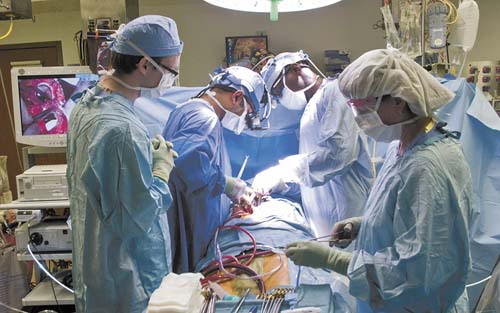
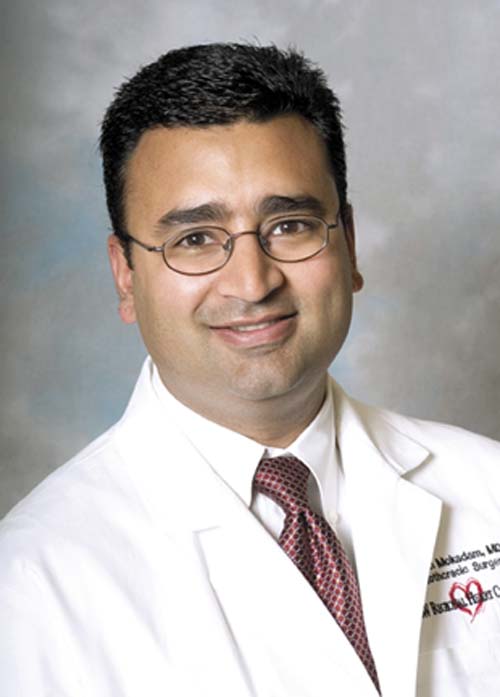
By then his heart was barely keeping him alive, said Dr. Nahush Mokadam, the surgeon who removed the heart and installed a temporary mechanical heart, in a UW Medicine press release.
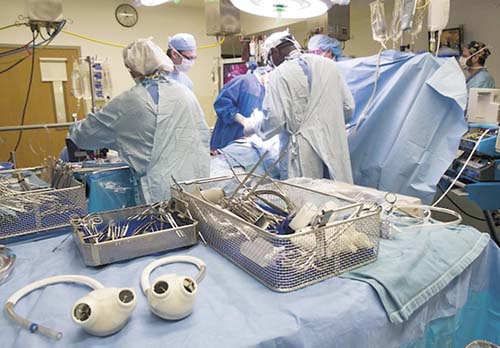
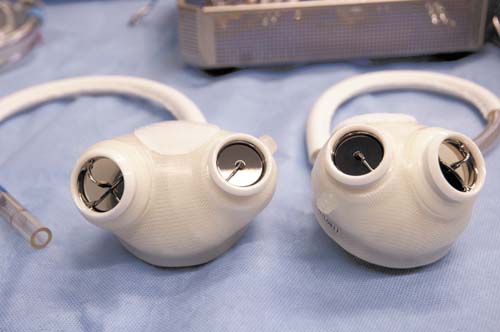
In a six-hour surgery Feb. 6, Mokadam removed Marshall’s failing left and right ventricles and all four heart valves and installed a Total Artificial Heart. SynCardia Systems designed the device as a permanent replacement heart, but the Food and Drug Administration has only approved its use as a bridge solution until a donor heart becomes available.
Marshall was diagnosed in 1999 with heart conditions that progressively reduced his heart muscle’s pumping capacity. Although he remained active over the years, in October 2011, his heart no longer functioned well enough for him complete his daily 3- to 7-mile walk.
Following the surgery, at first he was tethered to a 418-pound driver called “big blue” that required three nurses to push when he walked.
Wednesday, Marshall walked out of the hospital attached to a 13-pound battery-powered pneumatic machine to become the first patient to be discharged from a Pacific Northwest hospital after receiving a Total Artificial Heart.
“It’s life. I have an air compressor with me at all times,” Marshall said by cellphone from Seattle Tuesday.
Previously, patients remained in the hospital attached to “big blue,” sometimes for months, until a donor heart became available, he said.
Although Marshall was discharged Wednesday, he said he and Kathy — and their golden retriever, Gracie — have rented an apartment and will remain in the Seattle area until a donor heart becomes available.
“It’s just been amazing the outpouring of support I’ve had from co-workers, family and friends,” he said. “We’re very thankful for that.”
But consenting to the surgical procedure that extended his life and granted him this respite from hospitalization was extremely difficult, Marshall said. He knew he needs a new heart, but adjusting to the idea took time.
He said he didn’t fully grasp his circumstances until the day before the surgery when he collapsed at the hospital.
“It looked like that probably was the best advice,” Marshall said of the recommendation to have the mechanical device implanted temporary while he waits for a donor heart.
The mechanical heart Marshall received is made of two plastic air bags that act as ventricles. Each chamber has an in-flow and out-flow valve and a four-layer diaphragm that are sutured into the remaining heart structure: the left and right atria, the aorta and pulmonary artery, according to the UW Medicine press release.
“I feel really good,” Marshall said. “They’ve been calling me a superstar.”
The device in his chest has no sensors, motors or electronics, and is a wheezing pneumatic driver that connects to two tubes exiting his abdominal wall.
“The driver supplies vacuum pressure to pull the diaphragm to the bottom of the ventricle, allowing blood to enter, then produces a precisely calibrated pulse of air that pushes the diaphragm to the top of the ventricle to fully eject the blood,” according to the press release.
Marshall also is a participant in an FDA-sanctioned clinical study at UW Medical Center of SynCardia’s 13.5-pound portable driver, called “Freedom Pack,” to see if can be safely used at home.
A complicating factor in getting a donor heart is Marshall’s type O positive blood; it means he needs a heart from a type O positive donor. Doctors have told Marshall that the wait could be as long as 16 months. They also tell him that patients have lived for more than four years with one of these temporary artificial hearts.
After the transplant, Marshall expects about a week’s recovery time, a lot of follow up visits, and then there are pills to suppress his immune system and more pills to suppress their side affects, he said.
“It comes with quite a pill container,” Marshall said.
Outcomes are good for heart transplant recipients, he said. One person just finished the Iron Man competition.
“They are leading very active lives,” Marshall said. “I’m expecting nothing less.”
Even with his artificial heart, he said he is already walking several miles a day and goes to physical and occupational therapy daily.
Marshall is on disability leave from his job on the North Slope where he is a lead instrument technician for an oil company. He said his insurance will cover his medical expenses, which could tally $1 million or more including hospitalization, a mechanical heart, transplant surgery, after care and a lifetime of immunosuppressant drugs, Mokadam said. Just the artificial heart costs $124,000, he said.
When the waiting and recovery are over, Marshall said he’s looking forward to hiking Hatcher Pass.
“The big thing for me probably is just getting back to Alaska, to the wildness,” he said. “I’m looking forward to hiking with my wife and my dog.”
Contact managing editor Heather A. Resz at 352-2268 or heather.resz@frontiersman.com.

By Jeremiah Bartz Frontiersman.com A football coach using a hockey reference as the centerpiece for his keynote address may

Frontiersman.com With its headquarters in Wasilla, the Frontiersman has been a primary source of news for the Matanuska-Susitna

By Katie Stavick Frontiersman.com The next generation of leaders took flight this week as the Houston High School Class

By Kyle Wilkinson For the Frontiersman Keynote speaker and Carry the Cure President Bill Pagaran’s words boomed through the