Retiring teacher, coach urges Colony grads to ‘find their 68’
By Jeremiah Bartz Frontiersman.com A football coach using a hockey reference as the centerpiece for his keynote address may


It might not look it outside, but it is summer—a time of rest and relaxation, maybe picking up a summer job. School is a million miles away.
Well, maybe not for everyone. Some recent high school graduates will enter directly into the workforce with in-demand jobs. And they will have the skill set to enter those jobs with pay and benefits all due to the skills, training, and certifications they earned from the Career and Technical Education (CTE) programs available through the Matanuska Susitna Borough School District (MSBSD) schools.
There is plenty of research to support the benefits of CTE within the schools.
“Last year, 66% of students in the district were CTE concentrators,” says Trish Zugg, who is the CTE Program Administrator for the district. A concentrator is a student who participates in 2 credits of increasing rigorous courses within the same program of study. “It gets them invested and they stay invested.”
Students who enroll in a CTE program and remain a CTE concentrator, often reap the benefits of their hard work.
“Of those, 99% graduated and 70% went on to some sort of post-secondary training, including college, apprenticeships, the military, trade schools, or even employer-provided advanced training,” she reports.
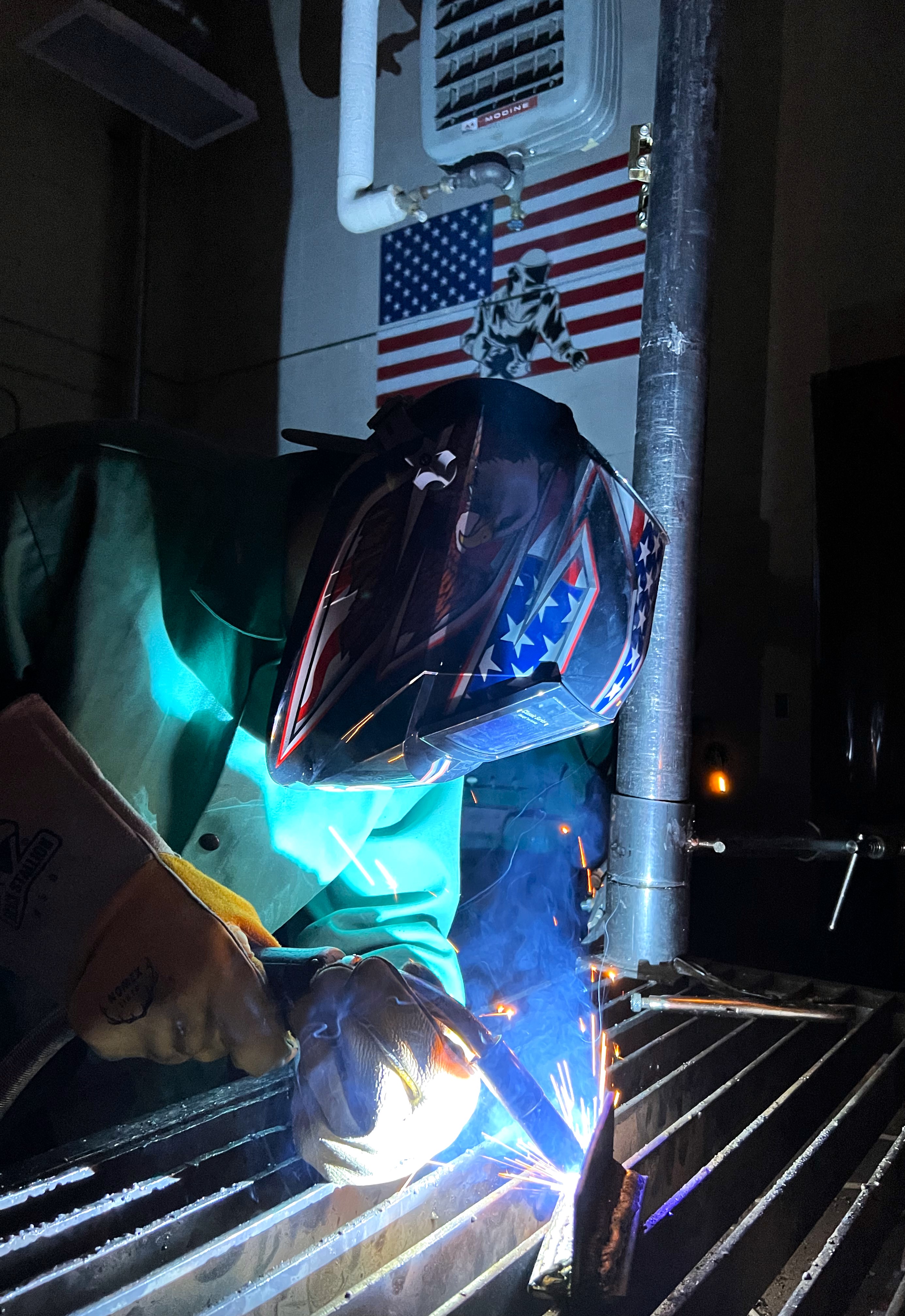
One of the most popular and in-demand CTE programs is Welding. Whether students get into welding as its own career, or utilize the skills from welding for other careers such as diesel mechanics or construction, or even an enhancement for an artistic medium, the program offered at Colony High School is always full and often has students on a waitlist to get into the program.
“We do all kinds of amazing things in this classroom,” says welding instructor Dan Trotter, a Certified Welding Inspector (CWI) who teaches juniors and seniors for 2 periods each day for the whole year.
“The students can get industry certifications in-house, right here. We test everything right here, so when the students walk out the door, they are good to go,” he says.
“We have the golden ticket of a CWI, which is very rare to have in the industry, and even more so at the high school level, and he is certifying our students,” says Zugg. Trotter collaborates with other welding instructors with programs at Palmer, Redington, and Houston to utilize his CWI to assess their students.
Trotter says that each test the students take is Pass/Fail, and would cost $450 and upward on their own. He says the welding program not only has the industry certifications, but they work with job placement, partnerships with Alaska Airframes, JD Steel, Delta Constructors, oil companies, not to mention that his students can acquire college credit through the University Of Alaska Anchorage through their dual enrollment program.
“We have it covered for the students whatever route they want to take, all the way around,” says Trotter.
Former welding student and graduate Michael Weigel took part in Trotter’s welding program, earning 1 certification through the program. He also took a diesel hydraulics program at Mat-Su Career and Technical High School (CTHS).
“After I graduated, I found out about the Local 302 (the local union), and applied with them and got an 8000 hour mechanic apprenticeship through them,” he says. Weigel wants to work with heavy equipment.
“I was able to take the welding certification and use it on a job down in Whittier, doing welding on a retaining wall for the railroad.” He now works for Granite Construction, all thanks to the training he received through CTE.
“Welding is connected to everything. It’s a good skill to have for just about anything,” says Trotter.
An added bonus for Weigel-he recently had to have major heart surgery and was able to have that because he says he got good health insurance through the union.
“It’s a lot harder than people think, it’s not an easy thing to learn,” says Weigel of the welding program, adding that anyone could go out and throw a “bead” and it might stick, but people really need to learn how to do it right, that will hold, and will look good.
Hunter Osborn, also a graduate who took welding, along with a myriad of construction trades, drafting, and diesel courses at CTHS, is now attending Idaho State University, pursuing a degree in Drafting. He recently received his ADAA certificate in mechanical drafting and will return to pursue studies on the architectural side and his Associate’s Degree.
“What I’d really like to do is be able to get into some sort of shop and be able to draw out everything, actually have it made and put it together.”
Osborn says that when he began the welding program, he had no interest in welding as a career, but something he was looking to do for his personal knowledge.
“Taking all the classes I took at CTHS, and the welding here (at Colony) I have an advantage in my Drafting classes, knowing how that all looks in the real world, how to actually put it together, not just draw it. Having a base of knowledge like that to build off of really helps.”
Osborn says that if for some reason his current plans don’t work out, he isn’t as worried since he earned his certifications in welding and can always fall back on those.
Cy Eller, who graduated back in 2016, also took the welding class, and outdoor power, which is another name for small engines on up to diesel mechanics, uses the knowledge gleaned from both classes quite a bit. Initially, he attended the University of Alaska Fairbanks, but took time off.
“My brother got a job with a construction company, and I found out how much he was earning and, for now, thought that sounded pretty good.” He says that he started off as a laborer, but when the company found out that he knew how to weld, he was bumped up, working full time for the company for 2 years and during his summers off while continuing to attend UAF.
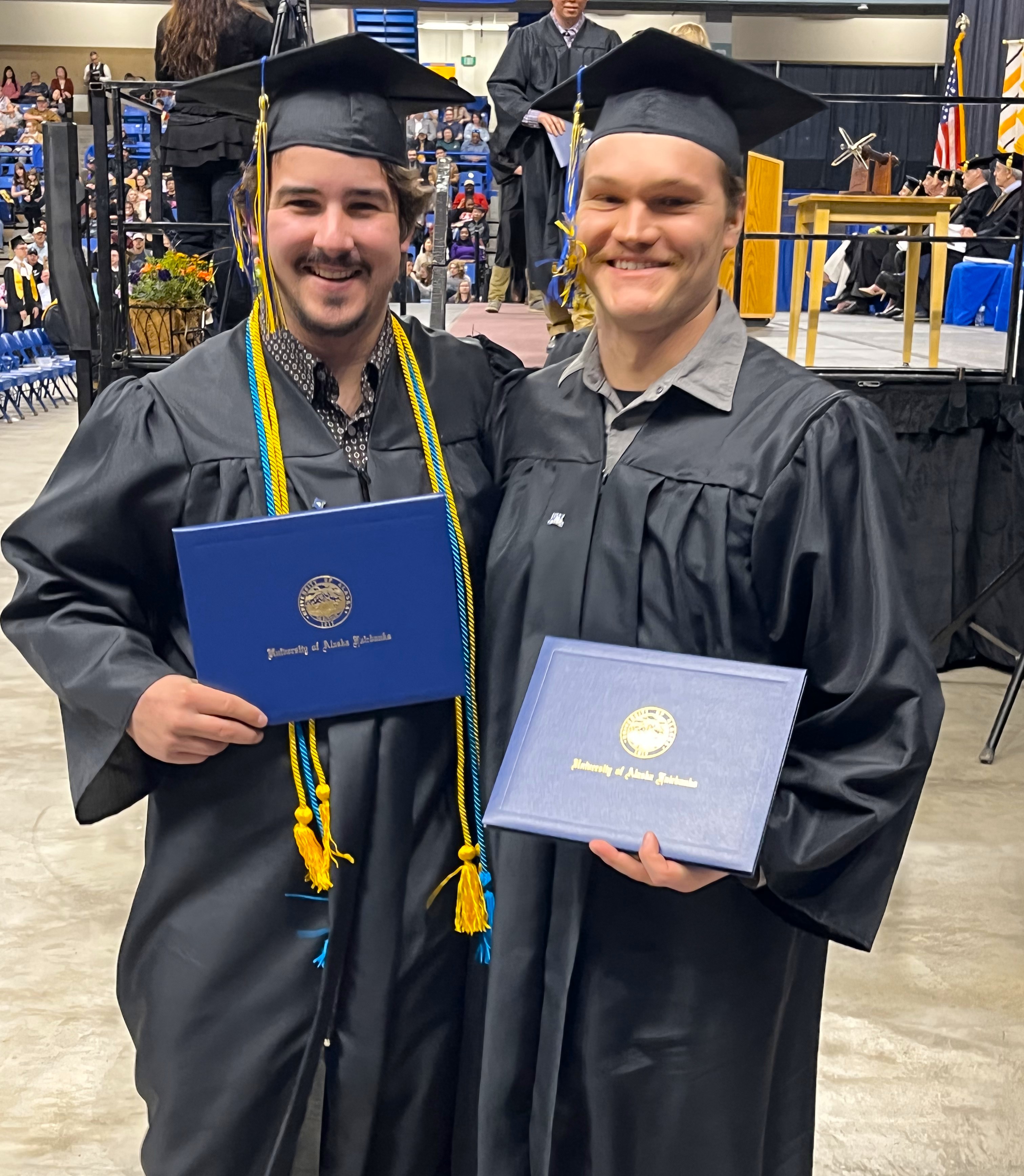
Eller recently earned his Bachelor’s Degree in Petroleum Engineering. Eller says that he took time off from welding and when he went back to it, he would often need to re-certify, but that the welding helped him offset costs so he wouldn’t be “a broke college kid.”
“We always had jobs in the summers, we’re always able to eat steak instead of ramen, have nice things, a Snowmachine. For me, it worked out really well,” he says with a big grin.
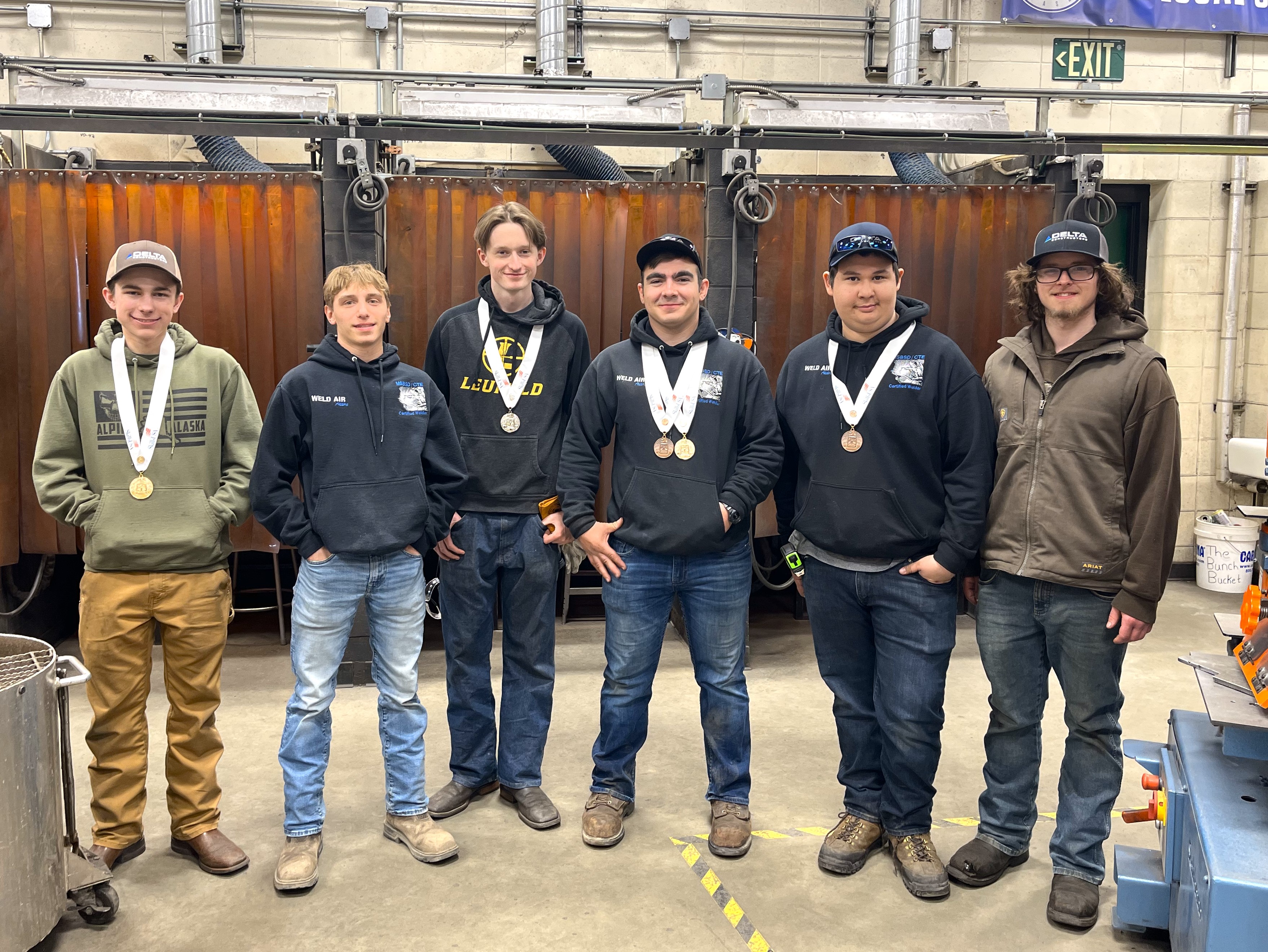
For 2 graduates of the Class of 2023, college is not on their radar, but instead they are going straight into a lucrative career after participating in SkillsUSA competitions.
“SkillsUSA was really cool because there was a lot to it,” says Gage Norris, describing the different parts to the competition, skills far beyond his 18 years needed to help he and Chris Pagani place in the top 2 of the competition.
“It’s not just the welding, it was every facet-can we cut it up, can we make sure it’s pieced together properly. There were judges from a bunch of different companies that came out, which was neat.”
One such company was Delta Construction, which just hired both Pagani and Norris “We’re starting pretty quickly and it’s a job, not an internship.”
Norris says that for now, they’re going straight to work, learning to become structural welders making stands for oil rigs that will be going out soon. Pagnani adds that they will also be doing fabrication, and working on containers and housing units for the oil rigs.
Norris doesn’t hide that for now, the work is all about the money. “I just want to make a lot of money. That’s it.”
Norris says that his starting pay will be $24/hour working 50 hour weeks.
One facet of CTE education that Zugg is working to change is the perception that students in the CTE courses academically don’t perform as well as students in AP or college level courses, or might be ill-prepared for the mathematics needed in college.
“CTE is rigorous. The work these students are doing is high-level education,” says Zugg, adding that the math courses the CTE students take helps prepare them for not only college, but entry into unions such as IBEW, and often construction and trades will require a different degree of math knowledge.
“That stereotypical view of where the CTE students learn their math needs to change. Take any of these graduates, like Cy, for example, they took every level of calculus, linear algebra, vector analysis, all these courses that one might assume for AP students, or certain college tracts. I think the ability to apply their math had a lot to do with their success. Cy was able to walk away from school for a year and was able to get back into it. That says a lot about the math these students are learning through CTE.”
“We do quite a bit of math in here (welding), even if the students don’t realize they’re doing it. Building trailers, fabrication, jet boats from scratch, math is all incorporated in here,” adds Trotter.
“These classes definitely help when you enter a career. A lot of places expect that you don’t know a lot as an 18- or 19-year-old kid, but when you can already read instruments, measure, show you know what you’re doing already, it boosts you up farther ahead,” says Eller.
Welding is just one program within the CTE that Zugg works diligently to promote, as well as erase the stigma that CTE is not only for the students donning dirty work boots, and that there is an abundance of opportunity for students who choose to go the CTE route while attending high school.
“CTE does have rigor; you’ll see that we have many students that go onto advanced entry in the workforce in high wage, high demand jobs,” says Zugg, adding that “contrary to stereotypical beliefs, we have many students that go on to college.” She points to the nursing students as an example, that enroll in the Certified Nursing Assistant (CNA) program at CTHS, who then later enter into a Registered Nursing program and other baccalaureate programs, some even moving on as medical doctors.
“I think what is key is to learn what their interests and attitudes are early on and use that to guide their high school planning, guide the rigor and relevance of their high school and post-high school plans,” says Zugg.
For more information about the CTE programs in Mat-Su, please visit www.matsuk12.us/cte

By Jeremiah Bartz Frontiersman.com A football coach using a hockey reference as the centerpiece for his keynote address may

Frontiersman.com With its headquarters in Wasilla, the Frontiersman has been a primary source of news for the Matanuska-Susitna

By Katie Stavick Frontiersman.com The next generation of leaders took flight this week as the Houston High School Class

By Kyle Wilkinson For the Frontiersman Keynote speaker and Carry the Cure President Bill Pagaran’s words boomed through the