Retiring teacher, coach urges Colony grads to ‘find their 68’
By Jeremiah Bartz Frontiersman.com A football coach using a hockey reference as the centerpiece for his keynote address may


ANCHORAGE — Dennis and Christine McClure’s book ‘We Fought the Road’ is not the first to be written about the building of the Alaska-Canada Highway.
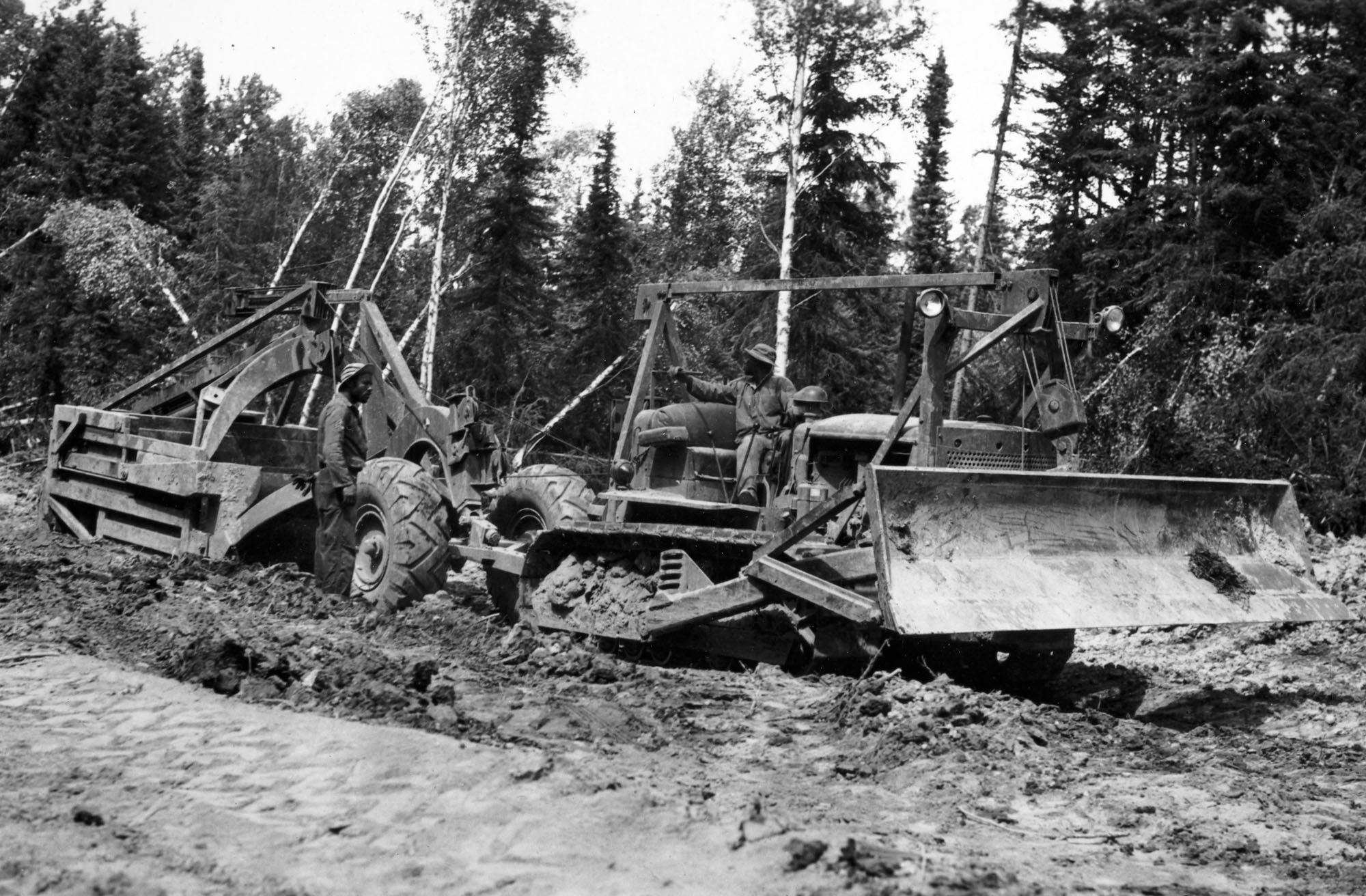
But it may well be the first that does justice to speak to the sacrifice and maltreatment of the black soldiers who carried the load of the labor in laying the 1,400 miles of roads in just days as the U.S. military sought a strategic foothold against an emerging Japanese threat after the bombing at Pearl Harbor.
The germ of the idea for the book began merely as a scrapbooking project for Christine, who was going through family stuff around the house after her mother died in 2009, found letters written by her father, who died in 2001, to this woman he’d just met before being shipped out with the Army to the Alaskan wilderness.
A white officer of an all-black unit, Turner “Tim” Timberlake wrote back to his love — later Christine’s mother — about the conditions and the stories of 1942 construction of what would come to be known as the Al-Can. Somewhat strangely, Tim’s accounts never mentioned the suffering or degradation experienced by the black soldiers. But as Dennis, a Civil War-era historian from his days at Cornell, and Christine, a lover of all things archived, pursued the story of how and why the Al-Can was built, that became the focal point of their research.
“Tim carries us through it, but it’s important for readers to know it’s not really about Tim. The obsession for us became about the way those black men lived. They were made to build barracks for the white officers… while they lived in tents at 40 or 50 below (zero),” said Dennis at Wednesday night’s book signing at Barnes and Noble in Anchorage. “As we traveled through this thing, that became the obsession. Tim’s story is the thread that holds it together.”
Armed with knowledge from archival photos and documents they’d discovered in military files, Dennis and Christine made their first Al-Can pilgrimage in 2013 before taking on writing the book. Four years later, they made the trip again, this time on a book tour that includes a stop Saturday at Fireside Books in Palmer where they’ll be signing books from 4 to 6 p.m. On Monday, the McClure’s will be guests of honor at a dinner at Turkey Red in Palmer with an author dinner to follow at Turkey Red.
Both events are open to the public. Call Fireside Books at (907) 745-2665 for more information.
At the time of the McClures’ last trip across the Al-Can, the concept was still more of a family scrapbook than anything academic, let alone literary. But when they came across a museum in Dawson Creek, British Columbia, where curator Anne Haycock turned them on to the idea of an actual book.
“She told us, ‘you guys aren’t thinking about it in big enough terms,’” Christine recalled. “She changed everything and during this trip, he got hooked — the highway hooked him.”
Dennis recalls having looked at so many photos of the construction of the road he began seeing ghosts among the trees.
Haycock pointed the McClures in the direction of Lael Morgan, a scholar, journalist, publisher and renowned expert on the Al-Can Highway. The three met for what turned out to be a very long lunch, and they came out confident there was definitely a book there.
“I have a publishing company that has the biggest collection of Alaska books there is. I also read everything on the Al-Can I could find and there are a couple really good books out there,” Morgan said. “But I could see (the McClures) had a very different take. They actually had dealt with human beings with picks and shovels and bulldozers.”
Morgan first brought the contribution of black soldiers to the public in 1992 and the 50th anniversary of the Al-Can’s construction.
“There were no pictures of black soldiers in any of the archives — they had truly been written out of history,” Morgan recalled. “We got in touch with the black vets, about 40 of them, and got personal photos — a good collection of them at work. It went all around the state and Canada, and then Collin Powell took it to the Pentagon in 1993.”
Morgan said that celebration was in some ways cathartic for those unrecognized vets.
“It was the worst winter on record since 1906 and the black troops were required to build winter barracks for the white soldiers, while they lived in tents,” Morgan said. “At Delta they couldn’t get supplies because it was too snowy and they damn near starved to death. Some of the vets I found out there were kind of bitter, but at the 50th anniversary they got some good publicity… All that they’d done, but nobody remembered; there was no monument like the Buffalo Soldiers had.”
With Morgan as their ‘mentor’ the McClures got to researching and writing — a four-year process that coincidentally culminated with the publishing of the book in the same year the Alaska State Legislature passed a bill recognizing the contributions of African American soldiers each Oct. 25.
Contact editor Matt Hickman at 325-2268 or news@frontiersman.com

By Jeremiah Bartz Frontiersman.com A football coach using a hockey reference as the centerpiece for his keynote address may

Frontiersman.com With its headquarters in Wasilla, the Frontiersman has been a primary source of news for the Matanuska-Susitna

By Katie Stavick Frontiersman.com The next generation of leaders took flight this week as the Houston High School Class

By Kyle Wilkinson For the Frontiersman Keynote speaker and Carry the Cure President Bill Pagaran’s words boomed through the