Retiring teacher, coach urges Colony grads to ‘find their 68’
By Jeremiah Bartz Frontiersman.com A football coach using a hockey reference as the centerpiece for his keynote address may


Last October, there was an upheaval that shook up the often-forgotten city of Houston, when voters took to the polls in record numbers, conveying a simple message-it was time for change. The incumbents and familiar names that had been on the city council for years were swept out of office for new candidates who had campaigned on change and transparency.
What followed in the days after the election was a surprising mass exodus as the long-time Houston city Mayor, Virgie Thompson, Deputy Mayor Lance Wilson, and Treasurer Sally Schug, immediately resigned. For Thompson and Wilson, it wasn’t just stepping down from their respective roles, but from the city council itself, taking with them years of knowledge and experience.
Thompson had served on the council since 2010, becoming mayor after former Mayor Roger Purcell faced a recall after allegations of violating city code related to travel arrangements without city council approval, participating in executive sessions without stating the specific topic to be discussed, and using unauthorized blue flashing lights while making a traffic stop.
Wilson had served for on the council for 14 years, many of those as the Deputy Mayor, and was often nominated to be the Mayor, a position he declined again and again. He was meticulous and often acted as the devil’s advocate, asking the tough questions before finding a satisfactory answer.
Their departure left Houston in a tough position. There was no leadership, no one to guide the city in case of a disaster, and no one to access finances, which meant employees wouldn’t get paid, bills were left to pile up, and equipment in need of repair was left to sit.
Houston is a second-class city, which means that the city council elects the mayor and deputy mayor for a 1- year term from the councilmembers themselves, rather than the residents voting in a mayor. In the weeks between Thompson and Wilson’s resignations and the certifying and swearing in of the new council members, there was no quorum, no majority to select a new leader.
As the new council members were sworn in, the abandoned seats from Thompson and Wilson’s resignations needed to be filled before a council could select a Mayor and Deputy Mayor. Ultimately, the council selected David Duren and Jay Lowenstein to round out the city council. And when it came time from them to elect a mayor and deputy mayor, Carter Cole and Mike Adams, the two councilmen left standing from the previous administration, were chosen to usher Houston into a new era.
Since then, Mayor Carter Cole and the Houston City Council have been working to change the image of Houston, looking at opportunities to bring in new industry, as well as meet some longtime needs the residents have been calling for-improved roads and safety, while maintaining the rural quality the residents cherish.
“It’s well overdue. We have to have something we can base a better revenue stream on,” says Mayor Cole.
For years, Houston has been known as the town to get fireworks, and more recently cannabis. Houston was among the first areas to embrace the cannabis business when voters made marijuana legal.
“We have to give Houston a voice,” he says, “I think we are the best place to live in the Valley. I don’t want that to change.” Mayor Cole is adamant that Houston remain quiet and non-urban.
When Cole was elected onto the council, one of his first projects was to revive a natural gas initiative that had been started in 2014, but had been shelved due to costs. In 2022, the first phase of the multi-phase project began, with two more phases to come.
Upon his election, and with the new city council sworn into office, one of the pressing items that needed to be addressed was the condition of the roads. Like many areas in the Borough, a lot of roads in Houston are gravel roads, which can require a lot of attention, and many residents were frustrated at the poor conditions and perceived lack of maintenance. But the frustration didn’t end there. For years, residents had complained of a lack of snow plowing in the winter, ponding in the early spring and fall, and dusty conditions during prolonged dry periods.
One issue that had created a backlog of issues had been the road grader, which had been damaged in an accident. While it was being repaired, other issues were found with the equipment, keeping it out of service through much of 2022.
Mayor Cole came from a background of working in Public Works, and knows how difficult it can be to keep roads safe and clear, equipment operational, and knew that this was an area of concern for residents.
Since taking office, Mayor Cole and the city council have worked to acquire more updated equipment for the Public Works Department (PWD), which handles the road maintenance for the city. During the record-breaking snowfall in December, 2022, the city employees and PWD worked tirelessly to keep many roads clear, even receiving praise from residents. Mayor Cole himself had been manning a plow to help residents who weren’t able to clear their own driveways for needed fuel or meal deliveries.
He also reached out and contracted outside operators to help keep the roads plowed, giving special thanks to Arnie Berg of 7M Contracting and Michael Freeman and his father, both from J.A.M. Services.
“Those men stepped up in a moment’s notice to fill in as operators of equipment and provide essential services to the City of Houston. That’s Alaskan, and that’s Houston,” said Mayor Cole.
Aside from plowing, the roads in many neighborhoods have seen more traffic than originally planned for, which has caused deterioration on a popular east-west corridor that runs through Houston.
“If a dirt road has, on average, more than 50 cars going down it, it needs to become a hard top. That’s pretty standard,” he says before explaining that the very busy thoroughfare of King Arthur, specifically a residential area between 3 Bees and Anthony Road easily sees over 250 cars, some of which carry heavy equipment, further impacting the roads.
“You cannot keep a road in any kind of shape, and a dirt road will not stand up to that. I would have to have a grader operator on that road virtually nonstop to keep that road passable.” He is proud to say that in the spring of 2024, the Mat-Su Borough will finally be paving sections of King Arthur, and some arterial roads that feed into King Arthur.
Mayor Cole is also asking the state to look into funding for the other end of King Arthur that feeds onto the Parks Highway. That area, along with several other low-lying roads that abut the Little Susitna River were washed out and sustained severe damage during the summer.
Other projects Mayor Cole is looking into includes a municipal airport, for which he is building an advisory committee to look into the potential. Another issue he would like the city to take on is to find a way to bring together the local marijuana businesses with the hemp industry to work cohesively.
“Hemp is considered an agricultural product, so they fall under a completely different set of rules. They can grow in open fields. The problem is, the reason most people grow it is for the oil, and the oil is in the flowering state, which is also the most stinky part.” One issue that can be seen as an impediment is the smell, as residents have complained about the odor produced from the marijuana growers, yet make room for an industry that is primarily harvested when it is at its most malodorous form.
He would like to change the policy so any new marijuana growers would have to utilize sealed units to alleviate complaints of odor, which has been a pervasive issue for the city. Cole is also quick to compliment many of the local cannabis growers for coming together to clean up any complaints about the smell, after expecting to face opposition.
“We’ve had some pretty good luck with the growers. They just cleaned up themselves and took care of some of the issues we had in the community, and we really appreciate it.”
Another initiative the mayor would like to see happen is to take 10% of the revenue earned from the marijuana industry and move it towards creating some form of substance use disorder treatment, though he recognizes that most people in the community struggling with substance use disorder are not abusing marijuana.
“Our communities, Wasilla and Houston, have been the worst affected (by substance use), so I want to talk to as many people affected as I can, see what works, what doesn’t, and what we can do, how we can start,” he says, knowing that something like this kind of undertaking will require subject matter experts, time, and care, as well as funding.
“There is some initial funding coming for that, but we are also looking at trying to do something. We have a committee, headed up by Councilman Dave Childs, actually looking at how to get some real treatment out here. I want to see them get help.”
Mayor Cole is also anticipating some gas exploration slated to take place later this year, as well as engaging in conversations with the Alaska Railroad and the local business community to explore adding a train depot.
“Over 550,000 people travel the trains from May to October, and with the expansions in Whittier and Seward, they’re estimating the numbers could double. So I’m looking at our local business to put together packages, see what could be done. And they (the Alaska Railroad) have expressed interest.”
If a depot were to come into Houston, that could increase revenue opportunities for the small community, which is already a destination for tour companies that make the Miller’s Market a must-stop during the busy tourist season.
There have also been new businesses cropping up in the past few years, including the Susitna Bar and Grill, Mela’s Café, which recently launched a food truck next to Gorilla Fireworks on the Parks Highway, and with the re-launch of the Houston Lodge also bringing in diners, there are now more options for hungry residents and travelers.
Food alone might not be enough to attract tourists, something the mayor thinks about, and in true Alaskan fashion, attractions that would be off the beaten path.
“Can we attract the tourists here? I know we have the surroundings here with the Little Su River running through, and we can offer some rugged terrain that people love to see in Alaska. I think we can. With a little work to trails and upgrades, it could be great.”
The council is working with the Mat-Su Borough to purchase some parklands, which will be routed through the Houston Parks and Recreation Committee to create more neighborhood parks so more residents could take advantage of the local lakes that dot the land, as well as jump-starting the Bear Paw Park project again, which is aimed to be a multi-use park that would also be handicap accessible and is slated to have Kids Kupboard come in and set up a stationary meal service for children.
Another issue that many residents eager to see happen is an audit. Some of the new council members campaigned for more transparency, and plenty of residents felt that there was a big issue regarding the city’s finances. Initially, an audit was among the top priorities for the new administration, but as the new members have been working to find their footing governing the city, and other issues took hold, and a new treasurer was hired to get the finances back on track, pay the employees, and reassure the constituents that there was a new era of leadership. An audit is on pause, but still a future item that will be addressed.
Still, there are residents who would like the city to be disbanded and revert governance back to the Mat-Su Borough. The drawback would include losing the fire department and an increase in property taxes, something the previous administration had fought to keep below the Borough level. Mayor Cole is hoping he can convince the naysayers to see the value in Houston remaining a city.
“If I can get one more year, we will have a very functional city, and we’ll just grow from there.”
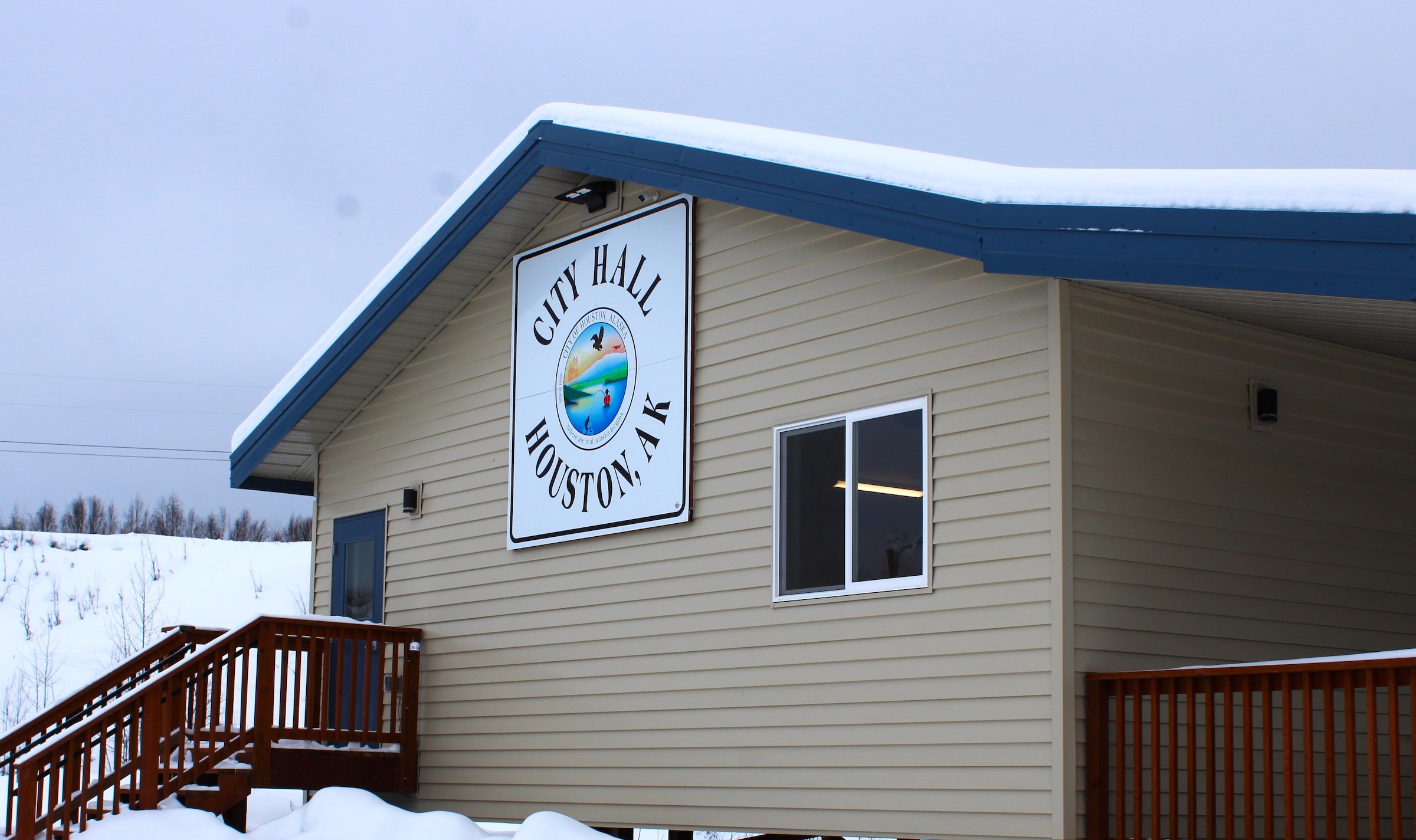
Mayor Cole says there has already been a shift in the attitude from the residents when they call, email, or stop by City Hall, a result he says comes from the hard work of the staff.
“We’re so used to receiving so many complaints. Never compliments. But now, thanks to the hard work of the city employees, we are starting to hear compliments. We are far from perfect, and there are still a lot of things that need our attention.
He introduced an ordinance to institute term-limits for Mayor and Deputy Mayor, and the council has been discussing if the code could be changed so that residents could vote for their mayor, or at the very least have the election of the mayor and deputy mayor a week after new and/or re-elected council members are sworn in. Currently, as soon as members are sworn in, those two positions are filled, which can sometimes be overwhelming and chaotic as new members take their seats.
“The reason is, I know how long it takes to destroy something. I was fortunate, I had municipal government experience. That rotation needs to be in there to prevent real damage to the city. With the council we have now, anyone could step in and keep the city moving forward.”
Moving forward is something the Mayor, the Council and the people who call Houston home are excited for and eager to see what unfolds.
“We have changed already, and it’s gonna get better.”

By Jeremiah Bartz Frontiersman.com A football coach using a hockey reference as the centerpiece for his keynote address may

Frontiersman.com With its headquarters in Wasilla, the Frontiersman has been a primary source of news for the Matanuska-Susitna

By Katie Stavick Frontiersman.com The next generation of leaders took flight this week as the Houston High School Class

By Kyle Wilkinson For the Frontiersman Keynote speaker and Carry the Cure President Bill Pagaran’s words boomed through the