Retiring teacher, coach urges Colony grads to ‘find their 68’
By Jeremiah Bartz Frontiersman.com A football coach using a hockey reference as the centerpiece for his keynote address may


They are people you see in the local market, church, or perhaps while out riding on your ATVs. Wherever you are, you might not even realize that someone standing next to you is in recovery from substance use disorder or alcoholism. But ask the about recovery, and they will often stop and tell you their stories.
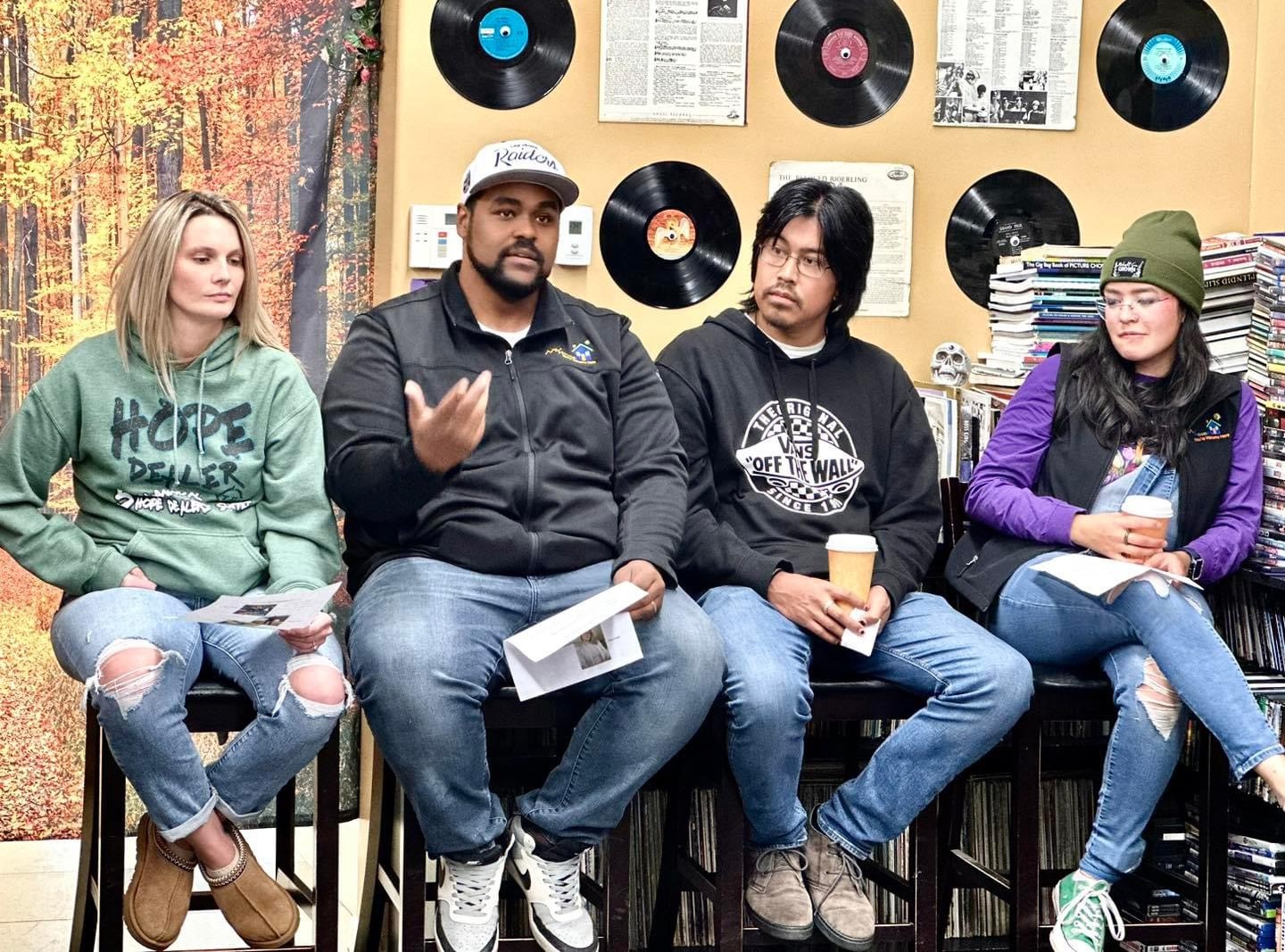
That’s what took place on September 5 at Black Birch Books in Wasilla, as a group of people in different stages of their recovery journeys convened to talk about recovery.
The two-hour event, led by Isaac Smoldon, Youth Representative from MyHouse, began with four members of the recovery community talking about their own paths that led them to recovery.
“It wasn’t necessarily by choice at first,” said Michelle Parker, who was involved in a motor vehicle accident and told the audience that the process forced her to face her issues.
For fellow panelist Ashton Engebretsen, it was being tired of living the way he was living. He says that at the time, he was homeless and that he preferred it back then. “I thrived in that kind of environment with the way that I was living. You don’t need much when you’re living in that kind of environment, whether it being lying or stealing or manipulation.”
He credits others who saw something in him worth saving. “It took a lot of people who saw more in me than I could see in myself to help me get there.”
“For me, it’s hard to lock down a moment that prompted me to get into recovery,” said Bryan Fields. “I never set out to be an addict in the first place. That wasn’t the life I envisioned for myself,” he said, telling the group that he was taught to have integrity and respect for others, but in the middle of his own substance use, would lie, cheat, and steal. Like Engebretsen, Fields says what prompted him to seek treatment was the exhaustion that comes with addiction. “I was so tired of living outside of the way I was raised. I was tired of repeating the cycle…the uncomfortability of waking up in misery day in and day out.”
“I had an amazing young child that I just adored…but I think I was so utterly tired of being completely out of control to this power that was stronger than me, that made me do things I never thought I was capable of doing,” says Chloe Engel.
When asked what the hardest part was in taking that first step towards recovery, Parker said it was being held accountable, not just to everyone else affected by substance use, but first and foremost, being accountable to herself.
“I was one of those people who, if I’m suffering, I’m going to make you suffer, too. If I have a black cloud hanging over my head, then you’re going to have one. Owning up to that and being vulnerable and honest about it is something that is definitely challenging in the beginning.”
Each participant had expressed the same themes-breaking the cycle of addiction, isolation, shame, hopelessness.
“It’s the most isolating experience I can imagine…Being around humans was the first thing to go,” said Engel, telling the audience that during her last period using, it was the loneliest and most broken version of herself she could remember. She says the she grew up in a similar pattern and had promised herself that she would not perpetuate the cycle. “I needed to get out of that and I think my kid was the glimmer of what I needed to do.”
“Rock bottom was almost every day of being an addict because I was so uncomfortable with the life that I was living,” Fields said.
Another aspect they talked about was addressing the issues that led them to substance use in the first place. Fields says he wasn’t able to process and deal with emotions or feelings, and that no one really took the time to sit him down and talk about why he was demonstrating certain behaviors. “I opted to get put into programs that didn’t really address the key issues I was dealing with, the internal struggle that I was facing.” He says that he was so engulfed in fear and shame, that when resources were presented, he would toss them to the side. It wasn’t until he reached out to his older siblings who were also in recovery and embrace their care and support that he was able to fully engage in recovery.
Parker shared that being vulnerable and having to feel her feelings for the first time was something that she had to get used to because in the past, she says she would drink and party instead of dealing with emotions.
“This is the first time you’re actually feeling things. This is the first time that you’re experiencing this. All the other times that you’ve had problems or issues, anything that came up, you’re drinking to deal with it.”
As for what motivates them to remain in recovery, they say it is about the people they surround themselves with now.
Engel says that her interpersonal relationships are the most important thing that I have. “That’s what keeps me grounded. I still make bad decisions. I still do stupid things. I’m still the same human that I always was, but if I don’t have people to hold me accountable, if I don’t surround myself with likeminded people who want to live a different life, I could slip.
Engesbretsen says that now he surrounds himself with people who genuinely care about him, specifically the group at MyHouse, who he credits for having helped him see in himself what he was unable to do prior to entering a recovery program. “No matter how much I gave up on myself, no matter how many times I went back out, they always found a way to give me another goal, another objective, another side of myself, so I kept striving towards that.”
He says that it took him a few tries, he made a few mistakes, and times he gave up on himself, but every time he came back a little stronger. “Eventually, it started to stick a little bit more and more. It began with days of sobriety, weeks of sobriety, then it turned into months, and hopefully it will be years.”
After everyone had an opportunity to speak about their recovery, there was time for a breakout session in which people could ask further questions and talk more about recovery.
As to what brought this event about, Smoldon said that part of the motivation is recognizing that September is National Recovery Month and the Mat-Su Borough has a robust recovery community. But it was also having the opportunity to ask questions to people in recovery.
“My intent was what questions would you want to ask someone that’s been in recovery, no matter if it’s two months, two years, or 20 years. What is going to help the community understand what recovery is and what it looks like?” He says that his work at MyHouse put him in the unique position of wanting to learn more and understand what it took for people with substance use disorder to seek recovery and keep going forward.
“I also think that having something approachable and having it in a space like this was important. We want people to hear their stories and have the opportunity to chat with them and have those conversations so we can learn and grow.”
There will be another Recovery Community Discussion on Thursday, September 19 at Black Birch Books, beginning at 5:00 pm, with a different set of panelists. The public is invited to attend.

By Katie Stavick Frontiersman.com The atmosphere was electric at the Menard Center on Tuesday evening as the Wasilla High

By Barbara Hunt Palmer Buzz It was 6:43 on Friday morning and the Plant Owner was sound asleep when

By Kyle Wilkinson Frontiersman Memorial Day Weekend was filled with a variety of events in Willow. From live music to

By Kyle Wilkinson For the Frontiersman The Susitna Valley Emergency Preparedness Fair will be held at the Willow Community Center