Retiring teacher, coach urges Colony grads to ‘find their 68’
By Jeremiah Bartz Frontiersman.com A football coach using a hockey reference as the centerpiece for his keynote address may


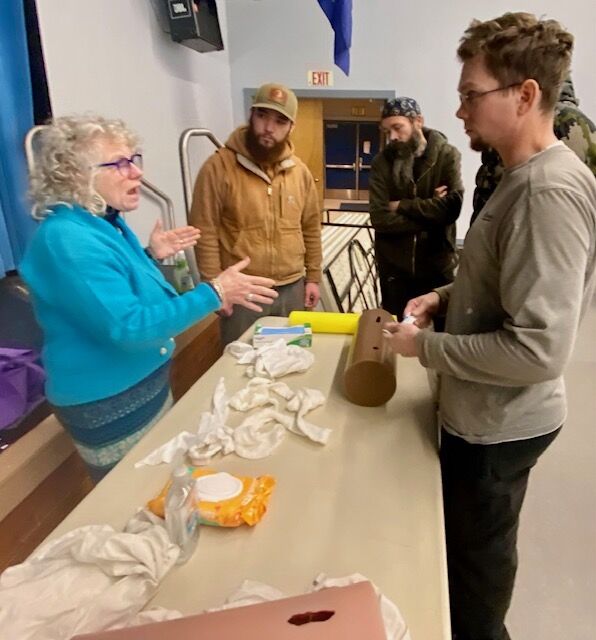
The Willow Community Emergency Response Team (CERT) hosted the American College of Surgeons ‘Stop The Bleed’ classes over the past week for people living in the Susitna Valley. Students learned how to respond to bleeding wounds on themselves and others. These free classes are offered to those living in rural communities that participate in activities where bleed wounds are a real possibility.
Instructors Brenda McCain and Margit Von Frankenburg, both registered nurses that live in Willow, taught a class of 14 students on Jan. 10 at the Willow Community Center. McCain and Von Frankenburg each have over 40 years of clinical nursing experience and are both members of the Willow CERT.
“It’s really important everywhere,” McCain said. “But here, we do more dangerous things… We use chainsaws and we use axes, and we hunt and we fish. We’re a long way from help and it's important to have the skills to take care of yourself and to get help.”
“The Stop The Bleed course is a lay person's learning of how to stop a bleed in an environment that they would find somebody that would need help,” Von Frankenburg said.
Students were led through a presentation on how to acknowledge a potential bleeding situation and to ensure safety of all those involved. They were then instructed on the ABCs of Bleeding: Alert, Bleeding, Compress.
McCain and Von Frankenburg talked through methods of how to contact emergency responders and what to expect when talking to emergency services. Class members shared their own experiences talking on the phone to emergency dispatch and how responders have interacted with them in person.
Class members were then led through how to address wounds on a patient. They were taught to find and identify different types of wounds and how to stop them from bleeding. Students practiced packing wounds and applying pressure with gauze on wound management leg trainers. Made of silicone, these learning tools simulate deep gashes or puncture wounds that might occur on an arm or leg. Students were taught about a variety of different types of gauze and other ideas for impromptu wound-packing materials for any kind of situation one might encounter.
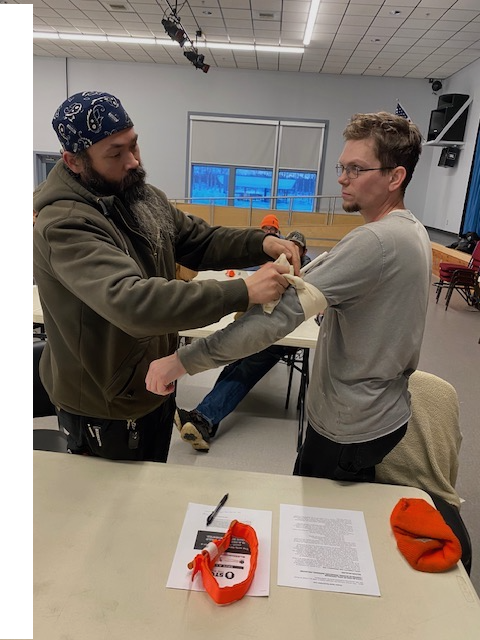
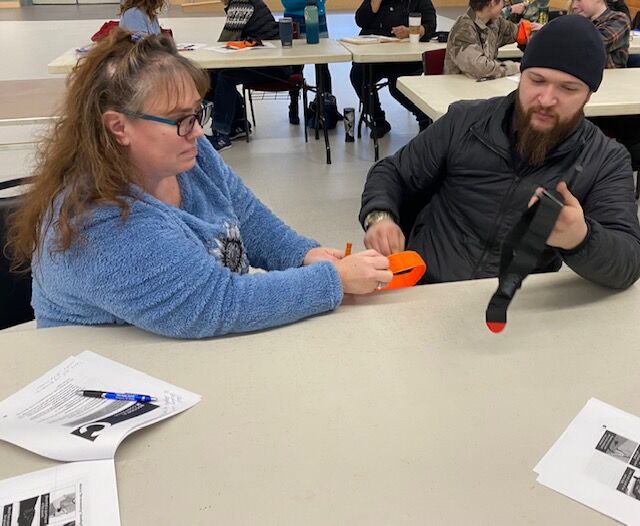
Students were then led through how to administer tourniquets to prevent further blood loss on a patient. Each student practiced using a tourniquet on their own arms and legs and then on their partners. Instructors used some students as an example of how to administer an improvised tourniquet using a piece of cloth and a cooking spoon.
The class wrapped up with McCain talking through the contents of her Emergency Kit. She described each item and what it was used for. She also shared experiences where she had to use this kit in real-world situations.
Leslie Piaskowski lives in the Willow community. She attended the course to learn more about how to be prepared for these types of emergencies.
“I think we all run the risk of running into a situation where this information would be useful,” Piaskowski said. “But I feel like I'm at a higher risk now that my kids are getting older and a lot of their friends are coming to my property, and they’re chopping wood, using chainsaws, snow machining… and I would hate to be unprepared.”
Prior to the class, Piaskowski said she would not have known what to do or how to treat these types of wounds. She now plans to put together an emergency kit for her car and feels better prepared for this type of situation.
“It's always so intimidating before you know these things,” Piaskowski said. “Before someone actually shows you what to do, you question, ‘would I know what to do?.’”
Jeremy Ellis, a snowcat operator in Willow, said he attended the course to learn more about how to treat injuries that might occur while working in the field. He said the class provided more cohesive instruction and built upon the knowledge he already had on first aid.
“It helped me put the pieces together,” Ellis said. “I have first aid kits here and there including tourniquets, but I’ve never taken one out and actually practiced using it.”
Ellis said he enjoyed hearing about the real-world emergencies that instructors and class members shared and how they dealt with them. He said he has more confidence on how to deal with this type of situation at work or while recreating with family and friends.
“In the future, I’ll know the steps to stop bleeding more effectively and safely,” Ellis said. “Even outside of work, I’m camping, hiking, [riding] atvs, cutting brush, dredging, doing all those outdoor things with the knowledge that if something major happens, I’ll know what to do.”
McCain said she has always been a proponent of health promotion. She enjoys being a part of Willow CERT and engaging with people during these classes.
“We just really love doing it, we love sharing it with people in the community,” McCain said. “We like it because people are very appreciative of it… That’s why we do it.”
Stop The Bleed classes will be offered annually. Stay up to date on the Willow CERT Facebook page or at https://willowcert.wordpress.com/ for when the next set of classes will be offered. McCain also wanted to thank the State of Alaska Department of Public Health Division of Public Health Section of Rural and Community Health Systems Health Emergency Response Operations for loaning their training equipment for these classes.

By Jeremiah Bartz Frontiersman.com A football coach using a hockey reference as the centerpiece for his keynote address may

Frontiersman.com With its headquarters in Wasilla, the Frontiersman has been a primary source of news for the Matanuska-Susitna

By Katie Stavick Frontiersman.com The next generation of leaders took flight this week as the Houston High School Class

By Kyle Wilkinson For the Frontiersman Keynote speaker and Carry the Cure President Bill Pagaran’s words boomed through the