Retiring teacher, coach urges Colony grads to ‘find their 68’
By Jeremiah Bartz Frontiersman.com A football coach using a hockey reference as the centerpiece for his keynote address may


MAT-SU — Back in October, my friend Lisa Rodgers and I sat at a table in Vagabond Blues coffeehouse with a woman we’d just met, who had lost more than 100 pounds over 10 months. The woman matter-of-factly told us she did it by eating sensibly and climbing the Butte almost every day, even in winter.
At the time, Lisa and I had been bewailing the end of summer hiking and casting around for easily accessed, uphill-but-avalanche-safe opportunities for winter hiking. The woman’s words electrified us. We hadn’t even considered the Butte as a winter hiking choice!
We learned that ropes had been strung most of the way up the switchbacks on the stair side of the Butte, and that the woman wore ice grippers — aka ice cleats, ice traction devices — on her boots while hiking up. Lisa and I — and several of our fellow moms — have since climbed the Butte numerous times. We’ve even scaled it twice in a day because it felt so great to be out in the chilly air, huffing and puffing and sweating while climbing up a rocky incline.
If you want to do what we’ve been doing, it will likely be an easier and safer Butte hike if you do the following:
• Wear layers of non-cotton clothing. Sweat plus cotton equals a chilly or even hypothermic hike. Possibilities that work better include lightweight wool or polypropylene long underwear under snow pants, a long underwear top (or two) under a fleece jacket or vest, non-cotton running pants and tops, warm mittens or gloves and a warm hat. I usually stuff a lightweight down jacket into my pack, just in case temperatures atop the Butte are more frigid than on the climb (which frequently occurs).
• Wear a daypack or fanny pack. Use it to carry a bottle or two of water, camera, a snack and an extra layer of clothing, or store in it layers you might need to shed while hiking.
• Wear warm boots suitable for snowy conditions. Wool or polyester socks are better than cotton in cold conditions.
• Drink a couple glasses of water an hour or so before leaving for hiking and eat a banana or some other light snack. A hike seems easier and much more pleasant if your body is hydrated and fueled for exercise. Bring water, Gatorade or a hot drink with you as well.
• Wear ice grippers on your boots, because the footing can get slippery when it’s steep, snowy or icy. The Kahtoola Microspikes you can get at REI’s shoe department are terrific. The rubbery top easily slips over and stays on your boots and the soles boast chains and 3/8-inch metal spikes. They look medieval and cost $60 per pair, but I’d read dozens of positive reviews of their performance and decided Kahtoolas would be much cheaper than a trip to the emergency room for a slip-and-fall injury. In the past, I’ve worn Yaktrax grippers, which use coiled metal wire for traction and cost about $20 per pair, but those tend to pop off my boots and get lost. A new breed of Yaktrax, however — the Yaktrax Pro — sells for $30 and have a strap that goes across the top of the foot to keep them secure on your boots. My friend Audra found these much better than grippers she had that either came off unexpectedly or “shed” their light-blue button-like cleats on the trail. Yaktrax also has a Kahtoola lookalike, the Yaktrax XTR, and STABILicers are another brand of traction device. It’s also possible to do what winter runners do for traction on ice: use a drill to put 3/8-inch No. 6 slotted-hex-head sheet metal screws into the rubber soles of your hiking shoes or boots.
• Wear or bring warm gloves and hat. The gloves protect your hands from the ropes strung along the switchbacks. We usually feel hot on the way up but chilly at the top, so it’s nice to have our gloves and hats to put on. At the top, we sometimes need to put on a balaclava to protect our faces on windy or subzero days. Gaiters are nice, to keep accumulated Butte snow from finding its way into your boots.
• Bring a charged cell phone. Maybe you’ll only use it to take pictures of your Butte summit celebration and the serene winter scenery, but it’s great to have along in case your car has a flat tire when you return to the Mothershead Road or near-the-reindeer-farm parking lots, or if you or a friend needs help on the trail.
• Keep some kitchen-sized garbage bags or supermarket plastic grocery bags in your car, as well as an extra pair of shoes to change into. During the summer, I’d dump my muddy hiking boots and sweaty socks into a plastic bag and then slip my weary feet into fresh socks and comfy clogs. It’s not a bad idea in winter. One of my friends inadvertently stepped in fresh dog poop on the trail recently and it was very nice to be able to drop that soiled boot into a plastic bag afterward and tie a knot in the top!
• Leash your dog if you’re taking it to the Butte — especially when heading downhill on the switchbacks — unless the dog responds well to voice control. Leashing could prevent a nasty dog-wildlife or dog-dog encounter, or keep your dog from getting hurt on the switchbacks, stairs and other steep, slippery parts of the Butte. A fast-moving, unleashed dog dashing off trail could easily slide off a drop-off and into trouble. One other thing: If your dog poops on the trail, please remove the poop so another hiker doesn’t accidentally step in it.
• Audra and I have repeatedly slogged through fresh snow accumulations on the West Butte trail, so we’ve occasionally tucked small shovels in our packs to clear a path up the stairs.
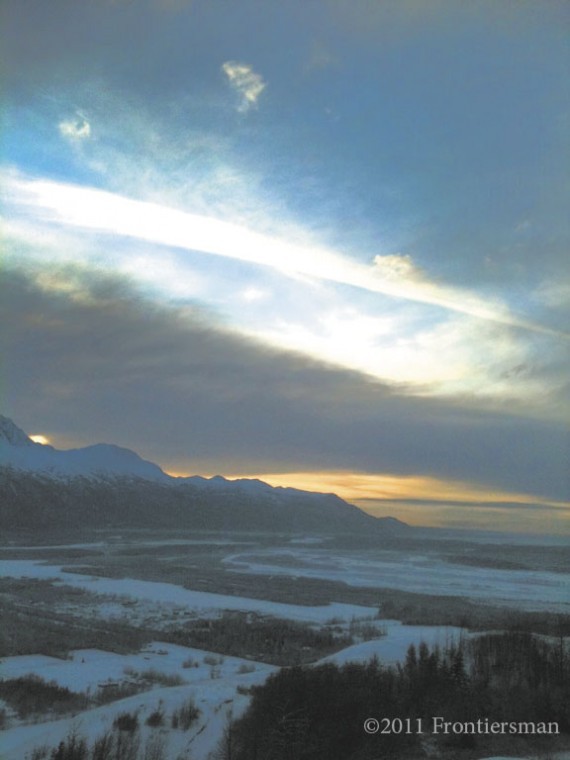
• Winter sunsets seen from the Butte are captivating, but the hike down afterward is usually dim or dark. Bring a headlamp with functioning batteries. Happy trails!
Tracy Kalytiak and Lisa Rodgers live in the Palmer area and write a blog about their experiences hiking in Mat-Su at twomomswhohikeinalaska.wordpress.com.

By Kyle Wilkinson Kyle in the outside Our spring bear hunt was bittersweet this year. We’re heading home without

Frontiersman.com Valley athletes earned titles during the Region III Championships track and field meet last week at Colony High

Leila Petersen Palmer Moose Leila Petersen, a member of the Palmer track and field team, has been named a Frontiersman

By Jeremiah Bartz J’s World August would have been the start of my 25th year as an editor at