Retiring teacher, coach urges Colony grads to ‘find their 68’
By Jeremiah Bartz Frontiersman.com A football coach using a hockey reference as the centerpiece for his keynote address may


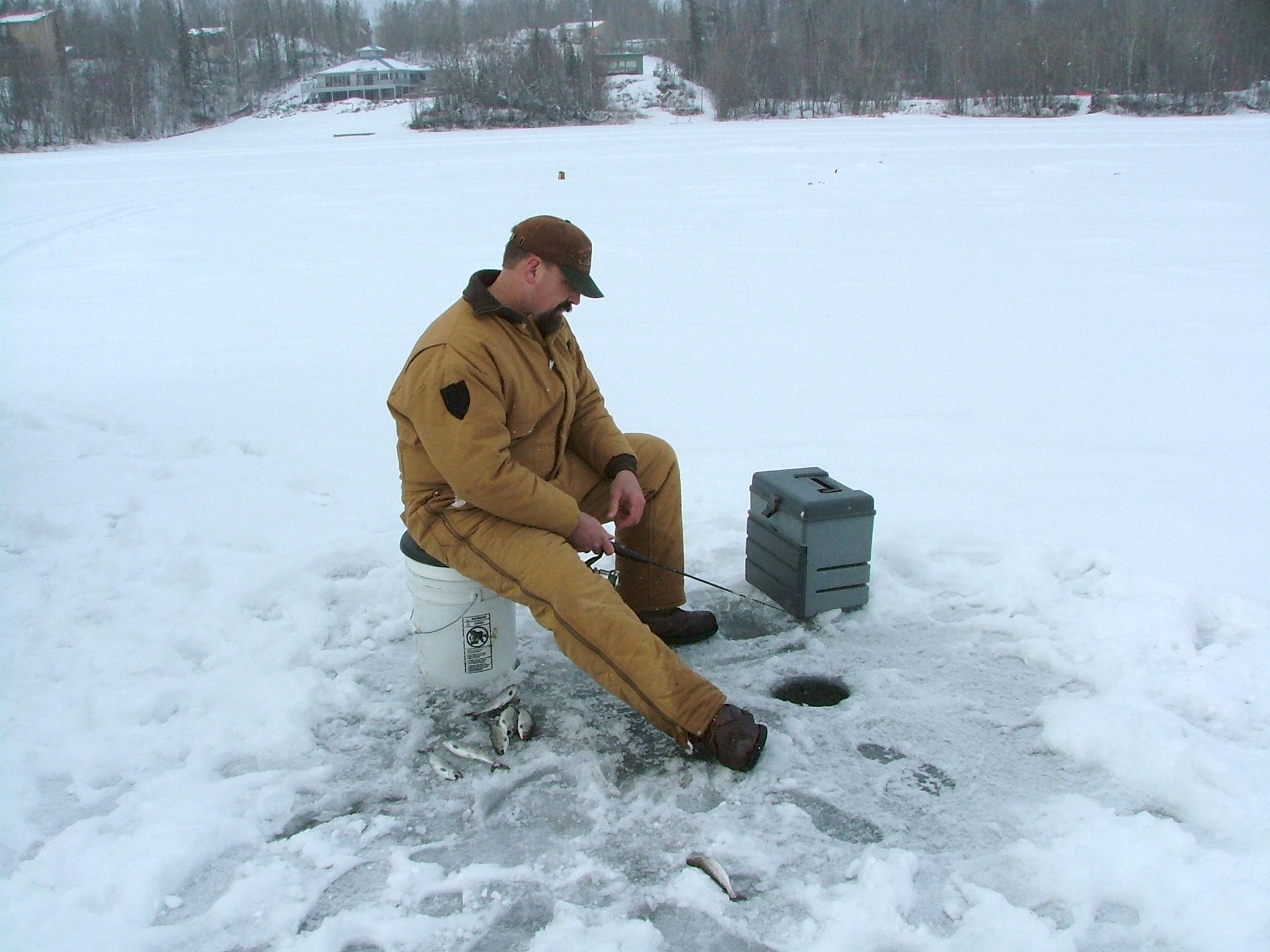
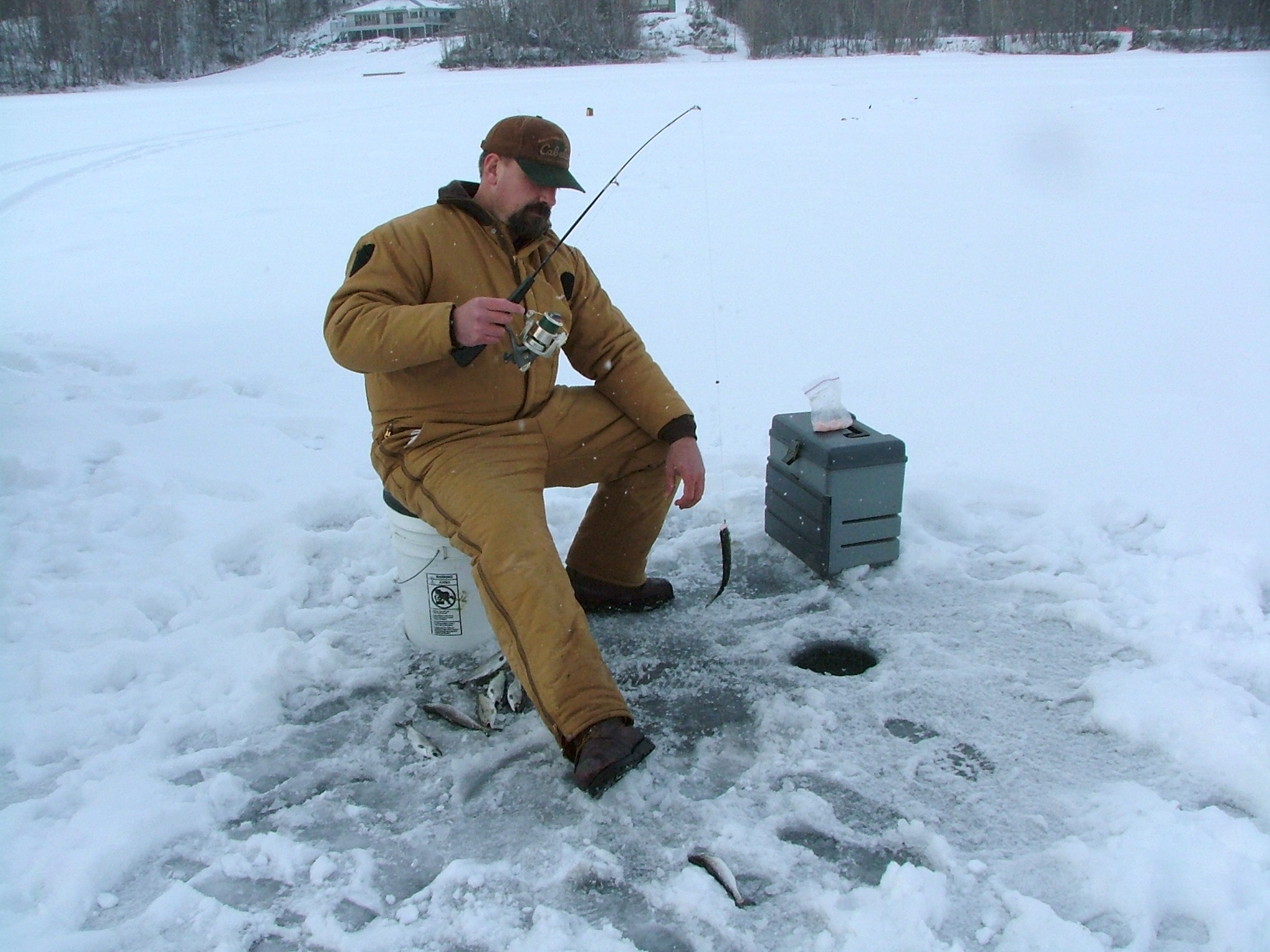
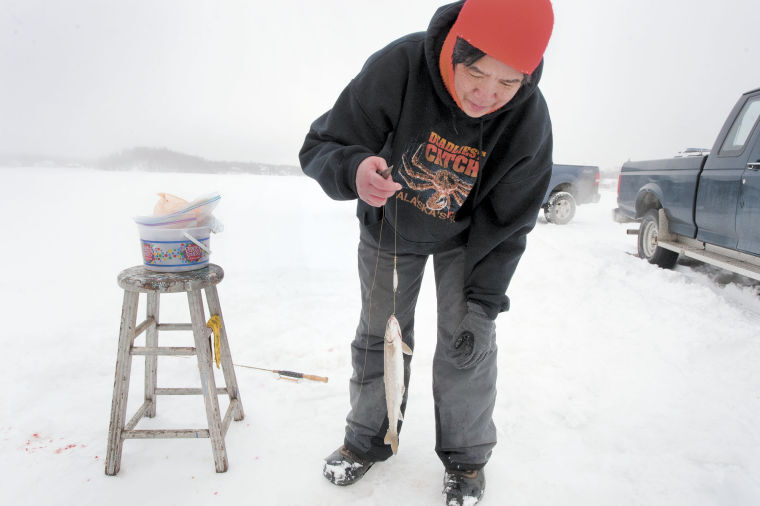
You’re staying close to home this year for your vacation and you’re wondering what to do during this cold time of year. Ice fishing is a fun outdoor activity and can provide a good fresh fish dinner or two for your family to boot.
Safety needs to be your first consideration. Personally, I won’t walk out on the ice until I can confirm a solid, six-inch depth of “black” ice. If I’m planning to take my four-wheeler or snowmachine onto the ice as transportation, I will wait until the ice is a foot thick. I don’t even consider taking my truck out until the ice is at least a solid 18 inches thick. Other folks might go on thinner ice, but I would rather be safe.
Every year, you’ll read about folks whose vehicles went through the ice because they went too early or drove over areas with active underwater springs. Once you’re out on the ice, be aware and avoid any areas where springs might be bubbling up or where creeks may be running into or out of the lake. Moving water usually thins and weakens the ice and can create safety issues if you go into those areas.
Calling various government agencies can provide some ice thickness information. Stopping by or calling the various local sport fishing equipment stores might get you better and more up-to-date information.
Some folks wear clothing specifically designed for ice fishing. Most of these garments have floatation built into the clothing. Other folks will wear a personal floatation device, like inflatable suspenders, over their jacket or parka in the rare event they should break through the ice.
A gadget handy to have on your person is a set of ‘ice picks” which are used to pull yourself back onto the ice if you break through. A set of ice cleats on your waterproof and insulated boots is also wise. Be sure to wear a warm hat and gloves too.
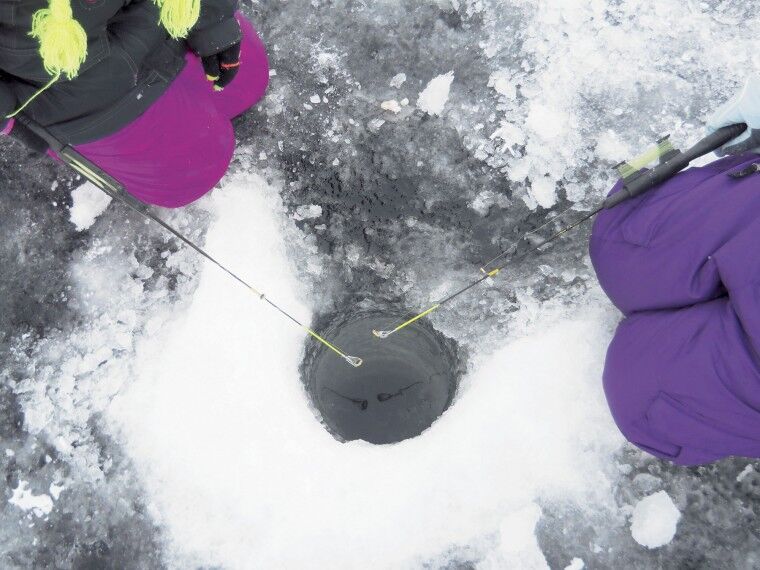
Equipment needs can be relatively simple or quite complex, depending on how committed you are to the sport. First, you need some way to open a hole through the ice. A hand auger works fine if the ice is a foot or less thick. A power auger makes short work of drilling a hole through any ice thickness up to four feet or so. An ice chisel also works well but leaves jagged edges on the hole and proves to be a lot of work with thicker ice.
A “ladle” makes removing floating ice in the hole easy. A short fishing pole preferably designed specifically for ice fishing, with a small reel and line, is your main fishing equipment. You can rig your terminal tackle to target different fish species. A small jig tipped with a piece of shrimp or a fish egg and jigged at various depths will usually catch your target species. Just using the same shrimp or egg on a hook with a sort leader suspended under a bobber works well too.
Most folks target stocked salmon, trout, or Dolly Varden. Northern pike are also available but require some heavier gear, including wire leaders to prevent the pike’s teeth from severing the line. Some folks will go after burbot, whitefish, and lake trout, but these species are beyond the scope of this short article. Buy a good ice fishing book or go online and read up on techniques and equipment needs.
You’ll need a sled of some sort to pull your gear out on the ice. Most of your stuff, except the auger and chisel will fit in a five-gallon bucket which, when turned upside down, makes a good seat while fishing. If it’s a cold day or the wind is blowing, you’ll wish you had a heated shelter of some sort to block the wind and warm up in.
I prefer to bring an assortment of rods and reels with different lines, a good assortment of jigs and lures, several pre-tied leaders with bait hooks, and some bobbers and split shot for weights. I’ll bring a chisel, a power auger, a small shovel (to clear snow from around the hole), and a ladle. I have a folding chair which is perfect as a fishing seat and I have recently purchased a collapsible fishing shelter I can either fish in or use as shelter from the weather.
A small propane heater assures warmth in the shelter. A small stove and some utensils make spending the entire day out and still being able to enjoy a warm meal and beverages possible.
Some folks like to use “tip-ups” to fish for pike. These devices don’t require the angler’s immediate presence to work and use a flag “tipping” up to signal when a fish has taken the bait.
Now that you have the basic gear, where can you go to fish? Most folks fish the ninety-some stocked lakes in the Valley. Others like to fish some of the local unstocked likes, like Big Lake, because of their accessibility. Lake Louise, near Glennallen, is visited for ice fishing lake trout, if you want to go for a drive. Later in the winter, fishing some of the rivers is possible, but it really helps if you have a good knowledge of the river to know where to target fish.
If you have never gone ice fishing but would like to learn, go with a neighbor, or friend who has ice fished. If you’re driving by a lake and see folks out ice fishing, stop and walk out to visit with them about the what’s and how’s of what they’re doing. Visit a couple of the sport fishing equipment dealers and ask for help in getting started. You can also go online to learn about equipment and techniques. Check out Fish and Game’s Sport Fish Division website as well. They have posted a lot of ice fishing information and you can access bathymetric maps of all the stocked lakes and several unstocked lakes in the area.
Make sure you have reviewed the current regulations regarding seasons, bag limits, legal species, and any specific regulations for the body of water you plan to fish. Number of lines, number of hooks, and type of lure or bait can also be specific for the water body. Have your current fishing license with you too. I’ve been checked more while ice fishing than any other time of year.

By Jeremiah Bartz Frontiersman.com A football coach using a hockey reference as the centerpiece for his keynote address may

Frontiersman.com With its headquarters in Wasilla, the Frontiersman has been a primary source of news for the Matanuska-Susitna

By Katie Stavick Frontiersman.com The next generation of leaders took flight this week as the Houston High School Class

By Kyle Wilkinson For the Frontiersman Keynote speaker and Carry the Cure President Bill Pagaran’s words boomed through the