Retiring teacher, coach urges Colony grads to ‘find their 68’
By Jeremiah Bartz Frontiersman.com A football coach using a hockey reference as the centerpiece for his keynote address may


WASILLA — Alaska’s First Lady, Donna Walker, dished out the ice cream for more than 30 Wasilla Middle School students from eighth grade science teacher Mayme Troutman’s class Monday morning. The students were the state champions in this year’s Power Pledge Challenge.
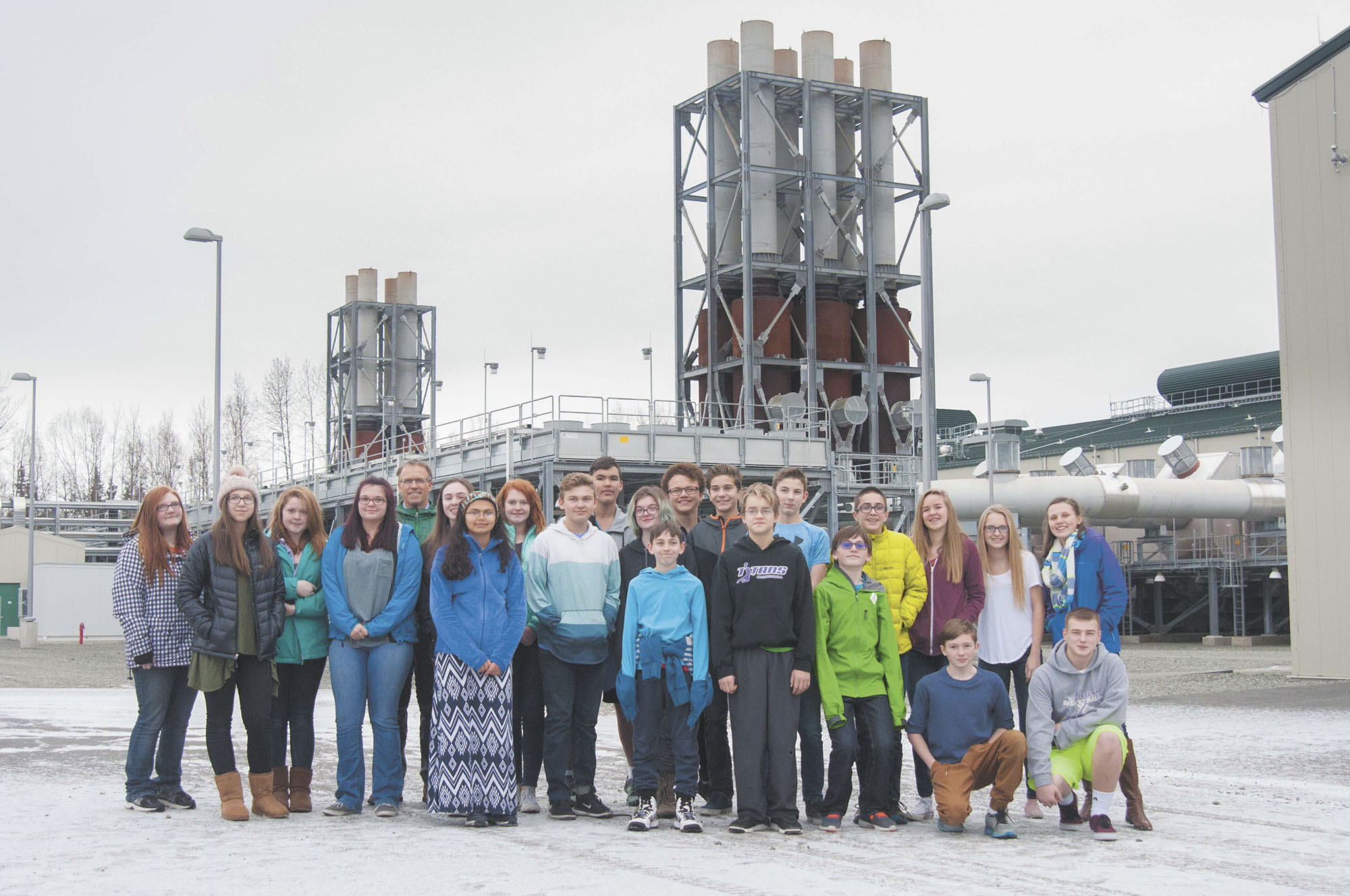
To earn that title, Troutman’s class beat out some 2,200 fellow middle school students from Anchorage, Juneau as well as the Mat-Su Borough. In addition to the state champion, one regional winner from the three mentioned locations was chosen. Teeland Middle School in Wasilla claimed the Mat-Su Borough title. David Knopp’s eighth grade science students enjoyed a tour of Matanuska Electric Association’s (MEA) Eklutna Lake facility earlier this month.
The program focuses on engaging students with hands-on activities and is part of AK EnergySmart and implemented through the Renewable Energy Alaska program (REAP) Troutman said. AK EnergySmart is a free curriculum resource geared toward giving Alaskan youth an understanding of the high economic and environmental costs of power generation and the importance of conserving energy at home and school. Through interdisciplinary units of study that investigate how energy is all around them, why we need energy, and how energy can be conserved, AK EnergySmart gives students valuable insights that they can pass along to their families.
With assistance from Colleen Fisk, REAP energy education director, students spent about a week learning just how much energy they use, but also how much energy what they use is using. Part of the program utilizes a “Kill-A-Watt” meter to help students actually see how much energy various appliance and devices use. Additionally, the program focuses on energy needs and conservation. Students also determined electricity costs for their regions of the state.
Costs around Alaska vary greatly. While here in the Mat-Su energy are derived from mainly the burning of fossil fuels combined with hydro-electric, some of the outlying villages in the far north of the state depend solely on diesel fuel. That makes power generation in those areas both expensive and volatile as the fuel must be transported and is subject to fluctuating market prices. Part of the program involves energy cost calculations based on their specific community or region.
Once they have obtained these values, Troutman explained student can calculate the cost of running those electronics for certain time periods, determine kilowatt hour costs and compare associated costs to other communities. For example, with certain appliances such as a coffee pot, students compared the cost of leaving the pot on all day to buying a latte.
“You come in a room and turn on the lights,” said Troutman. “How many light bulbs come on? How much energy do they use...energy has to be paid for and it has to come from somewhere!”
Troutman explained another part of the program involved inviting students to complete a survey designed not only to focus on what they learned in the classroom. Covered items in include ways to conserve energy at home and in school. The program pushes students to get them thinking about how they can make a difference in their daily habits and at their school is by having students develop an action plan that focuses on energy conservation and efficiency.
Ideas could include riding a bike instead of driving a car, unplugging computers and other electronics at night or when not in use, or turning off the lights when you leave a room, replacing incandescent light bulbs with compact fluorescent bulbs (CFLs) or LEDs, adding extra insulation to a house, or using Energy Star® appliances engineered with special power-saving measures installed. The students also made a pledge to come up with three ideas for reducing energy use at home.
Troutman’s students earned a 100 percent survey completion rate.
“The students were told to look for things in things in their house. Like using a dollar bill to see if their refrigerator has a tight seal or using a programmable thermostat. Why heat your house when you’re not home? That one blew their minds,” said Troutman.
Troutman explained what the students learned through this program will be used for the remainder of the school year. She explained aspects of energy such as chemistry and physics will be covered by her students next semester.
In addition to the ice cream party, the school received $800 earmarked for classroom energy education materials. This marks the third year for the Power Pledge challenge. In addition to Matanuska Electric Association (MEA) other participating energy producers include Chugach Electric, Alaska Electric Light and Power of Juneau, Municipal Light and Power of Anchorage and Alaska Energy Authority.

By Jeremiah Bartz Frontiersman.com A football coach using a hockey reference as the centerpiece for his keynote address may

Frontiersman.com With its headquarters in Wasilla, the Frontiersman has been a primary source of news for the Matanuska-Susitna

By Katie Stavick Frontiersman.com The next generation of leaders took flight this week as the Houston High School Class

By Kyle Wilkinson For the Frontiersman Keynote speaker and Carry the Cure President Bill Pagaran’s words boomed through the